
Data entry software is a digital solution that automates how businesses capture, validate, and organize information, turning one of the most time-consuming back-office tasks into a seamless, scalable process. Organizations that embrace automation gain a clear advantage: faster turnaround times, higher data accuracy, and teams free to focus on higher-value priorities. Whether managing thousands of invoices or processing customer records at scale, the right software makes it effortless.
In this guide, DIGI-TEXX explores the best data entry tools available and how to transition from manual to automated methods, step by step.
>>> See more:
- Top 10 Data Entry Outsourcing Companies to Hire in 2026
- Secure Data Annotation Services: Top Companies & How to Choose
- Data Labeling Service: What It Is, Types & Benefits For AI
What Is The Data Entry Software?
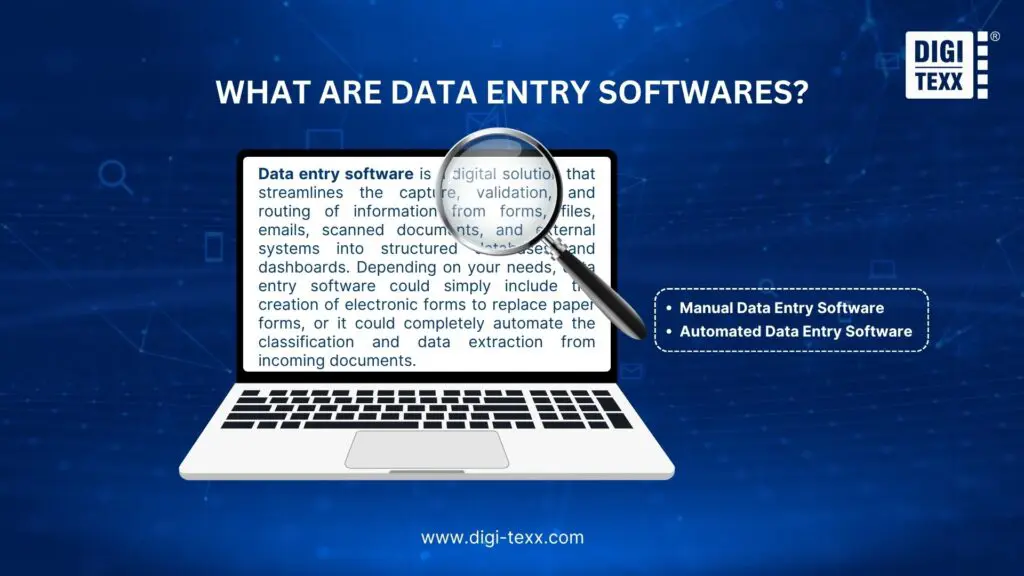
Data entry software is a digital solution that streamlines the capture, validation, and routing of information from forms, files, emails, scanned documents, and external systems into structured databases and dashboards. Depending on your needs, data entry software could simply include the creation of electronic forms to replace paper forms, or it could completely automate the classification and data extraction from incoming documents.
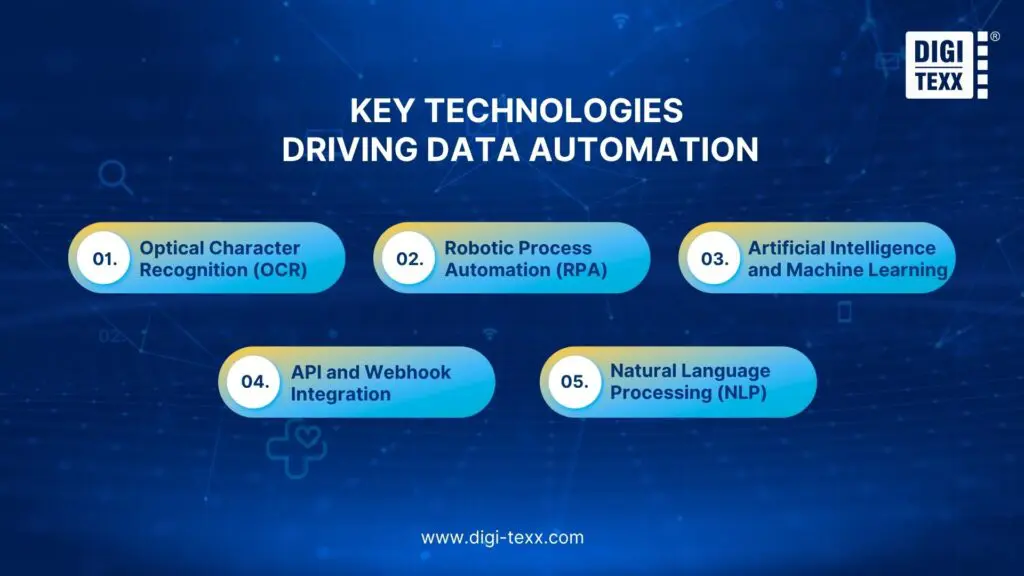
Modern platforms combine 5 core technologies: digital forms and APIs, Optical Character Recognition (OCR) for document processing, Robotic Process Automation (RPA) for repetitive workflows, AI-powered classification and extraction, and workflow automation for data routing.
These tools reduce manual errors, accelerate processing cycles, improve compliance, and scale across industries, including finance, healthcare, logistics, retail, government, and technology.
>>> See more:
- Top 10 Best big data processing tool for Business 2026
- Best Insurance Claims Processing Outsourcing BPO in the US 2026
- 15 Best Data Labeling Service Providers In 2026
Types Of Data Entry Software
Data entry software falls into two main categories, each suited to different business needs and levels of automation.
Manual Data Entry Software
Manual data entry software helps users populate systems by inputting data manually. Although they do not automate data entry, most of them provide custom-designed forms, validation rules, and intuitive interfaces that make the task easier. Such tools include Zoho Forms and Typeform, which are frequently used for data collection and entry.

Automated Data Entry Software
Automated data entry software uses RPA, AI, and machine learning to eliminate human input for routine, high-volume tasks. These platforms extract, classify, and route data from documents, emails, and web sources directly into downstream systems, removing manual steps entirely from repeatable workflows.
>>> See more:
- Why Businesses Outsource Data Management in 2026?
- Steps Of Data Analysis: 6 Key Stages Explained With Real Examples
- Professional Fashion Photo Editing Services for Stunning Visuals
20 Best Data Entry Software Tools to Boost Accuracy and Productivity
Here top 20 of the best data entry tools so that you can streamline your workflow and minimize the risk of error, so that you can concentrate on higher-level tasks.
1. Microsoft Excel
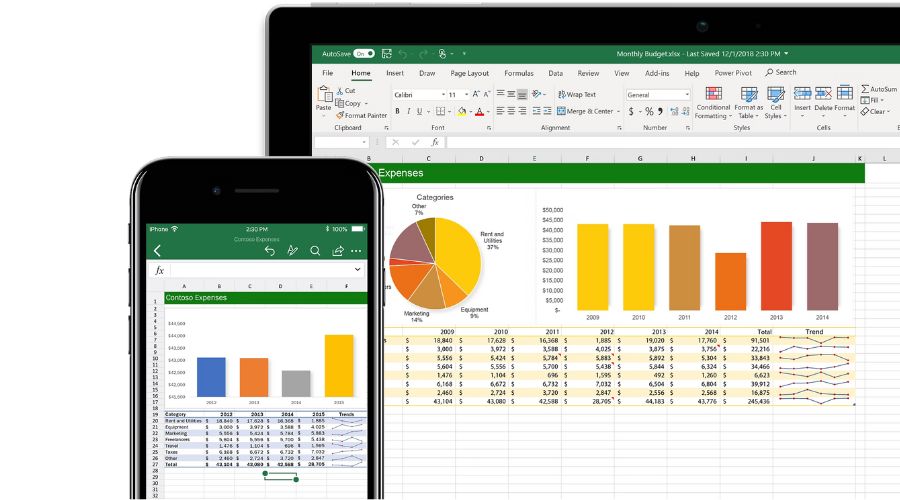
Microsoft Excel is a high-end data entry software for pc that is popularly utilized for data visualization, analysis, and organization. Excel has high-end functionality support, enabling users to conduct intricate calculations via functions and formulas. Excel has robust feature support in the guise of PivotTables and charts for data analysis and perfectly integrates with other Microsoft 365 applications.
Features:
- Advanced formulas and functions for complex calculations
- Pivot tables and charts for data analysis
- Integration with Microsoft 365 apps (SharePoint, Power BI, Power Automate)
- Extensive customization options and macro support
Pros:
- Universally familiar interface requiring minimal training
- Highly flexible for everything from simple lists to complex financial models
- Broad compatibility with other business tools and file formats
Cons:
- Prone to manual errors at scale
- Scalability issues with very large datasets
- Limited real-time collaboration compared to cloud-native alternatives
Pricing: Free for basic use; Microsoft 365 starts at $9.99/month
2. Typeform
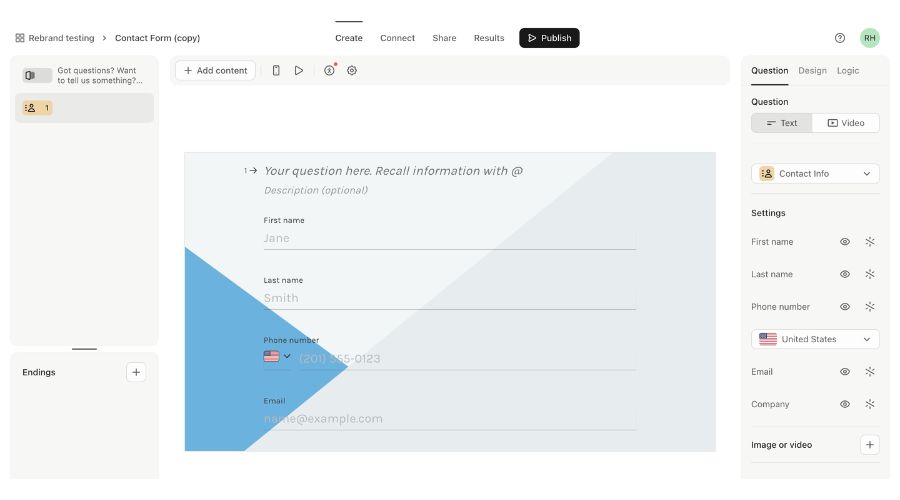
Typeform is a web-based interactive tool employed to create forms and surveys with an emphasis on user engagement. It provides a conversational interface to increase the interactivity of form filling for the user. With a wide range of customizable templates, Typeform lets users mold a form to suit their requirements, and it also provides advanced analytics and reporting features to monitor responses and insights.
Features:
- Conversational form design with one question displayed at a time
- Conditional logic for dynamic, adaptive forms
- Customizable templates and branding options
- Built-in analytics and reporting tools
Pros:
- Higher completion rates due to engaging, frictionless format
- Easy to design and launch without technical knowledge
- Integrates with hundreds of third-party applications
Cons:
- Data still relies on manual human input
- Advanced features locked behind higher-tier plans
- Limited for complex, multi-field data collection
Pricing: Free basic plan; premium plans start at $25/month
3. Google Sheets
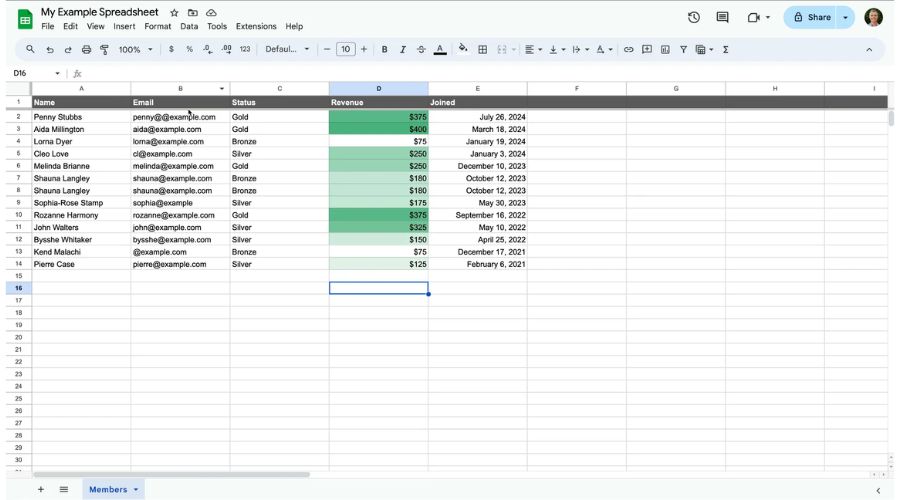
Google Sheets is Google’s cloud spreadsheet data entry software for pc and mobile that includes real-time collaboration and on-demand access from anywhere. It supports concurrent collaborative editing of the same document by multiple users simultaneously, which makes it ideal for collaboration. With hassle-free integration with other Google Workspace applications and cloud-based auto-saving, Google Sheets provides convenience and efficiency.
Features:
- Simultaneous real-time co-editing by multiple users
- Native integration with Google Workspace (Gmail, Drive, Docs, Forms)
- Cloud storage with automatic saving and version history
- Extensible via Google Apps Script and third-party add-ons
Pros:
- Excellent for team collaboration with instant, live updates
- Accessible from any device with an internet connection
- Free for individual users
Cons:
- Can become slow with very large datasets
- Limited automation capabilities without add-ons or scripting
- Less powerful analytically than Microsoft Excel
Pricing: Free for personal use; Google Workspace business plans start at $6/user/month
>>> See more:
- Top 10 Data Cleansing Companies for Businesses in 2026
- How to Automate Documentation in 2026: Step By Step Guide
- Best Data Cleansing Outsourcing Companies for 2026
4. Airtable
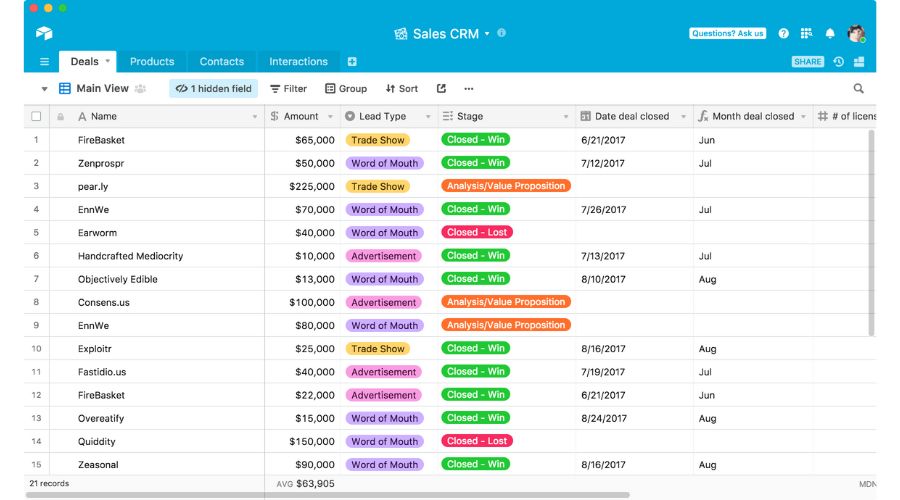
Airtable is one of the highly efficient data entry AI tools that merges the simplicity of a spreadsheet with the strength of a database and is ideally designed for the management of dynamic data. The tool is easy to use in editing fields and views, and it has high personalization capabilities for different types of data. Airtable further encompasses collaboration features that simplify teamwork, and it has integration support in regular applications and services.
Features:
- Customizable field types (text, number, date, attachment, linked records, and more)
- Multiple views, including grid, calendar, Kanban, gallery, and Gantt
- Collaboration tools with commenting and notifications
- Extensive integration marketplace and API access
Pros:
- Versatile data organization supporting complex relationships between datasets
- User-friendly interface accessible to non-technical users
- Highly flexible for a wide range of use cases and industries
Cons:
- Still requires manual data entry
- Less automation than advanced dedicated tools
- Costs can scale quickly for larger teams
Pricing: Free for individuals; premium plans start at $20/user/month
5. Zoho Forms
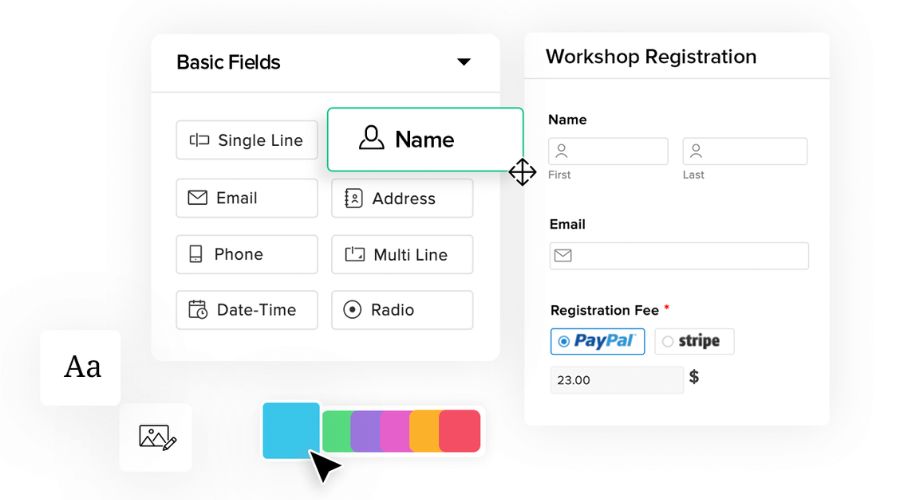
Zoho Forms is an online form builder where users can create personalized forms to effectively capture information. It has a simple drag-and-drop builder, allowing one to create forms without needing to write code. This AI tool for data entry supports conditional logic, which enables one to create dynamic forms that adapt according to user input.
Features:
- Drag-and-drop form builder with 30+ field types
- Conditional logic for dynamic, adaptive forms
- Integration with Zoho CRM, Analytics, Desk, and third-party apps
- Mobile app with offline data collection support
Pros:
- Seamless fit for organizations already using the Zoho suite
- Strong data management and workflow automation capabilities
- User-friendly interface with minimal learning curve
Cons:
- Still requires manual data entry from users
- Limited automation compared to dedicated AI-powered platforms
- Best value only for existing Zoho ecosystem users
Pricing: Plans start at $10/user/month
6. UiPath
For repetitive data entry processes to be automated, UiPath is the most capable auto data entry software. The Robotic Process Automation (RPA) tool automates the process of data extraction and entry, especially from unstructured files, minimizing the chances of human error and maximizing productivity.
UiPath’s especially useful for businesses that require complex workflows to be automated and is an ideal option for businesses that want to optimize operational efficiency.
Features:
- Drag-and-drop visual workflow designer for bot building
- AI-powered Document Understanding, combining OCR and machine learning
- AI Computer Vision for automating complex or legacy UIs
- Orchestration tools for managing, scheduling, and scaling bots
Pros:
- Powerful automation across virtually any application or system
- Handles both structured and unstructured data entry
- Robust governance, audit trails, and enterprise scalability
Cons:
- Requires RPA expertise and change management investment
- Enterprise pricing can be significant at scale
- Steeper learning curve than low-code alternatives
Pricing: Tiered and enterprise-focused; free trials available

7. Zapier
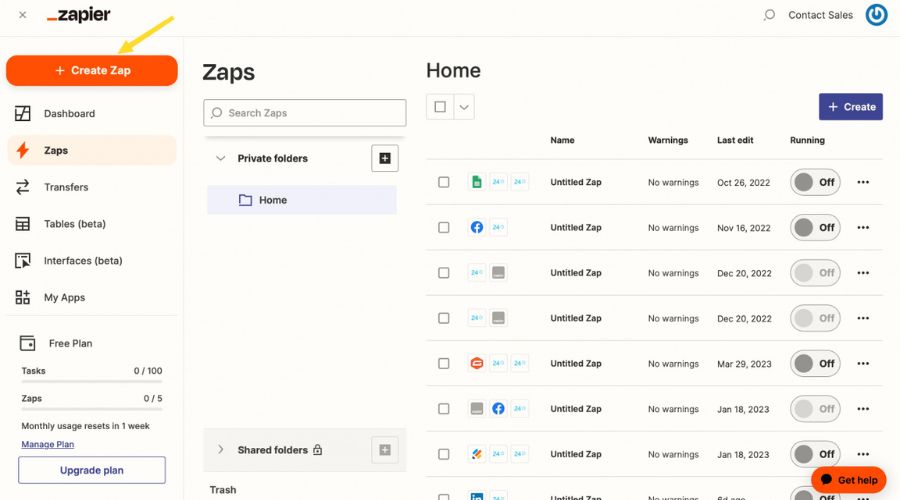
Another excellent data entry software is Zapier, especially useful for those who use many programs for routine tasks. Zapier integrates more than 3,000 apps, allowing users to create “Zaps” that transfer data automatically between one app and another without programming. By executing repetitive tasks like data transfer between two platforms or sending off notifications, Zapier reduces the time spent on data entry.
Features:
- 7,000+ app integrations via pre-built connectors
- Multi-step workflows (Zaps) triggered by events in connected apps
- Filters, conditional logic, and data formatting within workflows
- No-code interface accessible to non-technical users
Pros:
- Eliminates manual data transfer between applications
- Extremely fast to set up for common workflow patterns
- Scales from simple two-step automations to complex multi-app pipelines
Cons:
- Moves existing structured data only — does not extract from documents or images
- Costs can escalate with high task volumes
- Complex logic can become difficult to maintain at scale
Pricing: Free plan with limited automations; paid plans from $19.99/month
8. Jotform
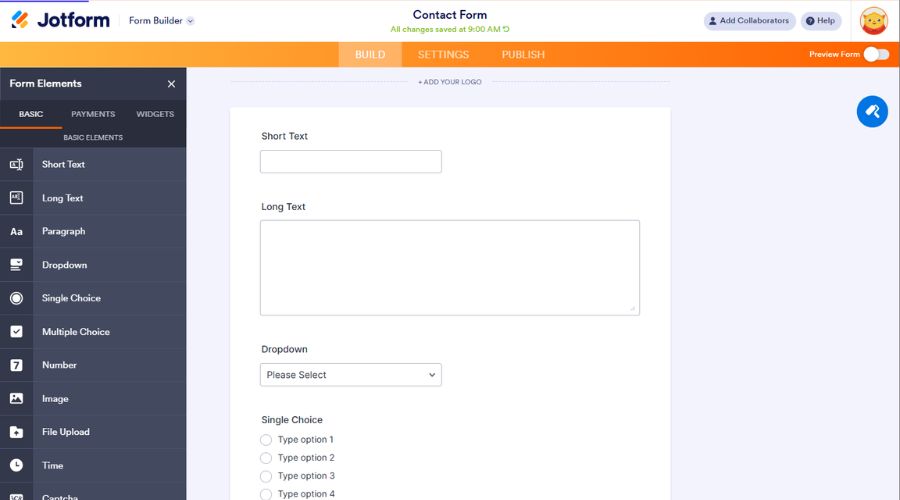
For those who want an easy form builder, Jotform is one of the data entry automation tools for creating personalized forms in a flash. Its drag-and-drop feature makes it easy for both beginners and professionals to create forms. Jotform supports a lot of third-party solutions that make it easy to collect data and monitor it across various platforms. With other features including online payments and analytics tools, Jotform is appropriate for companies that require basic as well as sophisticated forms.
Features:
- Drag-and-drop form builder with thousands of ready-made templates
- Support for e-signatures, file uploads, payments, and conditional logic
- Built-in table view turning submissions into a searchable database
- Integrations with CRMs, payment processors, cloud storage, and project tools
Pros:
- Extremely versatile across industries and use cases
- Rich feature set available even on lower-tier plans
- Automated data routing to downstream systems after submission
Cons:
- Still relies on human input to fill out forms
- Can feel overwhelming due to the sheer number of options
- Advanced features require higher-tier subscriptions
Pricing: Jotform offers paid plans starting at $39 per month, which offer more sophisticated capabilities.
9. Foxtrot RPA
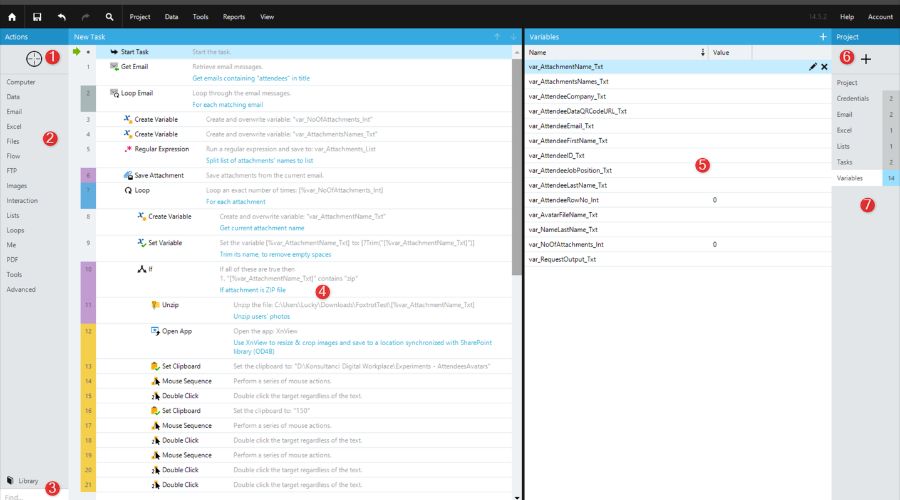
Foxtrot RPA is a robust data entry software for automating the data entry process with the help of robotic process automation. It is incredibly efficient in identifying and extracting data from different types of documents, including images and PDFs, offering high error reduction and savings of time. Foxtrot RPA is also incredibly system compatible, ensuring it is an end-to-end solution for businesses seeking to automate data entry processes. Its capacity for doing everyday work and enhancing data processing accuracy makes it a very welcome addition to any organization.
Features:
- Low-code, intuitive interface for building automation bots
- Supports attended and unattended automation modes
- Compatible with virtually any application, including legacy systems without APIs
- Scheduling and monitoring tools for managing automated workflows
Pros:
- More accessible than enterprise RPA platforms for mid-sized businesses
- Works with legacy systems and data entry software for PC environments that lack modern integration options or API support
- Competitive pricing relative to enterprise alternatives
Cons:
- Less feature-rich than larger enterprise RPA platforms
- Community and support resources smaller than major competitors
- May require upgrades as automation complexity grows
Pricing: Competitive tiered pricing; contact vendor for details
>>> Explore more:
- Data Validation vs Verification: Key Differences, Examples & Benefits
- Boost Efficiency With Insurance Back Office Support Services
- Invoice Reconciliation Process: Step-By-Step Guide & Key Steps
10. Nintex RPA
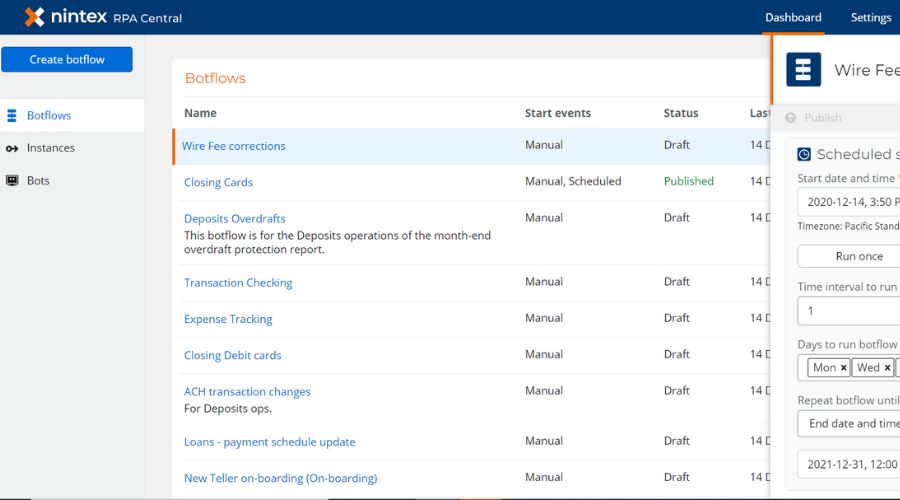
Nintex RPA is an accessible auto data entry software with an easy-to-use interface. With the drag-and-drop functionality, business users can automate tedious data entry without having to know how to code. Nintex RPA is also highly flexible and integrable, and can quickly be integrated with many business systems in order to automate tasks. Its efficiency and error reduction focus make it an absolute necessity for any company that wishes to utilize automation in order to drive maximum productivity.
Features:
- RPA bots for automating repetitive data entry across applications
- Process discovery and mapping tools to identify automation opportunities
- AI-powered document processing and decision automation
- Integration with Nintex’s broader process management and workflow suite
Pros:
- End-to-end automation covering process mapping through execution
- Well-suited for regulated industries with compliance requirements
- Strong governance and audit trail capabilities
Cons:
- Higher total cost of ownership than simpler RPA tools
- Implementation requires planning and change management
- Best value when used alongside the broader Nintex platform
Pricing: Enterprise pricing available on request
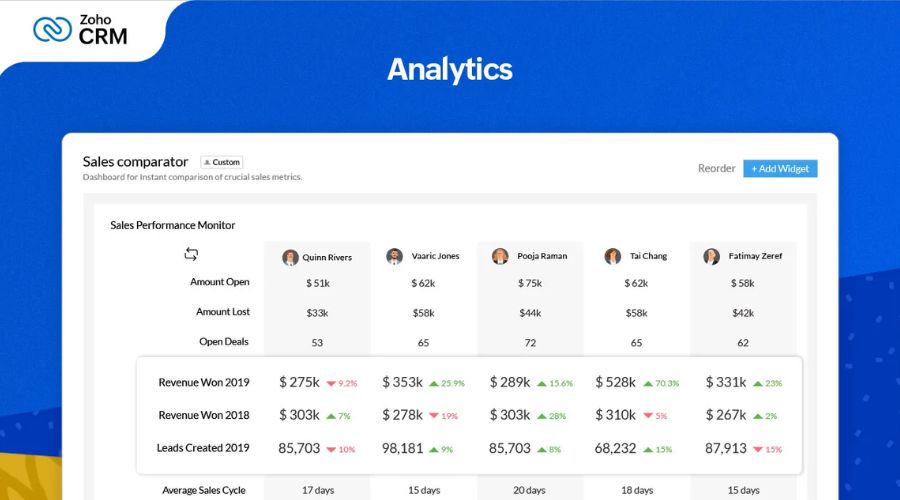
11. Zoho CRM
Zoho CRM is a customer relationship management tool that removes most of the data entry tasks that are part of customer interactions. By means of customer information gathering and automation of sales and marketing processes, Zoho CRM increases productivity and provides accurate and timely information. It also provides smart analytics to help companies make more informed decisions regarding customers’ behavior and preferences.
Features:
- Customizable forms and record layouts for manual data entry
- Workflow rules and blueprints for automated data routing and updates
- Data capture from web forms, emails, and third-party integrations
- AI assistant (Zia) for anomaly detection and data entry predictions
Pros:
- Centralizes customer data from multiple sources in one place
- Reduces errors through validation rules and required fields
- Integrates deeply with the broader Zoho product ecosystem
Cons:
- Primarily designed for customer data — less versatile for other data types
- Full feature set requires higher-tier plans
- Can be complex to configure for non-standard workflows
Pricing: Paid plans from $12/user/month
12. Rossum
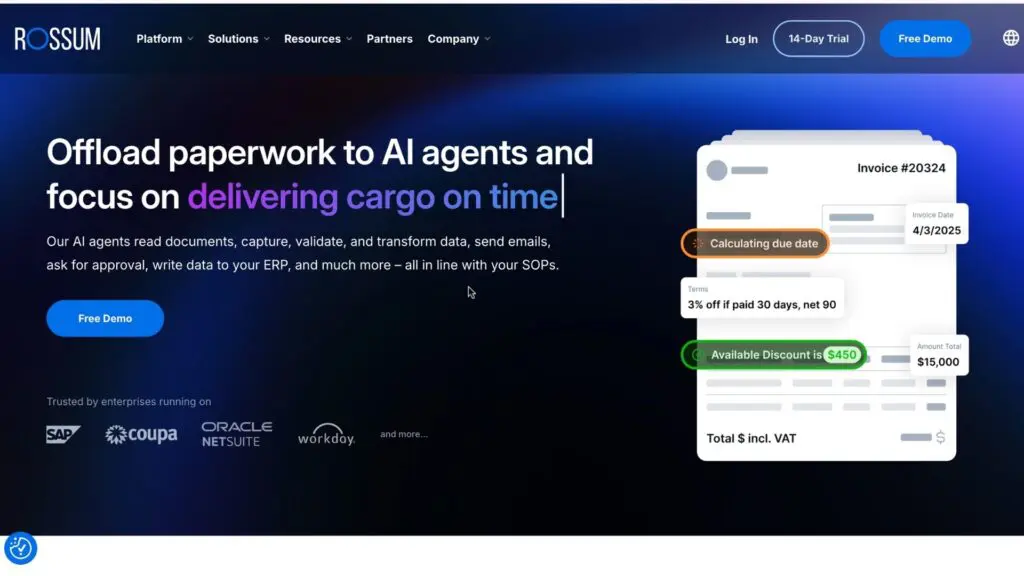
Rossum is an AI-powered intelligent document processing platform built specifically for transactional financial documents, featuring a self-learning AI that adapts to new document layouts without requiring manual template updates.
Features:
- Self-learning AI that adapts to variable invoice and PO layouts automatically
- Intelligent validation workflows with exception routing for human review
- Real-time collaboration tools for approval and verification processes
- Seamless ERP integrations with SAP, Oracle, NetSuite, and others
Pros:
- Eliminates ongoing template maintenance as supplier formats change
- Excellent accuracy for invoices, purchase orders, and receipts
- Fast deployment and intuitive interface for finance teams
Cons:
- Primarily focused on financial transactional documents
- May require customization for complex or non-standard workflows
- Volume-based pricing can become costly at a very large scale
Pricing: Subscription-based; tiered pricing by document volume
>>> Explore more:
- Outsource Data Conversion Services | DIGI-TEXX
- Best Offshore Data Annotation Service Providers in 2026
- Why Businesses Outsource Data Management in 2026?
13. Nanonets
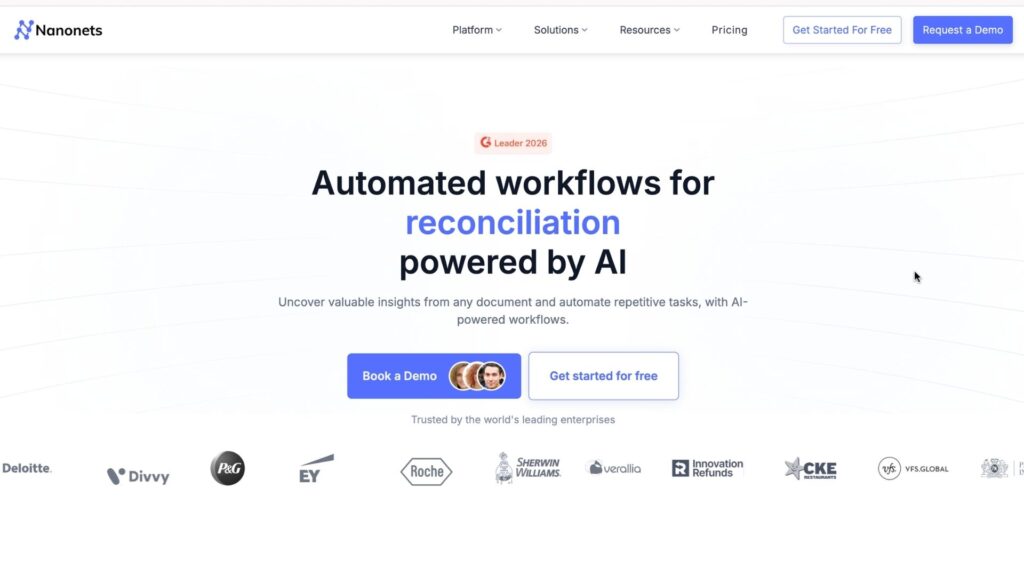
Nanonets is a no-code AI OCR platform that enables organizations to extract data from scanned documents, PDFs, images, and emails using pre-trained or custom-trained AI models, no data science expertise is required.
Features:
- Pre-trained models for invoices, receipts, IDs, and other common document types
- Custom model training through simple field labeling on sample documents
- Table and line-item extraction for structured financial documents
- API and Zapier integration for connecting to existing workflows
Pros:
- Fast setup with pre-trained models reducing time to value
- Accessible to non-technical teams without ML engineering resources
- Handles both structured and unstructured documents across industries
Cons:
- Pricing can escalate for high-volume document processing
- Advanced customization may still require technical expertise
- Less enterprise-grade governance than larger IDP platforms
Pricing: Free tier for testing; paid plans tiered by usage volume
14. Automation Anywhere
Automation Anywhere is a cloud-native auto data entry software platform built for automating structured and semi-structured data entry at enterprise scale, with strong capabilities in financial services, public sector, and shared service centers.
Features:
- Cloud-first RPA bots for web, desktop, and application automation
- Built-in analytics dashboards and bot governance tools
- Process discovery and mining to identify automation opportunities
- Secure credential handling and compliance controls
Pros:
- Rapid deployment with cloud-native architecture
- Strong fit for finance, operations, and back-office use cases
- Comprehensive governance and analytics out of the box
Cons:
- Complex processes may require advanced bot design skills
- Costs scale with bot volume and usage
- Enterprise-level investment not suited for small teams
Pricing: Custom enterprise pricing, free trials available

15. Blue Prism
Blue Prism is an enterprise RPA platform focused on security, governance, and auditability for large organizations and regulated industries. Its architecture treats software robots as a managed digital workforce, applying strict access controls, audit trails, and compliance logging to every automated task.
Features:
- Centralized control room for managing and monitoring digital workforce operations
- Role-based access controls and detailed audit logging
- Enterprise-grade scalability for hybrid legacy and modern system environments
- Strong security posture with robust credential and data governance
Pros:
- Unmatched governance and auditability for regulated industries
- Reliable and scalable across complex enterprise environments
- Excellent for financial services, healthcare, and government use cases
Cons:
- Steeper learning curve than low-code RPA alternatives
- Higher total cost of ownership
- Requires dedicated RPA expertise for development and maintenance
Pricing: Enterprise volume-based pricing. Contact Blue Prism for custom quotes.
16. Klippa DocHorizon
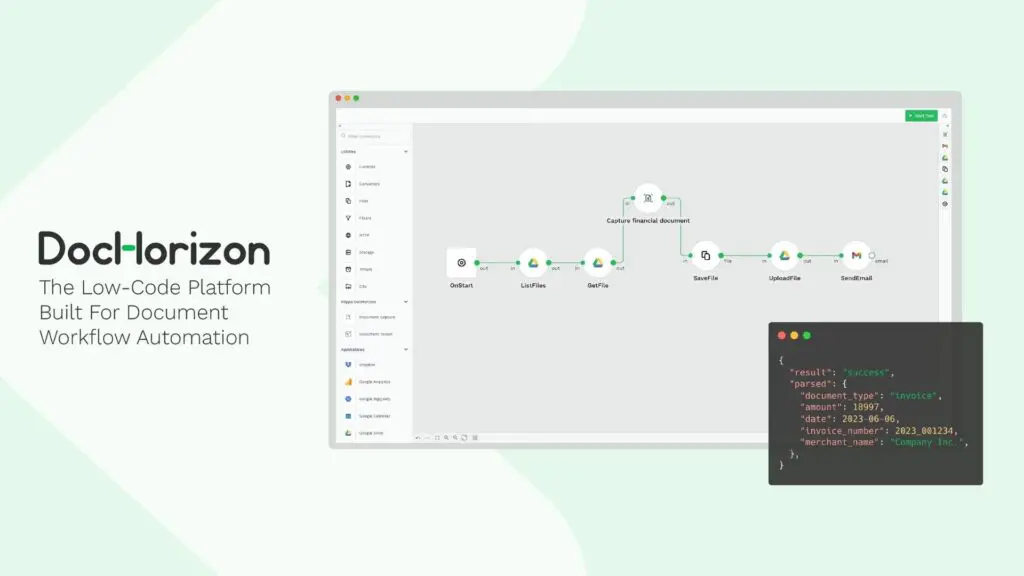
Klippa DocHorizon is a secure, intelligent document processing platform combining AI-powered OCR, document classification, and advanced fraud detection, purpose-built for compliance-heavy industries requiring both accuracy and regulatory alignment.
Features:
- AI-powered OCR and document classification across diverse document types
- Advanced fraud detection algorithms validating document authenticity
- GDPR-compliant data processing with secure handling of sensitive information
- Flexible API integration for custom deployment across existing systems
Pros:
- Combines data extraction with fraud detection in a single platform
- Strong regulatory compliance alignment (GDPR, financial sector requirements)
- Versatile across finance, logistics, insurance, and government use cases
Cons:
- Pricing may be steep for smaller-scale deployments
- Advanced fraud detection features require initial configuration
- Less widely known than larger IDP competitors
Pricing: Subscription-based; tiered pricing by volume and feature set.
17. Docsumo
Docsumo is an AI-powered document processing platform that automates data entry from business documents, including invoices, receipts, bank statements, and onboarding forms. It uses advanced OCR and machine learning to extract key fields and tables even from messy or varied layouts, making it a strong fit for finance and operations teams drowning in paperwork.
Features:
- Smart table extraction pulling line items from invoices and bank statements into structured rows
- Automated validation that checks totals, flags anomalies, and routes low-confidence fields for human review
- Pre-trained models for common document types with custom training for unique forms
- Integrations with QuickBooks, Salesforce, Zapier, and other business tools
Pros:
- Significantly reduces manual data entry for finance and accounting workflows
- Automated anomaly detection catches errors before they reach downstream systems
- Easy to get started with pre-trained models requiring minimal setup
Cons:
- Best suited for financial and operational documents; less versatile for other document types
- Custom model training for unusual formats requires additional configuration
- Enterprise features are priced at a premium
Pricing: 14-day free trial available, custom quotes for enterprise plans
18. Thunderbit
Thunderbit is an AI-powered web scraping Chrome extension that turns any website into structured, exportable data without writing a single line of code. It is designed for sales teams, e-commerce operators, and anyone who regularly needs to pull data from websites into spreadsheets or databases.
Features:
- AI Suggest Fields for one-click automatic detection of relevant data columns on any page
- Subpage scraping that automatically clicks through to detail pages to collect additional information
- Batch export to Excel, Google Sheets, Airtable, Notion, CSV, and JSON
- Scheduled cloud scraping for automated, recurring data collection
Pros:
- Requires zero coding, accessible to any business user
- Handles dynamic, complex website layouts that break traditional scrapers
- Supports 34 languages for global team use cases
Cons:
- Focused exclusively on web data, not suited for document or email extraction
- Free tier limited to 6 pages per month
- Credit-based pricing can add up for large-scale scraping operations
Pricing: Free tier available; paid plans start at $15/month for 500 credits
19. HubSpot Forms
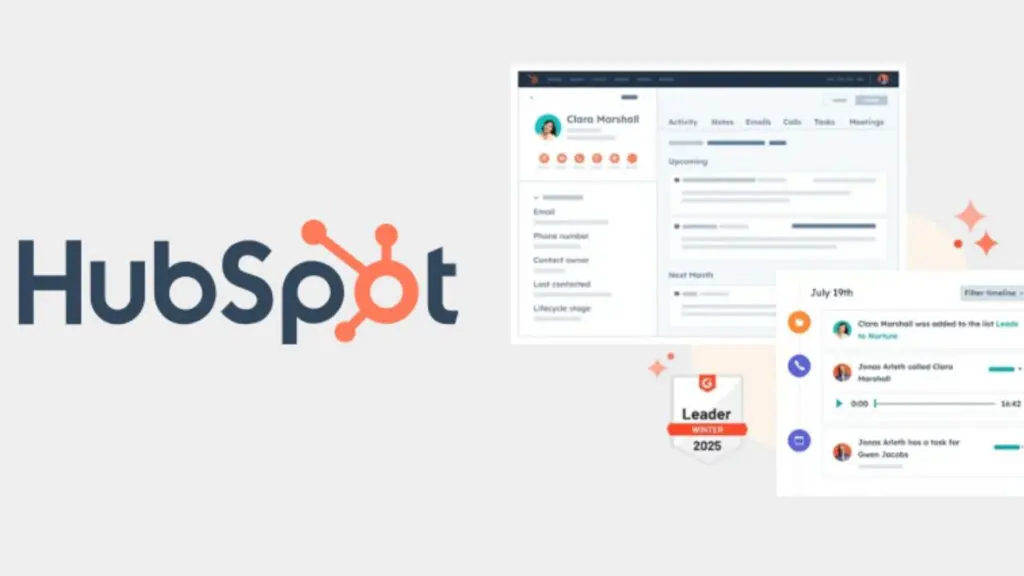
HubSpot Forms is a form builder and data capture tool built natively into the HubSpot CRM ecosystem, enabling businesses to collect leads, customer information, and survey responses directly into their CRM without any manual data transfer step.
Features:
- Drag-and-drop form builder with customizable fields and branding
- Native integration with HubSpot CRM for automatic contact creation and updating
- Progressive profiling that shows new fields to returning visitors to enrich contact records gradually
- Embedded, pop-up, and standalone form options for flexible deployment across websites and landing pages
Pros:
- Zero manual data transfer, form submissions flow directly into HubSpot CRM automatically
- Progressive profiling reduces form fatigue while continuously enriching data quality
- Free to use for HubSpot CRM users with no additional subscription required
Cons:
- Full value is only realized within the HubSpot ecosystem
- Limited customization compared to dedicated form builders like Jotform or Typeform
- Advanced automation features require higher-tier HubSpot plans
Pricing: Free with HubSpot CRM, advanced features available on Marketing Hub plans starting at $15/month
>>> See more:
- Document Indexing Services For Fast Search, Accurate Data & Easy Retrieval
- Ecommerce Back Office Support Services For Fast Growth
- Professional E-commerce Data Entry Services by DIGI-TEXX
20. GoCanvas
GoCanvas is a mobile-first data collection platform that enables businesses to replace paper forms with digital forms accessible on any smartphone or tablet, making it ideal for field workers, inspectors, and on-site teams who need to capture data away from the office.
Features:
- Drag-and-drop form builder with 30+ field types, including GPS location, photo capture, barcode scanning, and e-signatures
- Offline data collection with automatic synchronization when connectivity is restored
- Real-time data submission routing to back-office systems, spreadsheets, and CRMs
- Pre-built template library with 30,000+ industry-specific form templates
Pros:
- Purpose-built for field teams capturing data in remote or low-connectivity environments
- Eliminates paper-based workflows with digital forms on mobile devices
- Fast to deploy with an extensive library of ready-made templates across industries
Cons:
- Still requires manual human input, not an automated extraction tool
- Advanced integrations and workflow automation are locked behind higher-tier plans
- Can be overkill for office-based teams that rarely work in the field
Pricing: Plans start at $45/month, custom enterprise pricing available

How To Choose The Right Data Entry Software For Companies?
Selecting data entry software is not a one-size-fits-all decision. The right platform depends on your data sources, volumes, industry requirements, technical resources, and existing technology stack. Here are the key dimensions to evaluate.
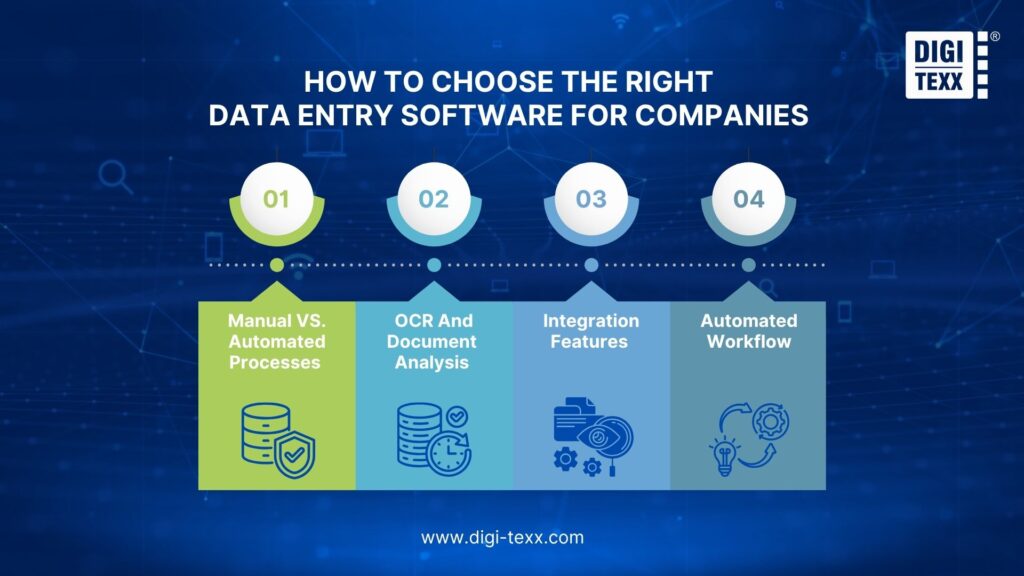
Manual VS. Automated Processes
Start by evaluating your data entry requirements. For straightforward tasks that benefit from human oversight, manual tools like spreadsheets may be all you need. On the other hand, if you’re dealing with high-volume or repetitive work, automated solutions become necessary. Consider which approach fits your current business processes while also supporting your long-term growth.
OCR And Document Analysis
If your data comes from physical documents, scanned files, or variable-layout PDFs, OCR and intelligent document processing are essential. Evaluate platforms on accuracy with your specific document types, support for relevant languages and formats, ability to extract tables and line items, and the quality of their validation workflows.
Integration Features
The value of captured data depends on getting it into the systems where decisions are made. Evaluate how well a platform connects with your CRM, ERP, accounting software, and collaboration tools. Poor integration means data still requires manual transfer at some point, negating much of the automation benefit.
>>> Explore more:
- Supply Chain Business Process Outsourcing (BPO) 2026
- AI In BPO: Benefits, Applications, Challenges & Future Trends
- 10 Best AI Process Automation Tools Free In 2026
Automated Workflow
Look beyond extraction to the full workflow. Can the platform automatically route documents, trigger approval flows for exceptions, and post validated data to destination systems without human handoffs? End-to-end automation delivers the greatest efficiency gains. For regulated industries, also verify that the platform maintains audit trails, enforces access controls, and satisfies your compliance obligations.
How Does Data Entry Software Function?
Data entry software operates through 2 primary functions: electronic form creation and submission, and automated document classification and data extraction. Understanding how each function works helps organizations select the right tool and set realistic expectations for their data workflows.
1. Electronic Form Creation and Submission
Electronic forms replace paper-based data collection by making structured input accessible on computers, tablets, and smartphones, including for employees working offsite or between locations. These forms stay synchronized with existing business systems, checking the accuracy of entered data in real time and automatically populating fields with information already stored in connected platforms.
When integrated with a broader content management system, form submissions can automatically trigger downstream workflows and provide immediate data access to relevant staff, eliminating delays caused by manual handoffs.
2. Automated Document Classification and Data Extraction
Automated data capture solutions do not replace source documents. Instead, they process incoming documents automatically, removing the need for human intervention at each step. Once a document enters the system, the software can:
- Automatically identify the document type at the point of acquisition
- Extract key data fields from structured and semi-structured content
- Validate extracted data against predefined rules or existing records
- Deliver both the document and its data directly into content management or information systems
Key Technologies Driving Data Automation
Understanding the technologies behind modern data entry software helps organizations make smarter platform decisions and set realistic expectations for what automation can achieve.
- Optical Character Recognition (OCR): Converts printed or handwritten content in scanned images and PDFs into machine-readable digital text. Modern OCR engines achieve accuracy rates above 99% for printed content and above 90% for structured handwriting.
- Robotic Process Automation (RPA): Deploys software robots that mimic human interactions with computer interfaces, clicking buttons, reading screens, copying data, and submitting forms, across applications that lack integration APIs.
- Artificial Intelligence and Machine Learning: Enable document classification, field extraction without fixed templates, anomaly detection, and continuous accuracy improvement based on operator feedback.
- API and Webhook Integration: Connects data entry tools to downstream systems, CRMs, ERPs, databases, and data warehouses, enabling automatic routing of captured data without human intermediation.
- Natural Language Processing (NLP): Enables tools to understand context in unstructured text, extracting relevant information from email bodies, customer messages, and free-text fields where data does not follow a fixed format.
>>> Explore more:
- Document Management Outsourcing: Benefits, Services & Companies
- AI-Powered Data Annotation Technologies Efficiency Accuracy Guide For AI Projects
- 5 Key Indicators Of A Business Process Outsourcing Provider You Should Track
Emerging Trends In AI For Data Entry And Automation
The data entry software landscape is evolving rapidly, driven by advances in AI and the broader push toward digital transformation. Several key trends are reshaping how organizations handle data capture in 2026.
- Generative AI for Data Extraction: Is moving beyond pattern recognition into genuine language understanding. Large language models can now extract information from free-text documents, contracts, emails, and reports that previously required human reading and interpretation.
- Self-Learning Models: Are eliminating the need for manual template maintenance. Modern AI platforms like Rossum learn from corrections and adapt to new document formats automatically, significantly reducing the ongoing maintenance burden.
- Hyperautomation: Combines RPA, AI, process mining, and analytics into unified platforms, enabling organizations to automate entire end-to-end data workflows rather than isolated steps. Process discovery tools identify where manual entry is still occurring and quantify the cost, helping prioritize automation investments.
- Mobile-First Data Capture: Expanding data entry software to field workers and remote teams, with offline collection on mobile devices and automatic synchronization when connectivity is restored, is critical for construction, utilities, healthcare, and field services.
- AI-Powered Data Quality: Is shifting validation from a post-capture cleanup task to a real-time, at-source discipline, catching errors the moment data enters the system rather than discovering them downstream when correction costs are far higher.
>>> See more:
- Outsourced AI Training Data: Benefits, Providers & How To Choose In 2026
- Construction Invoice Reconciliation: Process, Best Practices & Software 2026
- Architectural Photo Editing Service in the US | Top 5 Providers
FAQs About Data Entry Software
Are Businesses Shifting to Automated Data Entry Software?
Yes. Organizations across industries are accelerating the adoption of automated data entry software. Manual data entry for routine, high-volume tasks is decreasing, with automation handling standard document types while human operators focus on exceptions, quality review, and complex judgment cases.
Which Software Is Best For Data Entry?
The best data entry software depends on the use case. For spreadsheet-based manual entry, Microsoft Excel and Google Sheets are the standards. For form-based collection, Typeform, Jotform, and Zoho Forms deliver strong results. For document OCR and intelligent capture, ABBYY FlexiCapture and Rossum lead for enterprise scale. For RPA-based automation across legacy systems, UiPath and Automation Anywhere are the market leaders. For web data extraction, Thunderbit delivers the most accessible AI-powered scraping capability.
Which Tool Is Most Commonly Used For Data Entry?
The most commonly used tool for data entry depends on the scale, industry, and level of automation a business requires. However, across organizations of all sizes, a few tools consistently dominate.
Here are 4 tools most commonly included:
- Microsoft Excel: Microsoft Excel is the most widely used data entry software, with a familiar interface and flexibility. Default choice for structured data tasks.
- Google Sheets: Especially for remote teams. Its real-time collaboration, cloud access, and free tier make it ideal for businesses that value teamwork and mobility over advanced analytics.
- Typeform: Among the most frequently deployed tools, enabling businesses to capture customer, operational, and survey data without requiring manual transcription by staff.
- Automation Anywhere: Lead adoption for RPA-based data entry. These platforms replace manual workflows with software bots that extract, validate, and route data across systems with minimal human intervention.
What Are The 5 Data Entry Devices Examples?
This document provides an overview of several direct data entry devices and their practical applications across various settings. The devices covered include magnetic stripe readers, chip and PIN readers, contactless card readers, RFID, MICR, and OMR, each playing a distinct role in how data is captured and processed efficiently.
Choosing quality data entry software will make a huge difference in reducing errors and boosting productivity, whether you are dealing with large data sets, require automation of time-consuming activities, or need real-time collaboration with a team.
If you want to elevate your data entry operations, DIGI-TEXX has the best-of-breed data entry solutions that balance high-end automation with reliable, efficient data handling. By emphasizing the provision of customized solutions, DIGI-TEXX enables businesses to elevate productivity and put an end to data-driven process complexity.
If you have any questions or would like expert advice on data analytics services, please feel free to contact us using the information below.
DIGI-TEXX Contact Information:
🌐 Website: https://digi-texx.com/
📞 Hotline: +84 28 3715 5325
✉️ Email: [email protected]
🏢 Address:
- Headquarters: Anna Building, QTSC, Trung My Tay Ward
- Office 1: German House, 33 Le Duan, Saigon Ward
- Office 2: DIGI-TEXX Building, 477-479 An Duong Vuong, Binh Phu Ward
- Office 3: Innovation Solution Center, ISC Hau Giang, 198 19 Thang 8 street, Vi Tan Ward
Reference:
- World Wide Web Consortium (W3C). (n.d.). Web APIs and data integration standards. https://www.w3.org
- IEEE. (n.d.). Robotic process automation (RPA) and intelligent automation research. https://www.ieee.org