
Offshore BPO has become a strategic solution for businesses seeking to reduce costs, access global talent, and scale operations efficiently in a competitive market. By outsourcing business processes to providers in distant countries, companies can improve productivity, enable round-the-clock operations, and focus more effectively on their core objectives. However, alongside its advantages, offshore BPO also comes with challenges that businesses must carefully evaluate before making a decision. Drawing on DIGI-TEXX’s experience in delivering offshore BPO services, this article helps you explore both the benefits and potential risks so you can determine whether this outsourcing model is right for your business.
>>> See more:
- Business Process Automation Solutions: Benefits, Example & Service Company
- How To Prepare a Classified Balance Sheet: Template & Example
- Top 10 Best Data Entry Outsourcing Companies in USA 2026
What Is An Offshore BPO?
An offshore BPO is when a company outsources business processes to a third-party provider located in a distant foreign country. This model is mainly used to reduce costs, access a large talent pool, and enable 24/7 operations thanks to time zone differences. However, compared to nearshore or onshore outsourcing, offshore BPO may face challenges such as communication and cultural differences.

Offshore Outsourcing Pros And Cons
| Pros | Cons |
| Cost Efficiency | Communication Challenges |
| Access to Specialized Talent | Quality Control Issues |
| Around the Clock service | Data Security and Privacy Risks |
| Scalability and Flexibility | Loss of Control |
| Focus on Core Business | Ethical and Social Concerns |
Join us as we unpack the complexities of offshore BPO and help you determine if this strategy is the right fit for your business.
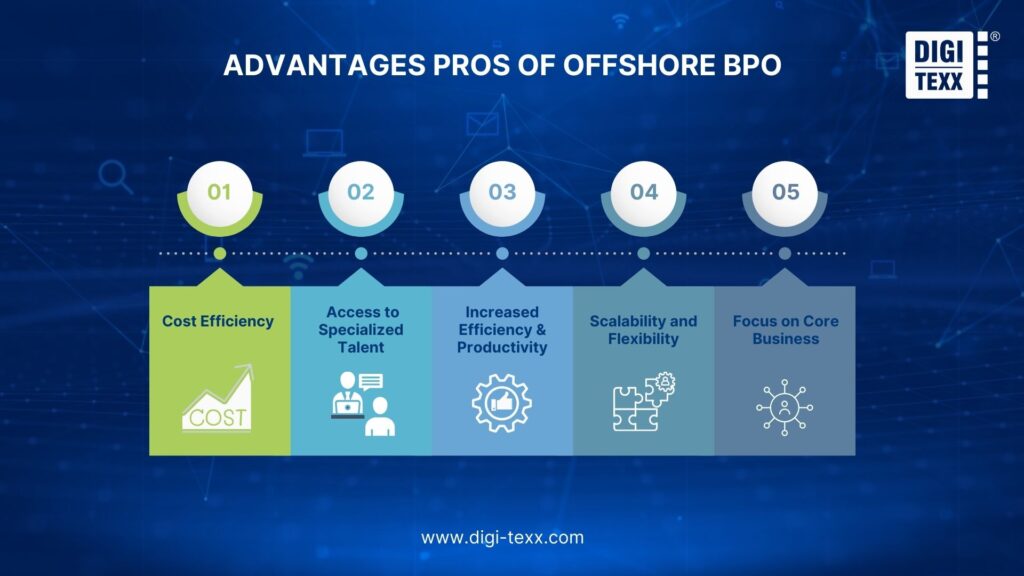
What Are The Advantages Of Offshore Outsourcing?
1. Cost Efficiency – The Key Driver
Perhaps the most enticing aspect of offshore BPO is the potential for substantial cost reductions. Labor costs in many countries are significantly lower than in developed nations, translating to considerable savings on salaries, benefits, and other related expenses. Beyond direct labor costs, offshore BPO can also reduce overhead expenses. Companies can minimize investments in office space, equipment, and utilities, as these are typically handled by the outsourcing provider. Furthermore, some countries offer tax incentives and other financial benefits to attract BPO businesses, further enhancing cost savings.
2. Access to Specialized Talent – Expanding The Diversity
Offshore BPO opens doors to a global talent pool, allowing businesses to access specialized skills and expertise that may be scarce or unavailable locally. Whether you need software developers, data analysts, or customer service representatives with specific language proficiencies, offshore outsourcing can connect you with the right professionals. This access to a wider range of talent enables companies to build high-performing teams and tackle complex projects with confidence. Moreover, by outsourcing non-core functions, businesses can free up their internal teams to focus on their core competencies, the activities that truly drive innovation and competitive advantage.
3. Increased Efficiency and Productivity – Working Around the Clock
Offshore BPO can significantly boost efficiency and productivity. By leveraging different time zones, businesses can establish 24/7 operations, ensuring continuous workflow and faster turnaround times. For example, while your local team is offline, your offshore partners can be working on critical tasks, ensuring seamless progress. Furthermore, specialized BPO providers often have optimized processes, advanced technology, and dedicated resources, leading to improved efficiency and higher productivity levels.
4. Scalability and Flexibility – Adapting to Change
In today’s dynamic business environment, scalability and flexibility are crucial. Offshore BPO provides businesses with the ability to rapidly scale their operations up or down as needed, without the complexities and costs associated with hiring and training new staff. Whether you’re experiencing rapid growth or seasonal fluctuations in demand, offshore outsourcing allows you to quickly adjust your resources and maintain optimal performance. This flexibility is particularly valuable for startups and small to medium-sized businesses (SMBs) that may have limited resources.
5. Focus on Core Business – Staying Ahead of the Curve
By offloading non-core functions to offshore providers, businesses can free up valuable internal resources and focus on strategic initiatives that drive growth and innovation. This allows companies to concentrate on their core business activities, such as product development, marketing, and customer relationship management. By streamlining operations and optimizing resource allocation, businesses can improve their competitive position and achieve sustainable growth.
>>> See more:
- Healthcare BPO Services – Cost Optimization & Improve Care 2026
- What Is A Back Office Service? Examples, Benefits, And Cost In 2026
- Top 10 Data Processing Software For Business 2026 – Best Tool Reviewed
What Are Potential Disadvantages Of Offshoring?
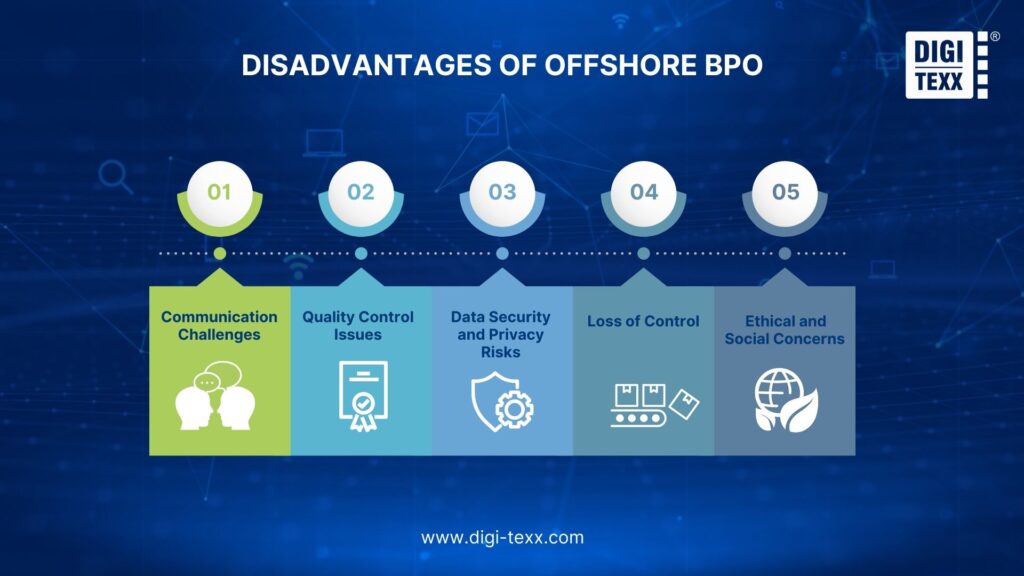
1. Communication Challenges – Bridging the Gap
One of the most significant challenges in offshore BPO is communication. Language barriers can lead to misunderstandings, misinterpretations, and delays. Even with English proficiency, cultural nuances and communication styles can differ significantly, impacting clarity and collaboration. Furthermore, time zone differences can create logistical hurdles, making real-time communication and coordination difficult. These communication challenges can impact project timelines, quality of work, and overall team cohesion.
2. Quality Control Issues – Maintaining Standards
Maintaining consistent quality across different locations can be a challenge. Differences in training, work processes, and quality standards can lead to variations in output. Monitoring performance and ensuring adherence to established quality metrics can be more complex when working with remote teams. Without robust quality control measures in place, businesses may experience inconsistencies in service delivery or product quality, potentially impacting customer satisfaction and brand reputation.
3. Data Security and Privacy Risks – Protecting Sensitive Information
Sharing sensitive data with third-party providers, especially those located in different countries, raises significant data security and privacy concerns. Businesses must ensure that their offshore partners have robust security measures in place to protect against data breaches, cyberattacks, and unauthorized access. Compliance with relevant data privacy regulations, such as GDPR, is also crucial. Failure to address these risks can lead to data leaks, legal liabilities, and reputational damage.
4. Loss of Control – Managing Remote Teams
Outsourcing inherently involves a degree of loss of control over specific business processes. Businesses become dependent on their outsourcing partners and may have less direct oversight over day-to-day operations. This can make it challenging to implement changes quickly or address issues promptly. Maintaining clear communication channels and establishing strong service level agreements (SLAs) are essential for mitigating this loss of control.
5. Ethical and Social Concerns – Responsible Outsourcing
Offshore BPO can raise ethical and social concerns. Businesses must ensure that their outsourcing providers adhere to fair labor practices, provide safe working conditions, and pay reasonable wages. Exploitation of workers in developing countries is a serious concern that businesses must actively address. Furthermore, the impact of offshore outsourcing on domestic employment is a factor that some businesses consider when making outsourcing decisions. Reputable companies prioritize ethical sourcing and responsible business practices.
Mitigating the Risks
While the disadvantages of offshore BPO are real, they can be effectively mitigated with careful planning, proactive strategies, and a commitment to building strong partnerships. Here are some key steps businesses can take to minimize risks and maximize the benefits of offshore outsourcing:
1. Careful Vendor Selection – Choosing the Right Partner
The foundation of a successful offshore BPO lies in selecting the right vendor. Thorough due diligence is essential. Businesses should research potential providers extensively, evaluating their experience, expertise, reputation, financial stability, and security practices. Request references, conduct site visits (if possible), and carefully review their track record. Look for providers that align with your company’s values and demonstrate a commitment to quality, ethical labor practices, and data security.

2. Clear Contracts and SLAs – Setting Expectations
Detailed contracts and service level agreements (SLAs) are crucial for establishing clear expectations and responsibilities. These documents should outline the scope of work, performance metrics, quality standards, data security protocols, payment terms, and dispute resolution mechanisms. Clearly defined SLAs help to minimize misunderstandings, ensure accountability, and provide a framework for measuring performance.
3. Effective Communication Strategies – Staying Connected
Establishing clear and consistent communication channels is essential for overcoming language barriers and cultural differences. Invest in translation services, provide cultural sensitivity training, and establish regular communication protocols, including video conferencing, instant messaging, and project management tools. Designate key points of contact on both sides to facilitate communication and address any issues promptly.
4. Robust Data Security Measures – Protecting Your Information
Protecting sensitive data is paramount. Businesses must ensure that their offshore partners have robust data security measures in place, including firewalls, encryption, access controls, and regular security audits. Conduct thorough security assessments and ensure compliance with relevant data privacy regulations. Establish clear data-sharing protocols and restrict access to sensitive information on a need-to-know basis.
5. Regular Monitoring and Evaluation – Ensuring Performance
Regular monitoring and evaluation are essential for ensuring that offshore providers are meeting performance expectations. Establish clear key performance indicators (KPIs) and track them regularly. Conduct periodic performance reviews, solicit feedback from stakeholders, and address any performance gaps promptly. Open communication and a collaborative approach are crucial for building strong relationships and achieving shared success.
6. Building Strong Relationships – Fostering Collaboration
Offshore BPO is not just a transactional arrangement; it’s a partnership. Invest in building strong relationships with your offshore teams. Foster a culture of collaboration, mutual respect, and open communication. Encourage regular interaction between teams, facilitate knowledge sharing, and celebrate successes together. Strong relationships are the foundation for long-term success in offshore BPO.
>>> See more:
- Construction Invoice Reconciliation: Best Practices, Software & Outsourcing
- Top 10 Outsourced AI Training Data Companies in 2026
- Best Real Estate Image Processing Services 2026: Top 15 Providers
Offshore BPO | Mitigate The Risks And Seize The Opportunities
Offshore BPO presents a complex landscape of opportunities and challenges. As we’ve explored, the potential benefits are significant, ranging from substantial cost savings and access to specialized talent to increased efficiency and scalability. Businesses can leverage offshore outsourcing to streamline operations, focus on core competencies, and achieve a competitive edge in the global marketplace. However, the path to success is not without its potential pitfalls. Communication challenges, quality control issues, data security risks, and ethical considerations must be carefully addressed.
Ultimately, the decision to engage in offshore BPO is a strategic one that requires careful consideration of a business’s specific needs, goals, and risk tolerance. There’s no one-size-fits-all answer. While offshore outsourcing can be a game-changer for some organizations, it may not be the right fit for others. The key lies in conducting thorough due diligence, selecting the right partners, establishing clear contracts and SLAs, and implementing robust risk mitigation strategies.
By carefully weighing the pros and cons, addressing potential challenges proactively, and fostering strong partnerships, businesses can unlock the transformative potential of offshore BPO. It’s about finding the right balance between cost savings and risk management, ensuring that offshore outsourcing becomes a strategic enabler of growth and innovation, rather than a source of unforeseen complications. We encourage you to further research and consult with experts to determine if offshore BPO is the right strategic move for your organization.
Top 7 Offshore BPO Services In USA
Human resources
Outsourcing human resources through offshore BPO has become increasingly popular among businesses. BPO providers can support the entire HR process, from sourcing candidates and conducting interviews to shortlisting applicants and handling payroll management and issue resolution.
In addition, offshore BPO services help streamline the overall hiring process and can provide training for new hires, enabling them to onboard faster and integrate smoothly into the organization.
Finance and accounting
Finance and accounting outsourcing covers key financial functions such as accounts payable and receivable, bank reconciliation, bookkeeping, tax planning, and financial reporting.
Offshore BPO companies often use cloud-based financial systems and automation tools to improve accuracy and efficiency. By adopting these technologies, businesses can make their accounting operations more agile and cost-effective.
Sales
Sales are essential to every business, but many companies lack the resources needed to scale their sales operations effectively. By working with offshore BPO, businesses can gain fresh insights and proven strategies to improve sales performance and drive sustainable growth.
Sales services may include contact and order management, data and promotion management, as well as pricing, configuration, and quoting support.
Customer support
Building strong customer relationships is essential to long-term business success. To improve service quality and responsiveness, many companies choose to outsource customer support through BPO solutions.
Outsourced customer support services typically include handling inbound and outbound calls, responding to customer emails and inquiries, managing customer accounts, and supporting product or service upgrades.
Software development and management
Software development is a complex and resource-intensive process. Many businesses need custom software to improve operations but lack the internal expertise or capacity to manage IT development effectively.
Offshore BPO companies specializing in software development and outstaffing provide access to skilled offshore developers who can support the entire development lifecycle, including analysis and planning, design and prototyping, development and implementation, as well as testing and deployment.
When launching a new software project, businesses often face the choice between outsourcing and outstaffing. Hiring and maintaining an in-house development team can be costly, especially when a project requires multiple engineers or a dedicated team. As a result, many companies choose offshore development teams in regions such as Eastern Europe or Latin America.
Although terms like software outsourcing, outstaffing, and dedicated development teams can be confusing, selecting the right offshore partner helps simplify the process. By working with experienced offshore development teams, businesses can reduce costs, ensure high-quality outcomes, and focus on core business activities while technical experts handle the development challenges.
Data management
Data plays a critical role in modern business operations. It supports better decision-making and helps organizations optimize and improve their processes. BPO providers help businesses collect, organize, manage, and use data more effectively to generate real business value.
Effective data management also enables companies to gain deeper insights into customer behavior, improve products and services, and make more informed strategic decisions.
Marketing
Marketing is one of the most commonly outsourced functions for businesses. From market research and strategy development to content creation and search engine optimization, offshore BPO vendors help companies build effective marketing solutions that attract and convert more customers.
With strong industry expertise, these providers can better analyze each business’s market landscape and develop tailored strategies for individual brands. Many offshore BPO vendors also offer dedicated content marketing specialists who manage and execute all marketing activities efficiently.
Tips For Choosing The Ideal Offshore BPO Companies
Choosing the right offshore BPO companies requires careful evaluation of expertise, working approach, and market reputation. Below are key factors businesses should consider to ensure a successful and long-term outsourcing partnership:
Identify The Area Of Specialization
It is essential to evaluate the service offerings of offshore BPO companies before making a decision. They should specialize in the services you need and have experienced professionals in that field.
For example, a business outsourcing marketing should look for offshore BPO companies that provide skilled content marketing and SEO specialists.
Consider Their Unique Approach
A successful partnership depends largely on the working approach of offshore BPO companies. Before hiring, assess how they identify business needs and customize solutions to meet specific goals.
Their approach should align closely with your business strategy and operational requirements.
Look For Reviews From Previous Clients
Client reviews are a strong indicator of the reliability and performance of offshore BPO companies. Feedback from previous and current clients can reveal service quality, communication style, and experience across different industries.
Why Choose DIGI-TEXX for Offshore BPO Services?
With over 20 years of experience, DIGI-TEXX supports global enterprises with high-quality offshore BPO services, particularly in data processing, finance and accounting, customer support, and back-office operations. The company operates with clearly defined workflows, dedicated project teams, and multi-level quality assurance frameworks that help maintain consistent accuracy and predictable turnaround times across large-scale projects.
What sets DIGI-TEXX apart from other offshore BPO companies is its strong focus on data security and compliance, making it a trusted partner for businesses handling sensitive information. By working with DIGI-TEXX, companies can reduce operational costs, scale teams quickly, and stay focused on strategic growth-without sacrificing quality or control.
>>> See more:
- How to Automate Documentation in 2026: Step By Step Guide
- What are the 6 steps of the data analysis process?
- Top 10 Data Cleansing Companies for Businesses in 2025
Frequently Asked Questions About Offshore BPO
What Is The Difference Between Onshore And Offshore BPO?
The main difference between onshore and offshore BPO lies in cost, quality, and communication. Offshore BPO is more cost-effective and easier to scale, but it may face challenges related to communication, cultural differences, and data security. In contrast, onshore BPO offers higher service quality, better customer experience, and easier regulatory compliance, but at a higher cost.
What Is An Example Of Offshore BPO?
An example of offshore BPO is when a company outsources software development or customer support to a service provider in Asia to reduce costs while maintaining service quality.
Choosing the right outsourcing model is a critical decision that can significantly impact long-term business performance. Understanding the offshore outsourcing pros and cons allows organizations to make informed choices, balancing cost savings, scalability, and efficiency against potential risks such as communication gaps, quality control, and data security concerns.
DIGI-TEXX Contact Information:
🌐 Website: https://digi-texx.com/
📞 Hotline: +84 28 3715 5325
✉️ Email: [email protected]
🏢 Address:
- Headquarters: Anna Building, QTSC, Trung My Tay Ward
- Office 1: German House, 33 Le Duan, Saigon Ward
- Office 2: DIGI-TEXX Building, 477-479 An Duong Vuong, Binh Phu Ward
- Office 3: Innovation Solution Center, ISC Hau Giang, 198 19 Thang 8 street, Vi Tan Ward