


BUSINESS CHALLENGES
Our Client
Our client is a US-based fashion tech startup revolutionizing on-model content. By utilizing Virtual Try-on AI, they enable brands to generate realistic model imagery from a single product photo, bypassing the logistical friction of traditional photoshoots.
Online Shopping Behavior Is Changing
This innovation addresses a critical structural gap in global E-commerce, where apparel return rates have surged to 30-40%, primarily driven by fit and style uncertainty, which are factors that account for 70% of all fashion returns.
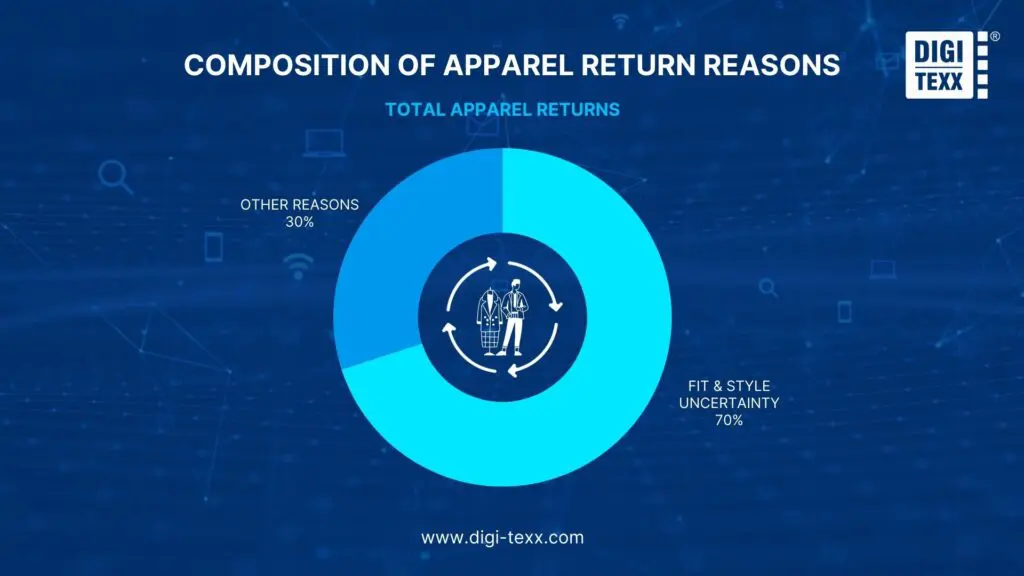
With the Virtual Try-on market projected to reach $48.1 billion by 2030, our client’s platform targets the “Experience Gap” that costs retailers approximately $21 to $24 per returned item. By integrating high-fidelity AI visualization, they empower brands to lift purchase probability by an average of 27% and reduce return volumes by up to 17%, effectively transforming digital browsing into a high-confidence checkout experience[1].
Project Challenges
As global E-commerce scales, the demand for high-volume, automated content has spiked. However, raw AI outputs often fall into the “Uncanny Valley”, appearing almost real but featuring distracting defects that undermine brand credibility.
The client needed a partner to bridge the gap between AI efficiency and high-end fashion aesthetics.
- Generative AI Artifacts & Model Authenticity: AI often produces “noisy” results, such as dry, messy hair and inconsistent skin discoloration on the neck or abdominal areas. Maintaining the model’s true look (features and skin tone) without distortion is vital for brand trust.
- Product Material Accuracy: Matching the specific texture, knit patterns, and intricate lettering exactly to the brand’s original material remains a significant challenge.
- Image Angel Correction: Mapping 2D flat-lay images, which are products photographed flat, onto a dynamic 3D model’s body requires reconstructing natural creases, seams, and complex folds that AI cannot yet automate perfectly
- Detail Completion: Reconstruct any missing or unclear details (edges, seams, complex folds, smudged nail polish, or blurry zippers) for a clean, complete final image.
- Shadow and Lightning Adjustment: AI-generated clothing often lacks realistic interaction with ambient light. We must manually adjust shadows and lighting directions on the neck and body to ensure the garment doesn’t look “floated” or digitally pasted.
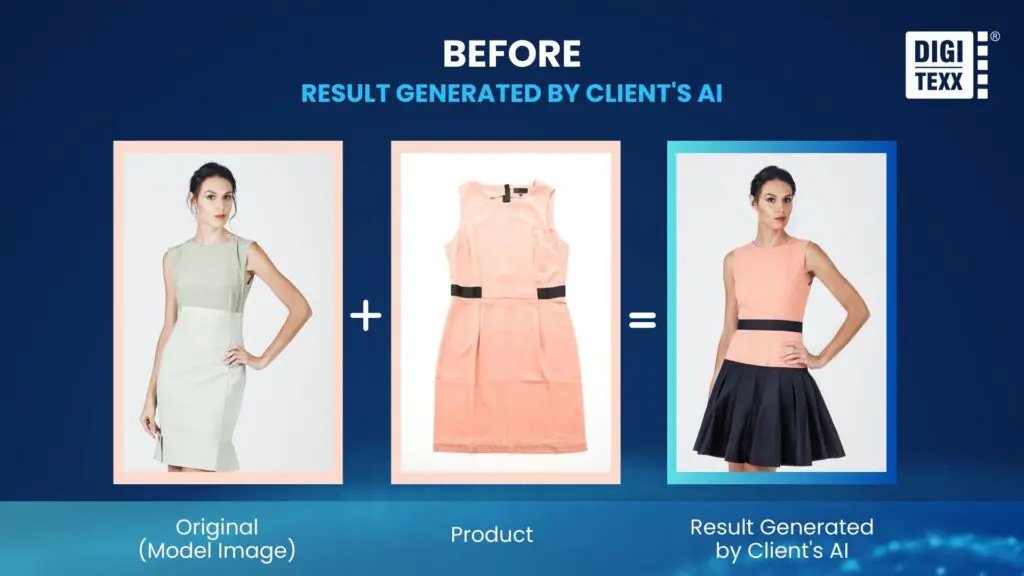
VISUAL ENHANCEMENT SERVICES FOR AI MODEL
DIGI-TEXX applied a hybrid human-in-the-loop Image Processing for enhancing virtual try-on AI Mode
- Implemented rigorous Quality Control (QC) processes to maintain consistent visual accuracy and brand integrity across all fashion assets.
- Utilized Advanced Photoshop skills to rectify complex AI artifacts such as skin discoloration, messy hair, and distorted limbs.
- Aligned 2D product textures with 3D model bodies to ensure precise fabric draping and realistic material representation.
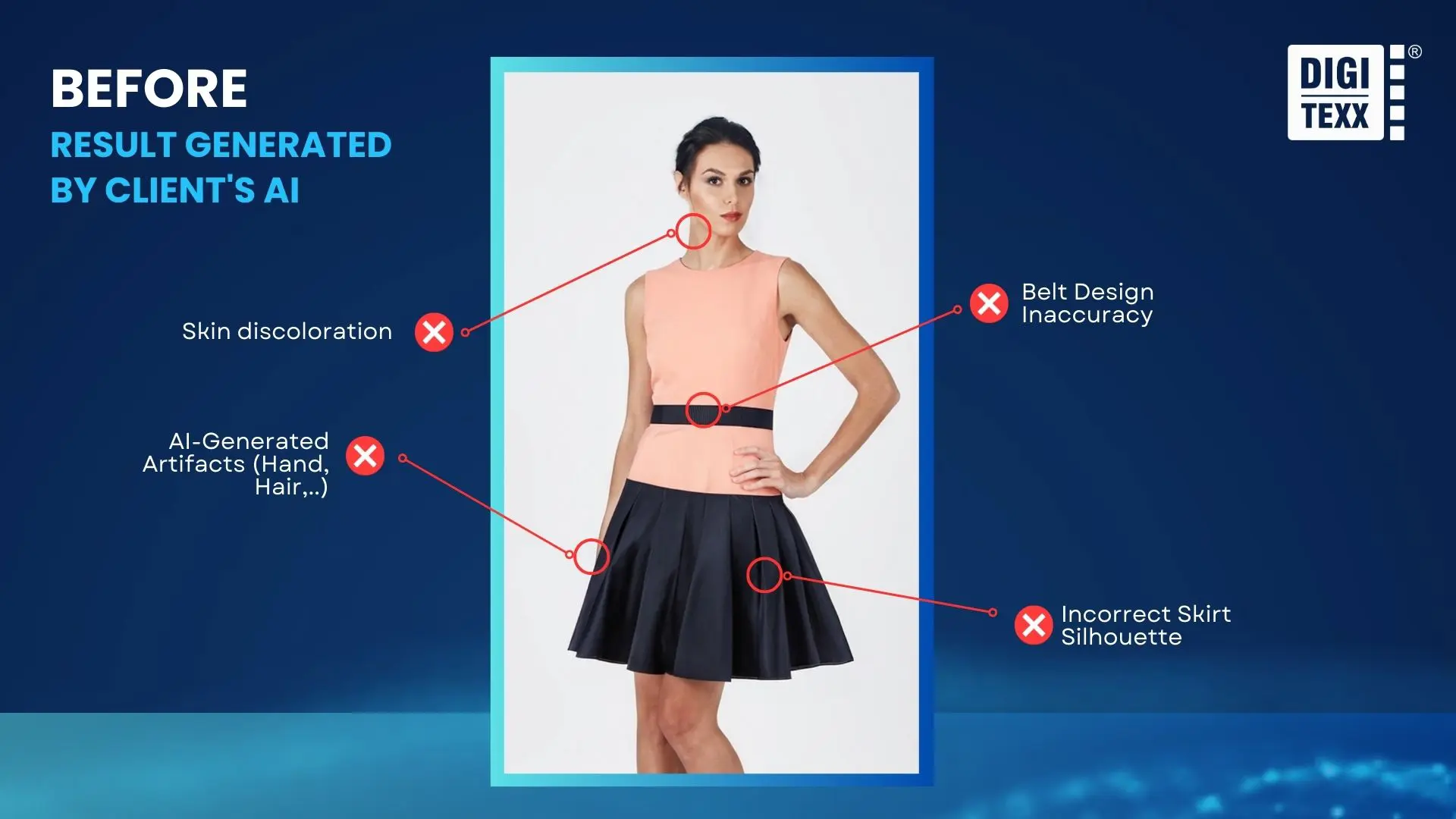
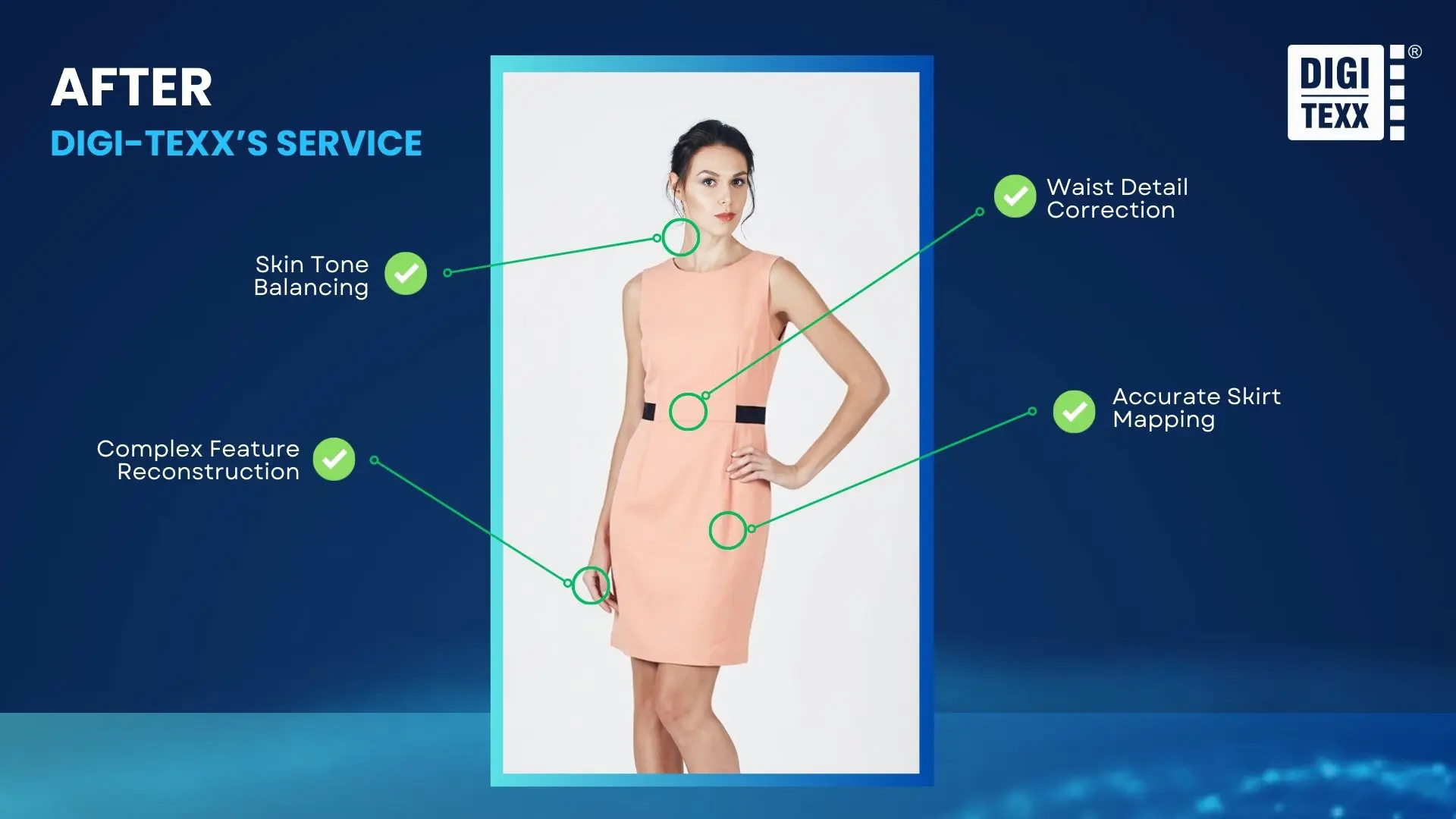
DIGI-TEXX’s image retouching team enhances the AI photo outcomes.
Our process ensured the Image Processing for Enhancing Virtual Try-on AI Model achieved a “Natural & Clean” look, bridging the gap between raw AI outputs and commercial-grade photography.
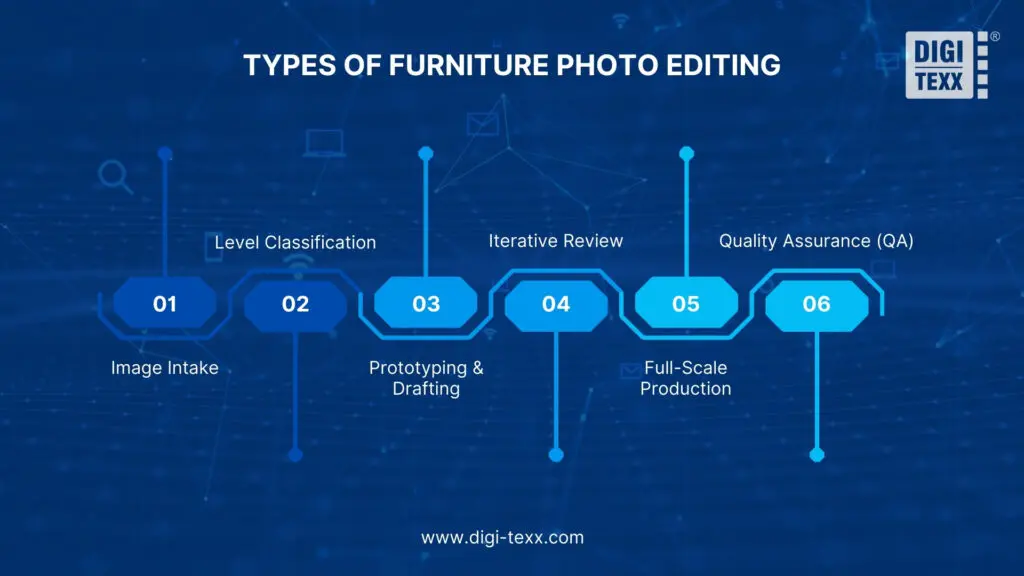
Project scope:
- Image Intake: Receive a comprehensive data package including the original product imagery, model photos, and the raw AI-generated results to establish a clear baseline for comparison.
- Level Classification: Analyze and evaluate the initial AI-generated outputs to classify images into Basic, Standard, or Advanced levels based on garment complexity and the severity of AI defects.
- Prototyping & Drafting: Create a Draft Basic Version for each level to establish quality benchmarks and alignment with the brand’s visual identity.
- Iterative Review: Submit drafts for client feedback; if edits are requested, perform Detailed Processing by level to refine specific elements like lighting or texture.
- Full-Scale Production: Once the prototype is approved, we apply the established standards and advanced techniques, including high-resolution enhancement and shadow correction, to the full package of images.
- Quality Assurance (QA): Conduct a QC Final Check to ensure every image meets the high-resolution and realism standards required for e-commerce.
BUSINESS OUTCOME
- Process 5,000+ images monthly.
- Reduced time-to-market by 60% compared to traditional manual retouching workflows.
- Achieved a 98% client approval rate on first-round drafts, ensuring AI-generated content is indistinguishable from professional photography.