
Customer experience outsourcing (CX outsourcing) puts a specialist partner in charge of defined customer interactions, from routine support to selected onboarding or retention work. It can help when your team cannot cover demand, languages, or service hours, but a contract alone will not improve the experience. The right decision depends on which cases the partner can actually resolve and how well its agents share context with your internal team. This guide compares ten CX outsourcing companies, explains when outsourcing makes sense, and gives you practical criteria for choosing a provider and measuring the result.

What Is Customer Experience Outsourcing?
Customer experience outsourcing is a contracted arrangement in which an external team handles defined customer interactions on a brand’s behalf. The provider may recruit and train agents, plan shifts, operate channels, audit conversations, and report results. The client still owns product policy, brand standards, customer data permissions, and decisions beyond the agents’ authority. A workable scope names the case types, hours, languages, systems, response commitments, and escalation owners. For example, an ecommerce team might delegate order-status chats and weekend returns questions while retaining high-value refunds and fraud decisions internally.
For example, an online retailer might outsource evening chat about orders while keeping refunds above a set value with its internal team. Another company might delegate phone, email, and chat support through one shared help desk. In both cases, the contract should define the channels, hours, languages, case types, decision limits, escalation owners, and access to conversation history.
CX Outsourcing Vs. Customer Service Outsourcing
Customer service outsourcing typically covers reactive inquiries and problem resolution. CX outsourcing can also include pre-purchase guidance, onboarding, retention, feedback capture, and the handoffs between them. The terms overlap in the market: judge a proposal by its actual scope, accountability, and customer outcomes rather than the label on the service.
CX Outsourcing Vs. Traditional Call Center Outsourcing
A call center primarily handles telephone contacts. A broader CX operation may coordinate calls, email, live chat, messaging, social inquiries, and related back-office work. Multiple channels alone do not create a joined-up experience: agents need the right customer history, current guidance, and a clear path for cases they cannot resolve. For a closer look at channel delivery, see DIGI-TEXX’s contact center services.
10 Customer Experience Outsourcing Companies In 2026
The ten providers below take different approaches to outsourced CX. Some combine operations with consulting and technology; others specialize in multilingual delivery, digital products, trust and safety, or flexible staffing for peak demand. Each profile covers actual service areas, a likely use case, and questions to test before contracting. The selection is an editorial shortlist based on published services, not an independently measured performance ranking.
1. DIGI-TEXX
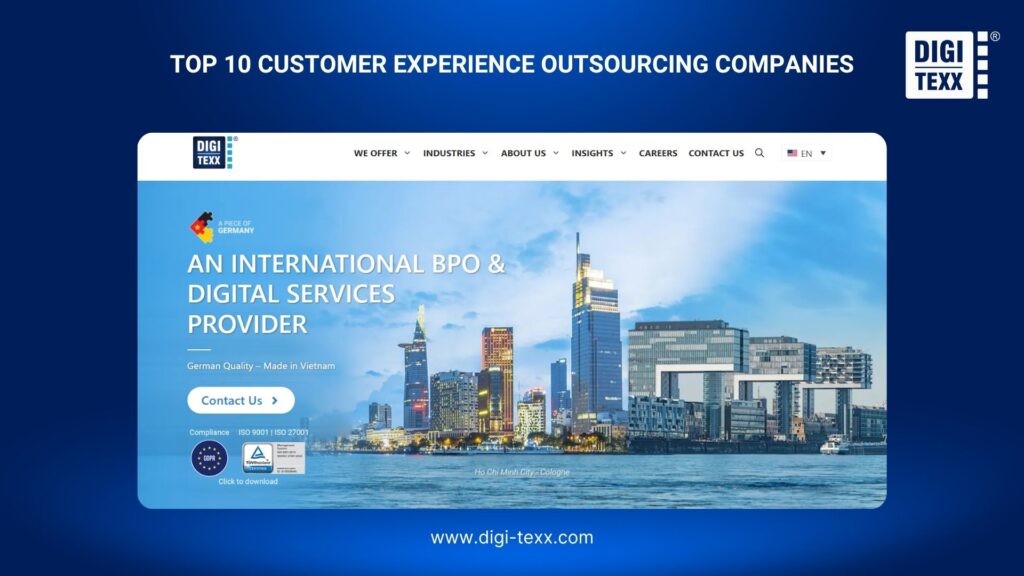
DIGI-TEXX is a Vietnam-based outsourcing provider with customer support, contact center, live chat, a help desk, and business support services. Its customer support pages describe 24/7/365 operations and processing capacity across more than 30 languages. Those are company-level capabilities; the actual languages, hours, and staffing available to a client must be specified in the agreement.
Service Offerings
- Customer support and contact center services: DIGI-TEXX describes inbound assistance through phone, email, live chat, and messaging. A program can cover common questions such as account access, order or service status, and complaints, with the actual case types, languages, service hours, and agent authority set in the client’s scope of work.
- Connected operational services: Its help desk can address technical support needs, while business support can handle verification and other back-office tasks that sit behind a customer response. DIGI-TEXX also offers content moderation as a separate service for digital platforms. Buyers should specify how cases move between these teams and who gives the final update to the customer.
Pros
- The service mix can connect the customer-facing team with back-office processes instead of treating every inquiry as an isolated ticket.
- A potentially relevant option for companies seeking multilingual support or after-hours coverage from a Vietnam-based delivery operation.
Cons Or Considerations: Ask for a workflow demonstration using your CRM, including an order or account issue that needs an internal handoff. Confirm agent training, named language coverage, response targets, data permissions, and how quality is reported.
2. TTEC
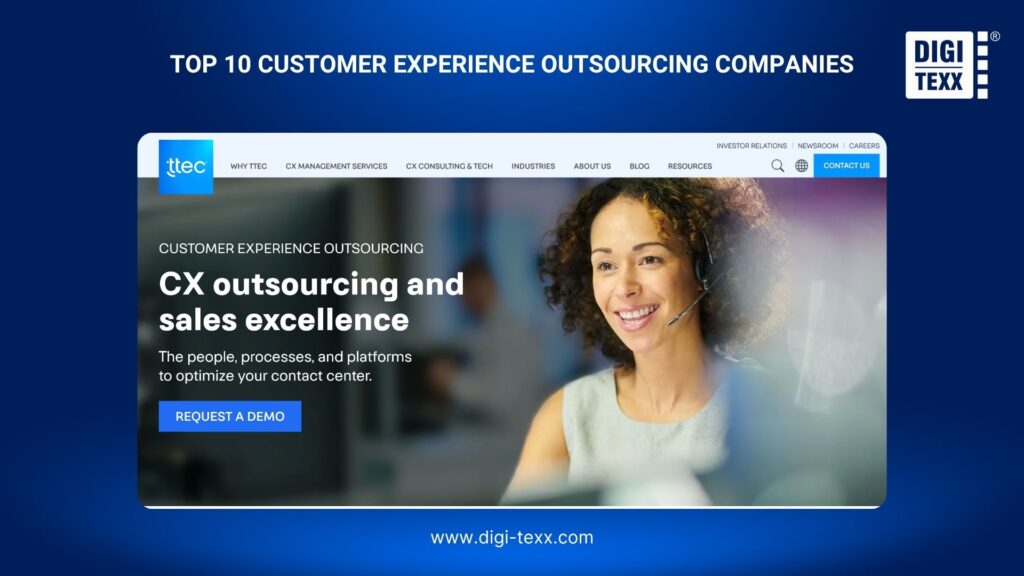
TTEC brings together CX outsourcing and TTEC Digital’s technology and consulting work. Its published portfolio covers customer care, technical support, sales, AI operations, analytics, and trust and safety. That breadth is relevant when a company needs to redesign its service model as well as staff the day-to-day operation.
Service Offerings
- Managed customer care and technical support: TTEC operates customer-facing teams for inquiries, troubleshooting, and service issues across voice and digital interactions. The outsourcing scope can include staffing, training, workforce management, and quality monitoring, which matters when a buyer needs an operating team rather than individual agents to fill shifts.
- CX technology and transformation: TTEC Digital offers consulting, CRM and contact center technology, analytics, and AI-related capabilities alongside TTEC’s managed operations. A buyer redesigning a fragmented customer journey can evaluate both the service team and the tools that route contacts, surface prior history, support agents, and report outcomes.
Pros
- Can address staffing, journey design, and technology integration as related parts of a larger CX program.
- Useful to evaluate for complex operations with multiple customer segments, channels, or markets.
Cons Or Considerations: A buyer with only one small, stable queue should compare the scope and total commercial commitment with a narrower specialist. Ask which tools and capabilities are included in the actual contract.
3. Concentrix
Concentrix provides global customer experience operations and services spanning customer care, digital engagement, analytics, and experience optimization. It highlights the role of fragmented data, inaccessible knowledge, and slow back-office decisions in poor customer experiences, an important distinction for buyers whose agents are answering quickly but customers still need to contact them again.
Service Offerings
- Multichannel customer operations: Concentrix supports customer interactions across voice and digital channels for different industries. Depending on the program, the work can span routine service requests, product questions, or more involved cases that require a transfer. Buyers should evaluate whether agents can see previous contacts and apply the same policy across channels.
- Experience optimization and analytics: Concentrix also describes services that analyze customer feedback and operational data to find causes of effort and repeat contacts. This is useful when delays originate in inaccessible knowledge, disconnected systems, or slow back-office decisions; improving the customer journey may require workflow changes as well as more agents.
Pros
- Broad service and geographic coverage may suit high-volume, multi-market operations.
- The emphasis on journey and process issues is relevant when lowering average handle time alone has failed to improve resolution.
Cons Or Considerations: Request a concrete plan for knowledge ownership, CRM integration, local language delivery, and escalation across teams. A global portfolio does not establish what the assigned account team will deliver.
4. Teleperformance
Teleperformance, also branded TP, offers customer service and technical support at global scale. Its services combine agents, processes, and AI, with multilingual delivery across markets. A large footprint can help when demand spans regions or time zones, provided staffing and quality governance are defined for the particular account.
Service Offerings
- Customer care and technical assistance: TP offers teams for everyday service questions as well as support that helps customers install, use, or troubleshoot products and digital services. For technical work, define the levels of support the external team can provide and the diagnostic details it must capture before passing an issue to specialists.
- Global and multilingual delivery: TP describes language support across markets and service through voice and digital channels, with related back-office capabilities. For a specific engagement, buyers should verify which languages have staffed coverage by shift, how region-specific policies are taught, and whether an overnight agent can reach an internal decision maker.
Pros
- A candidate for organizations that need large staffing pools and coordinated international coverage.
- May support both customer care and technical troubleshooting within a wider outsourcing relationship.
Cons Or Considerations: Check the proposed delivery sites, languages by shift, surge capacity, training time, security controls, and who owns a case after an escalation. Published scale does not guarantee capacity in a specific language or time window.
5. Alorica
Alorica is a CX and BPO provider offering customer care alongside sales, retention, and back-office work. Its mix can appeal to businesses that want to coordinate service inquiries with commercial or account-lifecycle interactions, but those workflows require different decision rules and success measures.
Service Offerings
- Customer care and technical support: Alorica’s CX operations cover inbound customer questions and product or service assistance across contact channels. The exact mix depends on the account, so the proposal should state which requests agents may resolve, which tools they can access, and where more complex or regulated issues are escalated.
- Sales, retention, and back-office work: Alorica also offers services for acquisition and existing-customer engagement, alongside operational processing. Those functions can sit next to support when a customer is considering a change or cancellation, but the client should set offer limits and separate service-quality measures from sales targets.
Pros
- A broader range of customer-lifecycle services can reduce handoff gaps when the scope is designed well.
- Worth comparing for businesses whose support operation also handles account changes or retention conversations.
Cons Or Considerations: Separate service-quality metrics from sales or retention targets. Define which offers agents may make, how complaints are escalated, and whether the same team handles support and outbound activity.
6. FlairsTech
FlairsTech describes its offer as managed CX rather than a simple supply of agents. Its published services include omnichannel and multilingual support, quality assurance, performance management, and analytics. This model is relevant when a buyer needs a provider to run the operational routines around customer interactions, not merely take over the queue.
Service Offerings
- Omnichannel and multilingual care: FlairsTech describes support through voice, chat, email, and social channels, with language and around-the-clock options for managed programs. These channels are most useful together when an agent can see previous conversations and continue a case instead of requiring the customer to explain it again.
- Managed operations and reporting: Beyond answering contacts, FlairsTech describes quality assurance, performance management, and analytics. Buyers can request the proposed QA rubric, conversation-sampling method, coaching cycle, and weekly report to see how the team identifies inconsistent answers and recurring reasons customers contact support.
Pros
- Managed training and QA routines can help make service more consistent across channels or peak periods.
- Reporting and customer-feedback analysis can reveal repeat-contact causes that need a product or policy fix.
Cons Or Considerations: Confirm which languages and hours are staffed for your program, how QA samples are selected, what the report includes, and who updates the knowledge base after a policy change.
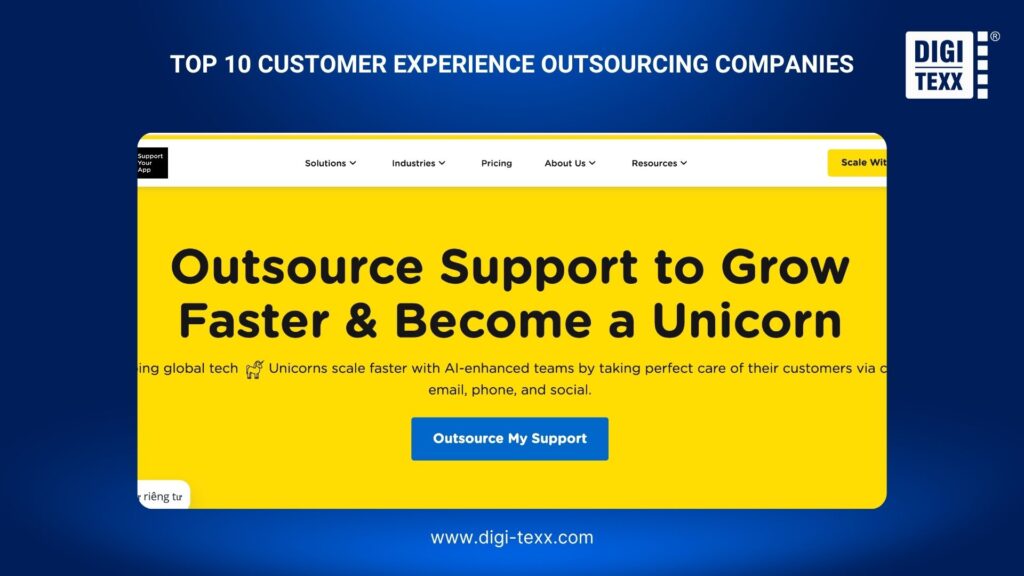
7. SupportYourApp
SupportYourApp focuses on outsourced support for technology products and digital businesses. It describes multilingual agents, help desk setup, workflow design, and AI-assisted support. That combination is particularly relevant when a company is establishing support operations or expanding a software product into new markets.
Service Offerings
- Customer and technical support for digital products: SupportYourApp provides agents across chat, email, and voice, with multilingual coverage for technology-focused clients. The scope may include account and billing questions as well as product troubleshooting; a useful test is whether agents document the steps already taken and identify when a product specialist is needed.
- Support infrastructure and automation: The company also describes help desk setup or migration, support workflow design, and AI tools that assist agents or handle routine requests. A buyer starting from a fragmented inbox should ask how tickets, customer history, knowledge articles, and bot-to-human transfers will work in its existing systems.
Pros
- Product-oriented support design can be useful when agents need to troubleshoot, document reproduction steps, and work with engineers.
- A potentially good fit for digital businesses with changing features and a fast-moving knowledge base.
Cons Or Considerations: Run a pilot with real technical edge cases. Test whether agents can distinguish a usage question from a defect, capture useful diagnostic information, and route the issue to the right product owner.
8. TaskUs
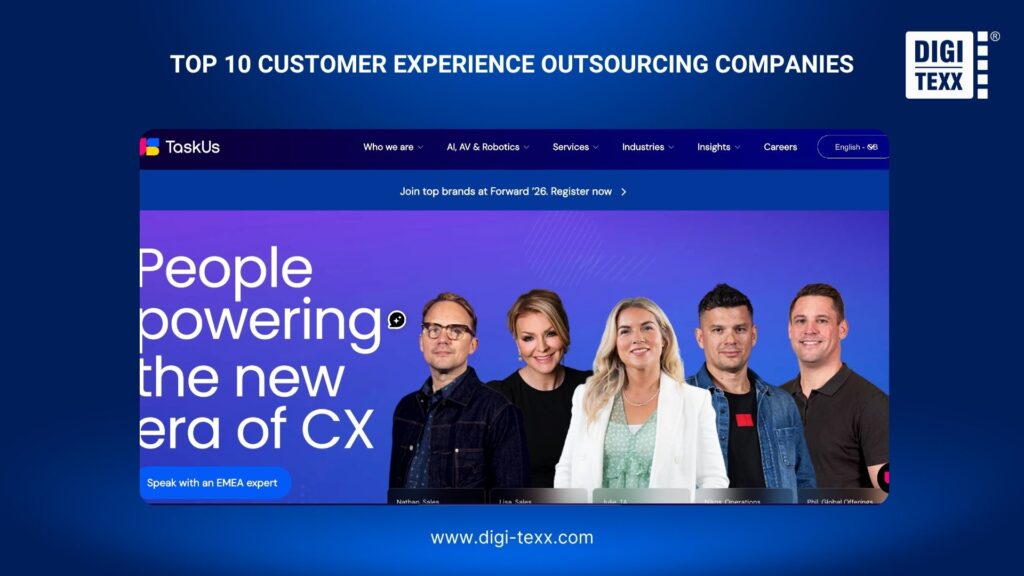
TaskUs works with digital businesses across customer support, content moderation, and trust and safety. This scope differs from traditional contact center work: an account complaint, suspicious activity, or harmful content report may involve both customer communication and a policy decision.
Service Offerings
- Digital customer experience: TaskUs provides outsourced support for online products and platforms, including account questions and service interactions handled by human teams and technology-supported workflows. Its model may be relevant when support volume changes quickly or customers interact across apps, communities, and other digital touchpoints.
- Trust and safety operations: TaskUs also handles content moderation and platform safety workflows. These services can intersect with customer care when a user disputes an account action or reports harmful content. The client should document policy authority, review and appeal routes, and the wording an agent may share about a moderation decision.
Pros
- The connection between support and trust and safety may suit platforms with user-generated content or account-risk cases.
- Specialized workflows can help separate routine assistance from sensitive reviews.
Cons Or Considerations: Specify who owns policy interpretation, appeals, high-risk escalations, and customer updates. Support agents should not infer or override moderation decisions outside their authority.
9. Foundever
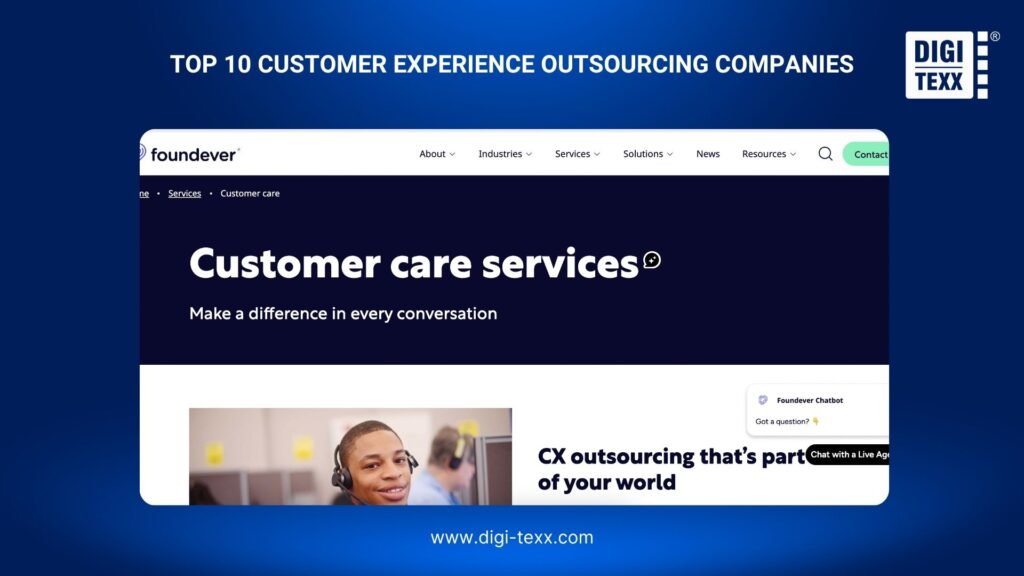
Foundever provides customer care, technical support, and multilingual services through a global delivery network. Its current site describes support in more than 60 languages and integration between self-service and human-assisted channels. That makes it a useful comparator for businesses whose customers move between automated answers and live agents.
Service Offerings
- Customer care and technical support: Foundever offers frontline assistance across voice and digital channels, including product, account, and service issues. The company also describes multilingual support, so a global buyer can compare whether the proposed delivery design provides consistent service in the languages and markets its customers actually use.
- Multilingual and connected journeys: Foundever describes language hubs and the transition from automated or self-service interactions to live agents. That handoff should carry the customer’s question, steps already completed, and relevant account context, otherwise automation can add a new step without reducing the effort needed to resolve the issue.
Pros
- Broad language coverage can help consolidate support across markets.
- Explicit attention to transitions from automation to live support fits a common source of repeat contacts.
Cons Or Considerations: A large global capability still needs to be translated into a specific staffing and localization plan. Ask which languages are supported on each shift and how the agent receives the customer’s prior bot interaction.
10. Liveops
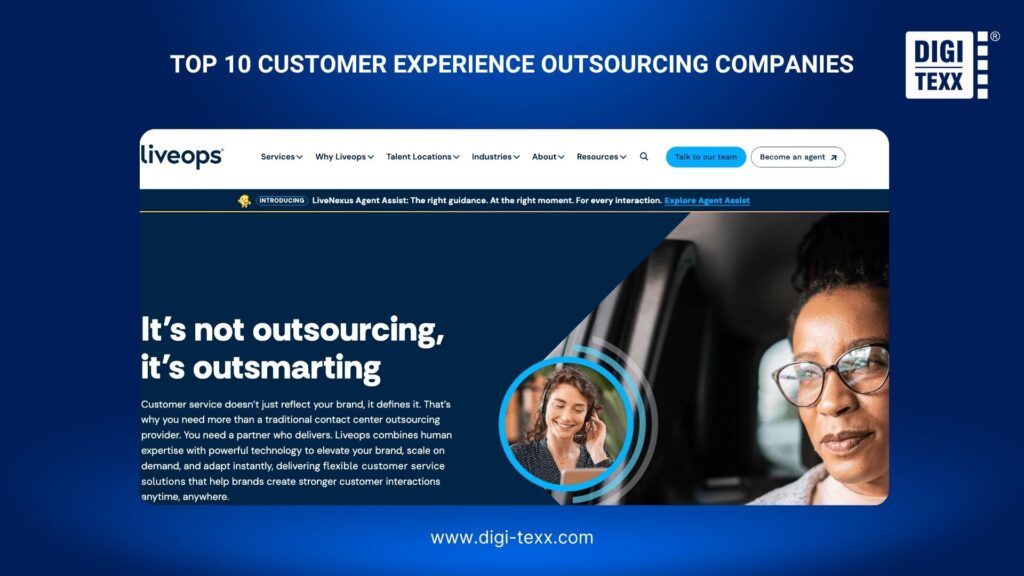
Liveops uses a virtual contact center model built around certified independent contractor agents. Its current service description emphasizes flexible capacity for seasonal demand, recall events, and unexpected call surges. Inbound voice remains its largest channel, although it also describes chat, email, and back-office support.
Service Offerings
- Virtual contact center support: Liveops connects clients with a network of certified independent contractor agents for customer service. It describes voice as its largest channel by volume, alongside chat, email, and some back-office work. Buyers should confirm which channels, skills, and service windows the proposed agent pool will actually cover.
- Flexible capacity for demand spikes: Liveops highlights seasonal peaks, recall events, and unexpected surges as use cases for its virtual model. A buyer with uneven volume can ask how quickly capacity can be added, what training agents complete before a surge, how quality is checked, and whether pricing reflects productive time or reserved coverage.
Pros
- The operating model can suit a business with pronounced peaks that does not need the same headcount all year.
- Virtual delivery offers a distinct alternative to a fixed contact center team.
Cons Or Considerations: Check how the proposed agent pool is trained and retained for your brand, which channels are actually available at the required hours, and how performance holds up when volume changes sharply.
How Should You Compare These Providers?
Start by grouping your recent customer inquiries by reason, channel, language, time of day, and complexity. Then, give each provider the same three to five representative cases, including a routine inquiry, a repeat contact, and an exception that requires internal approval. Ask each provider to demonstrate how agents access customer history, deliver approved responses, handle escalations, and report results.
When comparing providers, look beyond the initial cost. Evaluate total operating costs alongside resolution rates, CSAT, and QA results. A lower-cost interaction has limited value if customers need to contact you again to resolve the same issue. Before signing a contract, also review minimum volume commitments, setup and training fees, peak-volume pricing, and data access requirements.
Which Parts Of The Customer Journey Can Be Outsourced?
Start with interactions that are frequent, documented, and measurable. Map the customer’s goal and the owner of the next step, not just the channel where a conversation begins. The following examples show what a CX partner can handle across the journey and when an internal specialist must take over.
Pre-Purchase Inquiries And Onboarding
A partner can answer approved product questions, help customers create accounts, or guide first-time users through setup. If a customer encounters a product defect, the agent logs the steps already tried and passes the case to your technical owner. Product promises, discounts, and unusual exceptions remain subject to your approval.
Ongoing Support Across Voice And Digital Channels
Routine order updates, account questions, live chat, email tickets, and calls can sit with an external team. If a customer starts on chat and later calls, the next agent should see the earlier conversation and its status. Ask the provider to demonstrate this handoff in the tools you actually use.
Related DIGI-TEXX services:
Issue Resolution, Escalation, And Retention Support
Give agents authority to resolve routine issues within written limits. They might explain a standard billing policy, but route a disputed charge to an internal specialist with the customer’s history and actions taken. If the partner handles cancellation or retention requests, specify which offers agents may make and when an account owner must intervene.
Customer Feedback And Back-Office Handoffs
Agents can tag repeated complaints, summarize their causes, and send them to product or operations owners. For an order awaiting verification, the support team needs a named back-office contact and a status update it can share with the customer. Otherwise, outsourcing only moves the queue without resolving the underlying problem.
Alt text: Four customer experience touchpoints covering pre-purchase, everyday support, exceptions, and feedback
Four customer journey touchpoints that can be supported through a defined CX outsourcing workflow (Illustration created for DIGI-TEXX)
Related DIGI-TEXX services:
When Does Customer Experience Outsourcing Make Sense?
Customer experience outsourcing makes sense when a sustained service gap has a clear operational cause: customers wait too long, demand spikes overwhelm staffing, needed languages, or service hours are unavailable, or training new agents takes longer than the business can absorb. Examine contact reasons before buying capacity. If a broken checkout, confusing billing rule, or product defect drives the volume, fix that cause alongside any staffing change. A good partner can surface recurring friction but cannot change your product or policies on its own.
Demand Outpaces Response Capacity
Look at at least several representative weeks of contacts, broken down by hour, channel, issue, and outcome. A rising queue by itself is not enough evidence: compare first response time, repeat contacts, abandoned calls, and the share of cases awaiting internal action. If demand is concentrated in evenings or seasonal peaks, a flexible external team may fill a real coverage gap. If contacts spike after a broken checkout or confusing policy, fix that cause first; staffing up would simply process more preventable requests.
Customers Need More Service Hours Or Languages
Map when customers actually contact you and when their issue must be resolved, not just when an agent can answer. An overnight team can explain an order status, but a payment dispute may require an internal approver who is offline. In an RFP, specify volumes by hour and language, target wait times, and escalation coverage. Ask whether multilingual support means dedicated native-language agents on every shift, scheduled coverage for high-demand periods, or translation assistance. These are materially different experiences for customers.
Quality Varies By Channel Or Peak Period
Uneven quality often appears at channel transitions: an email agent gives one policy answer, while a phone agent gives another, or a customer repeats a complaint because the previous contact was never logged. Review a sample of low-scoring conversations and the associated repeat contacts before blaming individual agents. An outsourcing partner may improve consistency through common training, knowledge management, and calibrated QA. But your business must approve a single policy and update it promptly whenever products or rules change.
Hiring And Training Cannot Keep Pace
A support operation needs more than agent headcount. Recruitment, training, scheduling, coaching, knowledge-base maintenance, and turnover coverage consume internal time. If those tasks repeatedly delay service expansion, a managed provider may help. Estimate how long agents need to become proficient, how often your product changes, and which internal specialists will answer exceptions. A vendor’s promised launch date is only useful if the proposed team can pass realistic practice cases before taking live contacts.
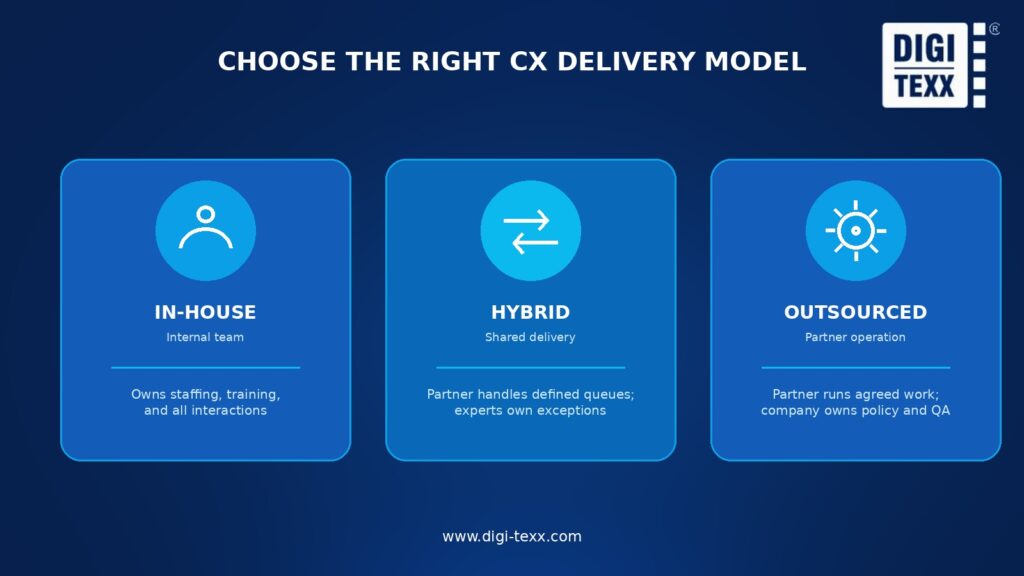
Keep the work in-house when your existing team meets customer needs reliably, demand is low enough for effective self-service, or most cases require sensitive judgment and privileged access. Use a hybrid model when routine cases are well documented but exceptions need internal specialists. A managed partner fits repeatable work at a scale that justifies training and oversight. Compare the full cost of each option, including recruitment, training, systems, supervision, coverage, and internal escalation time. A lower cost per contact is a poor saving if customers must return to get an answer.
| Model | Best fit | Internal responsibility |
| In-house | Complex, sensitive, or strategic cases | Staffing, tools, training, and QA |
| Outsourced | Repeatable, measurable work at steady volume | Policy, data, governance, and escalations |
| Hybrid | Mixed complexity or variable demand | Shared handoffs and ownership rules |
How Do You Choose the Right CX Outsourcing Model?
Choose the delivery model around your contact volume, case complexity, need for control, and existing systems. The options below can be combined: for example, a dedicated team can handle one channel in a hybrid operation.
Fully Managed Vs. Hybrid Operations
In a fully managed arrangement, the provider runs recruitment, scheduling, training, supervision, and QA against an agreed scope. Your business still approves policies, access, and exceptions and reviews performance. A hybrid model keeps complex or sensitive cases with internal specialists while routing routine inquiries, selected channels, or off-hours contacts to a partner. For either model, write a handoff rule that says who accepts a case, how quickly, who updates the customer, and when the case returns. Without that rule, each team can meet its own SLA while the customer remains unresolved.
Dedicated Vs. Shared Teams
A dedicated team works primarily on your brand and is easier to train on a complex catalog, regulated workflow, or specialized tone. A shared team can be more economical for lower or fluctuating volumes, but may need stricter knowledge checks and clear priority rules during simultaneous client peaks. Compare pricing on the same forecast: base staffing, training and ramp-up, supervision, weekend or night premiums, systems, overtime, and changes in volume. Ask what happens when actual contacts are below or above forecast and whether you pay for staffed time, handled contacts, or resolved outcomes.
Single-Channel Pilot Vs. Omnichannel Support
A single channel, time window, or issue type gives you a manageable pilot and a baseline for comparison. Expand to several channels once agents can retrieve the same customer context and apply consistent policy. If your workflows and reporting are already mature, a broader launch can be tested, but should still have staged checkpoints.
Human Agents, Self-Service, And AI-Assisted Workflows
Self-service and AI can deflect simple, repeatable questions, suggest approved answers, route requests, or summarize the conversation for a human agent. Ask where automation ends: can customers reach a person, does the agent see the bot’s history, and who checks inaccurate or inappropriate responses? Compare resolution and repeat contacts, not only containment or time saved. Automation is valuable when it removes effort from the customer as well as the support team.
What Are The Benefits And Risks Of CX Outsourcing?
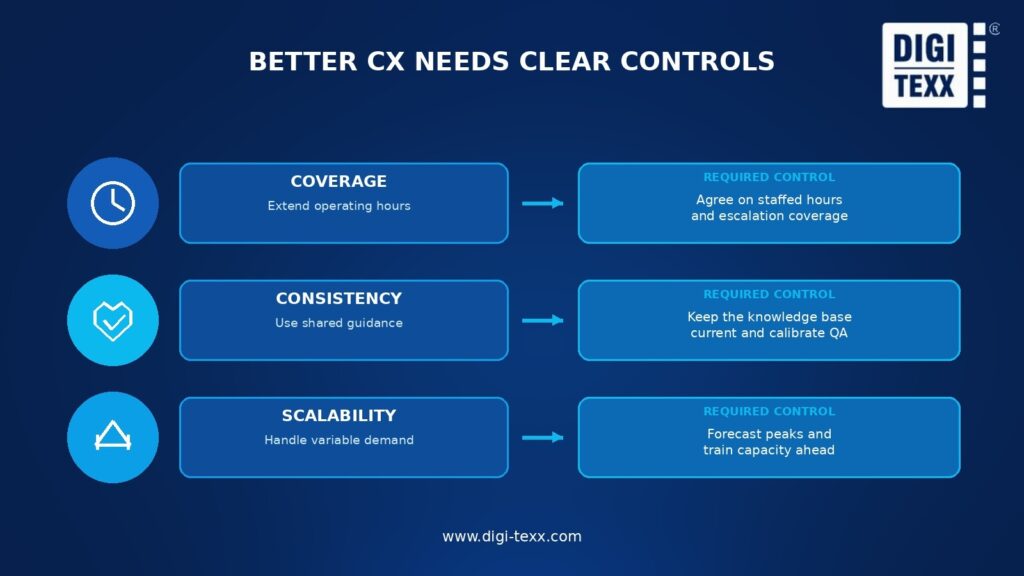
A CX partner can extend hours, add language coverage, and scale staffing for launches or seasonal peaks. Specialized recruitment, training, analytics, and workforce planning may be useful when building those capabilities internally would take too long. These are potential benefits, not guaranteed outcomes: coverage requires enough trained agents; consistency requires a current knowledge base and shared quality standards; and internal teams gain time only if the partner can resolve its assigned cases. Review customer outcomes and total operating cost together.
Common Risks: Brand Mismatch, Fragmented Data, And Weak Handoffs
The clearest failure is a customer who repeats the same problem after moving from chat to phone, then waits for an internal team that never received the case. Other risks include inaccurate advice, an unfamiliar brand voice, weak protection of customer data, and hidden charges for training, overflow, or changes in volume. Ask each provider to demonstrate the actual handoff, access controls, quality review, and pricing rules rather than accepting a general promise of ‘omnichannel’ service.
Controls That Reduce Those Risks
Turn brand voice and accuracy into observable controls. Provide examples of correct and unacceptable answers, a single owner for policy changes, restricted access by agent role, and a QA rubric covering factual accuracy, resolution, tone, and compliance. A transferred case should carry the issue, customer history, steps already taken, assigned owner, and next update time. Review failed cases together each week and trace whether the cause was training, missing information, a system limitation, or an internal decision delay. Audit a sample of access logs and reconcile invoices with the agreed staffing and completed work.
How Do You Evaluate A CX Outsourcing Partner?
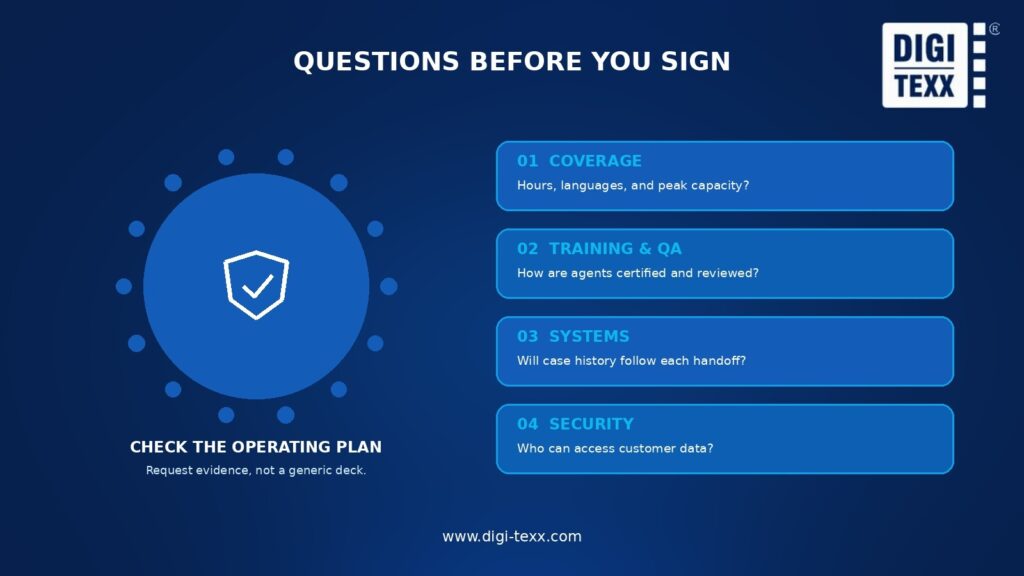
Give every shortlisted CX outsourcing partner the same contact mix, peak forecast, language needs, and sample conversations. Then compare demonstrations rather than slide decks: have an agent locate customer history, answer a routine inquiry from the approved knowledge base, escalate an exception, and show the report a manager would receive. Ask how agents are hired and certified, how policy changes reach every shift, whether the provider can work inside your CRM, how data access is limited, and which outcomes from comparable programs can be shared. A provider list is a starting point; fit is established through the proposed team and a measured pilot.
- Coverage: Which channels, hours, and languages will be staffed, and what changes during a peak?
- Training: Who owns the knowledge base, how are agents tested, and how are policy changes communicated?
- Systems: Will agents work in our CRM or help desk, and can they see prior interactions across channels?
- Data access: Which customer fields can each role see, and how are access and incidents reviewed?
- Escalations: Who owns urgent and unresolved cases, with what response time and customer update?
- QA and reporting: What conversations are sampled, how are reviewers calibrated, and what will the weekly report show?
- Relevant experience: Can you walk us through a comparable workflow and its measured results?
- Commercial terms: What is included in the fee, what costs extra, and what happens if volume changes?
- Request a sample scorecard, escalation map, weekly report, and draft scope of work before comparing bids. Treat provider rankings as a shortlist for further evaluation, not proof that a particular provider fits your customers.
Related DIGI-TEXX services:
Which KPIs Show Whether Outsourced CX Is Working?
Before launch, record baseline performance for each queue and agree on exactly when a case counts as resolved. Segment results by issue type, channel, language, and service hours. An overall average can look healthy while one customer group waits much longer or returns repeatedly for the same problem.
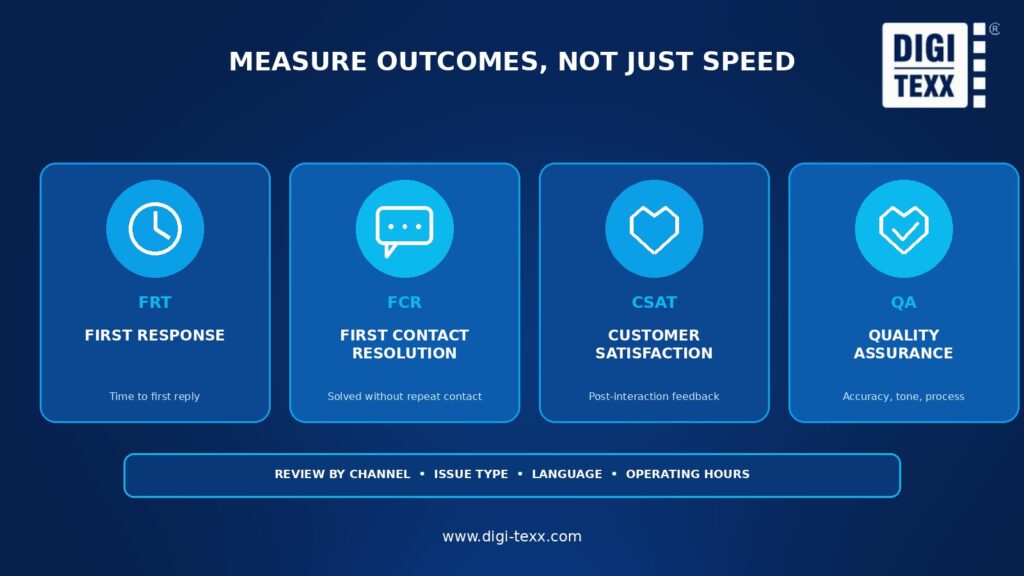
Track speed alongside outcomes. First response time measures the initial reply; first contact resolution tests whether the customer needed to return for the same issue. Customer satisfaction (CSAT) reflects survey responses, so also monitor who responds and whether low-volume queues have enough responses to interpret.
Resolution time should include the entire case, including time spent waiting on a handoff. Review escalation rate with transfer quality: a low rate is not good if agents retain cases they cannot solve. Calibrate QA reviewers on accuracy, tone, and process; calculate cost per genuinely resolved interaction using the agreed total operating cost.
Use the scorecard below as a starting point, then set targets from your baseline and service promise. Investigate trade-offs, such as faster replies with more repeat contacts, instead of rewarding one metric in isolation.
| KPI | What it tells you | Review |
| First Response Time | Speed of initial reply by channel | Weekly |
| First Contact Resolution | Cases solved without repeat contact | Weekly |
| CSAT | Customer feedback after interaction | Weekly/monthly |
| Resolution time | Time to solve comparable cases | Weekly |
| Escalation rate | Share transferred to specialists | Weekly |
| QA score | Accuracy, tone, and process compliance | Weekly |
| Cost per resolved interaction | Spend relative to completed work | Monthly |
How To Launch CX Outsourcing Without Disrupting Customer Service
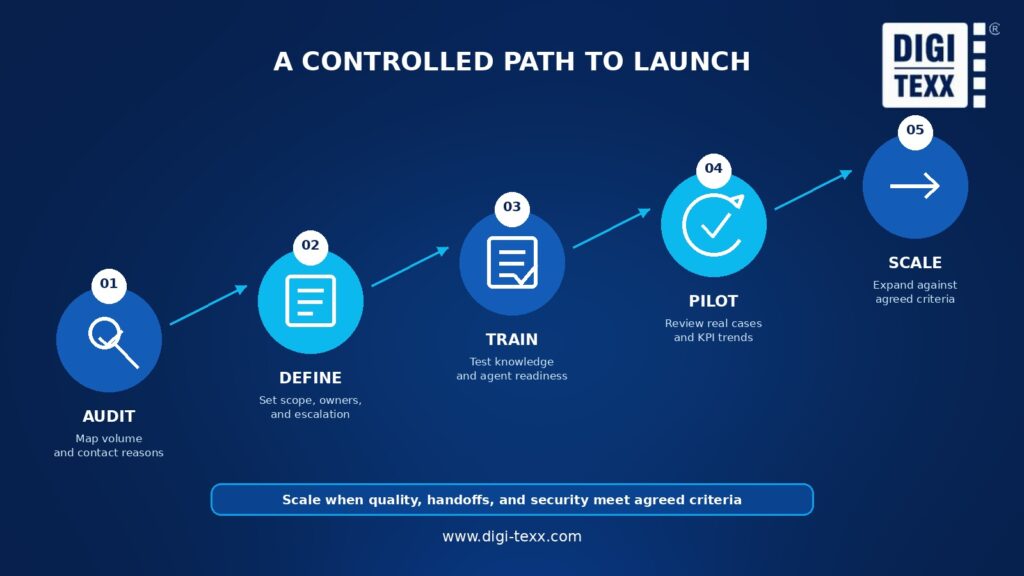
Launch with a bounded set of interactions, such as evening order inquiries or one language queue, so customers are protected while the workflow is tested. Agree on baseline and target values for first response time, first contact resolution, CSAT, QA, escalation quality, and cost. Run enough normal and peak traffic to expose staffing issues, review recordings or transcripts together each week, and fix repeated defects before expanding. The goal is to prove that the partner can resolve the assigned work without increasing effort for the customer.
Audit Demand And Define Initial Scope
Export several representative weeks of contact data: reasons, volume by hour and channel, languages, backlog, repeat contacts, and current results. Select one bounded queue that is common enough to measure and low enough in risk to train safely.
Set Ownership, SLAs, And Escalation Rules
Write a scope of work covering included cases, service hours, staffing assumptions, response and resolution targets, data permissions, and exclusions. Map each escalation to a named internal owner and define when the customer is updated.
Build The Knowledge Base And Train Agents
Give agents approved policies, product guidance, tone examples, and controlled system access. Assign an internal editor for changes. Test practice cases that include ambiguity, complaints, and exceptions, and require agents to escalate when the approved answer is unavailable.
Run A Limited Pilot And Review Interactions
Start with the selected queue and record baseline, targets, and exit criteria. Each week, sample conversations, audit handoffs and data access, compare KPI trends, and fix recurring defects with the provider. Include a peak period if peaks are part of the intended scope.
Expand Based On Measured Results
Add hours, languages, channels, or issue types only after the pilot meets its agreed quality and resolution criteria. Reassess staffing, internal escalation capacity, training, and the commercial terms whenever scope changes.
How DIGI-TEXX Could Structure A CX Outsourcing Pilot
Consider an online retailer whose internal team resolves product and refund exceptions during business hours but struggles with evening order questions in several languages. A pilot could route defined order-status and delivery inquiries to a DIGI-TEXX team through live chat and email. Agents would use approved answers and order data, record every action in the retailer’s help desk, and transfer disputed payments or policy exceptions to a named internal owner. This is an illustrative scope, not a claim about a current client deployment.
To scope a similar pilot, provide four to eight weeks of contact reasons and volumes by hour, the required languages, current first response and resolution results, approved help-desk access, and the cases your team must keep. Agree on staffing, training, escalation and customer updates before launch. Review transcripts, repeat contacts, CSAT, and total cost weekly; expand channels or hours only after the pilot meets the agreed quality and resolution criteria. Contact DIGI-TEXX to discuss its customer support and contact center options against that brief.
Frequently Asked Questions About Customer Experience Outsourcing
The answers below address the practical questions buyers ask before starting a CX outsourcing program. The exact approach should still reflect your channels, case complexity, and customer expectations.
Is CX Outsourcing The Same As Customer Support Outsourcing?
Yes, customer support is often one part of CX outsourcing. A wider CX program may also cover onboarding, pre-purchase guidance, retention interactions, feedback, and coordination between those stages. Confirm the specific scope in the proposal.
Can We Outsource Only One Support Channel?
Yes. Many teams begin with one channel, contact type, language, or time window. The partner still needs enough customer context and a reliable route to your internal specialists.
How Do We Maintain Brand Voice?
Share approved and unacceptable response examples, train on difficult scenarios, and score real conversations against the same rubric as your internal team. Update guidance whenever your product or policy changes.
What Should Remain Under Company Control?
Retain customer strategy, brand standards, product and policy decisions, data permissions, and oversight of the partner. Document who can approve exceptions and who owns every escalation.
How Long Should A Pilot Run?
Run the pilot long enough to observe normal and peak demand for the chosen scope. Agree on success criteria before launch, including quality, resolution, escalation, security, and cost. For a pilot tailored to your channels and languages, contact DIGI-TEXX.
Conclusion
The best CX outsourcing provider is the one whose proposed team can resolve your customers’ real issues within your policies, systems, languages, and hours. Start by checking whether the gap requires more people, better self-service, or a fix to the product or process. Then compare providers on a shared case set, run a bounded pilot, and judge outcomes across response time, resolution, customer feedback, quality, and cost. If extended or multilingual support is part of your plan, bring those requirements to DIGI-TEXX for a concrete pilot proposal.
DIGI-TEXX Contact Information:
🌐 Website: https://digi-texx.com/
📞 Hotline: +84 28 3715 5325
✉️ Email: [email protected]
🏢 Address:
- Headquarters: Anna Building, QTSC, Trung My Tay Ward
- Office 1: German House, 33 Le Duan, Saigon Ward
- Office 2: DIGI-TEXX Building, 477-479 An Duong Vuong, Binh Phu Ward
- Office 3: Innovation Solution Center, ISC Hau Giang, 198 19 Thang 8 street, Vi Tan Ward