

BUSINESS CHALLENGES
Our Client
Our client is an industry-leading US technology firm specializing in mission-critical communication tools and integrated physical security systems.
As a global giant in public safety, they focus on building high-performance platforms that empower law enforcement and urban planners to monitor moving vehicles and strengthen traffic security.
Project Scope
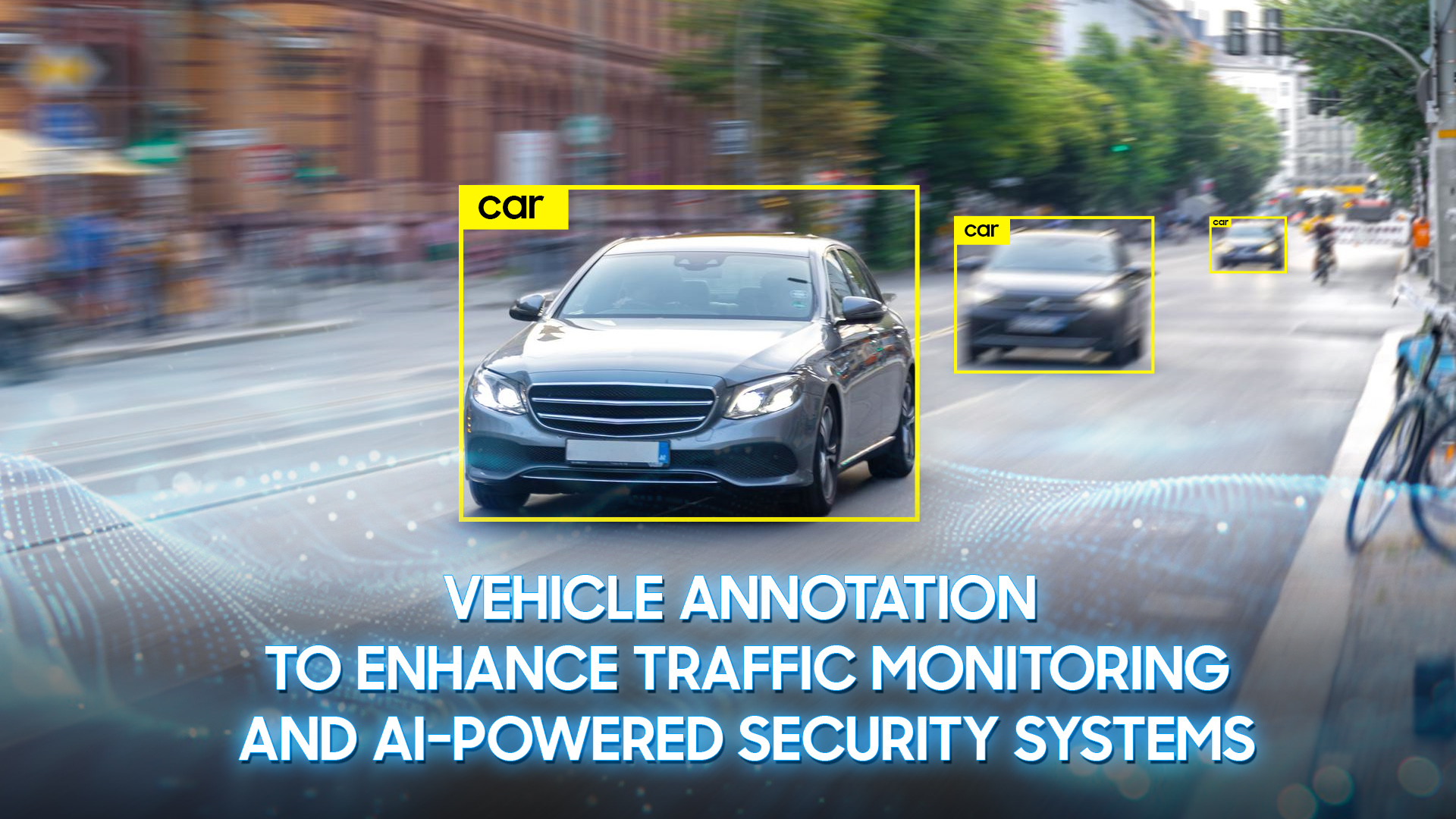
The scope of the Vehicle Annotation Project to enhance traffic monitoring and AI-Powered security systems focused on delivering foundational data layers for their AI platform:
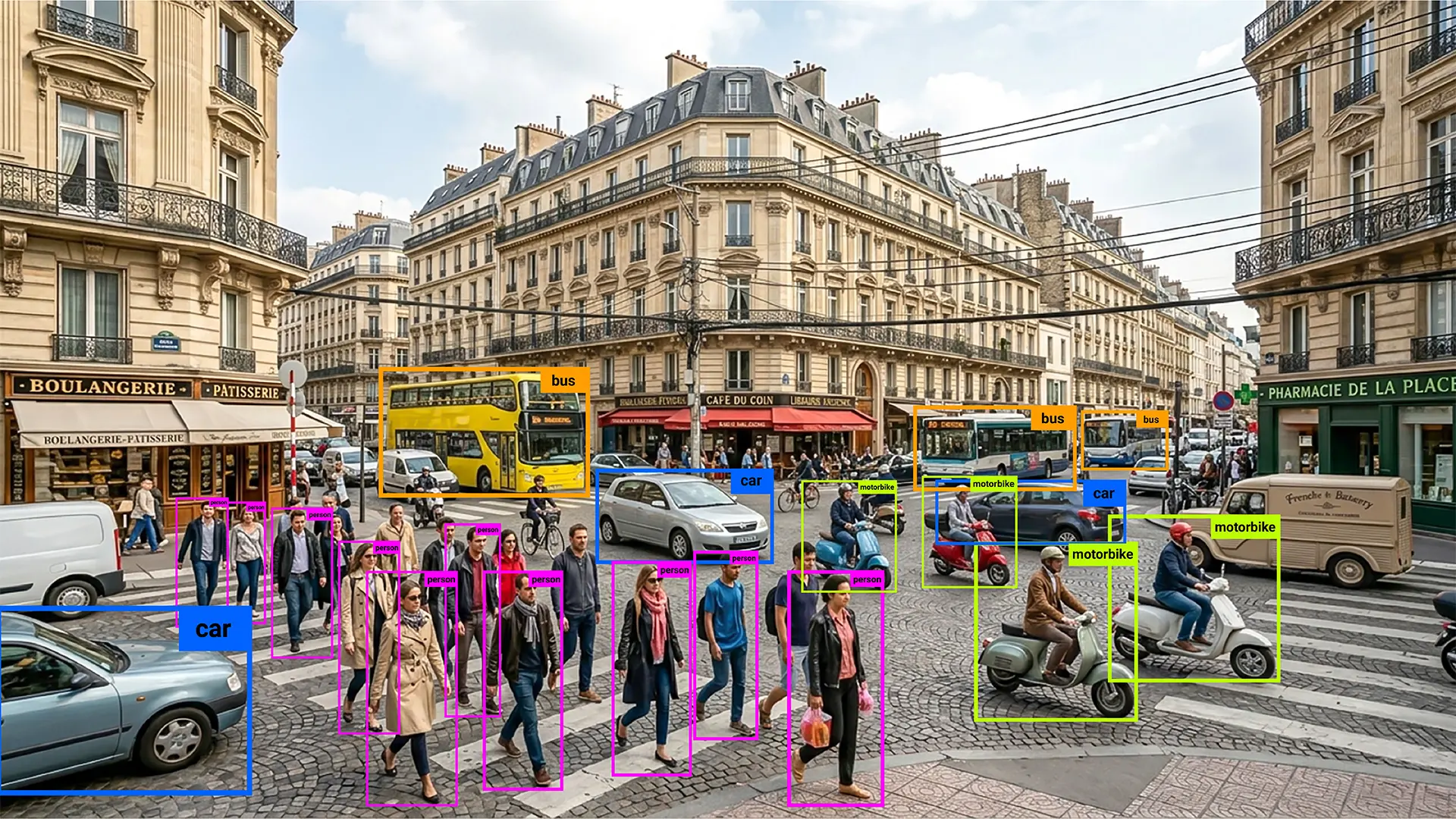
- Bounding Box Annotation: Drawing precise rectangular frames to define the spatial location of every moving vehicle.
- Vehicle Classification: Classifying objects into specific categories such as cars, trucks, motorcycles, and emergency vehicles.
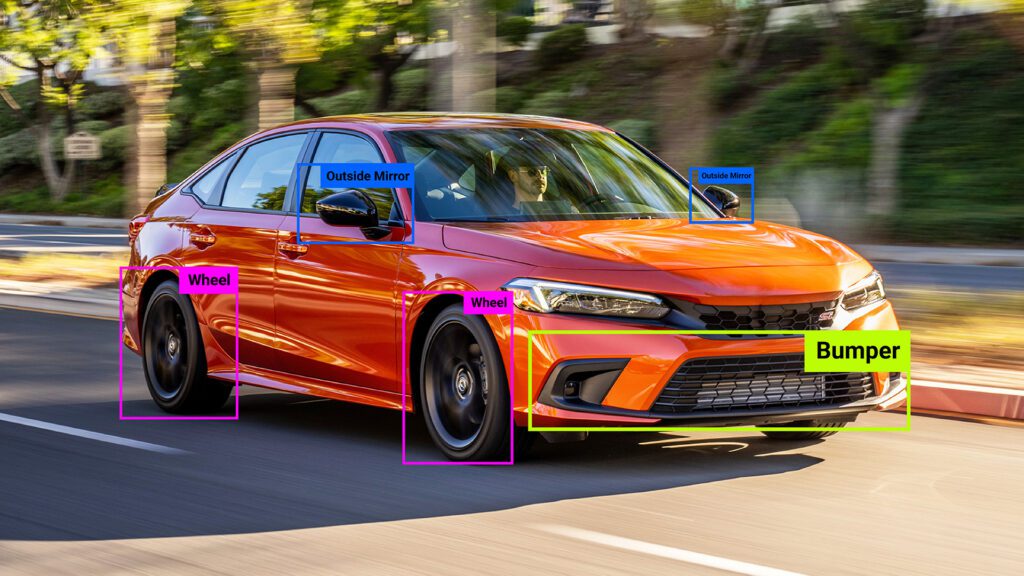
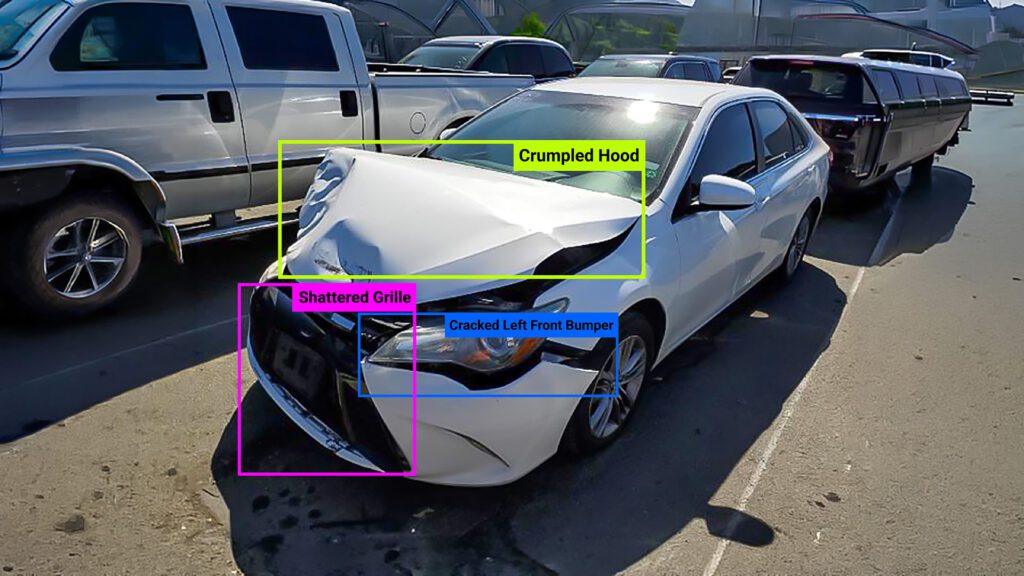
- Anomaly Annotation: Annotating vehicles’ structural damage and surface irregularities to refine automated anomaly detection models.
Project Challenges
Executing a vehicle annotation project at this scale presented several technical hurdles:
- Dynamic Occlusion: Vehicles often overlap or move behind urban obstacles (trees, poles), making it difficult to maintain precise bounding boxes.
- Varied Sizes and Shapes: Many vehicles share similar visual features but belong to different categories, such as SUVs vs. Crossovers or Sedans vs. Coupes. Annotators must differentiate based on subtle cues like wheelbase length, roofline slope, or ground clearance.
- Environmental Variance: AI models must be trained on data from night-time footage, heavy rain, or glare, where visibility is significantly compromised.
- Granular Precision Requirements: Reach the 95% accuracy threshold required for enhancing the client’s security systems with a monthly volume of 120,000 images.
- Visual Subtlety of Damage and Anomalies: Scratches, small dents, or cracks can blend into the vehicle’s bodywork depending on the paint color and light reflection. Minor structural shifts – require annotators to have a high level of expertise to distinguish between a factory-standard design and actual damage.
SOLUTION
DIGI-TEXX applied a hybrid human-in-the-loop data annotation approach, combining skilled human annotators with AI-assisted tools. The team:
- Scaled operations to process massive monthly volumes while ensuring every object met the client’s strict geometric standards.
- Implemented rigorous quality control processes to maintain consistent annotation accuracy across all outputs.
- Executed high-precision bounding box and anomaly labeling for the Vehicles Annotation Project for Traffic Monitoring to handle complex urban environments.
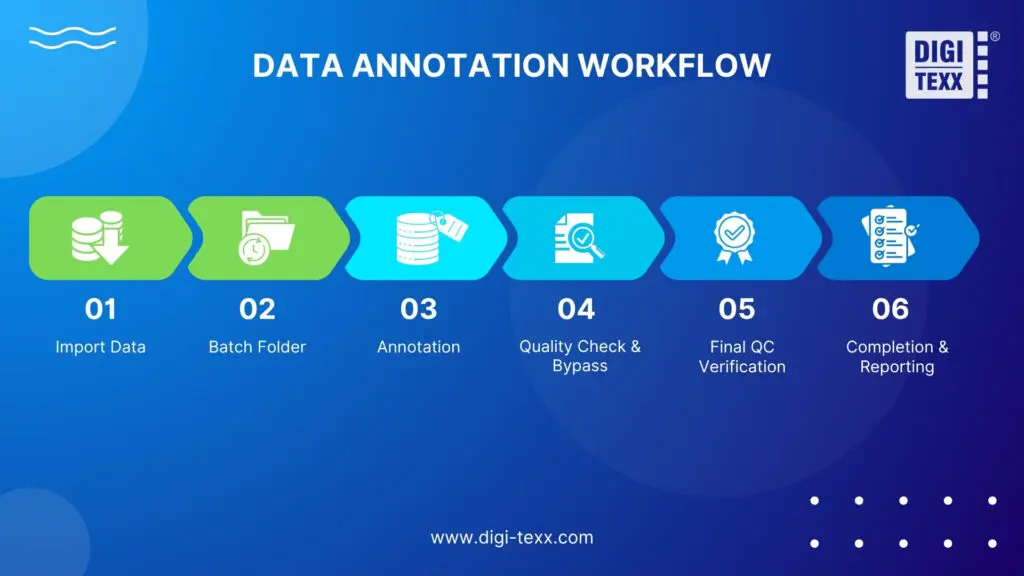
Our process ensured precision, scalability, and transparency across every project phase.
- Import Data: The client initiates the workflow by importing raw video or image data into the system to set the baseline for the service.
- Batch Folder: Data is organized into batch folders for systematic management. Segmenting data allows annotators to focus and accelerates the overall processing speed.
- Annotation: DIGI-TEXX annotators perform bounding box placement and object classification on each frame.
- Quality Check & Bypass: Post-annotation, data follows dual paths: immediate verification by the QC Team or a bypass route if automated criteria are met.
- Final QC Verification: The QC Team performs a final gatekeeping check. If data is disapproved, it enters a rework cycle where annotators refine the labels.
- Completion & Reporting: Once approved, the data is marked as completed. A manager then extracts a detailed report on progress and quality metrics before project closure
BUSINESS OUTCOME
- 150,000 labeled images per month
- 300,000 labeled vehicles and objects per month
- 98% accuracy
- 25% improvement in object detection performance