

Jewelry photo editing service plays a vital role in helping jewelry brands create stunning product images that capture attention and drive sales in today’s competitive digital marketplace. Similar to specialized solutions such as car photo editing, skin retouching, or restore damaged photographs, professional jewelry retouching focuses on enhancing image quality, improving visual consistency, and showcasing intricate product details.
Whether businesses want to edit photos in Lightroom, explore the best photo editing app, or understand the factors affecting photo editing price, high-quality image enhancement remains essential for building customer trust and increasing conversions. As technology continues to evolve through innovations such as AI business documents analysis, data enrichment tools, and document scanning software, modern photo editing services also help brands streamline workflows while maintaining exceptional visual standards.
In this article, DIGI-TEXX helps you understand what a jewelry photo editing service is, why it matters for jewelry businesses, how the editing process works, and the key factors that influence service costs.
What Is A Jewelry Editing Photo Service?
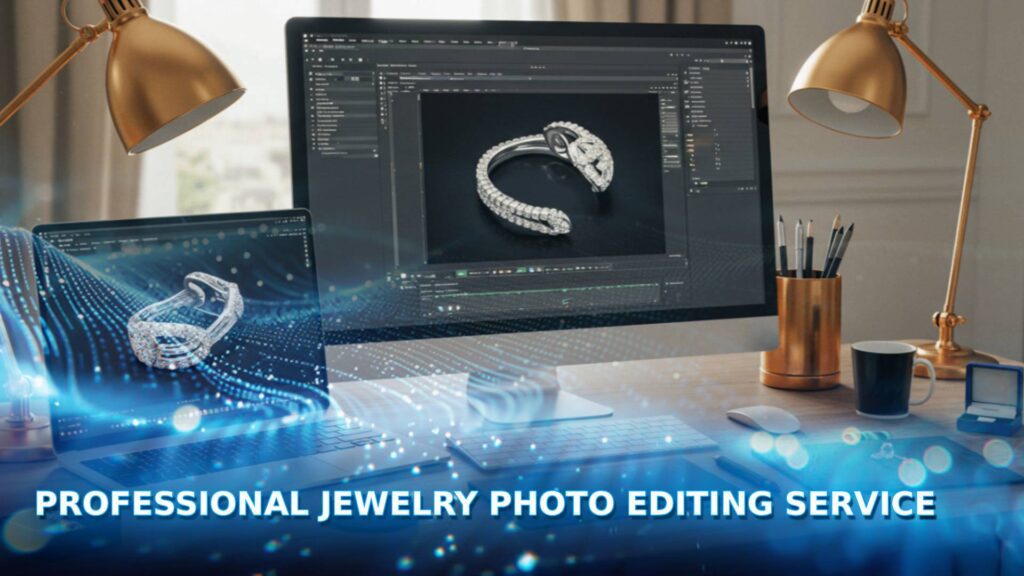
A jewelry photo editing service is the process of digitally refining jewelry images to ensure they accurately represent the product while meeting professional photography standards. It focuses on improving image quality, consistency, and visual clarity so that rings, necklaces, bracelets, and other jewelry pieces appear more attractive across online stores, catalogs, and promotional materials.
The service may involve adjusting lighting, enhancing gemstone visibility, correcting color inconsistencies, optimizing image composition, and ensuring a clean, distraction-free presentation. By transforming raw photographs into publication-ready visuals, jewelry photo editing helps brands create a more professional and cohesive product showcase.
Why Are Jewelry Retouching Services Required In The USA?
Jewelry retouching services help transform raw product photos into polished, high-quality images that attract customers and build trust. Since online shoppers often make purchasing decisions based on product visuals, professionally retouched images can enhance brilliance, showcase fine details, and create a more premium appearance.
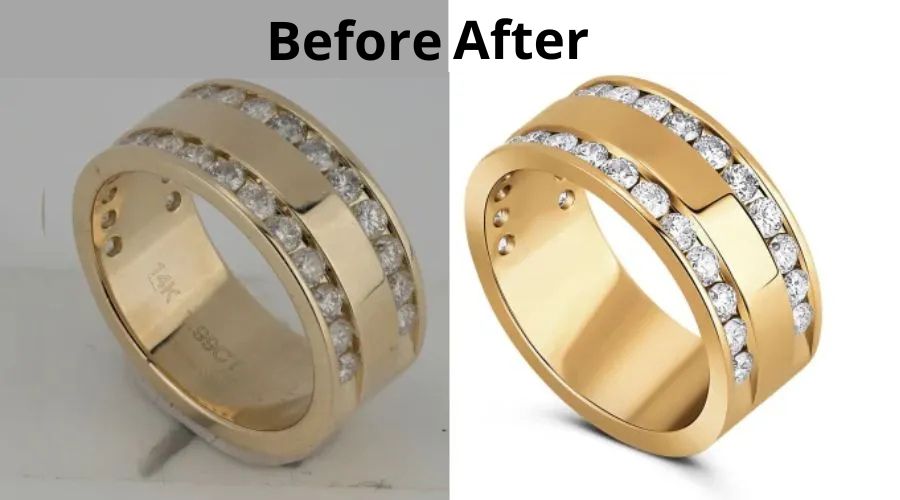
Professional jewelry retouching typically includes color correction, background removal, metal polishing, dust and reflection removal, shadow enhancement, and other refinements that ensure each piece looks its best. These improvements help brands present their products consistently, increase engagement, and support stronger e-commerce performance.
“67% of consumers say that the quality of a product image is very important when deciding whether to purchase a product online, highlighting the critical role of professional image editing in e-commerce success.” — Michael Del Gigante, CEO of MDG Advertising
Benefits Of Jewelry Retouching Services
- Enhance product appeal: Professionally retouched images make jewelry look more attractive and eye-catching, helping create a stronger first impression.
- Highlight intricate details: Retouching reveals fine craftsmanship, gemstone cuts, and delicate design elements that may not be visible in the original photo.
- Improve color accuracy: Adjustments ensure metals and gemstones appear vibrant, realistic, and consistent across all product images.
- Eliminate distractions: Unwanted reflections, dust, scratches, and background distractions are removed to keep the focus on the jewelry.
- Optimize lighting and brilliance: Fine-tuned lighting enhances sparkle, depth, and overall visual impact.
- Maintain brand consistency: Uniform image quality and styling create a cohesive product catalog and a more professional brand presence.
- Support multi-channel marketing: High-quality edited images can be used across e-commerce websites, social media, advertisements, and print materials.
- Strengthen brand credibility: Polished product photography reflects professionalism and helps build customer confidence.
- Increase customer engagement: Clear, visually appealing images encourage shoppers to explore products in greater detail.
- Stand out from competitors: Premium-quality visuals help jewelry brands differentiate themselves in a highly competitive market.
Common Jewelry Photo Editing Services
Professional jewelry photo editing involves more than basic retouching. Below are the most common services used to improve product presentation, enhance fine details, and prepare images for e-commerce.
Background Removal
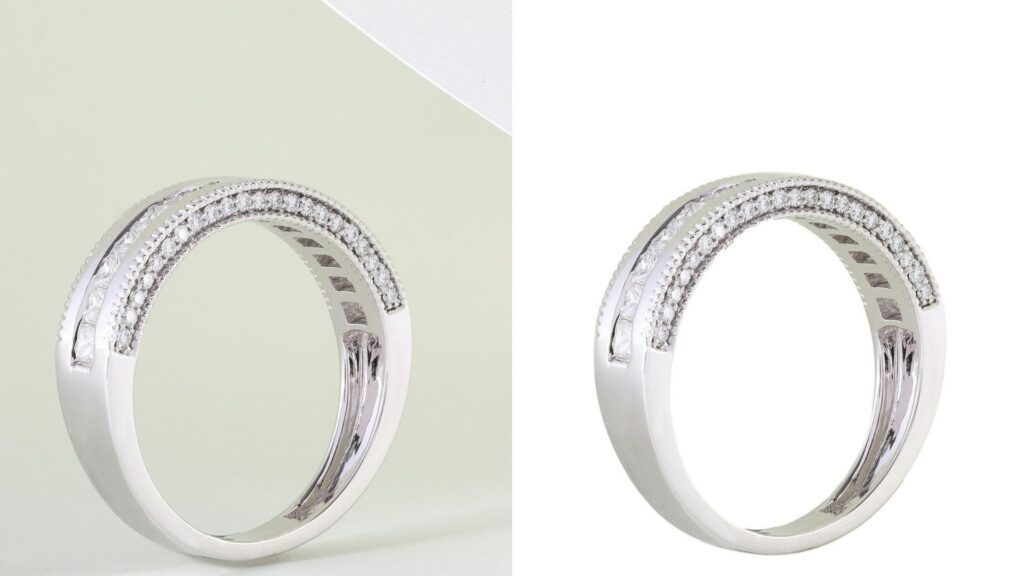
A clean background keeps the focus on the jewelry and creates a consistent, professional presentation. Precise clipping paths preserve delicate details such as chains, prongs, and gemstone settings while producing clean, e-commerce-ready images.
Reflection Removal
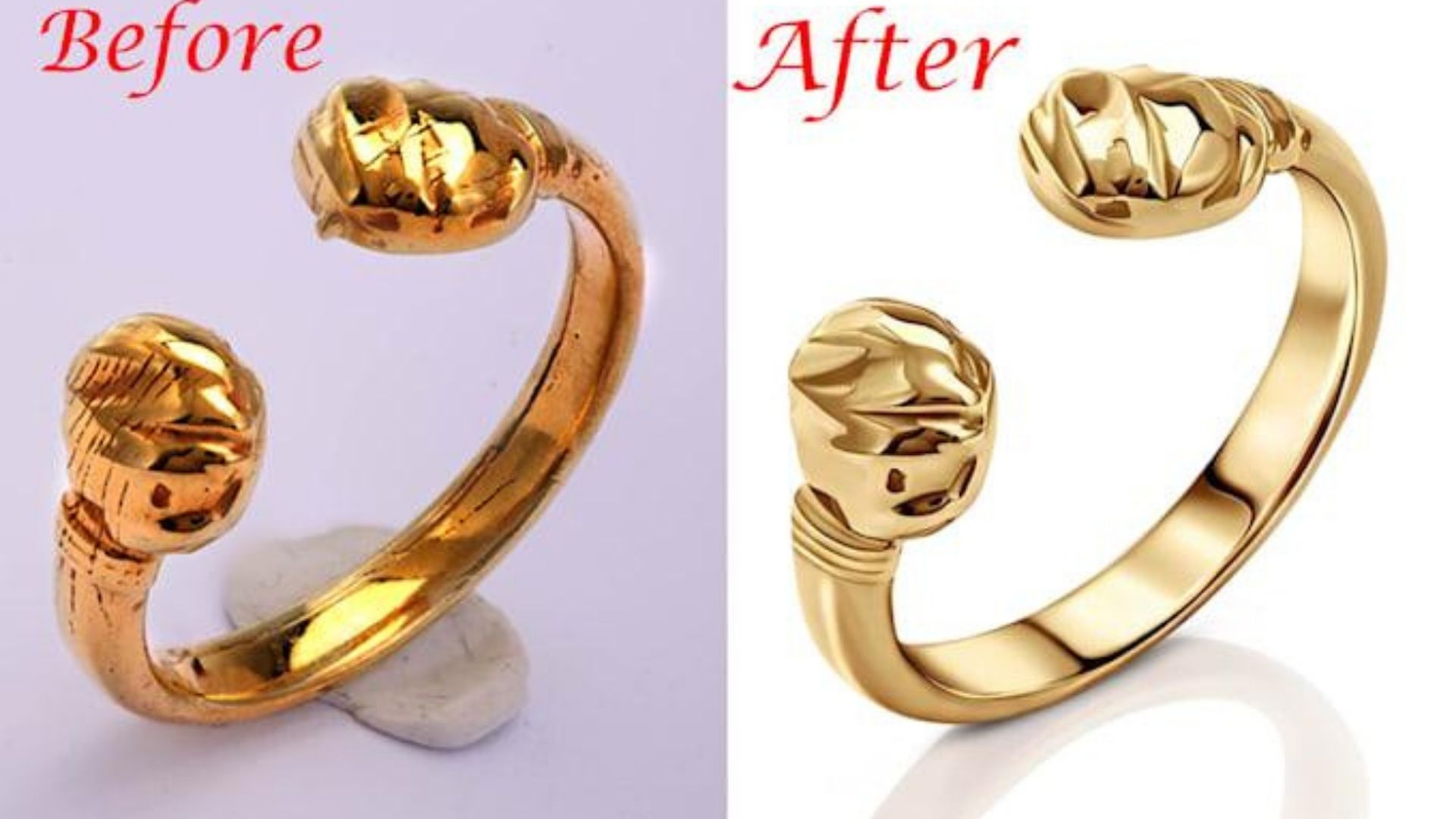
Highly polished metals often capture unwanted reflections from studio lights and surrounding objects. Selective reflection removal minimizes glare while preserving the natural shine and depth of precious metals.
Dust, Fingerprint, And Scratch Removal
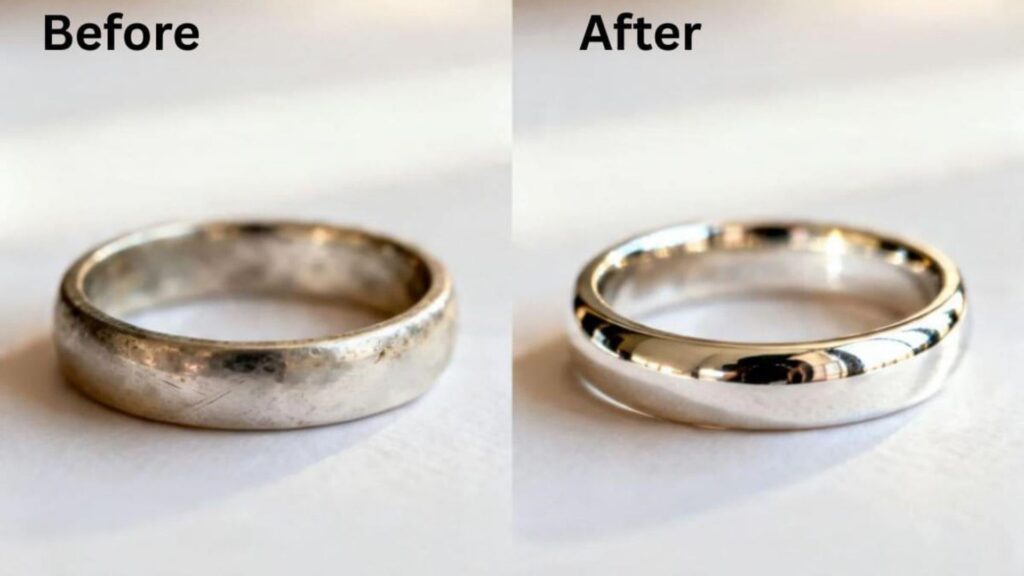
Dust, fingerprints, and fine scratches become highly visible in close-up jewelry photography. Careful retouching removes these imperfections while maintaining the jewelry’s original texture and craftsmanship.
Metal Polishing
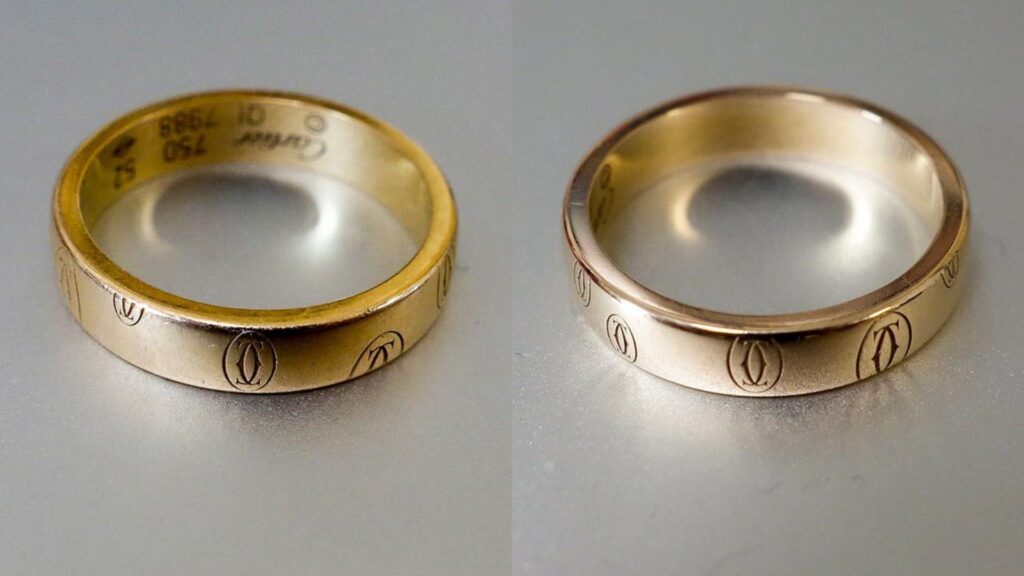
Uneven reflections can make precious metals appear dull or inconsistent. Refining highlights and shadows enhances the brilliance of gold, silver, and platinum while maintaining a realistic metallic finish.
Gemstone Enhancement
Diamonds and gemstones often lose their natural sparkle in photographs. Selective adjustments to brightness, clarity, and local contrast restore brilliance without making the stones look over-edited.
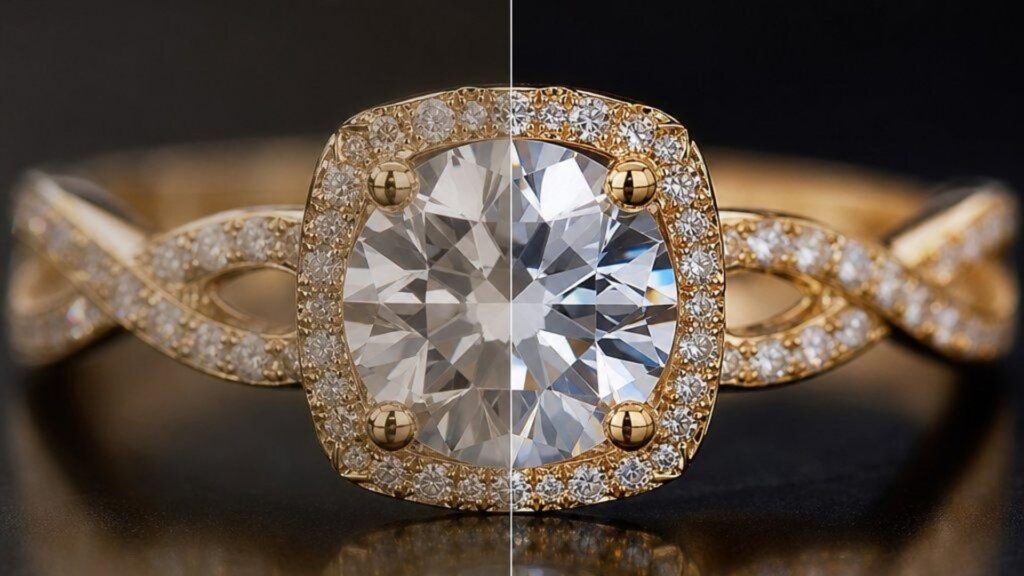
Color Correction
Accurate color correction ensures precious metals and gemstones closely match their real-life appearance. Adjusting white balance and color tones also helps maintain consistency across an entire product catalog.
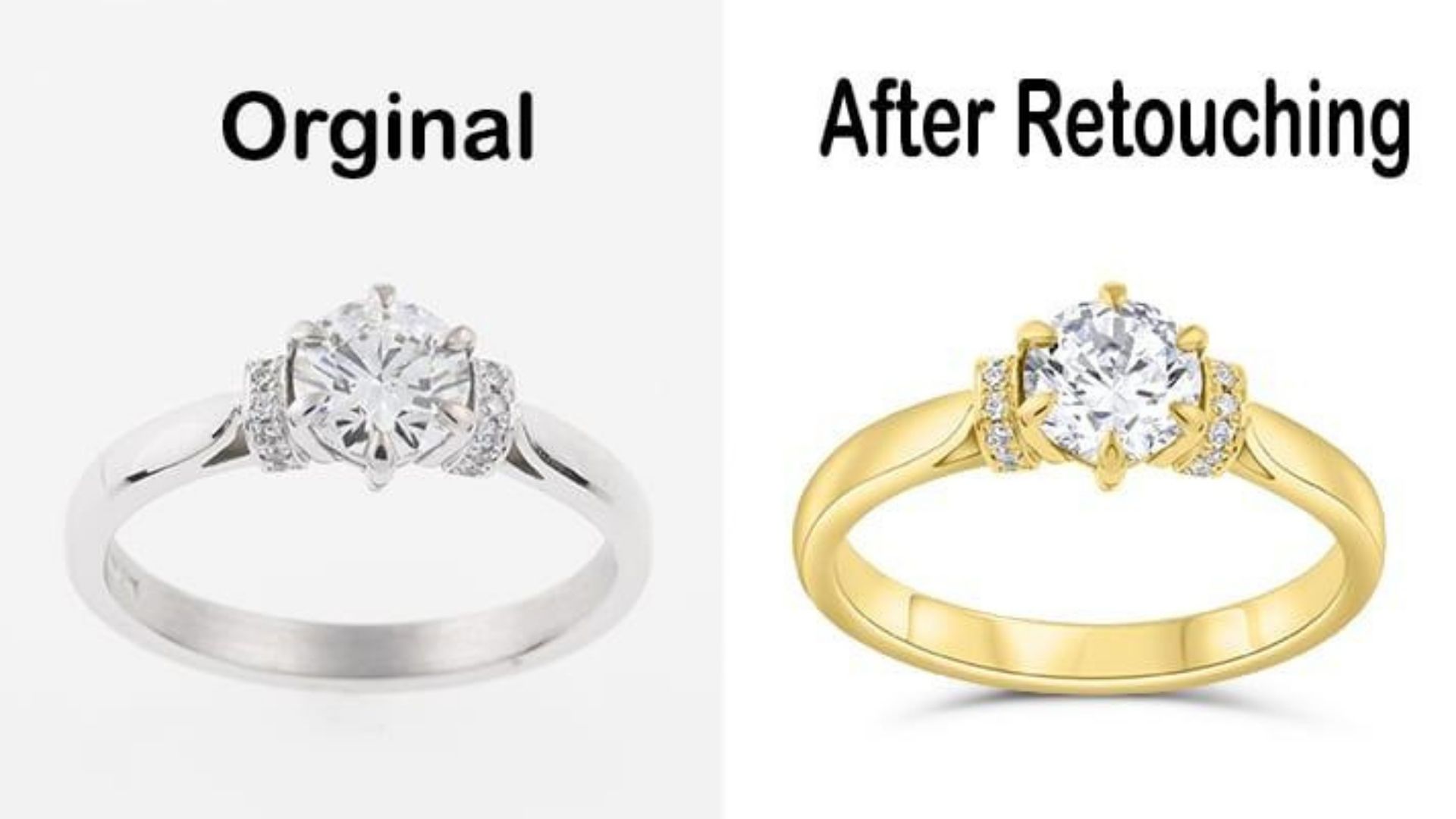
Shadow Creation
Soft shadows and subtle reflections add depth and prevent jewelry from appearing to float on the background. The result is a more natural, balanced, and premium-looking product image.

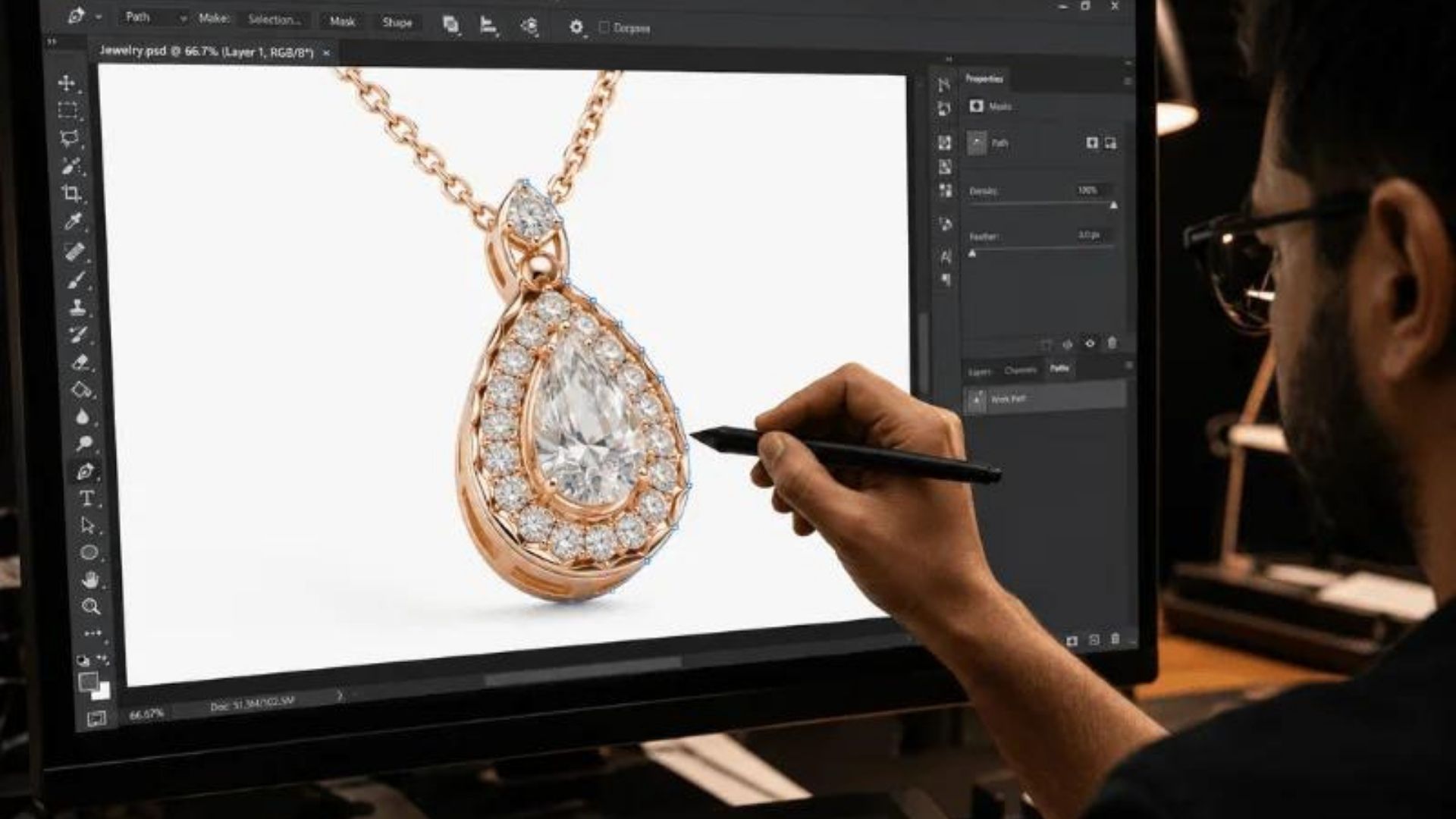
Clipping Path
Intricate jewelry designs require highly precise cutouts. Hand-drawn clipping paths preserve fine edges, making background replacement and advanced image editing more accurate.
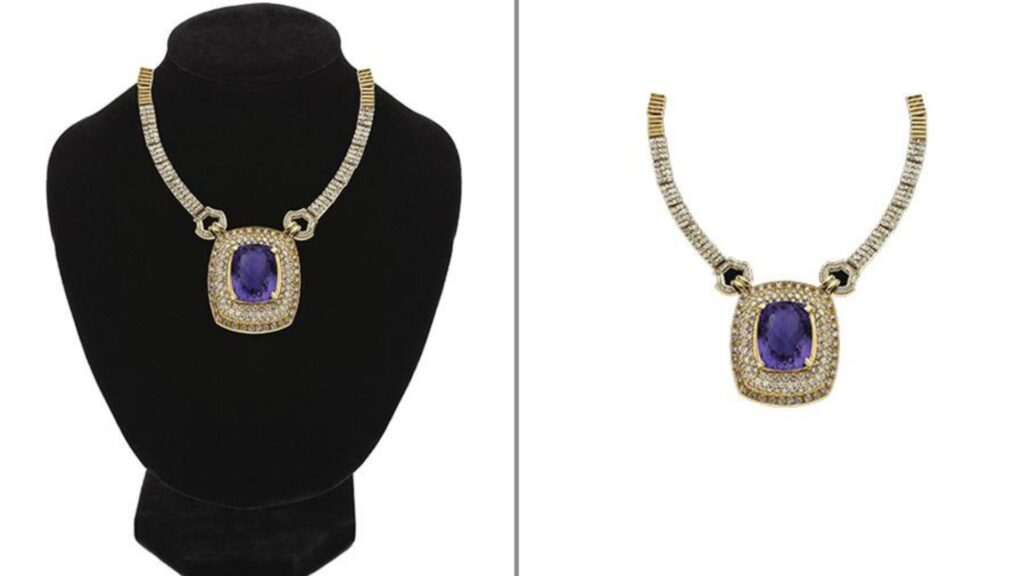
Ghost Mannequin (Optional)
Ghost mannequin editing removes display stands or supporting props while preserving the jewelry’s natural shape. This creates a clean, distraction-free presentation that keeps the focus on the product.
How To Edit Jewelry Photos Like A Professional?
Editing jewelry photos is one of the most demanding forms of product retouching because every detail matters. Reflective metals, sparkling gemstones, and intricate craftsmanship can easily reveal dust, scratches, or inaccurate colors in high-resolution images. To produce premium-quality visuals, every adjustment must enhance the jewelry’s appearance while maintaining its natural look.
At DIGI-TEXX, we follow a structured editing workflow that transforms RAW jewelry photos into polished, e-commerce-ready images suitable for online stores, catalogs, and advertising campaigns.
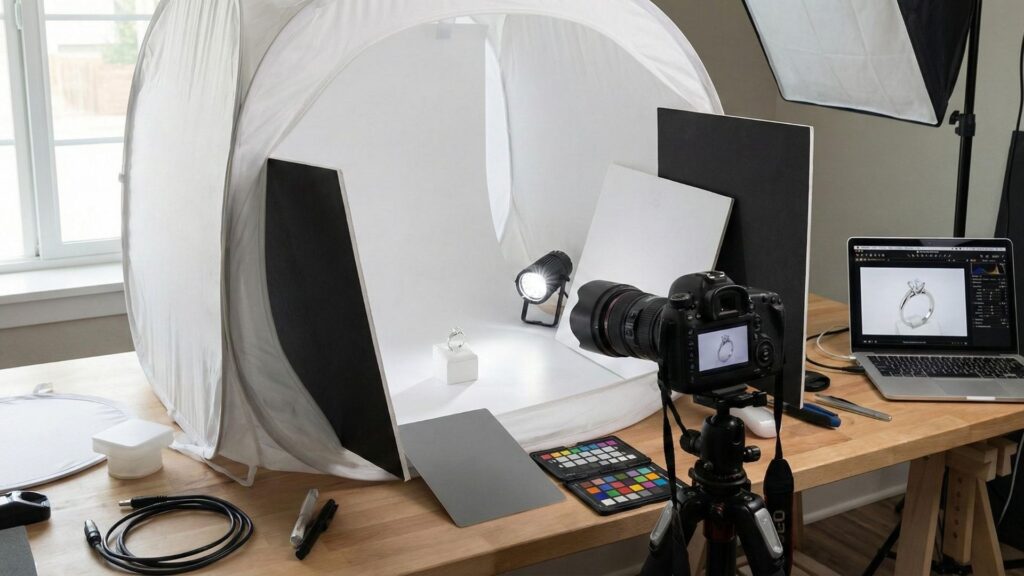
Step 1. Capture High-Quality RAW Images
Every successful jewelry edit starts with a well-captured image. Shooting in RAW format preserves significantly more image data than JPEG, providing greater flexibility when correcting exposure, colors, and highlights during post-processing.
For the best results, use:
- A tripod to eliminate camera shake.
- A macro lens for capturing intricate details.
- Softbox or diffused lighting to reduce harsh reflections.
- A low ISO (100–200) to minimize image noise.
- A narrow aperture (typically f/8–f/16) to maximize depth of field.
Starting with a properly exposed RAW image minimizes editing time while delivering superior image quality.
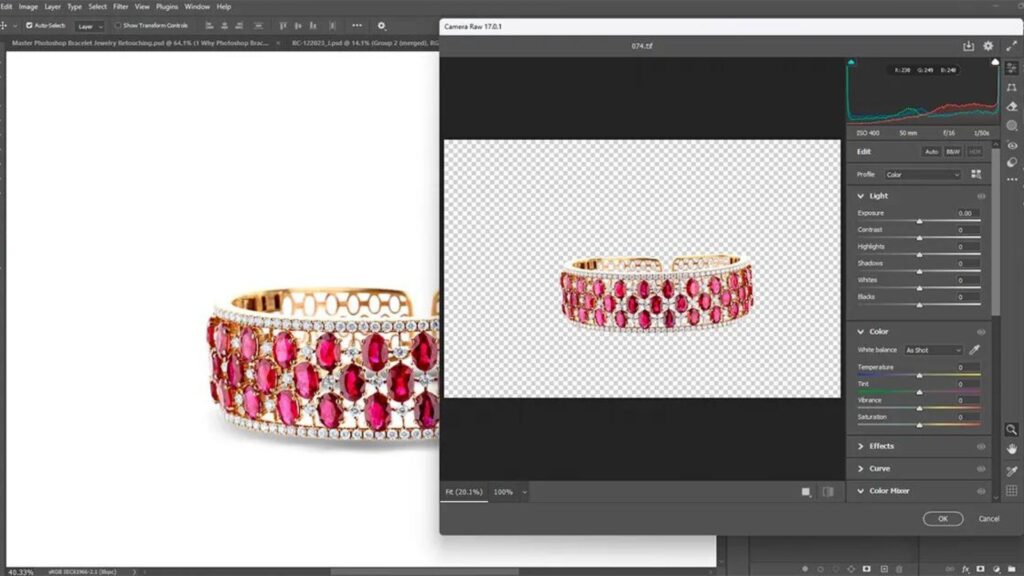
Step 2. Correct White Balance And Exposure
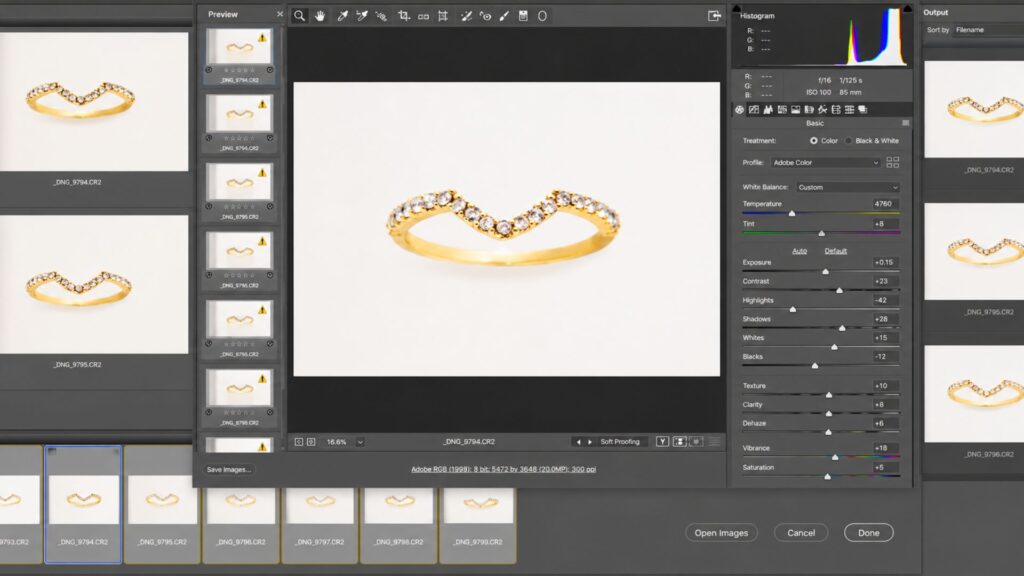
The first editing adjustment is correcting white balance. Even slight color shifts can make silver appear bluish or cause yellow gold to look overly orange, reducing the product’s accuracy.
At DIGI-TEXX, we begin in Adobe Camera Raw by adjusting:
- White Balance
- Exposure
- Highlights
- Shadows
- Whites and Blacks
These corrections establish a balanced foundation before more detailed retouching begins.
Step 3. Remove The Background With Precision
A clean white background is the industry standard for most e-commerce platforms because it keeps customers focused on the product.
Rather than relying solely on automatic selection tools, we create a precise clipping path using the Pen Tool to preserve delicate chains, gemstone prongs, and intricate edges. This approach produces crisp, natural outlines without losing fine details.

Step 4. Remove Dust, Fingerprints, And Scratches
Macro photography often reveals dust particles, fingerprints, scratches, and tiny imperfections that are invisible to the naked eye.
To eliminate these distractions while preserving natural textures, we use professional retouching tools including:
- Spot Healing Brush
- Healing Brush
- Clone Stamp Tool
- Frequency Separation (for advanced retouching)
Every adjustment is performed carefully to maintain the jewelry’s original craftsmanship rather than creating an artificial appearance.
Step 5. Polish Metal Surfaces
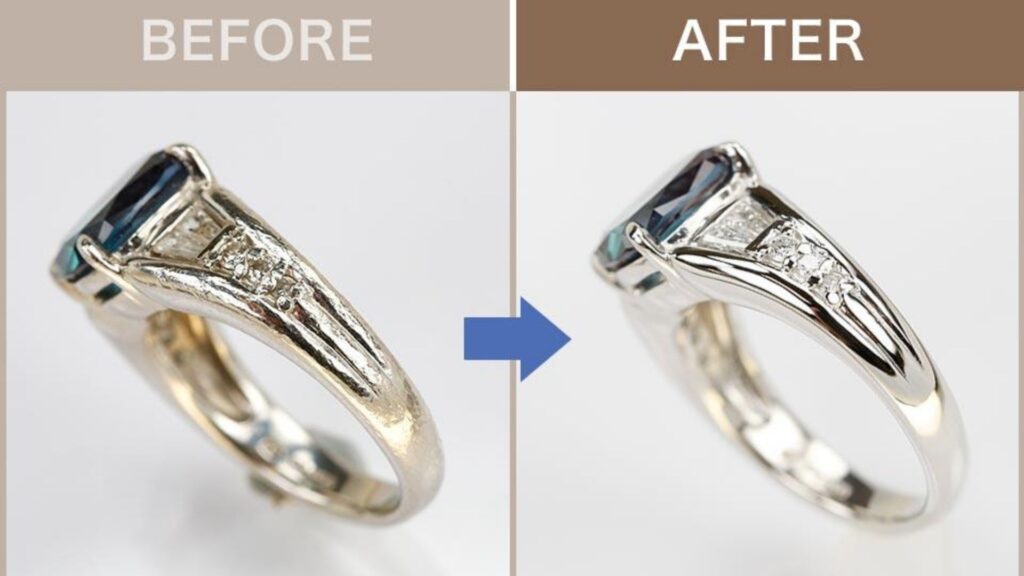
Gold, silver, and platinum naturally reflect surrounding light, making uneven reflections more noticeable.
To create a refined finish, we selectively polish metal surfaces using techniques such as:
- Dodge & Burn
- Curves adjustments
- High Pass enhancement
These techniques smooth uneven reflections, improve depth, and create a premium appearance while preserving realistic textures.
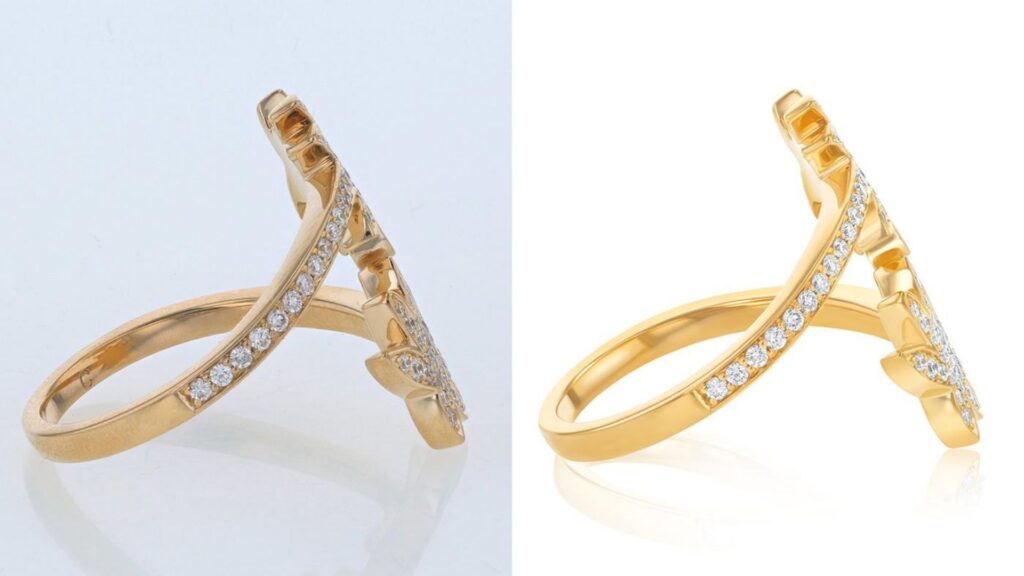
Step 6. Enhance Diamonds And Gemstones
Gemstones should appear brilliant without looking artificially enhanced.
We selectively improve:
- Brightness
- Local contrast
- Saturation
- Clarity
The objective is to highlight the stone’s natural brilliance while avoiding excessive sharpening or oversaturation that could misrepresent the product.
Step 7. Fine-Tune Color Accuracy
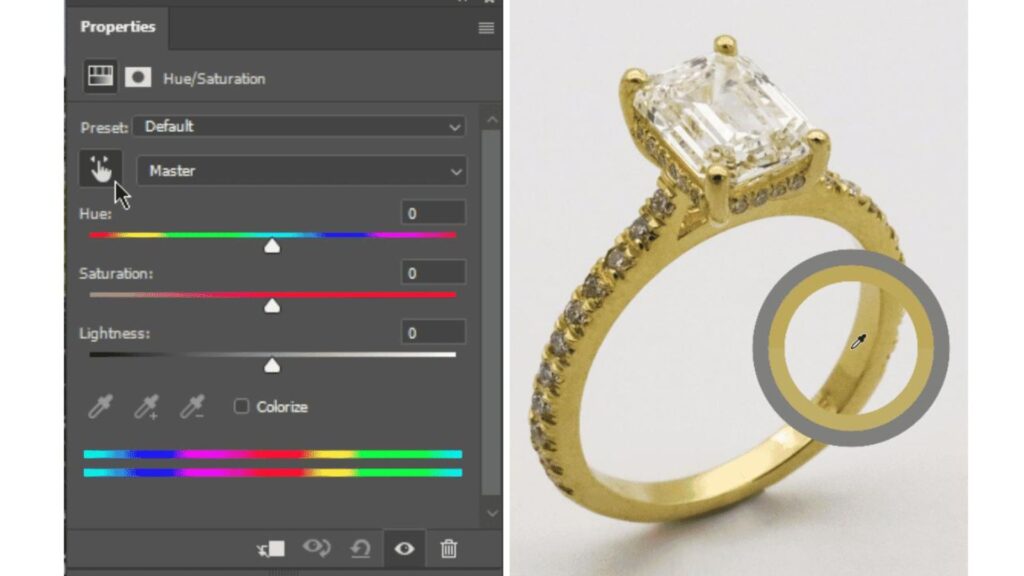
Color accuracy is essential for customer trust, particularly when selling premium jewelry online.
Using tools such as Hue/Saturation and Selective Color, we carefully adjust metal tones and gemstone colors to ensure they closely match the actual product under natural lighting conditions.
Step 8. Improve Contrast And Depth
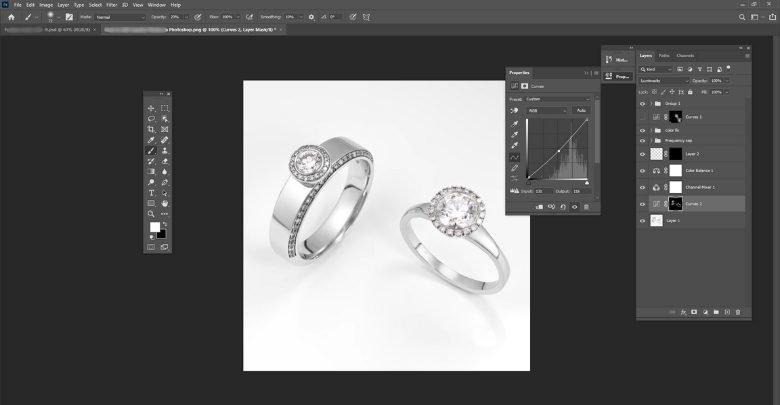
Proper contrast enhances dimension and helps intricate details stand out.
We use Curves and Levels adjustments to create balanced tonal contrast without crushing shadows or overexposing highlights. The result is a cleaner, more premium-looking product image.
Step 9. Add Natural Shadows Or Reflections
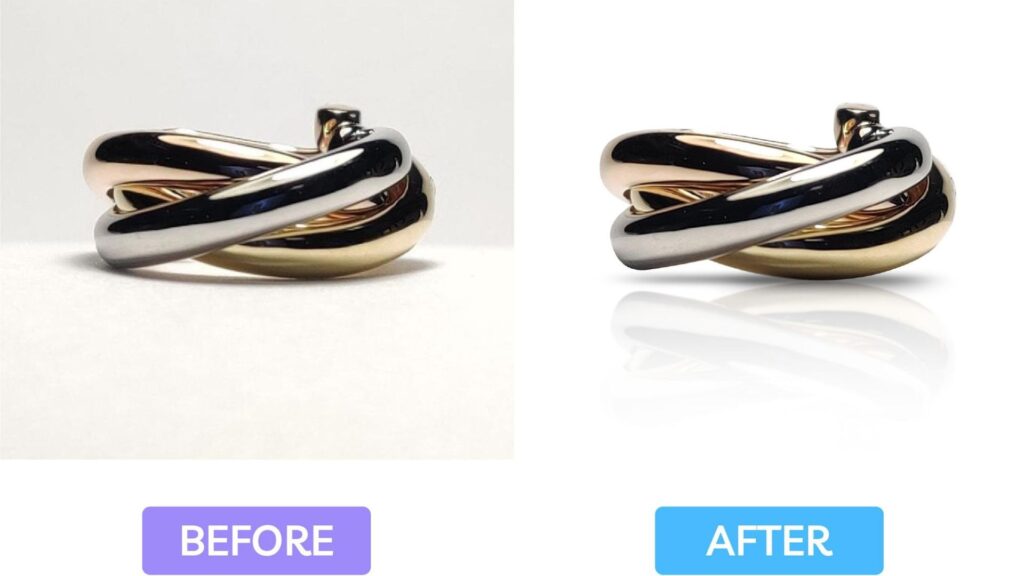
Without subtle shadows, jewelry can appear to float unnaturally on a white background.
Depending on the client’s branding guidelines, we add:
- Soft natural drop shadows
- Subtle mirror reflections
- Ambient shadows for depth
These finishing touches create a more realistic and visually appealing presentation while keeping the focus on the jewelry.
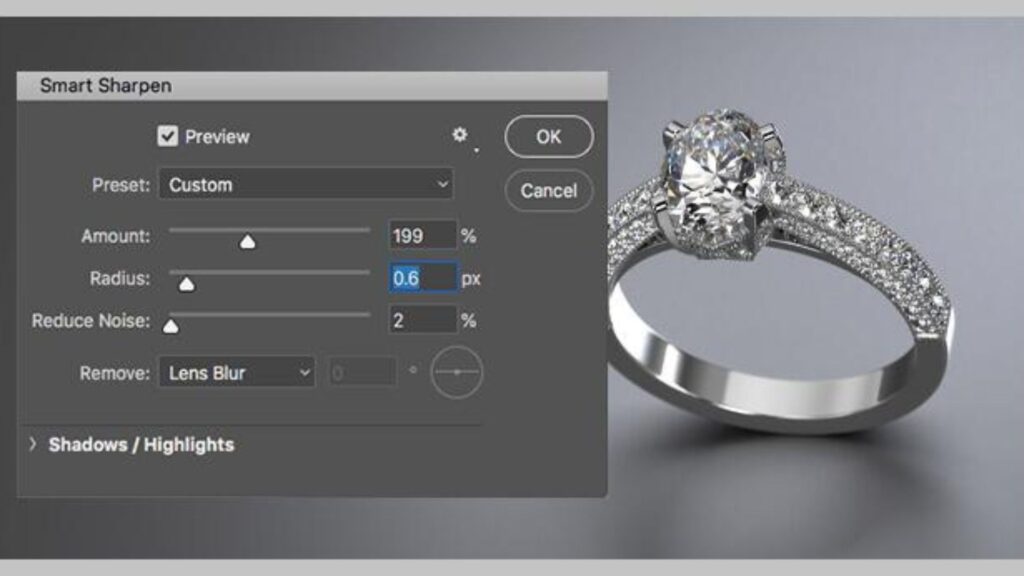
Step 10. Sharpen Fine Details
The final retouching stage enhances fine details without introducing halos or digital artifacts.
Using Smart Sharpen and High Pass sharpening techniques, we improve the visibility of gemstone facets, engraved patterns, and intricate craftsmanship while maintaining a natural appearance.
Step 11. Export Images For E-Commerce
Before delivery, every image is optimized for its intended platform.
Typical export formats include:
- JPEG for Amazon, Shopify, and most e-commerce websites.
- PNG for transparent backgrounds.
- WebP for faster website loading and improved SEO performance.
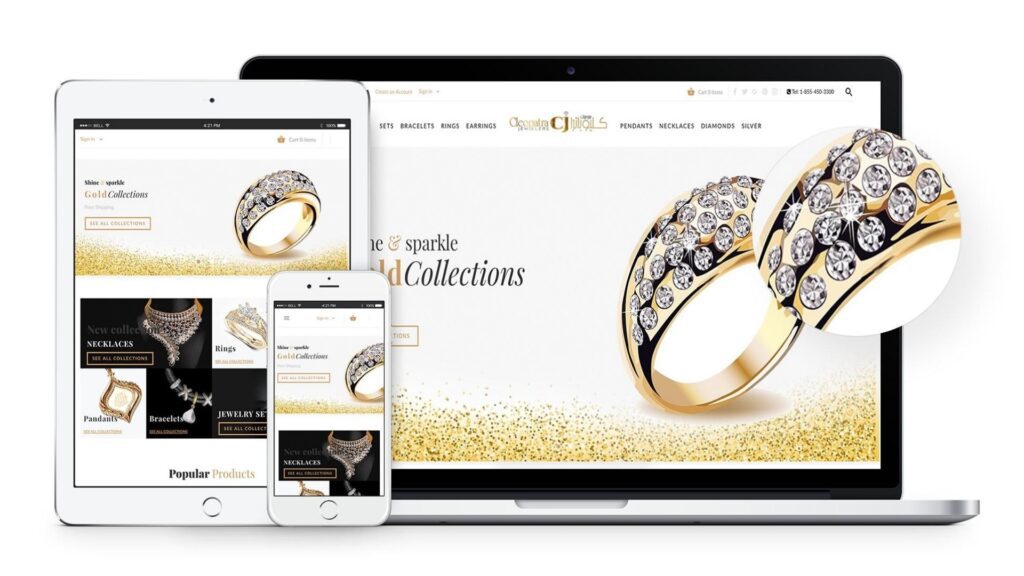
Each file is exported at an appropriate resolution and compression level to balance visual quality with page speed, ensuring an excellent shopping experience across desktop and mobile devices.
Why Choose DIGI-TEXX For Jewelry Photo Editing?
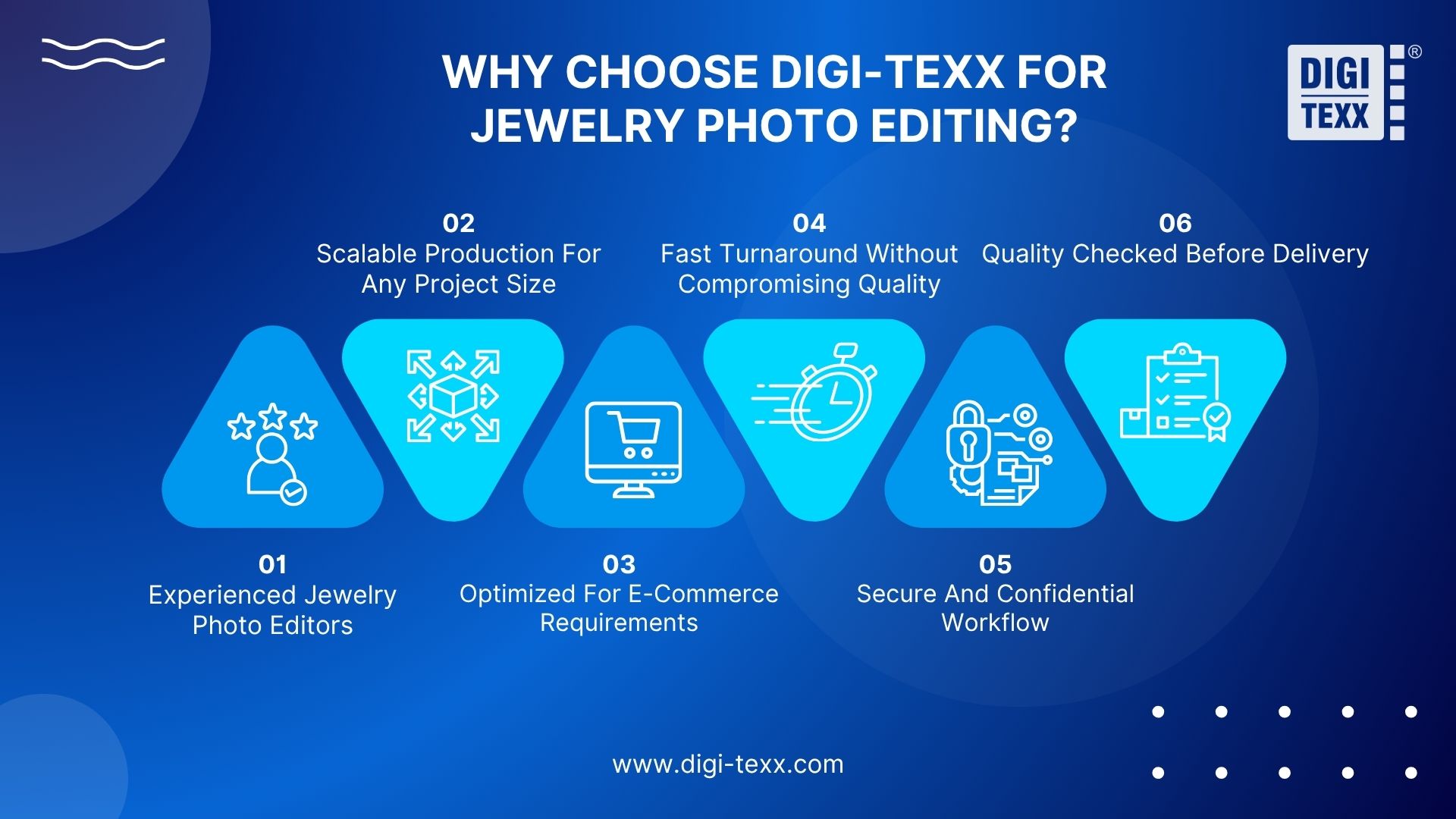
Choosing a jewelry photo editing partner isn’t just about finding someone who can remove backgrounds or polish metal surfaces. The real challenge is delivering consistent, high-quality images at scale while accurately representing every detail of the jewelry. Here’s how DIGI-TEXX helps brands achieve that.
Experienced Jewelry Photo Editors
Jewelry is one of the most demanding product categories to retouch. From preserving the natural shine of precious metals to enhancing gemstone brilliance, every edit requires precision and attention to detail. Our experienced editors understand how to improve images without making them look over-retouched.
Scalable Production For Any Project Size
Whether editing a small product collection or thousands of images for a seasonal launch, maintaining consistency is essential. DIGI-TEXX combines experienced specialists with standardized workflows to deliver uniform results across every image, regardless of project size.
Optimized For E-Commerce Requirements
Different platforms have different image standards, but all require clear, accurate, and fast-loading product photos. Every image is optimized for online stores with the appropriate background, dimensions, resolution, and file format to ensure a consistent shopping experience.
Fast Turnaround Without Compromising Quality
Speed is important in the fast-moving e-commerce industry, but quality should never be sacrificed. An efficient production workflow allows projects to be completed on schedule while maintaining the high standards expected for professional jewelry photography.
Secure And Confidential Workflow
New product collections, marketing campaigns, and product catalogs often contain sensitive information before launch. Strict NDAs, secure file handling, and controlled workflows help protect every project throughout the editing process.
Quality Checked Before Delivery
Every edited image undergoes a thorough quality review before delivery. Details such as clipping accuracy, color consistency, reflections, shadows, and overall image quality are carefully checked to ensure every file meets project requirements.
How Much Does Jewelry Photo Editing Service Cost?
The jewelry photo editing service cost depends on the level of editing required and the complexity of the product. Basic edits typically range from $0.29 to $5 per image, while more advanced retouching services can cost between $1.49 and $25 per image or more.
- Basic edits color correction, exposure enhancement, and minor blemish removal.
- Advanced edits smoothing skin, object manipulation, and extensive blemish removal.
- High-end edits detailed work on intricate products, high-end fashion items, and jewelry.
Other factors that can affect the cost of product photo editing include: The skill level of the editor, the type of product being edited, and the turnaround time.
FAQs About Jewelry Photo Editing Service
How Much Should I Pay Someone To Edit Photos?
The cost of photo editing typically ranges from $0.29 to $5 per image for basic adjustments and $1.49 to $25+ per image for advanced retouching. Pricing depends on factors such as image complexity, editing requirements, turnaround time, and the editor’s level of expertise.
What Is The App That Edits Jewelry Photos?
The best jewelry photo editing app depends on your needs. For e-commerce product images, AI tools like Mokker AI and Picsart offer quick background removal and professional enhancements. For mobile editing, Snapseed is a popular free option with powerful retouching and color correction features.
Jewelry photo editing service provided by DIGI-TEXX will enhance the visual appeal of jewelry pieces, ensuring they stand out in a competitive market. With professional editing techniques, DIGI-TEXX elevates product imagery, making it more captivating and ready for marketing, boosting sales and customer engagement.
DIGI-TEXX Contact Information:
🌐 Website: https://digi-texx.com/
📞 Hotline: +84 28 3715 5325
✉️ Email: [email protected]
🏢 Address:
- Headquarters: Anna Building, QTSC, Trung My Tay Ward
- Office 1: German House, 33 Le Duan, Saigon Ward
- Office 2: DIGI-TEXX Building, 477-479 An Duong Vuong, Binh Phu Ward
- Office 3: Innovation Solution Center, ISC Hau Giang, 198 19 Thang 8 street, Vi Tan Ward
Reference:
- Baymard Institute. (n.d.). E-commerce product page UX research. Baymard Institute. https://baymard.com
- Gemological Institute of America. (n.d.). Gem encyclopedia. GIA. https://www.gia.edu/gem-encyclopedia