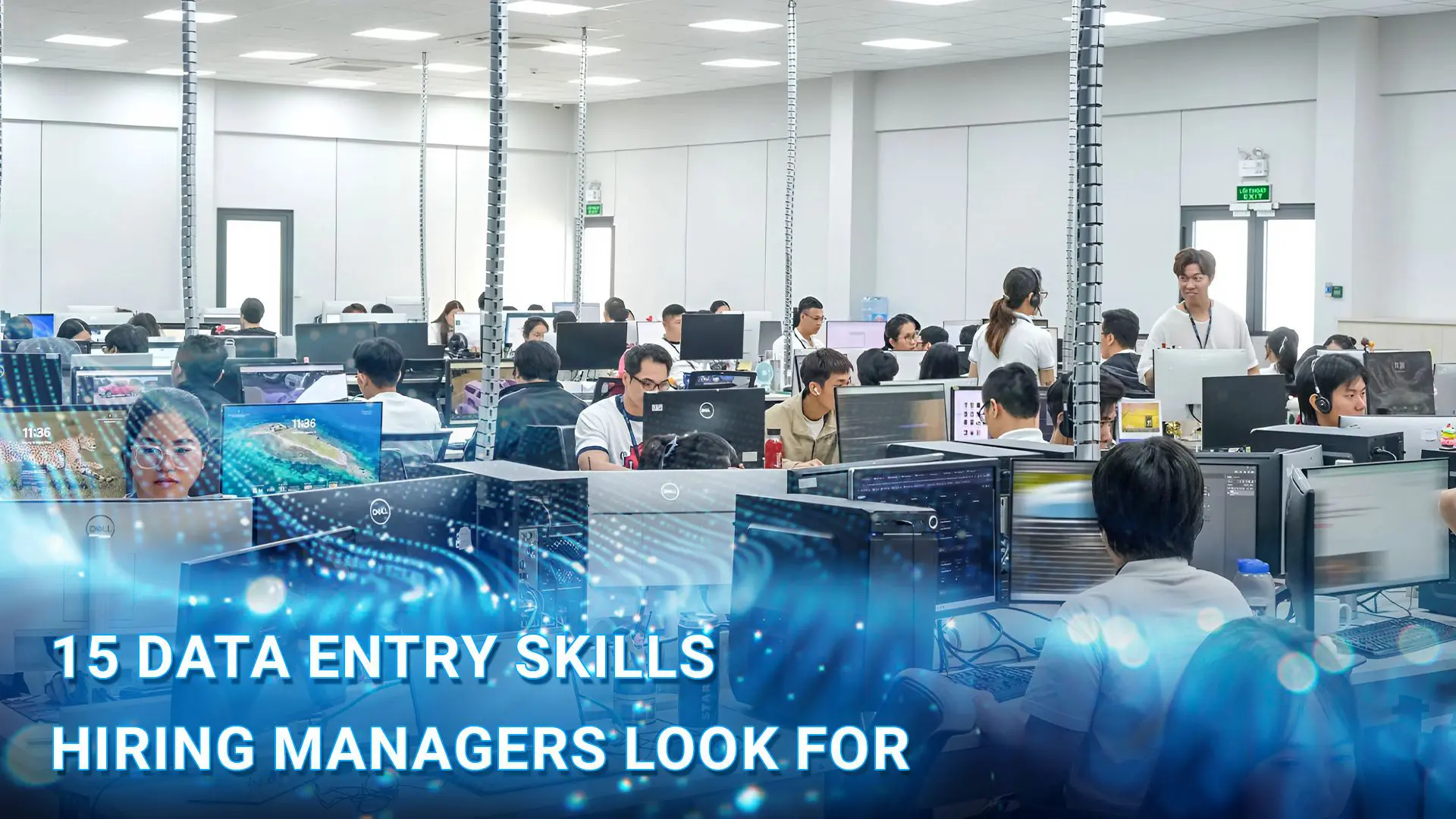

The effective use of remote data entry services is rapidly becoming a key strategy for maintaining the agility and sustainable growth of businesses in an era where every decision is data-driven. For data analysts, the quality of input data is critical; a small error in data entry can lead to seriously erroneous conclusions. This article will delve into the nature of virtual data entry services, why modern companies are strongly shifting towards online data entry support, and how to choose a reliable outsourced data input services partner.
What Are Remote Data Entry Services?

Remote data entry services involve outsourcing data entry tasks to a service provider or professionals working remotely, rather than performing them in the company’s on-site office. This service is not simply about typing and converting paper documents to digital format; it encompasses a range of information management tasks.
Professional outsourced data input service providers typically handle a wide variety of data types, including data entry from invoices, survey forms, medical records, legal documents, customer lists, and then updating product databases on e-commerce platforms or other output platforms as requested by the client. This process requires meticulous attention to detail to ensure accurate data transfer from unstructured or semi-structured sources into the client’s database management systems (DBMS) or CRM software.
Thanks to cloud computing technology and online collaboration tools, virtual data entry services have become more seamless than ever. Remote teams can securely access customer systems through encrypted connections to perform tasks, or receive raw data via secure file-sharing channels, process it, and send back the final results. For the data analytics field, this service plays a crucial preparatory role, ensuring that raw data is cleaned, standardized, and ready for data mining and business analysis by senior management.
Why Businesses Outsource Remote Data Entry?
The decision to switch from in-house data entry to remote data entry services often stems from the need to solve difficult operationa l efficiency and cost-effectiveness problems. As data volumes increase exponentially, maintaining an in-house data entry team becomes cumbersome and inefficient. Below are the main motivations driving businesses to seek external online data entry support solutions.
Cost reduction and overhead savings

The most obvious and immediate benefit of using outsourced data input services is the ability to significantly reduce costs. Maintaining a full-time data entry employee in the office requires businesses to pay not only for basic salaries but also for benefits, insurance, taxes, office space, and computer equipment and software.
Especially for businesses in North America or Western Europe, personnel costs for these repetitive administrative tasks are very high. By outsourcing to service providers located in countries with a cost advantage in labor while still ensuring high quality, businesses can save up to 60-70% of related operating costs. This saved capital can be reinvested in core activities such as research and development (R&D) or expanding the market for products/services.
Access to trained, scalable remote teams
Professional data entry service providers always have a large, highly trained and specialized team of data entry professionals. Unlike in-house employees who may have to handle multiple tasks, virtual data entry service specialists focus entirely on the speed and accuracy of data entry.
They are typically proficient in advanced data entry tools and software, as well as rigorous quality control processes. Furthermore, scalability is an advantage when using external services. When a business faces a large, unexpected project (e.g., digitizing a 10-year archive), the service provider can quickly mobilize dozens, even hundreds, of additional personnel to meet deadlines without the business having to go through a time-consuming recruitment and training process.
24/7 data handling and faster turnaround

The speed of information processing is a factor that makes outsourcing a worthwhile option for businesses.
Using these services, your business can send raw data at the end of the workday in the US or Europe. While your internal team rests, the remote data entry team on the other side of the globe will begin working. As a result, the data is already processed and ready on the system when you start your new workday the next morning. This rapid turnaround time significantly speeds up data-dependent business processes, from order approvals to market analysis report updates. The service provider’s team will also work continuously and in shifts 24/7.
Minimizing in-house staffing challenges
Managing a large team of employees performing repetitive tasks like data entry often comes with numerous staffing challenges: high turnover rates, low motivation, and the need for ongoing training for new hires.
Using online data entry support helps businesses shed this management burden. The service provider takes full responsibility for recruiting, training, managing performance, and maintaining the stability of the data entry team. The company’s internal HR department is freed up to focus on growth strategies and more core, critical tasks.
Benefits of Remote Data Entry for Growing Companies
For rapidly growing companies, flexibility and efficiency are key to avoiding falling behind. Integrating remote data entry services into the operating model offers strategic benefits – not only cost savings but also significant operational advantages.
Improved operational efficiency

When time-consuming manual data entry tasks are outsourced to outsourced data input services, the internal workflow of the business becomes more streamlined. There is no longer a situation where critical processes are bottlenecked due to waiting for data to be entered into the system.
For example, the accounting department can process invoices faster, and the sales department has instant access to the latest lead information updated from events. This overall operational efficiency improvement helps businesses react more quickly to market changes and customer demands, creating a competitive advantage as your team is freed up time.
Higher data accuracy through trained specialists
This is the most important benefit for the data analytics community. As mentioned, input data is the gold standard in analytics. Reputable virtual data entry service providers apply rigorous quality assurance (QA) processes, often including double-keying – where two different employees enter the same data and the system alerts if there is a mismatch.
They also use automated error checking tools and manual monitoring to ensure accuracy can reach up to 99.9%. Clean, high-quality data is an indispensable prerequisite for analytical models and machine learning algorithms to function effectively and make accurate business predictions.
Flexibility to scale up or down quickly

A growing business’s data processing needs rarely remain constant. Processing demands can surge seasonally or during large marketing campaigns.
Online data entry support services offer the flexibility to adapt to these fluctuations. Businesses can easily request an increase in data entry personnel during a peak month and reduce it to a maintenance level when demand returns to normal.
Increased productivity for internal teams
The most valuable benefit of outsourcing data entry is freeing up your most valuable resource. Imagine your highly paid data analysts spending 30% of their working time manually and repeatedly entering and cleaning data. That’s a huge waste of talent.
When this burden is shifted to remote data entry services, internal teams can focus 100% of their energy on higher-value tasks such as trend analysis, predictive modeling, business strategy development, and customer interaction. This not only improves overall productivity but also enhances employee job satisfaction.
How to Choose the Right Remote Data Entry Service Provider
Choosing the wrong outsourced data input service provider can lead to data security risks and poor quality, with consequences far more serious than not outsourcing at all. To ensure success, businesses need to thoroughly evaluate potential providers based on the following rigorous criteria.
Experience and portfolio evaluation

Practical experience is the most important measure. Look for providers with a long history and a proven track record. Have these providers previously run projects for clients in the same industry as you? Do they have experience handling the specific type of data you need to import?
Ask to see case studies and get feedback from their previous clients. An experienced virtual data entry services provider will understand the technical terms and specific requirements of your business, minimizing initial learning curve and errors.
Data Security Certifications
In the context of increasing data breaches, information security is non-negotiable. When you outsource data entry, you are sharing sensitive business and customer data with third parties.
Ensure your online data entry support partner adheres to stringent international security standards. Certifications such as ISO 27001 (for information security management) are a good indicator. If you operate in the European market, the partner is required to comply with the General Data Protection Regulation (GDPR). Ask them about the technical security measures (encryption, firewalls, access control) and physical security at their facility.
Quality Assurance Process

Ask them to present the specific process for achieving this. A robust QA process for remote data entry services should include multiple layers of testing.
Confirm whether they use OCR (Optical Character Recognition) technology in conjunction with manual testing? What is the committed error rate? How do they handle exceptions or unclear data? A clear and transparent process will give you confidence in the quality of the final output, ensuring the data is ready for advanced analytical purposes.
Pricing Transparency and SLAs
The pricing model needs to be clear and easy to understand to avoid unexpected costs later. Vendors may charge by the hour, by the number of keystrokes, or by project. Choose the model that best suits your work requirements and budget. Also, clarify their pricing model before starting implementation.
Additionally, a SLA is crucial as it provides the legal basis for evaluating the performance of the outsourced data input services provider and ensures your business’s rights are protected in case of problems.
Conclusion
Integrating remote data entry services into operational strategies is not just a short-term cost-cutting measure, but also a long-term step towards optimizing performance and enhancing competitiveness. These solutions free up internal resources, ensure scalability, and, most importantly for data analytics, provide an accurate and reliable source of input data. To begin your digital transformation journey for your data entry process and receive professional advice on the most suitable solutions, contact DIGI-TEXX today to explore the potential of your data.