
With so many competitors on e-commerce platforms, highlighting product images is crucial. Therefore, ecommerce photo retouching is not just a simple post-production process, but a key factor determining the success or failure of an online store. The first thing that catches a customer’s attention when they visit your website is the image. A carefully crafted product image that adheres to ecommerce product image standards will tell your brand story better than a thousand advertisements.
The Real Reason Your Product Photos Aren’t Converting

Have you ever wondered why, despite having high-quality products, your sales remain stagnant? After considering all factors, most people will conclude that the images displayed aren’t convincing enough. With online shopping, customers can’t touch, hold, or try the product. They place their trust entirely in what they see. If e-commerce photo retouching isn’t done properly, the images will lack depth, have inaccurate colors, or clearly reveal product flaws.
The reason many people fail to convert their product photos stems from a lack of professionalism in product image cleaning services. Dust, small scratches on the product surface, or uneven lighting can make the product look old and of much lower quality than it actually is. Furthermore, each e-commerce platform like Amazon, eBay, or Zalora has its own strict regulations. Not understanding marketplace photo guidelines can lead to reduced visibility for your products, or even rejection from listing.
A sharp, realistic photo, completely free of distracting elements, will help buyers clearly visualize the product, thus shortening the decision-making time. This is a crucial step in turning casual viewers into loyal customers.
Types of Ecommerce Photo Retouching
Always remember that each type of product requires specialized processing techniques to highlight its unique beauty. Below are the most common types of ecommerce photo retouching that businesses should consider to enhance their brand image.
Retouch for fashion items and models.

In the fashion industry, the human element and the clothing must blend perfectly. Ecommerce photo retouching for fashion isn’t just about adjusting brightness; it also includes techniques like Ghost Mannequin to create a 3D effect for clothing, helping customers visualize the fit. For lookbook photos, skin retouching is crucial.
However, the biggest challenge is preserving the natural skin texture while removing unwanted blemishes, dark spots, or wrinkles. A professional service will know how to balance this, avoiding making the model’s skin look like a wax statue. Additionally, adjusting the garment’s shape and fabric folds to create a smooth yet naturally flowing drape is an essential part of ecommerce product image standards.
Retouch for shiny surfaces
Photographing products with shiny surfaces like jewelry, watches, eyeglasses, or metal household items is a nightmare for many photographers due to reflection issues. This is where product image cleaning services come into play. Technicians must meticulously process every detail to remove reflections from the camera, the photographer, or the surrounding environment from the product surface.
The ecommerce photo retouching process for glossy surfaces requires advanced techniques in light re-lighting to highlight the shine and luxury of metals or gemstones without dazzling the viewer. Controlling contrast and white balance also needs to be done carefully to ensure that gold, silver, or platinum colors are displayed accurately, strictly adhering to marketplace photo guidelines for color fidelity.
Retouching for Cosmetics and Beauty Bottles

The cosmetics industry always demands absolute perfection. A small scratch on a perfume bottle or a bit of dust on a lipstick can diminish the value of a high-end product. Ecommerce photo retouching for cosmetics focuses on cleaning the packaging surface, clarifying labels, and creating a vibrant liquid effect – for liquid products.
Technicians often have to redraw the bottle outlines to make them look sharper, while also adjusting the glossiness and matte finish to match the actual material of the packaging. For cream or liquid products, the shades must be adjusted precisely to reality, as customers buying cosmetics online rely entirely on the colors displayed on their screens. Therefore, adhering to ecommerce product image standards in this industry is mandatory to avoid return rates due to color discrepancies.
Retouching for Food Products
For the F&B industry, food photography aims to stimulate the appetite. Ecommerce photo retouching for food is not just about cleaning the background, but also about the art of making food look more appetizing. Technicians will enhance color saturation to make vegetables look fresher and greener, meat look juicier, or add smoky effects to create a sense of warmth.
However, in this field, creating overly artificial images is not advisable. Product image cleaning services will help remove leftover food scraps and greasy stains on the plate, but still preserve the natural imperfections of the food to ensure authenticity. The goal is to create an image that makes viewers feel hungry immediately without feeling like it’s a product that has been excessively edited.
How Much Ecommerce Retouching Actually Costs
The cost of ecommerce photo retouching is always a headache for many businesses. Understanding pricing structures will help you optimize your budget while ensuring high-quality output images.
Price per image based on complexity

Typically, service prices are calculated per image and depend heavily on the complexity of the output. A simple image requiring only background removal and basic color correction will have a low price. However, when the request is for high-end retouching such as skin retouching, jewelry surface reconstruction, or complex background merging, the cost will increase depending on your requirements for the output.
Differences between agency pricing

There will always be a significant difference between the prices of freelancers and professional agencies. Freelancers may offer lower prices, but this often comes with risks regarding deadlines and inconsistencies in quality when handling large volumes. Conversely, agencies that provide industrial-scale ecommerce photo retouching processes with a rigorous QC team ensure that all 1000 photos adhere to the same ecommerce product image standards. Agency pricing is usually stable, and they offer good discounts for large orders.
Hidden fees buyers often overlook: When outsourcing photo editing services, there will always be unforeseen costs if you don’t ask clearly. Some companies will charge extra fees for rush edits (rush fee), revision fees if you are not satisfied with the initial result, or fees for exporting files in special formats. To avoid these extras, always discuss marketplace photo guidelines thoroughly with the service provider and request a comprehensive quote from the outset.
What NOT to Do When Retouching Ecommerce Photos
In an effort to make products look perfect, many businesses fall into the trap of over-editing, leading to counterproductive results. Below are some fatal mistakes to avoid when performing ecommerce photo retouching.
Over-editing that makes products look fake.
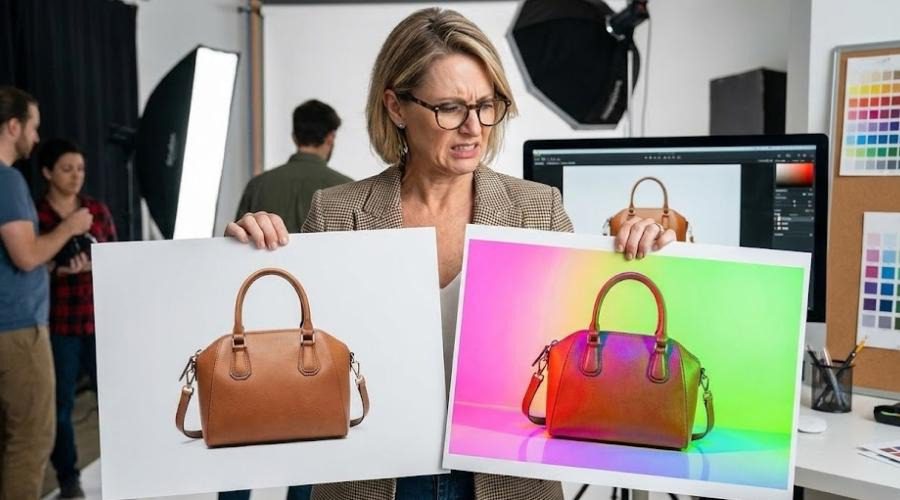
The most common mistake is over-editing. Excessive surface smoothing makes a leather bag look like it’s made of plastic, or increasing color saturation too much makes the actual product look paler than the photo. Remember, today’s customers are very discerning; they easily spot unnatural photos and decide not to buy the product. The goal of product image cleaning services is to enhance the product, not turn it into an edited version that no longer resembles reality.
Wrong skin tones in fashion & model shots.
One of the most serious problems in photo editing is distorted skin tones in fashion and cosmetic photos. Adjusting the color of an entire photo can sometimes unintentionally alter the model’s skin tone, making them look pale or overly red – leading to not only an unprofessional appearance but also potentially causing racial controversy. A standard ecommerce photo retouching process should use masks to separately adjust clothing and skin tone, ensuring both are displayed accurately and naturally.
Inconsistent color temperatures across listings.

Imagine a customer browsing your product catalog: some images have a bluish tint, others a yellowish tint, even within the same collection. Inconsistent color temperatures create a cluttered, unprofessional feel and reduce brand credibility. Adhering to marketplace photo guidelines requires absolute consistency in white balance across all images.
Using too harsh or unrealistic shadows.
Shadows help create depth and a sense of space for the product. However, using artificial drop shadows that are too strong, too sharp, or in the wrong direction of light will make the object look like it’s “floating” or has been carelessly edited. In e-commerce photo retouching, the technique of creating shadows (natural shadows or reflection shadows) needs to be done subtly, accurately simulating the main direction of light so that the product stands firmly against the background.
Conclusion
E-commerce photo retouching has become an indispensable process for transforming raw photos into powerful sales tools. Investing in image quality, strictly adhering to e-commerce product image standards and marketplace photo guidelines not only makes your store more professional but also significantly increases conversion rates.
If you’re ready, let the experts at DIGI-TEXX assist you with comprehensive product image cleaning and photo editing solutions. With experience processing millions of images for the international market, we are committed to delivering high-quality, consistent images ready to conquer even the most demanding e-commerce platforms.