Customer service outsourcing means assigning agreed customer interactions and support workflows to an external team. For multilingual operations, choose a partner by language proficiency, channel coverage, operating hours, quality assurance, and escalation ownership—not its language count alone. A useful proposal shows who resolves each issue, in which language, and how the result is measured.
DIGI-TEXX offers multilingual customer support and related business support services. Other options include global CX providers, managed support teams, staffing firms, and specialist reception services. This guide explains how to compare these models, evaluate 15 providers, and build a multilingual operation around measurable customer outcomes. [1][2]
Editorial disclosure: This guide is published by DIGI-TEXX and includes DIGI-TEXX. The providers below are not an independent ranking. Descriptions reflect linked public materials reviewed on 26 October 2026; suggested applications and procurement questions are editorial assessments. Confirm project-specific languages, staffing, locations, prices, and service commitments directly.

>>> See more:
- Outsourced Live Chat Services For Customer Support | DIGI-TEXX
- Multilingual Customer Support Services | DIGI-TEXX
- Professional Outsourced Help Desk Services | DIGI-TEXX
What Is Customer Service Outsourcing?
Customer service outsourcing is the practice of transferring part or all of a company’s customer-facing support operations to an external provider. Instead of hiring and managing every agent internally, businesses can rely on a specialized customer service outsourcing company to handle customer inquiries, issue resolution, and ongoing support.
Depending on the provider, outsourced customer service can cover:
- Phone calls for inquiries, complaints, and account issues
- Live chat and email for real-time and ticket-based support
- Social media and messaging for customer engagement
- Technical support for troubleshooting and product assistance
The goal goes beyond cutting costs. A well-designed outsourcing model can help businesses scale support capacity, extend service hours, access specialized talent, and maintain consistent service quality without expanding an in-house team at the same pace. For example, DIGI-TEXX provides 24/7/365 support across phone, chat, email, messaging, and other channels, with multilingual and technical support capabilities.
Customer service vs. customer support: Customer service generally covers broader assistance, while customer support often focuses on troubleshooting and technical issues. Since most outsourcing providers handle both functions, this guide uses the terms interchangeably.
The best customer service outsourcing companies do more than answer calls or reply to tickets. The right provider should match your support volume, preferred channels, languages, service hours, security requirements, and level of operational control.
The 15 providers below represent different outsourcing models, including managed BPO, dedicated staffing, nearshore delivery, on-demand support, and specialized customer service. Each company is evaluated based on its service capabilities, delivery model, geographic coverage, industry focus, publicly available pricing, and customer evidence where available.
Which Outsourcing Model Fits Your Operation
Managed BPO Or Dedicated Staffing
In managed BPO, the provider takes agreed responsibility for staffing, supervision, QA and service delivery. Dedicated staffing gives you external personnel, but your team may retain daily workflow management, training and quality ownership. Compare who is accountable for resolution, not just the number of agents.
Shared Teams Or Dedicated Teams
A shared team may suit a small or variable queue when the work can be documented clearly. A dedicated team may suit complex products, sustained volume or deeper brand training. Ask how shared capacity is allocated during simultaneous client peaks and how dedicated teams cover absence and turnover.
Onshore Nearshore Or Offshore Delivery
These models describe location relative to the customer business. Select a location using language availability, time-zone overlap, operating controls and total cost. A provider’s headquarters does not establish where your customer data will be accessed or where the assigned agents work.
What Customer Support Work Can Be Outsourced?
Inbound support can cover order enquiries, account questions, complaints and approved policy explanations. Outbound support can cover service updates, appointment confirmations and follow-up on unresolved cases. Define permitted contact purposes and escalation rules before launch.
Digital support can combine email, chat, messaging and social media. Multiple channels become a connected customer experience only when conversation history, identity checks and ownership carry across them. Test what happens when a customer moves from chat to phone.
Technical support should have a documented boundary between routine troubleshooting and specialist investigation. Agents need approved diagnostic steps and a reliable handoff to engineering or internal experts. Back-office follow-through can include ticket categorisation, record updates and coordination with fulfilment, subject to permissions.
15 Customer Service Outsourcing Providers To Consider In 2026
Start with the service model. DIGI-TEXX, Foundever, SupportYourApp and Simply Contact publish multilingual offerings. Helpware, SupportNinja, PartnerHero, Influx, Helplama, Auxis, EverHelp and SkyCom offer different support or operational models. Near and Wing warrant a separate staffing comparison; Back Office Betties is a legal-sector specialist. Inclusion does not establish equal language coverage or capacity. [1][2][5–18]
| Provider | Published focus | Potential application | Verify in the proposal |
| DIGI-TEXX [1][2] | Customer and business support | Customer enquiries linked to administration | Language × channel × shift staffing |
| Foundever [5] | Multilingual CX hubs | Consolidating several country queues | Assigned hub and language QA |
| SupportYourApp [6] | Multilingual and technical support | Software customer enquiries | Troubleshooting and escalation scope |
| Helpware [7] | CX and back-office operations | Interactions with operational follow-up | Ownership of end-to-end resolution |
| SupportNinja [8] | CX operations and improvement | Recurring workflow bottlenecks | Baseline and improvement accountability |
| PartnerHero [9] | Managed human and AI CX | Combined automation and agent support | Billable outcomes and reopened cases |
| Influx [10] | Flexible managed support | Changing or seasonal demand | Peak capacity and notice periods |
| Simply Contact [11] | Multilingual human and AI support | Voice plus translated written queues | Human coverage versus translation |
| Helplama [12] | Phone chat and email support | A defined smaller support queue | Included volume and overage costs |
| Auxis [13] | Nearshore business and IT operations | Support within a broader programme | Customer versus IT service scope |
| Near [14] | Staffing and recruiting | Adding staff to a client-managed team | Who manages training QA and shifts |
| EverHelp [15] | Support teams with AI | Launching a managed support operation | Readiness milestones and human escalation |
| Wing [16] | Managed remote assistant roles | Dedicated support and admin workload | Absence cover and queue supervision |
| SkyCom [17] | Bilingual nearshore support | English and Spanish customer queues | Proficiency and coverage by interval |
| Back Office Betties [18] | Legal reception and intake | Law-firm calls and scheduling | Intake boundaries and routing |
1. DIGI-TEXX
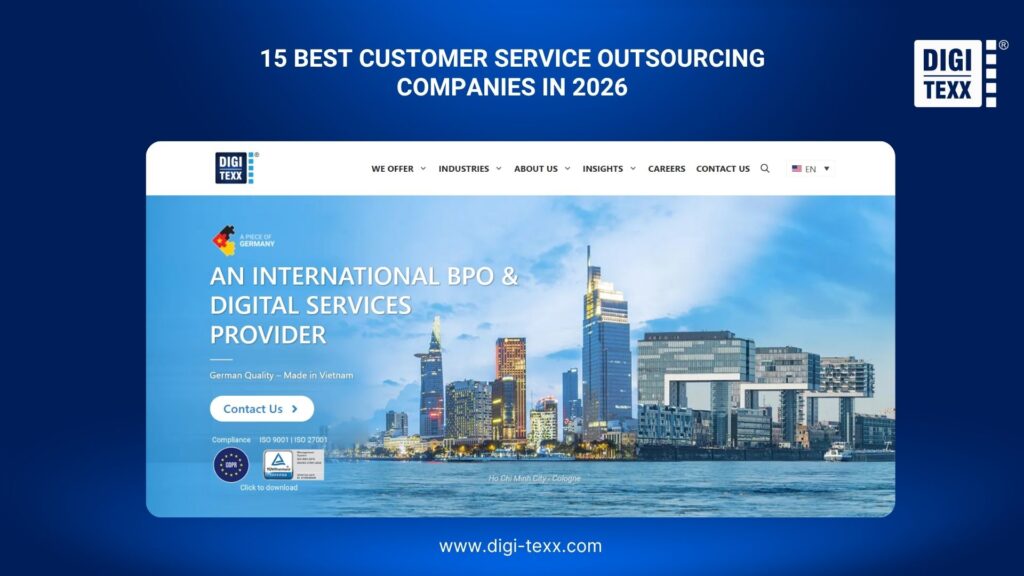
DIGI-TEXX publishes customer support services across phone, email, chat and other channels. Its business support page identifies Vietnamese, English, German, Japanese and Chinese; a separate tele-verification description includes French. These are service-specific statements, not a promise that every language is staffed on every channel and shift. [1][2]
Potential fit: support linked to administrative workflows. Request a language-by-channel staffing plan, sample conversations, reviewer coverage and escalation rules. The website’s “30+ processing languages” should not be relabelled as 30+ spoken customer-service languages. Published round-the-clock availability must be translated into account-specific coverage commitments. [1][2]
Scope to discuss: separate the customer conversation from the work needed to complete it. An ecommerce enquiry may require an order lookup and a fulfilment handoff; an insurance enquiry may require a policy-information response and referral to the authorised claims team. These are illustrative applications, not published DIGI-TEXX customer-support case results. Define which records agents may view, what they may change and which decisions remain with the client.
Language validation should be practical. Ask for voice and written assessments for each requested market, the available proficiency level, the language used by QA reviewers and backup arrangements when a specialist is absent. A French tele-verification capability, for example, should not automatically be assumed to include French technical-support chat. Confirm the proposed scope against the relevant service descriptions. [2]
A useful pilot would cover routine questions, a complaint, missing information and an escalation requiring internal action. Request the proposed staffing by interval, training and QA ownership, reporting sample and commercial assumptions. Assess customer-support quality using the pilot’s own measures; company-wide headcount and document-processing accuracy are not substitutes for an account-level delivery plan.
>>> See more:
- Why Retail Outsourcing Is a Smart Strategy for Retail Businesses?
- Multichannel Contact Center Services | DIGI-TEXX
2. Foundever
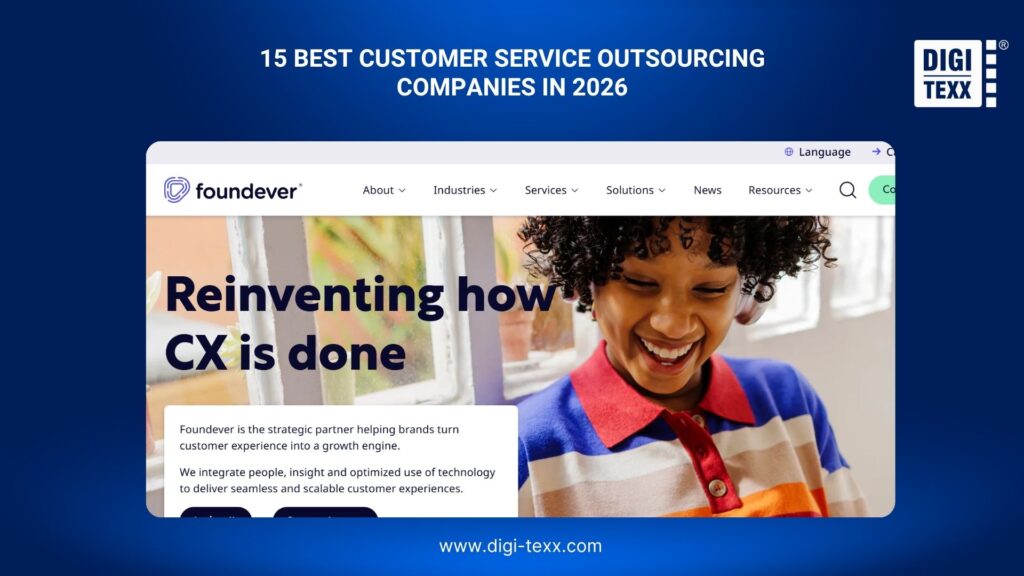
Foundever publishes multilingual customer support delivered through a network of hubs. Its service page reports support in more than 60 languages. Potential fit: businesses consolidating support across markets. Ask which hubs and languages will serve your account, how quality is calibrated across locations and which hours are included. A global language portfolio does not prove immediate staffing availability. [5]
Buying scenario: a company operates several country support teams and wants a common reporting and quality framework. The evaluation should examine how local language knowledge is retained when queues are consolidated. Ask for an ownership map covering the central programme manager, each delivery hub and each language reviewer.
In the pilot, send comparable contact reasons to different language queues and review policy consistency, escalation quality and resolution. Request separate staffing and pricing assumptions for low-volume languages, because small queues may require a different coverage model from the main market. Compare the proposed account configuration rather than the provider’s aggregate global footprint.
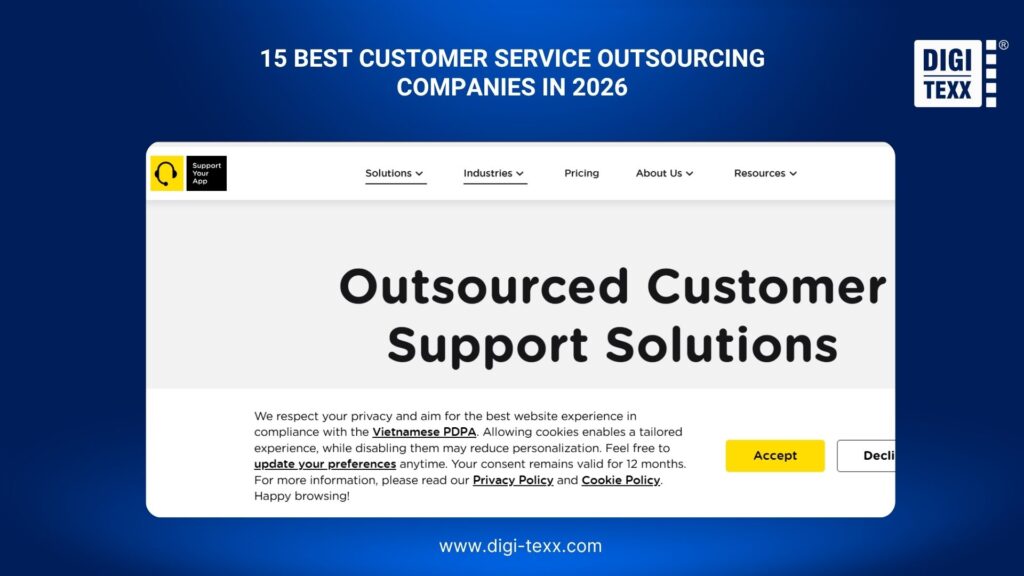
3. SupportYourApp
SupportYourApp publishes multilingual customer support, including voice and digital channels, with a stated 60-plus-language offering and 24/7 service. Potential fit: businesses seeking customer and technical support across markets. Test your actual language pairs and product scenarios, and confirm where human agents handle issues versus automation or translation tools. [6]
Buying scenario: a software business needs multilingual assistance for account access, product questions and initial troubleshooting. Distinguish agents following approved troubleshooting steps from engineers diagnosing product defects. Agree the evidence an escalation must contain, such as reproduction steps and relevant customer context.
Ask how product releases and incident updates reach every language queue. Test whether an agent can explain an unfamiliar issue accurately without inventing a fix. If AI drafts replies, agree the review process and escalation conditions. Quote comparisons should include training for product changes, specialised language coverage and any software or automation charges.
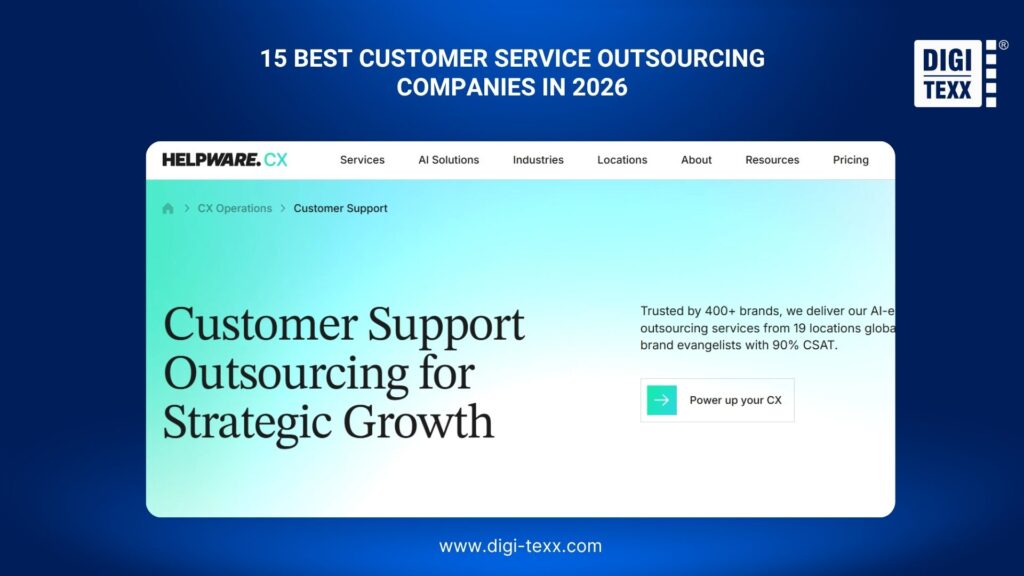
4. Helpware
Helpware’s published portfolio includes customer support, CX operations, back-office work and technical support alongside AI and technology services. Potential fit: an operation requiring customer interactions and related operational tasks. Confirm the scope of the CX engagement separately from software or AI implementation, with named owners for handoffs and unresolved work. [7]
Buying scenario: customer conversations create administrative follow-up that currently moves between separate teams. Evaluate whether one proposed operating model can own both the response and the handoff, while keeping approval authority with the right person.
Request a process map from incoming contact through CRM documentation to final resolution. The pilot should include an incomplete record and a case rejected by the downstream team. Measure whether the customer receives a clear update and whether the work returns to a named owner. Ask which improvement and integration activities are included in the recurring fee.
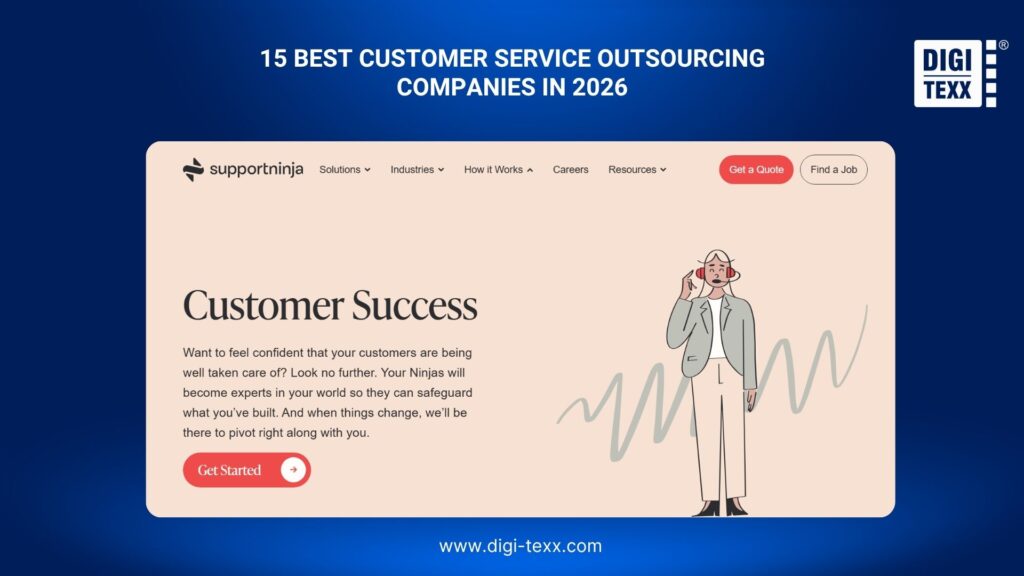
5. SupportNinja
SupportNinja positions its offering around operating and improving CX workflows with technology and human review. Potential fit: businesses seeking ongoing operational delivery with process improvement. Request evidence relevant to your product, languages and ticket complexity; agree how improvement work will be measured separately from routine service levels. [8]
Buying scenario: an established support queue has recurring bottlenecks rather than simply too few agents. Ask the proposed team to distinguish staffing shortfalls from knowledge gaps, product defects and unclear policies. Each diagnosis should lead to a specific action and owner.
Evaluate a sample weekly operations review: it should explain the causes of repeat contacts and aged tickets, not only report activity totals. If automation is proposed, compare outcomes for automated and human-assisted cases, including reopen rates. Keep productivity commitments separate from assumptions that require changes to your product or internal systems.
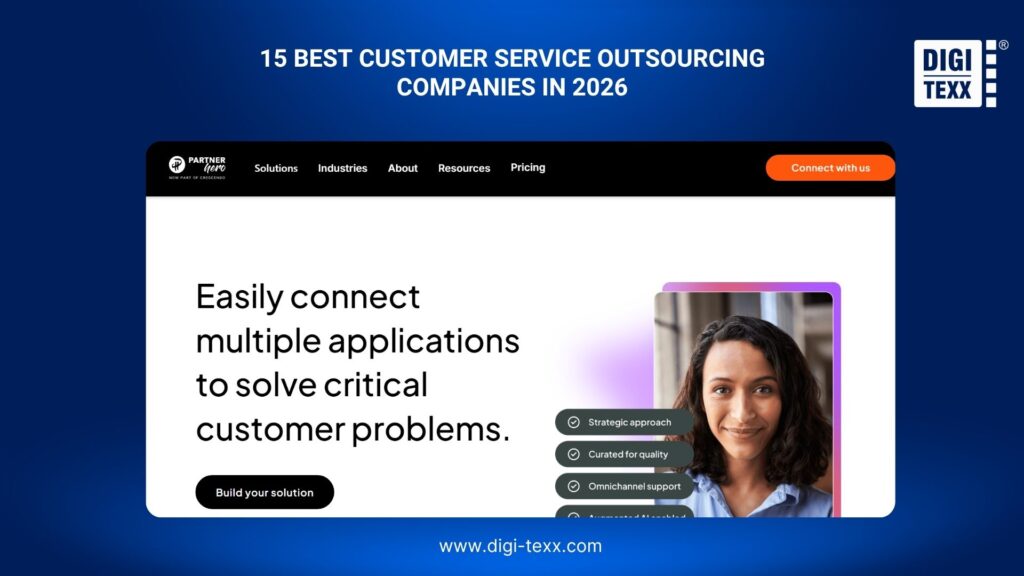
6. PartnerHero
PartnerHero’s site describes managed CX teams and AI-assisted service powered by Crescendo. It also presents outcome-based pricing. Potential fit: businesses evaluating combined human and automated support. Define a billable outcome, how reopened cases count and who handles an incorrect automated answer before comparing commercial proposals. [9]
Buying scenario: a business wants one partner to operate human support alongside AI-assisted workflows. Start by defining which contact reasons can be automated, which require review and which must always reach an authorised person. Ask how the customer’s context is retained during a handoff.
For outcome-based proposals, test the charging rules against a reopened ticket, a duplicate enquiry and a case escalated to the client. Agree how incorrectly closed cases are corrected and reported. Compare the complete service, including knowledge maintenance, agent supervision, automation monitoring and access to conversation records at the end of the engagement.
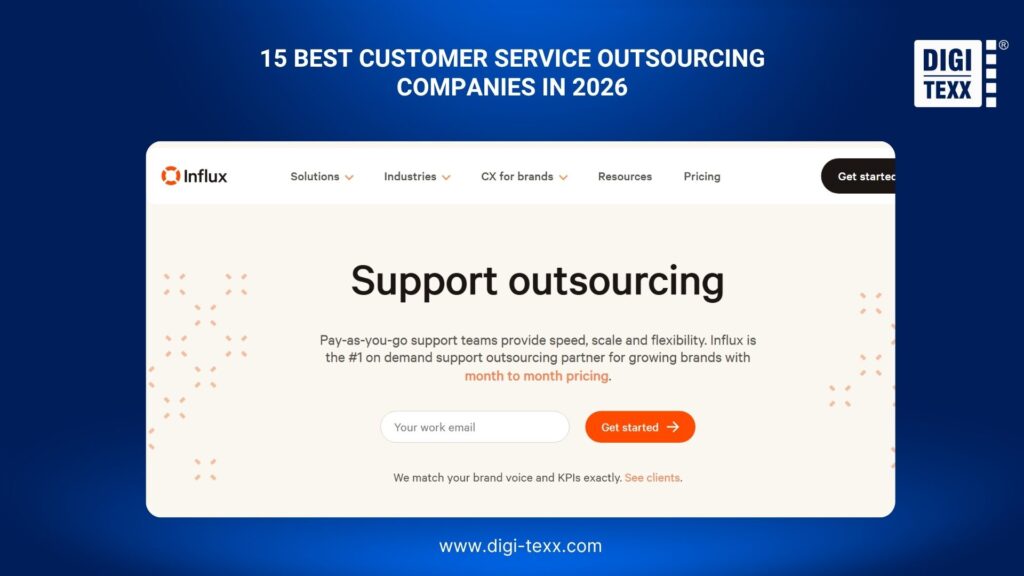
7. Influx
Influx publishes managed customer support with round-the-clock coverage and month-to-month plans. Potential fit: businesses with changing support demand. Ask how peak capacity is reserved, what the minimum commitment includes, and how language coverage and escalation availability vary by plan. Published flexibility still needs an account-specific staffing agreement. [10]
Buying scenario: an online business needs extra support during promotions or product launches without maintaining the same capacity throughout the year. Provide historical arrival patterns and a peak forecast rather than a monthly average alone.
Ask how much notice is required for a volume increase, who is trained before the surge and what happens when demand exceeds the forecast. Test both the busiest interval and the return to normal volume. A flexible commercial term is useful only if staffing, quality review and escalation coverage remain clear throughout those changes.
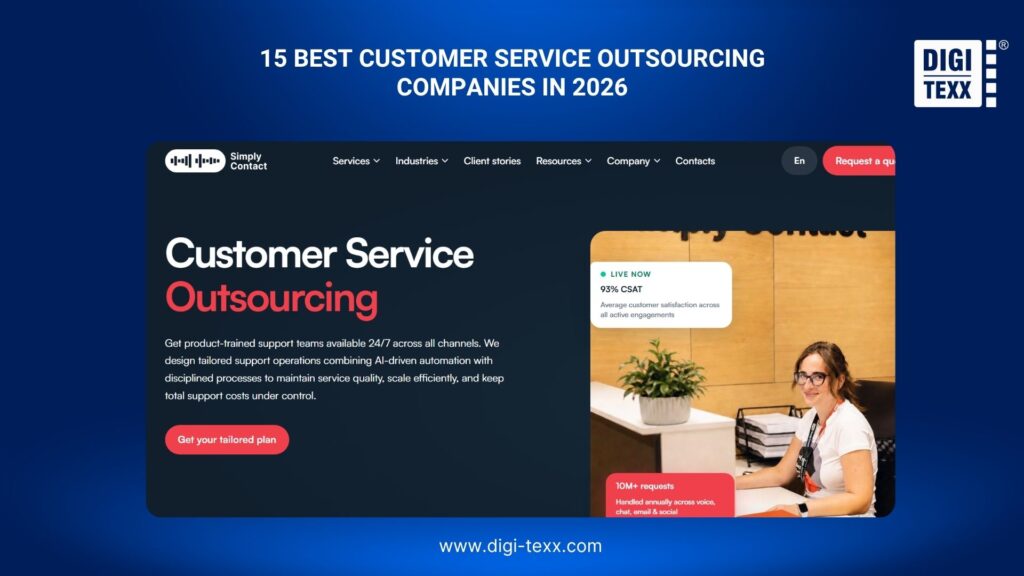
8. SimplyContact
Simply Contact publishes multilingual customer support and describes a model combining native-speaking voice agents with AI translation for some written support. Potential fit: businesses comparing human language coverage with translation-assisted digital coverage. Assess these separately: written translation availability is not evidence of staffed voice capability in the same language. [11]
Buying scenario: an international business has enough volume for native-speaking voice teams in a few markets, but smaller written queues in other languages. Compare these queue types separately and require disclosure of where translation is used.
The assessment should include a message with ambiguous wording, a local product term and a complaint requiring a careful tone. Have a qualified reviewer check the original request and the final reply. Ask how corrections are incorporated into the knowledge base and how quality is reported for low-volume languages instead of being hidden inside a blended average.
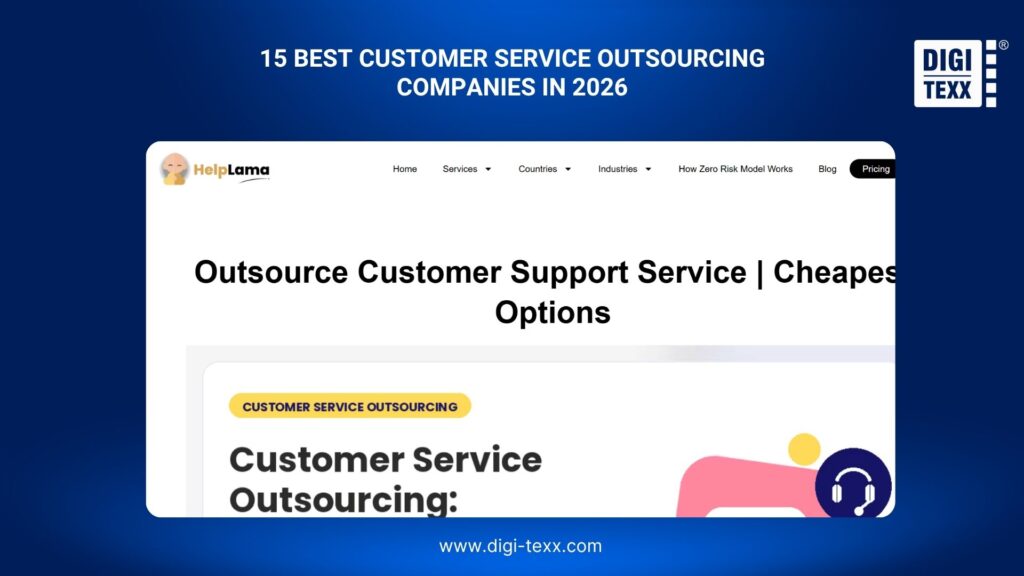
9. Helplama
Helplama publishes phone, live chat and email support, including ecommerce and technical-support services. Potential fit: businesses outsourcing a defined customer support queue. Request a quote for the actual volume and schedule, with explicit treatment of overages, training and complex cases. Do not compare an entry package with another supplier’s fully staffed operation. [12]
Buying scenario: a smaller ecommerce or software business wants to outsource a clearly defined set of enquiries. Prepare examples of normal requests and cases that exceed the intended scope before asking for a package recommendation.
Confirm whether the quote covers all channels, active handling time, after-hours contacts and supervisory support. Ask how agents handle an order exception or a technical issue outside their permissions. Assess total monthly cost at both normal and peak demand; a starting package price is not enough to establish the cost of a complete support operation.
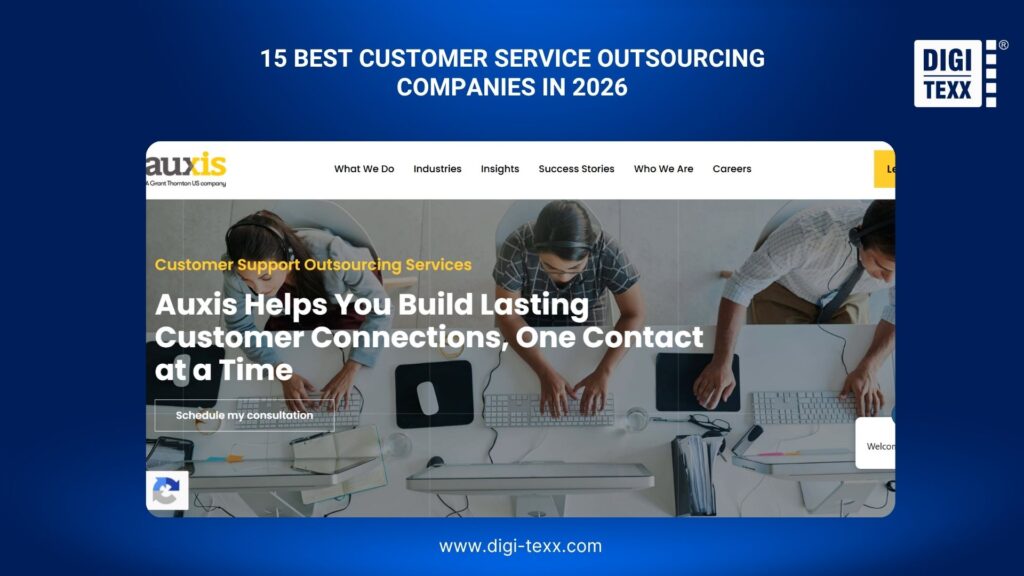
10. Auxis
Auxis publishes nearshore outsourcing, customer service and IT service-desk offerings within a wider business-transformation portfolio. Potential fit: buyers combining support operations with broader process or IT needs. Confirm the delivery site, languages and management scope; keep customer service and internal IT support deliverables distinct in the contract. [13]
Buying scenario: customer service is part of a wider nearshore operations programme. Map customer-facing work separately from internal IT service-desk tasks so that user identities, access rights and escalation destinations remain clear.
Evaluate the proposed overlap with your internal business hours and the handoff when those teams are offline. Request a responsibility matrix for training, workforce planning, system incidents and process improvement. Compare implementation charges with recurring operations fees, and identify any client-side changes required before the proposed service levels can be achieved.
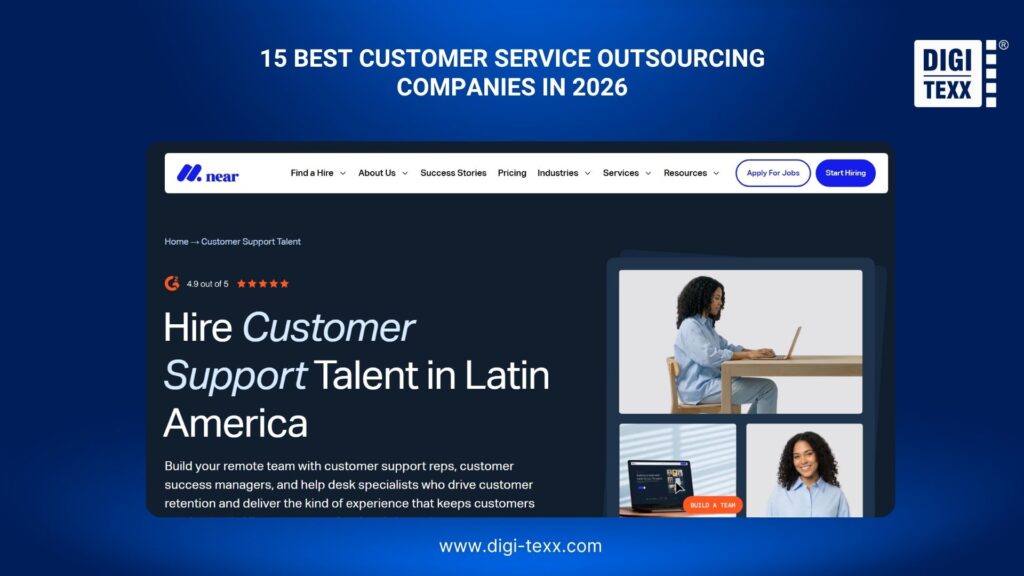
11. Near
Near describes itself as a staffing and recruiting agency helping US companies hire remote talent in Latin America. Potential fit: businesses that want to manage their own externally recruited team. Do not assume that recruiting includes ongoing queue management, QA, workforce planning or contractual resolution targets; identify who will supply those functions. [14]
Buying scenario: a company already has a support manager, working procedures and a quality framework, but needs additional people. Recruiting can address the staffing requirement while the company continues to run the operation.
The buyer should budget for onboarding, queue supervision, reviewer time, technology and backup coverage as well as recruitment or employment-related fees. Assess candidates using realistic language and product exercises. Before comparing this model with managed BPO, add the cost and responsibility of functions that the internal team will continue to perform.
12. EverHelp
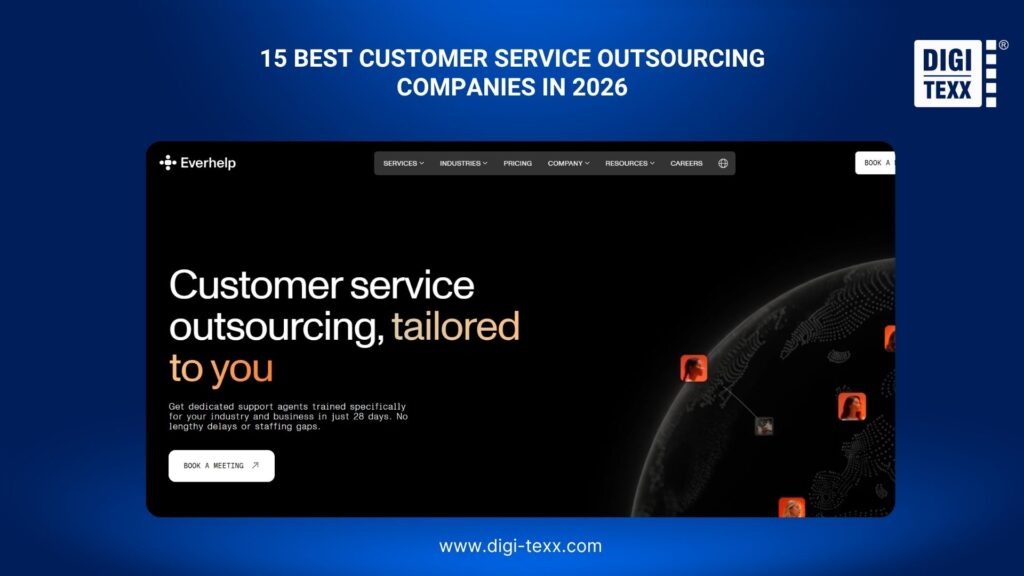
EverHelp presents a customer support model connecting people and AI, with team staffing and launch services. Potential fit: businesses evaluating an externally managed support operation. Ask for the exact human staffing model, languages, onboarding deliverables and escalation coverage rather than treating advertised launch timing or headline results as a commitment for your programme. [15]
Buying scenario: a business wants a partner to assemble and launch a support team while introducing automation where appropriate. Ask for a milestone plan showing knowledge transfer, access setup, training, calibration and pilot acceptance.
Clarify the difference between agents being recruited and the service being ready for live customers. Test human escalation when an automated answer is incomplete or wrong. Ask who updates the knowledge base after a product or policy change, how QA findings become training actions and which launch dependencies are the client’s responsibility.
13. Wing
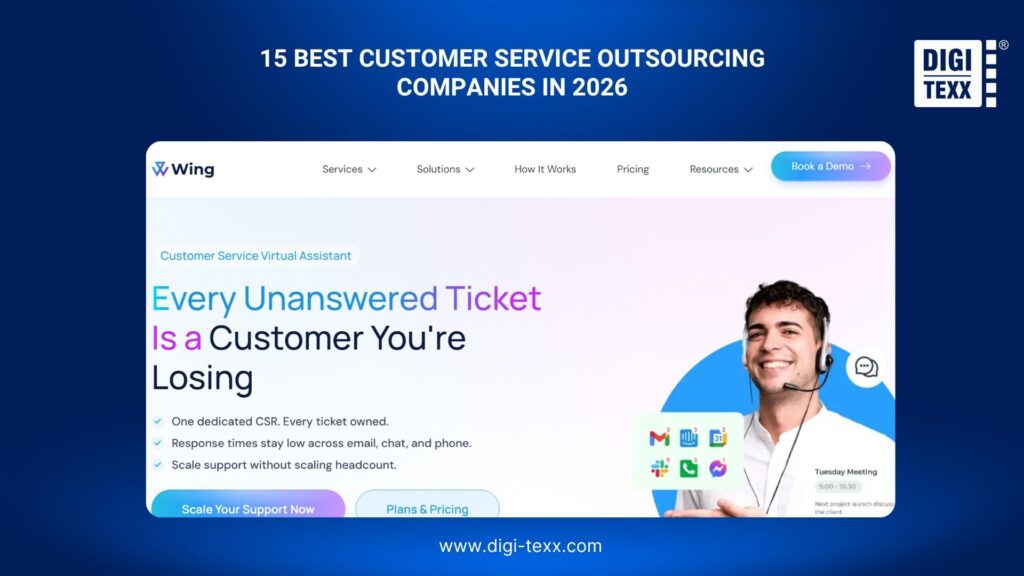
Wing publishes managed virtual-assistant and customer-service roles. Potential fit: businesses seeking dedicated remote personnel for a defined workload. Verify the boundary between assistant supervision and end-to-end support management, including shift backup, QA reviews and access administration. A staffed role is not automatically a multilingual contact-center operation. [16]
Buying scenario: a small team needs a dedicated person to work through a predictable customer-service and administrative workload. Create a role description with priorities, expected hours, permitted actions and a named internal supervisor.
Check what happens during absence, competing task deadlines and unexpected demand. A dedicated assistant may need your team to decide which queue or task takes priority. Compare the proposed management support with your actual need for workforce planning, language QA and multi-shift coverage before treating the model as a replacement for a managed contact center.
14. SkyCom
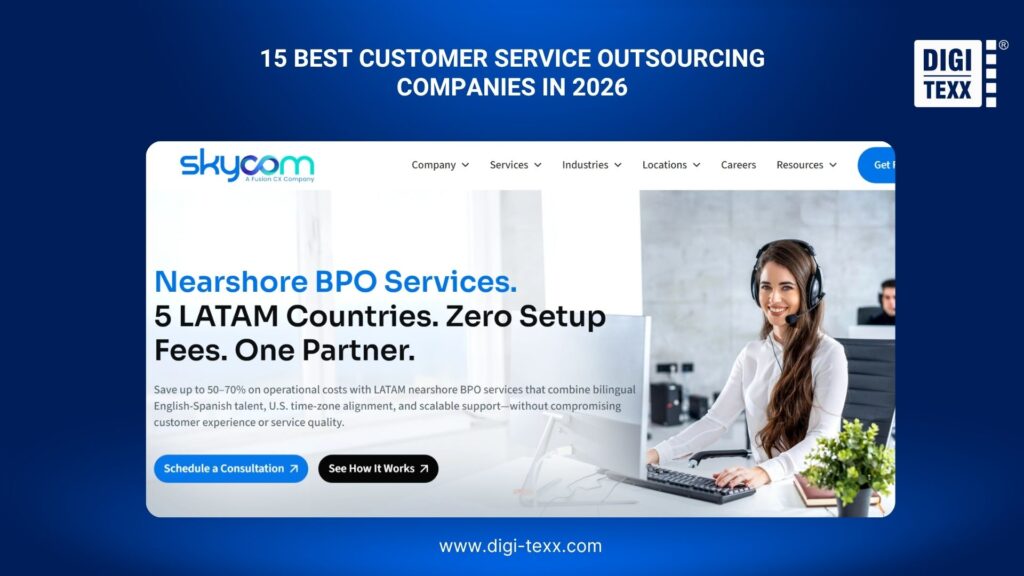
SkyCom publishes bilingual English and Spanish customer-support services and nearshore BPO positioning. Potential fit: US-facing support requiring those languages. Request voice samples, written assessments and shift coverage for the actual team. Additional language requirements should be confirmed individually rather than inferred from the term multilingual. [17]
Buying scenario: a US-facing operation needs English and Spanish assistance with consistent handling across both queues. Test spoken comprehension, written accuracy and the ability to explain the same policy clearly in either language.
Include a bilingual handoff in the pilot and check whether the customer must repeat information. Specify the expected time-zone coverage, language mix at peak hours and backup plan. For sector-specific work, ask for evidence covering the proposed process and team rather than assuming that a broad industry listing establishes suitability.
15. BackOfficeBetties
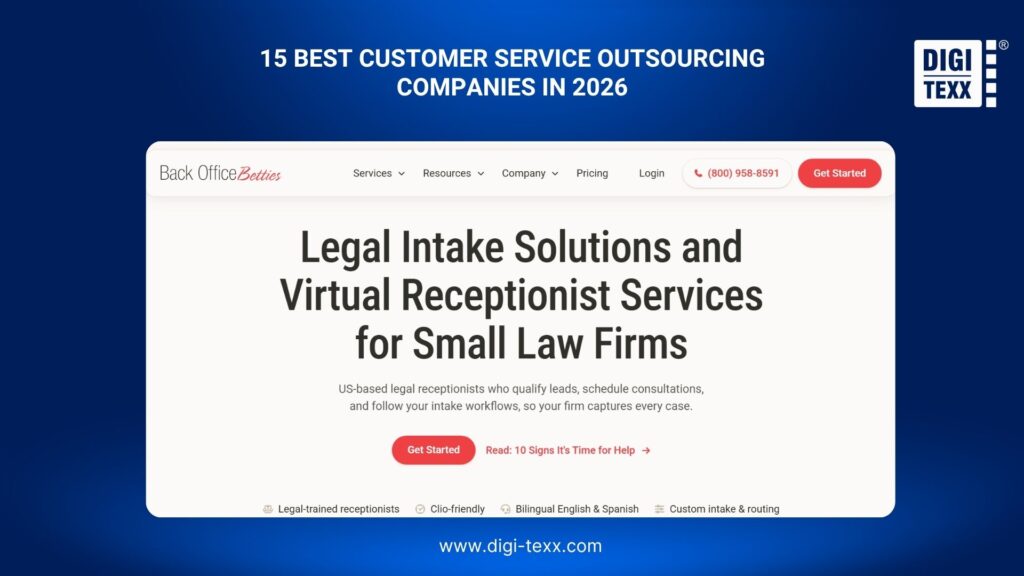
Back Office Betties specialises in legal intake, answering services and virtual legal assistants. Its website identifies English and Spanish capability. Potential fit: law firms needing reception, intake and scheduling support. Compare it against your legal intake workflow rather than treating it as interchangeable with a general technical-support BPO provider. [18]
Buying scenario: a small law firm wants reception and intake to continue while its staff are occupied with client work. Separate collecting information, checking an approved intake checklist and scheduling from giving advice or making an acceptance decision.
Test an incomplete enquiry, an urgent caller and a request outside the firm’s practice area. Agree the routing rules, what the receptionist may say and who receives follow-up tasks. Compare bilingual coverage, overflow arrangements and intake-system access. This specialist scope may be more useful than a broader BPO package when the primary problem is missed calls and inconsistent intake.
>>> See more:
- Back Office Support Services: Benefits, Types, Costs & Outsourcing Solutions
- Outsourced IT Help Desk Services for Businesses | DIGI-TEXX
- Professional Business Support Services | DIGI-TEXX
How To Evaluate Multilingual Delivery
Build A Language And Coverage Matrix
For every language, record the locale, voice and written requirements, service hours with time zone, normal and peak volume, agent proficiency, QA reviewer and backup arrangement. Include public holidays and after-hours escalation. Require suppliers to distinguish staffed human service from machine-translated or automated service.
Test Realistic Conversations
Use product-specific role plays and written tasks, including complaints, ambiguous requests, policy exceptions and a transfer between channels. Assess comprehension, accuracy, cultural appropriateness and ability to explain the next step. A fluent answer that applies the wrong policy should fail the assessment.
Control Knowledge And Translation
Maintain approved terminology, product names and policy versions for each supported market. Assign an owner to review translations and distribute updates. Specify which issues require a human reviewer and how agents should respond when an approved answer is unavailable.
Connect The Front Office To Resolution
Give agents only the system access they need. Define who approves refunds, changes account details or resolves technical exceptions. Each handoff should contain the customer’s issue, actions already taken, next owner and next-update time. Test the workflow before expanding volume.
Design Routing Around Language Intent And Urgency
At intake, identify the customer’s preferred language, contact reason and urgency before assigning the queue. Store these as ticket fields so they remain available during transfers. Route a technical issue to a suitably trained agent; language fluency alone does not establish troubleshooting competence.
For a language without immediate live coverage, define a fallback in advance: a scheduled callback, a written response within an agreed window or an approved translation-assisted interaction. Tell the customer what to expect. Do not silently move an urgent case into a slow queue just because the preferred language team is unavailable.
Use A Human And AI Workflow With Explicit Boundaries
Classify contact reasons before deciding where AI belongs. Routine information retrieval may be suitable for automation when answers come from an approved source. Account-specific changes require verified identity and permissions. Exceptions, unclear requests and situations outside approved policy need a human decision.
Review the entire interaction rather than only the generated wording. A grammatically accurate translation can still carry the wrong amount, delivery promise or policy interpretation. Log the source information and final response where appropriate, and give reviewers a way to flag the failure and correct the underlying knowledge.
Illustrative Ecommerce Workflow
A customer asks in German why an order has not arrived. The intake process records the language and order reference, the agent checks the authorised delivery data and explains the available information using approved terminology. If the carrier status conflicts with the order record, the case moves to fulfilment with a named owner and update deadline.
The support team then contacts the customer in German with the confirmed next step and records the outcome. Measure the complete case, including waiting and repeat contact, rather than treating the first response as success. This example illustrates a proposed operating design; it is not a claimed result from any provider in this guide.
Benefits risks and total cost
Outsourcing can provide additional capacity, extend coverage and reduce the effort of recruiting individual language teams. These benefits depend on a workable service design. Poor training, unclear ownership or missing system access can instead produce repeat contacts and higher internal review costs.
Evaluate savings against the same workload and quality requirement. Include setup, training, agent or transaction fees, supervision, QA, licenses, translation tools, integration, holiday coverage, rework and your retained management time. Ask each bidder to state assumptions, minimum commitments and exit costs.
A practical comparison metric is total support cost divided by resolved cases under an agreed definition. Track reopened issues separately and avoid treating a closed ticket or an automated reply as proof of resolution. This guide does not claim a verified market-average price or universal saving.
Understand what each pricing unit includes
Per-hour or dedicated-resource pricing pays for agreed capacity; check productive hours, supervision and absence coverage. Per-contact or per-ticket pricing links fees to workload, but needs clear rules for duplicate contacts, transfers and reopened issues. A monthly package needs explicit limits, overages and channel coverage.
Outcome-based pricing needs an agreed definition of the result and an auditable treatment of failures. A ticket that is closed automatically but reopened by the customer should not disappear from quality reporting. There is no universally best pricing model: choose one that fits demand, case complexity and the party responsible for each dependency.
Illustrative comparison of total cost
Assume two hypothetical proposals cover the same month and scope. Proposal A costs $12,000 and produces 8,000 resolved cases under the agreed definition: $1.50 per resolved case. Proposal B costs $10,500 and produces 6,000 resolved cases: $1.75 per resolved case. These are invented examples for calculation, not supplier prices or market benchmarks.
Before using this comparison, include equivalent costs in both totals and check comparable issue complexity, language mix and customer outcomes. A lower cost per resolution should not be achieved by refusing difficult cases, discouraging escalation or excluding reopened work.
Reduce dependency before the contract starts
Agree ownership and exportability of ticket history, knowledge articles, training material and performance records. Define how access will be removed and work transferred if the engagement ends. A practical exit plan should explain who handles open cases and how customers continue receiving updates during the transition.
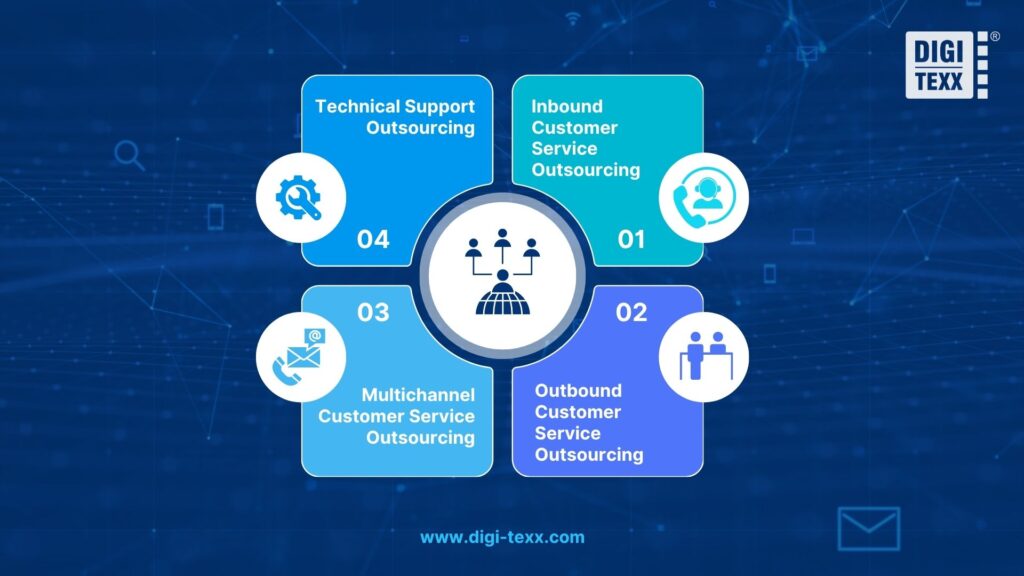
What Are The Main Types Of Customer Service Outsourcing?
Customer service outsourcing can be structured around the type of customer interaction, support channel, or expertise required. The right model depends on service volume, customer expectations, operating hours, and the complexity of issues handled.
Inbound Customer Service Outsourcing
Inbound customer service outsourcing focuses on handling customer-initiated interactions, such as questions, complaints, order inquiries, account requests, and service issues. Outsourced agents respond through phone, email, live chat, or messaging platforms based on the business’s support model.
This approach is useful when internal teams face high call volumes, long response times, or demand spikes. A provider can add trained agents and extended service hours without requiring the company to expand its internal customer service team at the same pace.
Outbound Customer Service Outsourcing
Outbound customer service outsourcing involves proactive interactions initiated by the support team. Common activities include customer follow-ups, satisfaction surveys, appointment confirmations, order updates, retention calls, and lead or customer re-engagement.
Because outbound interactions are more proactive, businesses should define clear contact rules, scripts, escalation procedures, and performance metrics. This helps outsourced agents represent the brand consistently while improving response rates and customer retention.
Multichannel Customer Service Outsourcing
Multichannel customer service outsourcing allows an external team to manage support across multiple communication channels, including phone, email, live chat, social media, SMS, and messaging apps.
The main advantage is continuity across channels. Instead of operating separate teams for different platforms, businesses can centralize workflows, customer information, and service standards with one outsourcing partner. This model is particularly useful for eCommerce and digital businesses where customers expect fast support through the channel they already use.
Technical Support Outsourcing
Technical support outsourcing transfers troubleshooting and product-related assistance to specialized external agents. Services can include help desk support, software troubleshooting, account assistance, product guidance, incident handling, and issue escalation.
This model is common among SaaS, technology, telecommunications, and digital product companies. Providers may use knowledge bases, ticketing systems, remote support tools, and AI-assisted workflows to help agents resolve routine issues while escalating more complex cases to internal specialists.
Benefits Risks And Total Cost
Outsourcing can provide additional capacity, extend coverage and reduce the effort of recruiting individual language teams. These benefits depend on a workable service design. Poor training, unclear ownership or missing system access can instead produce repeat contacts and higher internal review costs.
Evaluate savings against the same workload and quality requirement. Include setup, training, agent or transaction fees, supervision, QA, licenses, translation tools, integration, holiday coverage, rework and your retained management time. Ask each bidder to state assumptions, minimum commitments and exit costs.
A practical comparison metric is total support cost divided by resolved cases under an agreed definition. Track reopened issues separately and avoid treating a closed ticket or an automated reply as proof of resolution. This guide does not claim a verified market-average price or universal saving.
Understand What Each Pricing Unit Includes
Per-hour or dedicated-resource pricing pays for agreed capacity; check productive hours, supervision and absence coverage. Per-contact or per-ticket pricing links fees to workload, but needs clear rules for duplicate contacts, transfers and reopened issues. A monthly package needs explicit limits, overages and channel coverage.
Outcome-based pricing needs an agreed definition of the result and an auditable treatment of failures. A ticket that is closed automatically but reopened by the customer should not disappear from quality reporting. There is no universally best pricing model: choose one that fits demand, case complexity and the party responsible for each dependency.
Illustrative Comparison Of Total Cost
Assume two hypothetical proposals cover the same month and scope. Proposal A costs $12,000 and produces 8,000 resolved cases under the agreed definition: $1.50 per resolved case. Proposal B costs $10,500 and produces 6,000 resolved cases: $1.75 per resolved case. These are invented examples for calculation, not supplier prices or market benchmarks.
Before using this comparison, include equivalent costs in both totals and check comparable issue complexity, language mix and customer outcomes. A lower cost per resolution should not be achieved by refusing difficult cases, discouraging escalation or excluding reopened work.
Reduce Dependency Before The Contract Starts
Agree ownership and exportability of ticket history, knowledge articles, training material and performance records. Define how access will be removed and work transferred if the engagement ends. A practical exit plan should explain who handles open cases and how customers continue receiving updates during the transition.
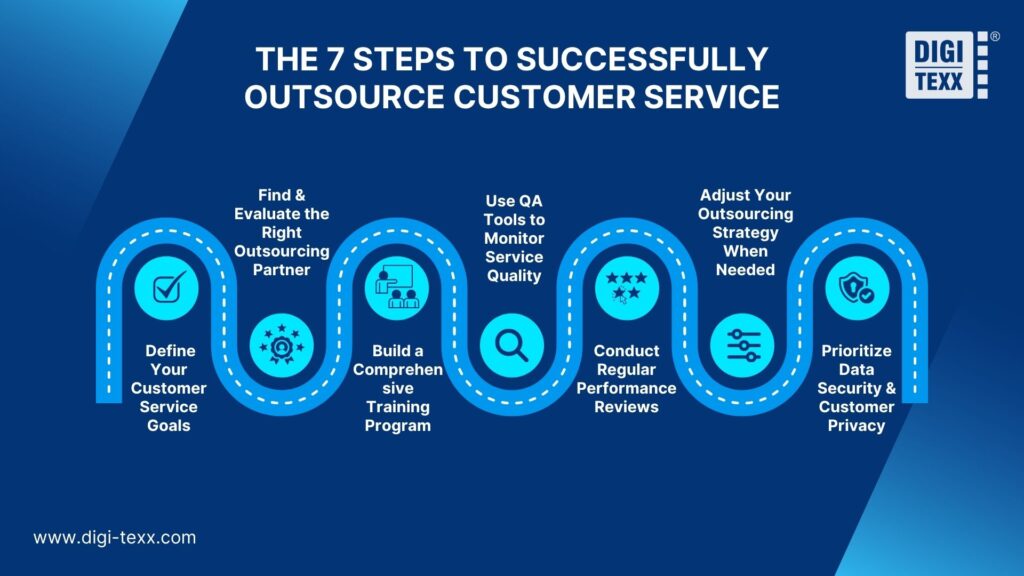
What Are the 7 Steps To Successfully Outsource Customer Service?
A successful customer service outsourcing program requires more than selecting a provider. Businesses need defined objectives, appropriate processes, ongoing quality control, and strong data governance.
1. Define Your Customer Service Goals
Start by identifying why customer service outsourcing is needed and what the external team should improve. Goals may include reducing first response time, increasing CSAT, extending support hours, lowering operating costs, or handling seasonal demand. Define measurable KPIs before selecting a provider so performance can be evaluated against a clear baseline.
2. Find And Evaluate the Right Outsourcing Partner
Compare providers based on their service capabilities, industry experience, support channels, geographic coverage, language capabilities, technology, security standards, and pricing model.
The cheapest provider is not necessarily the most cost-effective option. Businesses should evaluate whether a provider can meet required service levels and integrate with existing CRM, help desk, communication, and reporting systems.
3. Build A Comprehensive Training Program
Outsourced agents need more than a product overview. Training should cover company policies, customer personas, product knowledge, communication standards, escalation procedures, FAQs, and common scenarios.
A structured knowledge base and role-specific training can help agents become productive faster while reducing inconsistent responses.
4. Use QA Tools To Monitor Service Quality
Quality assurance should continue after onboarding. Businesses can use QA tools, call monitoring, ticket reviews, customer feedback, and AI-assisted conversation analysis to identify errors and training gaps.
Useful metrics include CSAT, first response time, average handle time, resolution rate, escalation rate, and quality scores. Automated QA can also help review larger volumes of customer interactions than manual sampling alone.
5. Conduct Regular Performance Reviews
Schedule regular reviews with the outsourcing partner to evaluate KPIs, SLA compliance, customer feedback, staffing levels, and recurring issues.
Performance reviews should lead to specific actions, such as updating training materials, adjusting staffing, improving workflows, or revising escalation rules.
6. Adjust Your Outsourcing Strategy When Needed
Customer service requirements can change as products, markets, and customer volumes evolve. If performance consistently falls below target, determine whether the problem is related to staffing, training, technology, workflow, or the outsourcing model itself.
Depending on the findings, businesses may increase capacity, change processes, move additional channels to the provider, or reconsider the scope of customer service outsourcing.
7. Prioritize Data Security and Customer Privacy
Before giving an external provider access to customer information, review its security controls, certifications, data access policies, encryption, employee access management, incident response procedures, and regulatory compliance.
A strong outsourcing agreement should also define data ownership, permitted data use, retention requirements, breach notification procedures, and responsibilities for protecting customer information.
How To Launch An Outsourced Support Operation
1. Define Scope And Baseline
Document contact reasons, languages, channel volumes, peak patterns and current performance. Select an initial queue with clear ownership and an internal sponsor. Define what stays in-house.
2. Agree Responsibilities And Controls
Approve the workflow, permission levels, escalation owners, knowledge base and reporting definitions. Document access, retention, incident handling and subcontractor arrangements with the relevant internal teams.
3. Train And Calibrate
Train agents and reviewers using the same examples. Have both teams score sample conversations and reconcile disagreements before customer interactions begin. Include language-specific policy and terminology checks.
4. Run A Bounded Pilot
Set a limited scope, staffing plan and acceptance criteria before starting. Include difficult cases and escalation tests. Decide in advance what would require corrective training, an extension or a pause.
5. Expand Only After Acceptance
Review performance by language and channel. Increase volume when quality, resolution and coverage are stable. Maintain a rollback route, refreshed documentation and an owner for ongoing improvements.
6. Use A Phased Launch Plan
An illustrative six-week pilot can begin with scope, baseline and access design in weeks one and two. Weeks three and four can cover knowledge transfer, agent practice and reviewer calibration. Weeks five and six can introduce a controlled live queue and an acceptance review. This is a planning example, not a provider launch commitment; complex systems or language recruitment may require more time.
The acceptance review should consider language quality, correct policy application, escalation completeness and backlog as well as response speed. Record unresolved issues and their owners. If one language queue fails, remediate it before expanding that queue even when the blended programme average looks acceptable.
7. Make Operational Reviews Produce Decisions
Use short operational reviews during launch to resolve access issues, knowledge gaps and urgent staffing problems. Once stable, review recurring causes of contact, quality trends and improvement actions with the supplier. Each action needs an owner, deadline and evidence of completion.
A structured knowledge base and role-specific training can help agents become productive faster while reducing inconsistent responses.
Performance reviews should lead to specific actions, such as updating training materials, adjusting staffing, improving workflows, or revising escalation rules.
Why Choose DIGI-TEXX For Customer Service Outsourcing Services?
DIGI-TEXX provides customer service outsourcing with multilingual, multichannel, and technology-enabled support. Its model combines customer-facing services with broader data and business process capabilities, making it suitable for organizations that need support operations connected to back-office workflows.
Experienced Customer Service Team
DIGI-TEXX provides 24/7/365 customer support with more than 1,200 employees and support capabilities covering 30+ languages. Services include customer inquiries, technical support, consultation, verification, and other business support activities.
The combination of customer service and data-processing capabilities can help businesses manage both customer interactions and related operational tasks through one provider.
Multichannel Customer Support
The service covers multiple customer touchpoints, including phone, email, live chat, messaging, social media, video, and mobile applications. This allows businesses to select channels based on customer behavior instead of relying exclusively on voice support.
For eCommerce operations, DIGI-TEXX also provides voice and non-voice help desk support across multiple languages.
Technology-Driven Service Delivery
Technology is used to support agent workflows, monitoring, reporting, and service quality. DIGI-TEXX also combines customer support with capabilities in document processing, data management, AI, and automation.
This is useful when customer service generates downstream tasks such as data verification, document processing, reporting, or compliance checks, rather than operating as a standalone contact center.
Flexible and Scalable Solutions
DIGI-TEXX offers different delivery and pricing structures, including hourly, transaction-based, volume-based, dedicated-resource, package, and pay-as-you-go models. This gives businesses more flexibility when support volumes fluctuate or when they want to start with a defined service scope.
Data Security and Quality Assurance
Security and QA are integrated into the service delivery model, with DIGI-TEXX citing ISO 27001 and GDPR among its security and compliance capabilities. Quality monitoring, reporting, and process controls help maintain consistent service standards across outsourced operations.

FAQs About Customer Service Outsourcing
Which Providers Offer Multilingual Business Process Outsourcing For Customer Support Operations?
DIGI-TEXX, Foundever, SupportYourApp and Simply Contact publish multilingual support offerings. Shortlist by the actual languages, channels, service hours and management scope you require. Check whether coverage uses human agents, translation tools or both, then test representative conversations before contracting. [1][2][5][6][11]
Does DIGI-TEXX Provide Multilingual Customer Support?
Yes. DIGI-TEXX publishes multilingual customer support and business support services. Confirm the specific language, channel and shift combination for your account; processing-language counts should not be interpreted as guaranteed voice-agent availability. [1][2]
Can An Offshore Team Support Customers During US Business Hours?
Yes, if the agreed staffing and escalation model covers those hours. Put the time zone, daylight-saving changes, weekends, holidays and backup coverage in the service agreement. The location of a provider alone does not prove US-hour availability.
Can AI Translation Replace Multilingual Agents?
AI translation can assist written support, but suitability depends on accuracy, terminology, context and risk. Test representative messages and require human escalation for ambiguous or sensitive cases. Translation coverage should be assessed separately from spoken-language proficiency.
Is Outsourcing Customer Service Cheaper Than Hiring Internally?
It can be, but the answer depends on workload and scope. Compare total cost at the same service quality, including onboarding, software, QA, management, rework and peak coverage. A lower hourly rate may still produce a higher cost per resolved issue.
What Is The Difference Between A BPO Provider And A Staffing Agency?
A managed BPO provider operates an agreed process and is accountable for defined deliverables. A staffing agency primarily helps supply or recruit people, while the client may retain operational management. Confirm responsibilities in the proposal because individual offerings can overlap.
How Can We Protect Customer Information When Outsourcing?
Evaluate the actual workflow: data accessed, access permissions, logging, retention, deletion, incident response and subcontractors. Request evidence covering the relevant delivery team and systems. Have the appropriate internal specialists approve the controls before sharing live customer information.
How Should We Choose A Multilingual Outsourcing Partner?
Define your language and channel requirements, compare like-for-like scopes, assess actual agents and reviewers, and run a representative pilot. Select on resolution quality, operating accountability and total cost rather than language counts or headline claims.
Discuss your customer support requirements with DIGI-TEXX
Share your target markets, languages, channels, service hours, monthly volumes and peak demand with DIGI-TEXX. Include your current helpdesk or CRM, main contact reasons and escalation requirements so the discussion can focus on a defined operating scope and measurable acceptance criteria.
Explore multilingual customer support services, related business support services and help desk services, or contact DIGI-TEXX to discuss your requirements. [1][2][20][21]
DIGI-TEXX Contact Information:
🌐 Website: https://digi-texx.com/
📞 Hotline: +84 28 3715 5325
✉️ Email: [email protected]
🏢 Address:
- Headquarters: Anna Building, QTSC, Trung My Tay Ward
- Office 1: German House, 33 Le Duan, Saigon Ward
- Office 2: DIGI-TEXX Building, 477-479 An Duong Vuong, Binh Phu Ward
- Office 3: Innovation Solution Center, ISC Hau Giang, 198 19 Thang 8 street, Vi Tan Ward
References:
[1] DIGI-TEXX Customer Support — https://digi-texx.com/customer-support-services/
[2] DIGI-TEXX Business Support — https://digi-texx.com/customer-support-services/business-support-services/
[3] DIGI-TEXX ISO Certificates — https://digi-texx.com/download-center/iso-certificates/
[4] QTSC DIGI-TEXX directory — https://www.qtsc.com.vn/en/business/digi-texx-vietnam-ltd
[5] Foundever Multilingual Customer Support — https://foundever.com/services/multilingual-customer-support/
[6] SupportYourApp Multilingual Customer Support — https://supportyourapp.com/multilingual-customer-support/
[7] Helpware — https://helpware.com/
[8] SupportNinja — https://www.supportninja.com/
[9] PartnerHero — https://www.partnerhero.com/
[10] Influx — https://influx.com/
[11] Simply Contact — https://simplycontact.com/
[12] Helplama — https://helplama.com/
[13] Auxis — https://www.auxis.com/
[14] Near — https://www.hirewithnear.com/
[15] EverHelp — https://www.ever-help.com/
[16] Wing — https://wingassistant.com/
[17] SkyCom Bilingual Call Center — https://www.skycomcallcenter.com/services/bilingual-call-center/
[18] Back Office Betties — https://backofficebetties.com/
[19] Simply Contact Ditto Music results — https://simplycontact.com/blog/silver-winner-ukcxa-award-2025-best-bpo-partnership/
[20] DIGI-TEXX Help Desk — https://digi-texx.com/customer-support-services/help-desk-services/
[21] Contact DIGI-TEXX — https://digi-texx.com/contact-us/