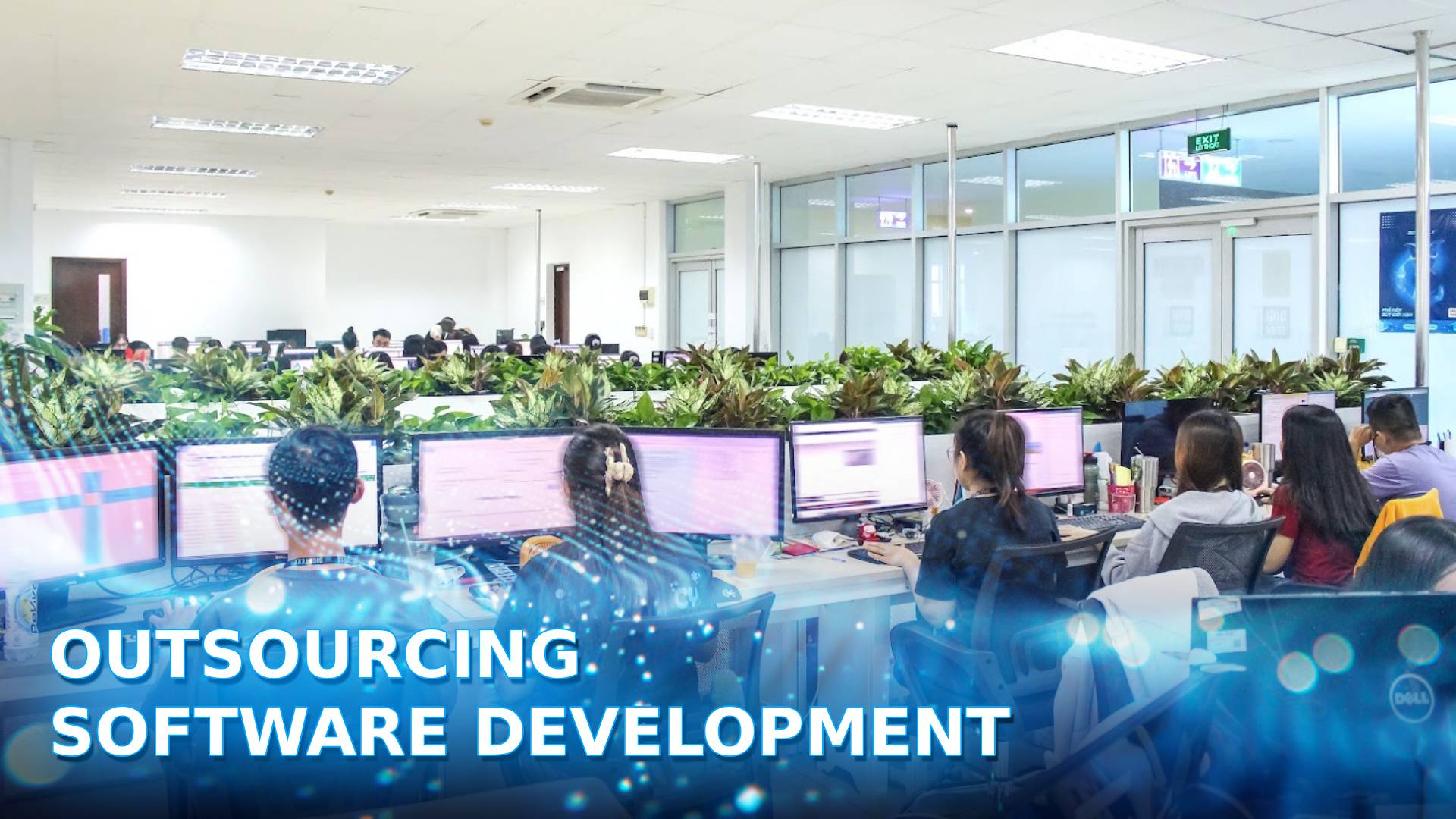
Outsourcing software development enables businesses to access global technical talent, reduce development costs, and accelerate time-to-market without expanding in-house teams. However, choosing the right outsourcing model and development partner requires careful consideration of project requirements, budget, and security. In this guide, DIGI-TEXX will help you understand the key benefits, challenges, costs, and best practices for outsourcing software development to make informed business decisions.
>>> See more:
- 10 Best Content Moderation Service Providers In USA 2026
- Back Office Support Services: How To Reduce Workload And Scale Operations
- 10 Document Processing Companies: IDP Platforms and Outsourced Services
What Is Software Development Outsourcing?
Software development outsourcing is a business practice in which a company hires an external provider or third-party development team to manage specific software projects or engineering tasks instead of handling them entirely in-house. These services can include custom software development, mobile and web application development, legacy system maintenance, software testing, and quality assurance.
Through outsourcing software development, businesses can access a global talent pool, work with specialists who have expertise in specific technologies, and accelerate project delivery without going through lengthy recruitment and training processes. Rather than building and maintaining a full in-house development team, companies can engage external developers based on their technical requirements, project scope, and available budget.
Although cost reduction was traditionally a major reason for outsourcing, its value has expanded beyond financial savings. Businesses increasingly use this approach to fill skill gaps, adopt emerging technologies, scale development capacity, and shorten time-to-market. It also allows internal teams to dedicate more time to core product development and strategic business priorities.
However, successful outsourcing requires more than selecting a qualified development partner. Companies need clearly defined project requirements, transparent communication channels, agreed-upon quality standards, and realistic delivery timelines. Establishing effective collaboration processes from the beginning helps minimize project risks and ensures that outsourced teams remain aligned with business objectives.
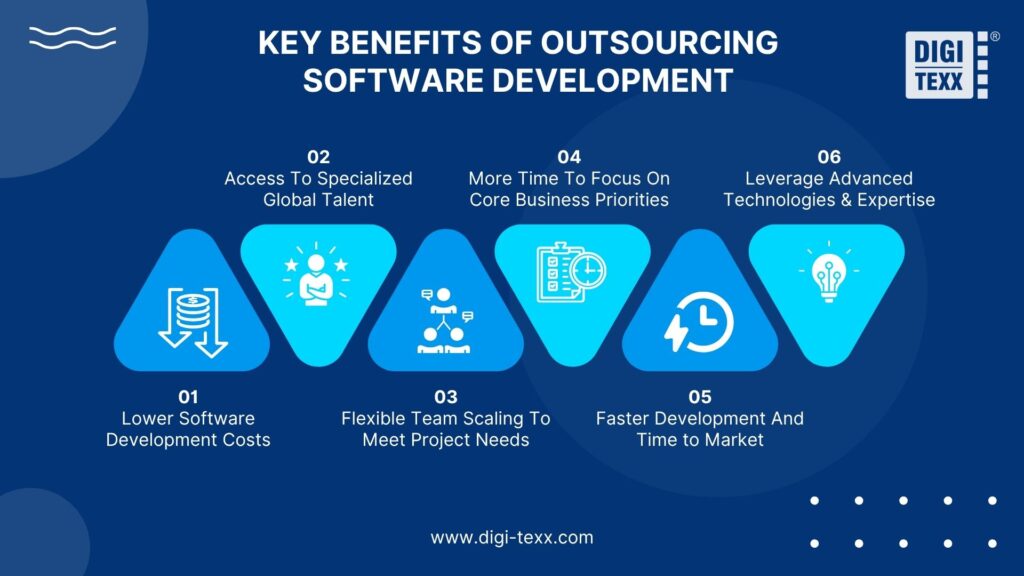
Key Benefits Of Outsourcing Software Development
Outsourcing software development helps businesses optimize development resources, overcome technical skill gaps, and adapt to changing project demands. Beyond cost savings, this approach provides the flexibility and expertise needed to develop software efficiently without expanding internal teams.
Lower Software Development Costs
Outsourcing reduces expenses associated with recruiting, onboarding, training, and retaining in-house developers. Businesses can also avoid additional costs for office space, equipment, and development infrastructure while allocating budgets to specialized services based on actual project needs.
Access To Specialized Global Talent
Outsourcing gives businesses access to developers with specialized skills in programming languages, frameworks, cloud computing, and emerging technologies. This makes it easier to find the right expertise for complex projects without being limited by local talent shortages or lengthy recruitment processes.
Flexible Team Scaling To Meet Project Needs
Outsourcing allows businesses to adjust team size and technical resources as project requirements evolve. Companies can bring in additional developers during intensive development phases and reduce resources when workloads decline, avoiding the costs and administrative burden of maintaining a fixed workforce.
More Time To Focus On Core Business Priorities
Managing software development internally requires time and resources for recruitment, technical supervision, and project coordination. By delegating these responsibilities to an external partner, businesses can reduce operational distractions and focus on product strategy, customer experience, and other activities that directly support business growth.
Faster Development And Time to Market
Outsourcing partners bring experienced development teams, established workflows, and ready-to-use technical resources, reducing the time needed to recruit staff and initiate projects. This helps businesses accelerate development cycles, respond to changing market demands, and launch products or software updates sooner.
Leverage Advanced Technologies And Expertise
Outsourcing partners often have hands-on experience with modern development frameworks, cloud platforms, automation, and AI technologies. Businesses can leverage these capabilities to implement suitable technical solutions, improve development efficiency, and keep pace with technological changes without investing heavily in building internal expertise.
>>> See more:
- Human-In-The-Loop Automation: How It Works, Examples & Benefits
- Best Data Entry Outsourcing Companies Reviewed for 2026
- Document Indexing Services To Improve Search Accuracy & Data Retrieval
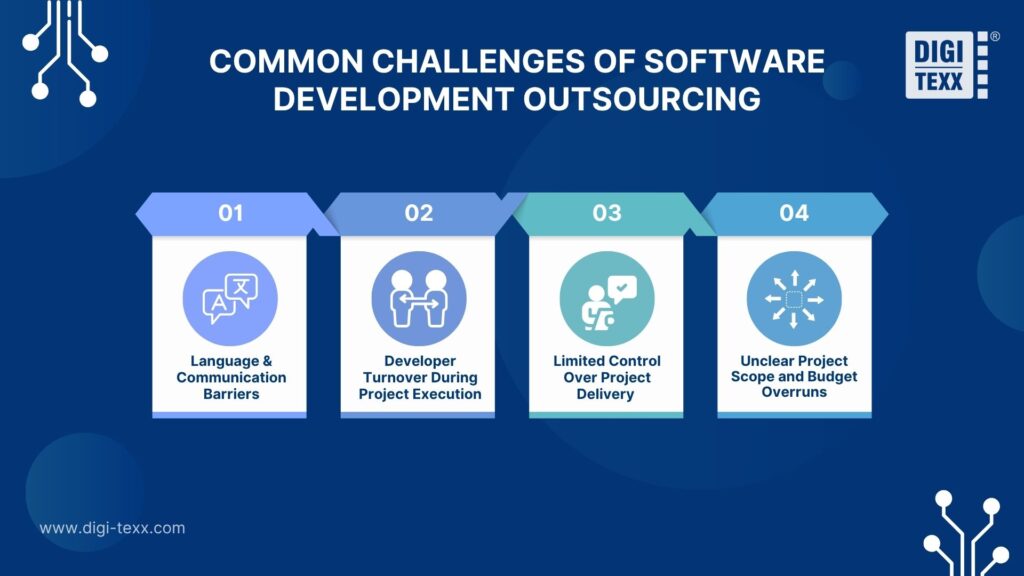
Common Challenges Of Software Development Outsourcing
Despite its benefits, outsourcing software development comes with challenges that can affect project quality, costs, and delivery timelines. Communication gaps, team changes, and unclear project requirements are among the common risks businesses should consider before working with an external development partner.
Language And Communication Barriers
Language differences can make it difficult for outsourced developers to fully understand business requirements, technical specifications, and project expectations. Poor communication may lead to misunderstandings, incorrect implementation, and repeated revisions. Developers also need to collaborate with internal teams, such as product, sales, and customer support, to ensure the software addresses actual business needs. Without clear communication channels and regular feedback, even technically skilled teams may struggle to deliver the expected results.
Developer Turnover During Project Execution
Changes in development personnel can disrupt project continuity, particularly when key developers leave before completing their tasks. New team members need time to understand the codebase, technical decisions, and project requirements, potentially causing delays and inconsistent work quality. Without proper documentation, knowledge transfer procedures, and backup resources, developer turnover can significantly affect project progress.
Limited Control Over Project Delivery And Outcomes
When businesses outsource an entire software project, external providers take primary responsibility for development activities and deliverables. This can limit the client’s direct oversight of daily workflows, technical decisions, and development quality. Without clear performance metrics, progress reports, and quality assurance processes, businesses may find it difficult to identify issues early or ensure the final product meets their requirements and industry standards.
Unclear Project Scope and Budget Overruns
Unclear requirements can create gaps between business expectations and the outsourced team’s understanding of the project. When features, deliverables, or technical specifications are not properly defined, additional requests and revisions may expand the original scope, increasing costs and extending deadlines. This risk is particularly significant in fixed-price contracts, where changes outside the agreed scope may require additional fees. Businesses should establish detailed specifications, project milestones, budgets, and change management procedures before development begins.
When To Outsource Software Development?
Businesses should consider outsourcing software development when their internal teams lack the technical expertise, workforce, or capacity to handle a project effectively. It is also a practical option when companies need to expand development resources quickly, meet tight delivery deadlines, or manage growing workloads without committing to permanent hires. Additionally, outsourcing makes sense when a project requires specialized technologies or skills that are difficult to source internally, helping businesses control costs while maintaining development efficiency.
>>> See more:
- Data Cleansing Outsourcing: 20 Best US Companies 2026
- How to Automate Documentation: 6 Steps, Tools & Best Practices
- Top 15 Best Big Data Processing Tool For Business 2026
Software Development Outsourcing Models
Businesses can choose from several software development outsourcing models depending on their project scope, budget, resource requirements, and desired level of control. Each model offers a different approach to managing costs, development teams, and project responsibilities.
The following table compares four common outsourcing models to help businesses identify the right arrangement for their development needs.
| Comparison criteria | Fixed-Price Model | Time and Materials (T&M) | Dedicated Development Team | Staff Augmentation |
| Typical project size | Small | Small to medium | Large | Medium to large |
| Business requirements | Clearly defined and stable | Evolving or flexible | Expected to change over time | Evolving with project needs |
| Project scope and resources | Fully specified in advance | Flexible or partially defined | Adjusted throughout the project | Adjusted based on staffing needs |
| Client control | Limited | Moderate to high | High | Full control over daily work |
Fixed-Price Contract
A fixed-price contract establishes a predetermined budget based on an agreed project scope, deliverables, and timeline. The outsourcing provider is responsible for completing the specified work within the agreed cost. This model works best for projects with stable requirements, clearly defined specifications, and minimal expected changes.
Time And Materials Contract
Under the time and materials (T&M) model, businesses pay for the actual hours developers work, along with any agreed project-related expenses, such as software licenses, subscriptions, and equipment. Unlike fixed-price contracts, this arrangement allows requirements and development priorities to evolve throughout the project. It is suitable for projects where the scope may change or cannot be fully determined upfront.
Dedicated Development Team
A dedicated development team is a group of specialists provided by an outsourcing partner to work exclusively on a client’s project over an extended period. The team is selected based on the project’s technical requirements and business objectives, with the client typically involved in defining roles and evaluating candidates. Businesses can also adjust team size and skill sets as development needs change. This model is particularly suitable for complex, long-term projects that require continuous development and collaboration.
Staff Augmentation Model
Staff augmentation allows businesses to add external developers to their existing in-house teams to fill skill gaps or increase development capacity. These professionals are employed by the outsourcing provider but work under the client’s direct supervision and management. Unlike a dedicated team arrangement, staff augmentation generally does not include a project manager from the outsourcing provider. This model gives businesses greater control over daily tasks, workflows, and technical decisions while avoiding the long-term costs of recruiting permanent employees.
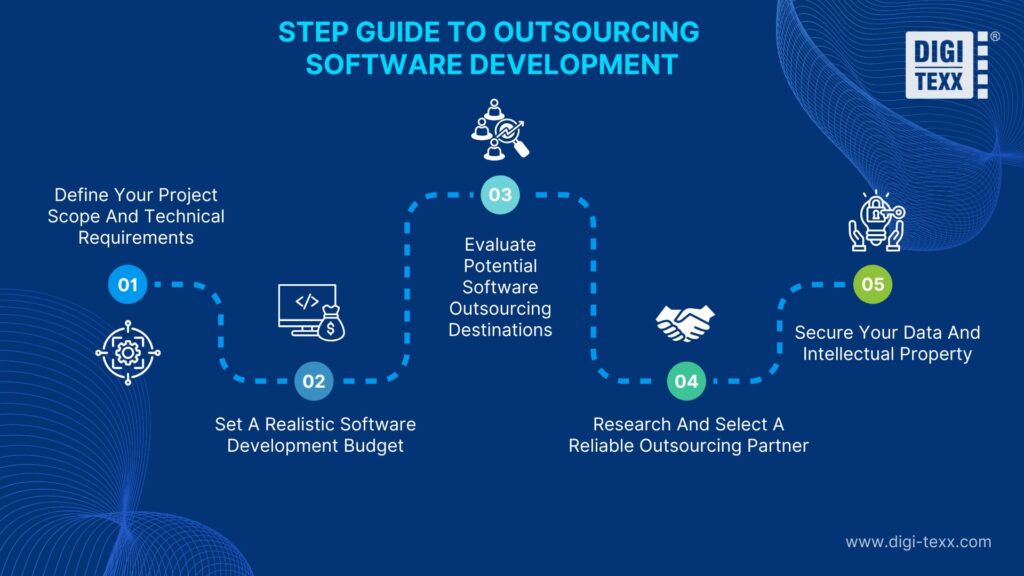
5 Step Guide To Outsourcing Software Development
Outsourcing software development requires careful planning to select the right partner, control project risks, and protect sensitive information. Businesses should also appoint a technical leader to monitor progress, review code quality, and ensure the outsourced team meets project requirements.
Step 1. Define Your Project Scope And Technical Requirements
Start by identifying the software’s objectives, core features, and business needs. Prepare a project brief or scope of work (SOW) outlining expected deliverables, development methods, technology stacks, frameworks, timelines, and required technical expertise.
Involve technical leaders and relevant stakeholders in defining functional requirements, performance standards, and acceptance criteria. Detailed documentation helps outsourcing providers understand expectations, estimate resources accurately, and recommend solutions that align with business objectives.
Step 2. Set A Realistic Software Development Budget
Estimate the budget based on project complexity, team size, developer expertise, working hours, and service fees. Include additional expenses such as project management, software licenses, infrastructure, and ongoing maintenance to avoid unexpected costs.
Be cautious of providers offering rates significantly below market averages. Low quotes may indicate limited technical expertise, hidden fees, or pricing strategies that increase costs later. Compare pricing transparency, service quality, and long-term value rather than choosing solely based on the lowest initial quote.
Step 3. Evaluate Potential Software Outsourcing Destinations
The outsourcing location can affect development costs, communication, and project efficiency. Evaluate potential destinations based on developer availability, technical expertise, labor rates, time zone compatibility, English proficiency, political stability, and data protection regulations.
Consider whether local laws adequately protect intellectual property, contractual rights, and sensitive information. Recruitment partners and local industry networks can also provide valuable insights into talent availability, vendor credibility, and market conditions.
Step 4. Research And Select A Reliable Outsourcing Partner
Use professional networks, industry directories, and independent review platforms to identify potential providers. Clutch and G2 offer client reviews and vendor comparisons, while LinkedIn and technology events help businesses connect with development teams.
Before selecting a partner for outsourcing software development, evaluate the following criteria:
- Technical expertise: Review the provider’s portfolio, technology stack, industry experience, and ability to handle projects of similar complexity.
- Client reputation: Check independent reviews, case studies, customer references, and feedback from previous clients.
- Development processes: Assess project management, quality assurance, communication, and progress reporting practices.
- Security and compliance: Verify security certifications, data protection policies, and procedures for handling confidential information.
- Contractual terms: Review service agreements, intellectual property ownership, payment conditions, and project exit provisions.
Shortlist providers with the technical capabilities, industry experience, and operational reliability needed to deliver your project.
Step 5. Secure Your Data And Intellectual Property
Outsourcing software development often involves sharing confidential business information, source code, customer data, and internal system access. Without proper safeguards, this can expose businesses to data breaches, unauthorized access, and intellectual property disputes.
Before collaboration begins, require the provider to sign a non-disclosure agreement (NDA) and establish contractual terms covering intellectual property ownership, data confidentiality, and security responsibilities. Also, review its security policies, access controls, encryption practices, and regular network security audits.
Finally, implement role-based access permissions and monitor access to sensitive systems throughout the project. These measures help protect confidential information and maintain accountability between both parties.
>>> See more: Top 10 Clipping Path Service Providers For USA Businesses In 2026
How Much Does IT Cost To Outsource Software Development?
The cost to outsource software development typically ranges from $20,000 to $500,000+ per project, depending on software complexity, technical requirements, development time, and team composition. Smaller projects with limited features require less investment, while enterprise-grade platforms involving multiple integrations, advanced architecture, and strict security standards demand significantly larger budgets.
The following estimates provide a general benchmark for outsourced software development in 2026:
| Project complexity | Typical scope | Estimated cost | Development timeline |
| Simple software | Single platform, essential features, basic integrations, and standard user roles | $20,000–$90,000 | 2–5 months |
| Mid-complexity software | Custom backend, multiple user roles, payment processing, mobile applications, and third-party integrations | $90,000–$250,000 | 5–10 months |
| Complex software | Multi-platform systems, advanced AI capabilities, complex architecture, high-volume data processing, and compliance requirements | $250,000–$500,000+ | 9–18+ months |
For example, a basic business application with user authentication, dashboards, and standard reporting may fall into the simple project category. A mid-complexity solution involving payment gateways, mobile applications, and integrations with existing business systems requires more development and testing resources. Enterprise software with advanced AI functionality, legacy system integration, high availability, and regulatory compliance typically involves substantially higher costs.
Several factors can increase or reduce the final outsourcing budget:
- Feature scope and software complexity: More features, user roles, workflows, and business logic require additional development hours and testing.
- Technology and integration requirements: Custom architecture, AI capabilities, cloud infrastructure, and connections with legacy systems can increase implementation costs.
- Team composition: A project requiring senior developers, software architects, QA engineers, DevOps specialists, and project managers will generally cost more than one handled by a small development team.
- Security and compliance: Industries with strict data protection, security, and regulatory requirements may need additional audits, testing, and infrastructure investments.
- Maintenance and ongoing support: Post-launch bug fixes, performance monitoring, security updates, and feature enhancements should also be considered when planning the total budget.
These figures are indicative market estimates rather than fixed outsourcing rates. The actual quote depends on the project specifications, provider location, development model, and services included in the contract. Businesses should therefore evaluate the full project scope and expected deliverables rather than comparing providers solely by their hourly rates.
FAQs About Outsourcing Software Development
Is IT Outsourcing Dead?
No, IT outsourcing is not dead; it is evolving. Businesses are moving away from outsourcing purely to reduce labor costs and increasingly prioritize specialized expertise, service quality, and strategic partnerships. While AI is automating routine IT tasks, outsourced providers remain valuable for accessing skilled talent, scaling operations, managing complex projects, and accelerating digital transformation.
What Are The Top Software Development Outsourcing Companies?
Some notable software development outsourcing companies include Forte Group, BairesDev, Luxoft, ScienceSoft, Simform, and DIGI-TEXX. They offer services ranging from custom software engineering and cloud development to AI integration, application modernization, and digital transformation.
- Forte Group: Provides custom software development, AI engineering, cloud solutions, and dedicated development teams.
- BairesDev: Specializes in nearshore software development and staff augmentation, leveraging Latin American engineering talent.
- Luxoft: Focuses on enterprise software engineering, application modernization, and digital transformation.
- ScienceSoft: Offers custom software development, IT consulting, cybersecurity, and application services.
- Simform: Delivers custom software engineering, cloud development, AI solutions, and dedicated engineering teams.
- DIGI-TEXX: Provides software and application development alongside BPO, automation, and digital transformation services, with delivery operations in Vietnam and Europe.
When selecting a provider, businesses should compare technical expertise, engagement models, time zone compatibility, communication processes, and security certifications to ensure the partnership meets their project requirements.
Outsourcing software development offers businesses a flexible way to access specialized expertise, optimize resources, and accelerate digital transformation. To achieve the best results, companies should carefully evaluate outsourcing models, development costs, technical capabilities, and security standards before selecting a partner.
With software development capabilities and experience in BPO and digital transformation, DIGI-TEXX supports businesses in improving operational efficiency through technology-driven solutions. Contact DIGI-TEXX to discuss your requirements and explore solutions aligned with your business objectives.
DIGI-TEXX Contact Information:
🌐 Website: https://digi-texx.com/
📞 Hotline: +84 28 3715 5325
✉️ Email: [email protected]
🏢 Address:
- Headquarters: Anna Building, QTSC, Trung My Tay Ward
- Office 1: German House, 33 Le Duan, Saigon Ward
- Office 2: DIGI-TEXX Building, 477-479 An Duong Vuong, Binh Phu Ward
- Office 3: Innovation Solution Center, ISC Hau Giang, 198 19 Thang 8 street, Vi Tan Ward
Reference:
- Dey, D., Fan, M., & Zhang, C. (2010). Design and analysis of contracts for software outsourcing. Information Systems Research, 21(1), 93–114. https://doi.org/10.1287/isre.1080.0223
- International Organization for Standardization, International Electrotechnical Commission, & Institute of Electrical and Electronics Engineers. (2024). Software engineering—Life cycle processes—Software acquisition (ISO/IEC/IEEE Standard No. 41062:2024). https://www.iso.org/standard/81503.html