DIGI-TEXX, Invensis, Flatworld Solutions, and SunTec India are providers US businesses can evaluate for outsourced document and data processing. Their published offerings cover different combinations of capture, processing, and data-quality work. For cleansing, deduplication, and validation, compare the relevant service scope from each provider rather than assuming every processing quote includes all three. [1][2][4][5][6][7][8][9]
Outsourcing data processing means assigning defined tasks and output requirements to an external team. The deliverable may be structured invoice records, a cleaned customer database, or validated information ready for import. A useful contract specifies what is processed, how errors are reviewed and when the result is accepted.
This guide explains the service types, compares four providers and gives you a practical framework for evaluating quality, security and cost. If you already have a scope, explore DIGI-TEXX document processing services to discuss your source files, output fields and review requirements.
Editorial disclosure: DIGI-TEXX publishes this guide and is included in the comparison. It is a research-based shortlist, not an independent ranking or hands-on performance test. Provider information was reviewed on October 20, 2026. Use-case examples and procurement questions are editorial guidance; project commitments require confirmation.
What Is Data Processing Outsourcing?
Data processing outsourcing involves an external provider organizing and transforming raw inputs into agreed business outputs. Inputs may include scanned documents, forms, spreadsheets, transaction records or database exports. The work can combine software, operators and reviewers, depending on source quality and the decisions required.
Data entry captures information. Document processing may add classification, OCR extraction, indexing and review. Data cleansing corrects or standardizes existing records. Validation checks whether values meet agreed rules, while verification may compare them with an approved source. Define these activities in the scope because providers do not always use the terms identically.
For example, reading an invoice with OCR is only one stage. A usable output may also require supplier identification, line-item capture, total checks, duplicate detection and an exception report. The client should retain approval responsibilities that are outside the processing contract.
Which Companies Provide Outsourced Data Processing Services?
The following shortlist uses official processing and data-quality service pages. These companies provide a starting point for US procurement teams; a US-facing website or customer reference does not establish that processing occurs in the United States. Confirm the contracting entity, delivery country and support hours.
Compare the table first, then review the profiles for service boundaries and questions to ask. Listed capabilities may belong to separate service lines and should be confirmed in the same proposal.
| Provider | Published processing scope | Data-quality scope to assess | Pricing reference |
| DIGI-TEXX [1][2][3] | Document capture and processing with review | Cleansing, duplicates, standardization and OCR verification | Page/document/FTE/project quote |
| Invensis [4][5] | Forms, orders, transactions and indexing | Cleansing, validation, deduplication and enrichment | Request scoped quote |
| Flatworld Solutions [6][7] | Data processing and preparation | Cleansing, standardization and deduplication | Record/hour/month; custom scope |
| SunTec India / SunTec Data [8][9] | Data processing and validation | CRM and product-data cleanup, deduplication and checks | Advertised USD 5–8/hour starting reference; confirm service |
1. DIGI-TEXX — Document Processing and Data Quality
DIGI-TEXX publishes document-processing services and separate cleansing and verification offerings. Its invoice workflow combines OCR and machine learning with operators, including an option to work in a client’s existing system. The stated portfolio is relevant when document capture needs to connect with review and data preparation. [1][2][3]
Service detail:
- Processing of invoices, claims, utility bills, sales orders and historical documents. [1]
- Classification, extraction, rule checks and human review of flagged items. [1]
- Database cleansing and standardization, including duplicate-record handling. [2]
- OCR-data verification and checks for inaccurate or outdated information. [3]
Potential fit: a business needs repeatable document intake, validated fields and a defined handoff. Ask which cleansing and verification tasks are included, how uncertain values are escalated and whether the output can be reviewed within the client’s system.
Pricing: DIGI-TEXX describes per-page, per-document, FTE and project-based models. Request a sample-based proposal covering review, exceptions and delivery rather than assuming a public unit rate. [1]
2. Invensis — Processing, Forms and Data Cleansing
Invensis describes a processing workflow spanning collection, preparation, input, processing, output and maintenance. Its processing page identifies US customers among its served markets. A separate cleansing offering covers data-quality work, so buyers can investigate both newly captured records and existing databases. [4][5]
Service detail:
- Forms, transaction and order processing, plus document indexing. [4]
- Data preparation, formatting and validation within the processing workflow. [4]
- Cleansing, standardization, deduplication and enrichment through the relevant service scope. [5]
Potential fit: recurring operational data that needs both processing and preparation for use. Ask which business rules are checked, who approves corrections and whether ongoing maintenance is part of the contract.
Pricing: request a quote for the actual workload. A comparable, service-specific public unit rate was not established from the reviewed processing page. Compare setup and QA alongside the processing charge. [4]
3. Flatworld Solutions — Data Processing and Database Cleanup
Flatworld Solutions publishes processing and cleansing services, including deduplication within its data-quality offering. Its service descriptions give buyers a basis for evaluating combined processing and cleanup rather than purchasing a format change alone. [6][7]
Service detail:
- Data processing and preparation for business use. [6]
- Correction and standardization of inconsistent records. [7]
- Deduplication as part of the stated cleansing scope. [7]
Potential fit: mixed records or databases requiring standardization before downstream use. Ask for the matching rules, handling of conflicting values and output review process. Do not assume all related services are bundled into one price.
Pricing: the processing page describes per-record, hourly or monthly rates, with quotes depending on volume, complexity, processing method, turnaround and QA. Request the complete scope and exclusions. [6]
4. SunTec India / SunTec Data — Data Operations and Cleansing
SunTec India publishes data-processing and validation services, while SunTec Data provides a detailed cleansing offering. Treat these as related service routes to investigate, and confirm the contracting entity and delivery team in the proposal. [8][9]
Service detail:
- Data processing, standardization and validation. [8]
- CRM contact deduplication, contact verification and field normalization. [9]
- Product-data cleanup, attribute checks and specialist-supervised reconciliation for relevant datasets. [9]
Potential fit: customer or product records that need ongoing cleanup and enrichment. Ask how related contacts, subsidiaries and historical interactions are preserved when duplicates are reviewed.
Pricing: SunTec India’s data-services FAQ advertises starting rates of USD 5–8/hour depending on the service, with monthly and project options. This is a broad advertised starting reference, not a confirmed price for a complete document-processing or cleansing project. [8]
What Services Can You Outsource?
The original service categories remain useful, but each needs a clear output and acceptance rule. The examples below show what to specify in a brief; they are illustrative requirements rather than promises that every provider offers every activity.
Data Entry and Document Capture
Data entry converts information into the fields your process needs. For documents, this can involve OCR-assisted capture and operator entry where the source is difficult to read. Agree the field definitions before production so that staff do not make different assumptions about dates, names or identifiers.
- Typical inputs: forms, invoices, survey responses, customer details and inventory records.
- Required outputs: named fields, a stable record ID and a link or reference back to the source.
- Review rule: flag unreadable values; preserve leading zeros in identifiers and record missing pages separately.
Data Validation and Verification
Validation tests records against defined requirements, such as mandatory fields, permitted values, date ranges or arithmetic consistency. Verification can compare a captured value with its source or an approved reference. A record may pass a format check and still contain the wrong value, so specify both where needed.
- Format checks: required fields, data types and allowed values.
- Business checks: totals, relationships and consistency across related records.
- Source checks: confirm uncertain or critical fields against the document or approved master data.
See more: DIGI-TEXX data verification services.
Data Cleansing and Standardization
Cleansing addresses inconsistencies in existing datasets. It may involve correcting obvious errors, normalizing formats and identifying outdated or incomplete information. Establish an authoritative source for corrections; filling a blank with an unsupported guess creates a new error rather than improving quality.
- Normalize approved date, address and category formats.
- Separate verified corrections from suggestions requiring client confirmation.
- Keep a change log with original values, new values and reasons for the change.
Deduplication and Record Matching
Deduplication identifies records that may represent the same entity. Exact matches can be straightforward, but similar names or shared addresses require more care. The buyer should define match rules, review thresholds and which value is retained when records conflict.
- Use approved identifiers and combinations of fields to find candidate matches.
- Send uncertain matches for review instead of merging them automatically.
- Preserve relationships, source IDs and a reversible merge history.
Illustrative example: two customers at the same address may be different people. Matching the address alone is not enough to merge their accounts. Evaluate both missed duplicates and incorrect merges during a pilot.
Data Reporting
Processing reports should make the delivered work auditable. Start with batch counts, exceptions, quality results and correction status before requesting wider analytics or dashboards. Confirm whether business analysis is included; a production report and an analytical model are different deliverables.
- Report received, accepted, rejected and pending records.
- Separate critical-field errors from minor formatting issues.
- Show outstanding exceptions, their owners and the next required action.
Data Preparation for Migration
Migration may require mapping, cleansing, test imports and reconciliation, as well as transferring records. Data-processing support should not be assumed to include a complete system migration. Assign responsibility for source exports, destination configuration, backups, cutover and rollback before work begins.
- Agree field mappings, relationships and destination constraints.
- Test whether accepted records import correctly and retain required identifiers.
- Keep final production access and cutover approvals with the agreed system owner.
Data Conversion
Conversion changes a file format or data structure. A PDF-to-spreadsheet task may require extraction and review, while a structured-file conversion may focus on mapping, types and encoding. Define whether you need a readable archive, editable document or machine-readable dataset.
- Specify target formats and required structure, such as CSV columns or XML elements.
- Test values and relationships, not only whether the output file opens.
- Scope conversion, cleansing and destination loading separately where responsibilities differ.
See more: DIGI-TEXX data conversion services.
How Outsourced Data Processing Works
A controlled workflow connects intake to accepted output. The following seven steps are a buyer-side model for scoping the service, not a claim that every provider follows an identical process.
1. Define the Scope and Data Contract
Document input types, required fields, output formats and business rules. Include examples of acceptable output and explain how blanks, invalid values and duplicates should be handled. Identify a client decision-maker for questions that cannot be resolved from the source.
- Deliverable: approved field dictionary, sample output and responsibility matrix.
2. Transfer and Register the Inputs
Agree the permitted transfer method and account access before sharing production files. Register each batch with file or record identifiers and expected counts. Detect missing, corrupt or repeated files before they enter the production queue.
- Deliverable: intake manifest and a list of rejected or missing inputs.
3. Classify, Capture and Structure the Data
Group inputs by document or record type, then apply the agreed capture method. Automation may handle repeatable layouts, while operators address difficult material. Preserve the relationship between each output and its source so that reviewers can trace corrections.
- Deliverable: structured records with source references and processing status.
4. Clean, Match and Validate
Apply the approved standardization, duplicate-matching and validation rules. Keep original values where needed for audit or rollback. A rule failure should create a visible status or exception; it should not disappear from the batch count.
- Deliverable: checked records, proposed duplicate groups and exception categories.
5. Review Exceptions and Resolve Questions
Route unreadable fields, conflicting values and uncertain matches to trained reviewers. Some cases require client confirmation. Define response windows and separate items on hold from completed output so that turnaround reporting remains meaningful.
- Deliverable: review log, correction history and unresolved questions assigned to an owner.
6. Reconcile, Test and Accept the Output
Reconcile input and output counts, accounting for valid splits, merges and exclusions. Test file structure and import behavior in the destination where included. Acceptance should depend on the agreed quality checks, not simply on receipt of a file.
- Deliverable: reconciliation report, QA results and acceptance or rework decision.
7. Monitor Performance and Manage Retention
Track recurring errors, changes in input quality and new exceptions. Update rules through a controlled approval process rather than informal operator workarounds. Apply the agreed retention and deletion requirements to source files, working copies and delivered outputs.
- Deliverable: periodic performance report and documented change or closure actions.
How Should You Measure Data Quality?
Compare providers using the same definitions and test set. “Accuracy” can refer to characters, fields, pages, records or accepted documents, so the unit and denominator must be explicit. Critical fields should have their own threshold when errors would affect downstream decisions.
| Measure | Definition to agree | What to report |
| Field accuracy | Correct checked fields ÷ all checked fields | Review population/sample and critical-field results |
| Record completeness | Required records and fields present under agreed rules | Missing records, missing fields and approved exclusions |
| Duplicate-match quality | Correct duplicate decisions against a reviewed test set | False merges and missed duplicates separately |
| Reconciliation | Every input accounted for in accepted/pending/rejected outputs | Approved splits, merges and reasons for count changes |
| Turnaround and rework | Agreed start/end event and correction window | On-time acceptance, backlog and rework effort |
For an illustrative field check, 9,950 correct fields out of 10,000 checked fields equals 99.5%. That result does not describe unchecked records. If errors cluster in payment identifiers or another critical field, an overall percentage can hide the operational issue. Report sample composition and critical-field errors separately.
Why Should You Outsource Data Processing Services?
Outsourcing data processing to an experienced BPO partner offers numerous benefits that can significantly enhance your business’s efficiency and scalability. Here are a few key reasons why businesses should consider outsourcing these services:
Cost Savings
Outsourcing data processing services can significantly reduce operational costs. By partnering with a BPO provider, businesses eliminate the need to invest in expensive infrastructure, software, and in-house resources. Outsourcing allows companies to pay only for the services they need, offering cost-effective solutions without compromising on quality.
Access to Expertise and Technologies

BPO providers have specialized expertise and access to cutting-edge technologies that may be too costly for in-house teams to implement. Outsourcing data processing enables your business to benefit from the latest tools and technologies, ensuring that your data is handled with the utmost accuracy and efficiency. With skilled professionals at your disposal, you can be confident that your data is being processed using the best practices in the industry.
Scalability and Flexibility
One of the primary benefits of outsourcing data processing is the scalability and flexibility it offers. As your business grows, your data processing needs will evolve. With a BPO provider, you can scale your services up or down based on demand. Whether you need to process a small batch of data or handle large volumes during peak times, outsourcing ensures that your data processing capacity can easily adjust to meet your changing requirements.
Data Security and Compliance
Data security is a critical concern when outsourcing, especially as each country, region, or continent enforces its own unique security policies and regulations. Partnering with a reliable BPO provider ensures that your data is managed in compliance with the specific legal and regulatory frameworks of your target markets. Experienced BPO providers like DIGI-TEXX prioritize robust security measures, including encryption, secure data transfer protocols, and compliance with international standards such as GDPR, HIPAA, or other region-specific regulations.
When Keeping the Work In-House May Make Sense
Internal tools may be sufficient for small, consistent workloads when the team has review capacity and the necessary controls. A hybrid model may also work: software handles standard cases while an external team reviews exceptions. Compare operating effort, access restrictions and long-term maintainability.
How Much Does Outsourced Data Processing Cost?
Pricing depends on the task and unit of work. DIGI-TEXX describes page-, document-, FTE- and project-based models; Flatworld Solutions describes record, hourly and monthly options. SunTec India advertises starting rates of USD 5–8/hour depending on service. These are provider-specific references, not a verified market range or a DIGI-TEXX quotation. [1][6][8]
Ask every provider to quote the same input mix, volume, quality requirements and turnaround. Define whether a “record” means an invoice header, a line item or a complete transaction; otherwise, unit prices are difficult to compare.
- Setup: assessment, field mapping, rules and training.
- Production: capture, processing, cleansing and agreed review.
- Exceptions: client queries, additional review and rework policy.
- Delivery: import testing, integration, licenses or storage where required.
- Ongoing support: reporting, changes, minimum commitments and exit assistance.
Illustrative calculation: 50,000 records at an assumed USD 0.04 each produce USD 2,000 in processing fees. Adding an assumed USD 500 setup fee gives USD 2,500 before other costs. These assumptions demonstrate arithmetic only; they are not observed provider prices.
How to Choose a Provider for a US Business
Give each shortlisted supplier the same brief and representative sample. Evaluate published capability first, then confirm the delivery commitments through a pilot and written scope.
- Define the deliverable: input types, fields, volume, target system and retained client approvals.
- Confirm delivery arrangements: contracting entity, processing country, time-zone overlap and escalation channels.
- Review data handling: access permissions, transfer, storage, logging, retention and subcontractor involvement.
- Test a representative pilot: include poor scans, unusual layouts, duplicates and conflicting records that occur in real work.
- Agree measurable acceptance: quality units, critical fields, exceptions, rework and reconciliation.
- Validate capacity and pricing: normal and peak throughput, reviewer availability, minimum fees and change costs.
For in-system processing, specify the application, permitted roles, authentication requirements and audit trail. Agree who approves updates and how unsuccessful writes are reconciled. A provider’s general integration capability does not establish permission to modify every client system.
Why Consider DIGI-TEXX for Data Processing?
DIGI-TEXX’s document-processing, cleansing and verification offerings provide a basis for discussing capture and data quality together. Buyers should use those service descriptions to define a project-specific workflow, then request evidence for the required controls and workload. [1][2][3]
Document Processing with Human Review
The published document workflow combines extraction technology with rule checks and operator review. Ask which records receive human review, how exceptions are prioritized and whether acceptance happens before data reaches the destination. [1]
A Documented Project Example
DIGI-TEXX’s investment-management case describes scanning and indexing 1.8 million A4-equivalent pages, with a planned six-month schedule and 15 full-time equivalents. It reports 98.6% accuracy against a 97% commitment. These figures relate to that Vietnamese document-digitization project; they are not a universal field-accuracy guarantee or a US cleansing case. [10]
Use the case to frame questions about source handling, indexing, QC and delivery. If your project involves structured extraction or duplicate matching, request a pilot measuring those outputs separately.
Read the case study: Document Scanning Solutions for a Top Investment Management Institution.
Security Credentials and External Context
DIGI-TEXX’s About Us page lists ISO 27001:2022 and ISO 9001:2015 credentials. Review the certificate documents and covered scope before applying those credentials to a specific contract. [11]
QTSC’s business directory also identifies DIGI-TEXX and its services. This is an external business mention supporting entity identification, not an independent ranking, current capacity audit or guarantee of project results. [12]
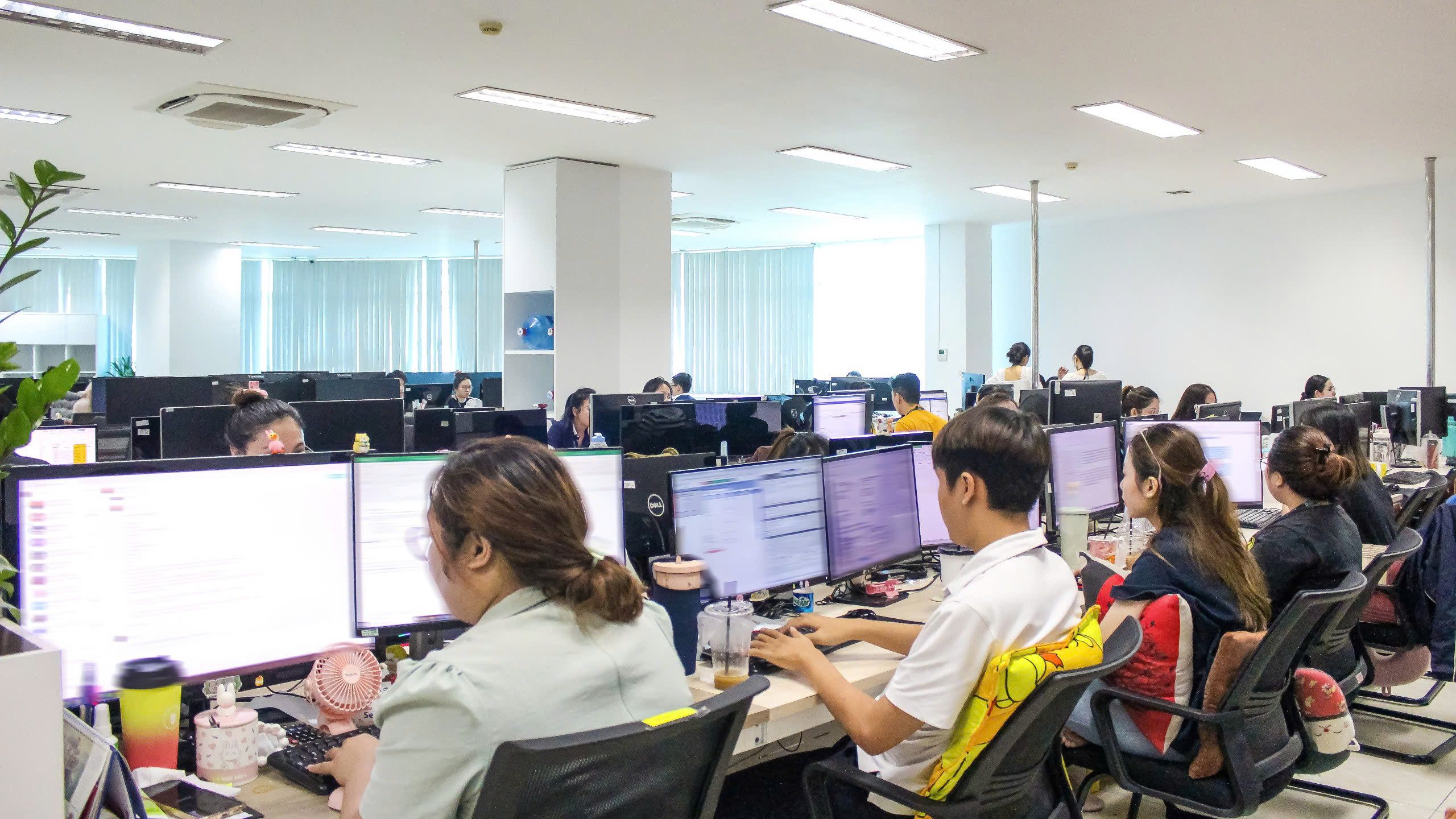
Key Data Processing Services Offered by DIGI-TEXX
DIGI-TEXX offers a comprehensive suite of data processing services designed to meet the unique needs of your business.
Data entry
Data entry is the foundation of data processing. DIGI-TEXX provides accurate and efficient data entry services, ensuring that all your business information is recorded and organized correctly. Whether it’s customer details, sales records, or inventory data, DIGI-TEXX handles data entry quickly and accurately.
Data Validation
Data validation is crucial to ensure that your data is accurate, consistent, and reliable. DIGI-TEXX uses advanced validation techniques to verify the integrity of your data, preventing errors and discrepancies that could affect decision-making and business operations.
Data Cleansing
Over time, data can become outdated, incomplete, or irrelevant. DIGI-TEXX offers comprehensive data cleansing services to remove inaccuracies, redundancies, and outdated information, helping businesses maintain clean, high-quality datasets.
Data Reporting

Data reporting is an essential part of business intelligence. DIGI-TEXX provides customized data reporting services to help businesses generate insightful reports that can drive strategic decisions. From daily performance tracking to in-depth analytics, DIGI-TEXX ensures that your reports are accurate and tailored to your specific needs.
Data Migration
Data migration involves transferring data from one system or format to another. DIGI-TEXX ensures seamless data migration with minimal disruption to your business operations, ensuring that your data remains secure and accessible throughout the process.
Data Conversion
Businesses often require data in different formats for various purposes. DIGI-TEXX offers data conversion services to transform your data into the desired format, whether it’s converting PDF documents into Excel sheets or transferring data between software systems.
Frequently Asked Questions About Outsourced Data Processing
The questions below address provider shortlisting and common delivery decisions. Use the answers to prepare a scope, then confirm the relevant commitments with each supplier.
Which companies provide outsourced document and data processing for US businesses?
DIGI-TEXX, Invensis, Flatworld Solutions and SunTec India are candidates to assess based on their published processing services. Compare document types, structured outputs, validation, exception handling and US business-hour support. Confirm processing location and contractual availability; serving US businesses does not necessarily mean US-based delivery. [1][4][6][8]
Which companies provide outsourced data cleansing, deduplication, and data validation?
DIGI-TEXX, Invensis, Flatworld Solutions and SunTec’s relevant data-service teams publish cleansing or validation offerings that include duplicate-related work. Ask each to specify correction rules, duplicate matching, review of uncertain matches and the final validation report. These tasks may be separate service lines rather than one bundled product. [2][3][5][7][9]
How do outsourcing providers validate data extracted from scanned documents?
A scoped workflow can combine required-field and format checks, business-rule tests and comparison with source documents. Reviewers handle low-confidence or conflicting values. Ask which fields are reviewed, how exceptions are escalated and what evidence accompanies acceptance; OCR output alone is not validated data.
Can a provider work within our existing system?
Some providers offer in-system workflows. DIGI-TEXX’s invoice-processing description includes work in a client’s existing system, and its verification offering discusses online-system implementation. Confirm the application, permissions, reviewer actions and audit requirements for your own engagement. [1][3]
What is the difference between data cleansing and deduplication?
Cleansing addresses errors and inconsistencies such as invalid formats or outdated values. Deduplication identifies records that may represent the same entity and applies approved merge or removal rules. A cleanup project may need both, but duplicate decisions should preserve valid relationships and be reversible.
Does outsourcing eliminate the need for internal review?
No. The client still needs owners for business rules, ambiguous cases and final acceptance. Providers can perform agreed checks, but they should not invent missing business context or make approvals outside their assigned authority. Budget for retained oversight.
How long does a processing project take?
Timing depends on volume, input variation, review effort and approval cycles. Request separate estimates for setup, pilot, production and acceptance. Confirm whether turnaround starts at upload or after a complete, processable batch is received.
What should we include in an RFP?
Include source samples, volumes, fields, validation rules, duplicate logic, output formats, system access, delivery locations, security requirements, operating hours and acceptance metrics. Ask for a pilot plan, pricing assumptions, exclusions, rework terms and an exit or handover process.
Discuss Your Data Processing Requirements with DIGI-TEXX
Outsourcing works best when the expected result is clear. Share your document types, estimated volumes, target fields, cleansing needs and turnaround with DIGI-TEXX to discuss a scoped assessment. Include difficult examples so that the proposal reflects the review work your process actually requires.
Contact DIGI-TEXX to discuss document processing, data cleansing and verification. Agree the permitted sample-transfer method before sharing production records.
Website: https://digi-texx.com/ | Hotline: +84 28 3715 5325 | Email: [email protected]
| Read more:
References
[1] DIGI-TEXX — Document Processing — https://digi-texx.com/data-management/document-processing-services/
[2] DIGI-TEXX — Data Cleansing — https://digi-texx.com/data-management/data-cleansing-services/
[3] DIGI-TEXX — Data Verification — https://digi-texx.com/data-management/data-verification-services/
[4] Invensis — Data Processing — https://www.invensis.net/services/outsource-data-processing
[5] Invensis — Data Cleansing — https://www.invensis.net/services/outsource-data-cleansing
[6] Flatworld Solutions — Data Processing — https://www.flatworldsolutions.com/data-management/data-processing.php
[7] Flatworld Solutions — Data Cleansing — https://www.flatworldsolutions.com/data-management/data-cleansing-services.php
[8] SunTec India — Data Services and Pricing — https://www.suntecindia.com/data-services.html
[9] SunTec Data — Data Cleansing — https://www.suntecdata.com/data-cleansing-services.html
[10] DIGI-TEXX — Investment-Management Case Study — https://digi-texx.com/case-studies/document-scanning-solutions-for-a-top-investment-management-institution/
[11] DIGI-TEXX — About Us — https://digi-texx.com/about-us/
[12] QTSC — DIGI-TEXX directory entry — https://www.qtsc.com.vn/en/business/digi-texx-vietnam-ltd