
Outsource order processing is becoming a strategic choice as businesses handle growing, multi-channel order volumes with limited staff and rising error rates. Although order processing is just one link in the operational chain, weak execution can slow deliveries, increase costs, and damage customer experience. In this article, DIGI-TEXX explains the critical role of order processing, industry-specific challenges, and how data-driven approaches, automation, and outsourcing help businesses operate more accurately, flexibly, and sustainably.
>>> See more:
- What Is Business Process Outsourcing (BPO)? Definition & Benefits
- How To Prepare a Classified Balance Sheet: Template & Example
- Financial Data Quality Management: What It Is & Why It Matters
- Top Data Entry Skills You Need to Get Hired in 2025
What Is The Meaning Of Order Processing?
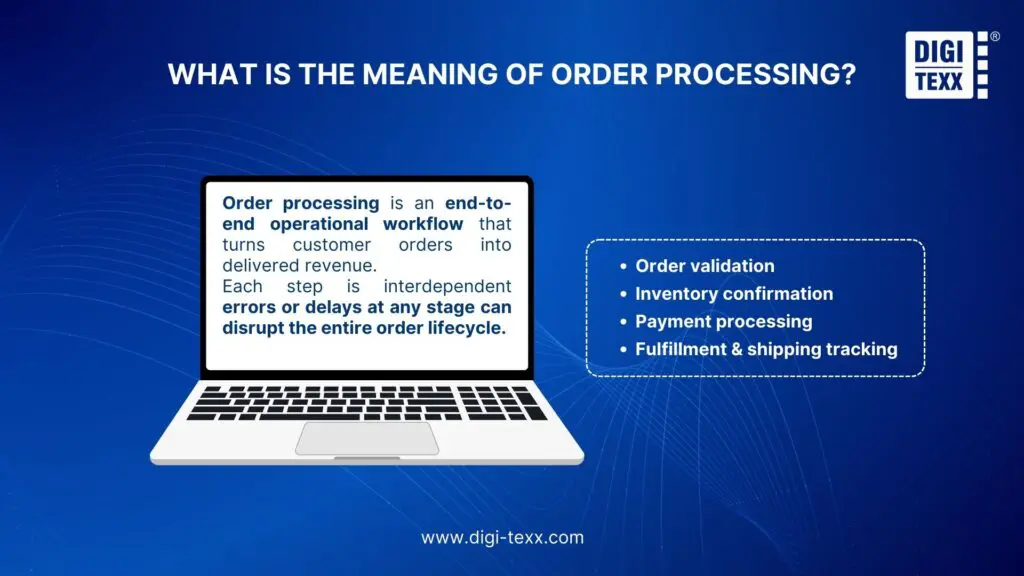
Order processing refers to the end-to-end operational workflow that ensures customer orders are handled accurately, completely, and on time from the moment an order is placed to final fulfillment and system confirmation. It goes beyond simple order entry and involves coordinated execution across data, people, and systems to convert sales into realized revenue.
In practice, order processing typically includes validating order details, confirming inventory availability, processing payments, coordinating picking and packing, and monitoring shipment status. Each step is operationally interdependent, meaning delays or errors at any stage can disrupt the entire order lifecycle.
Why Is Order Processing Important For Businesses?
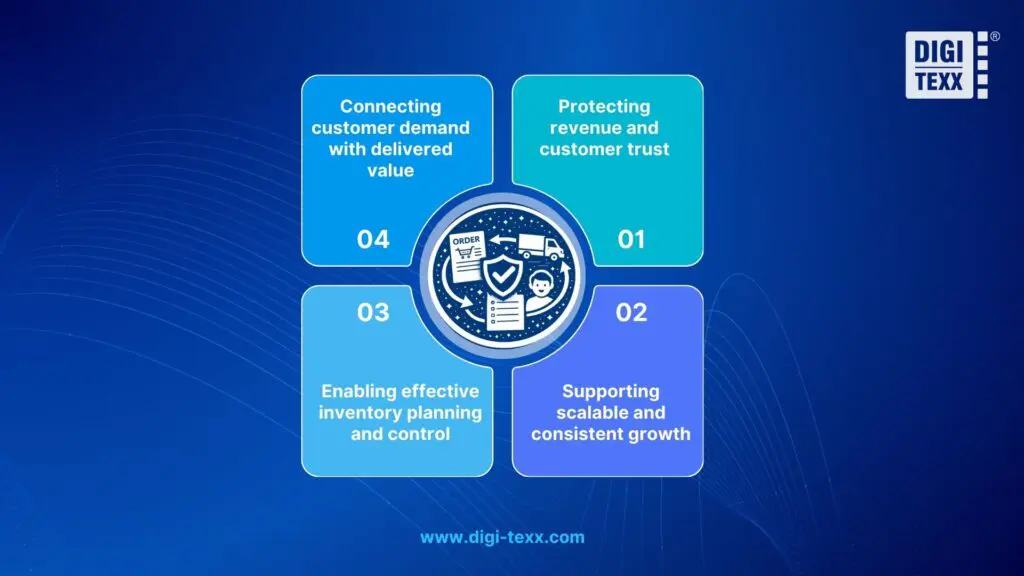
Order processing is not a standalone task but a core operational foundation that directly impacts revenue, costs, and customer experience. When this process breaks down, issues quickly cascade across inventory, fulfillment, and customer service. The following four points highlight why order processing is critical to business performance and long-term scalability.
- Connecting customer demand with delivered value: Order processing acts as the operational bridge that transforms customer demand into delivered value. It tightly integrates sales, inventory, financial recording, and order fulfillment. When order processing runs smoothly, overall business operations become more stable and predictable.
- Protecting revenue and customer trust: Accurate order processing helps reduce cancellations, returns, and billing disputes. In contrast, errors in order details, inventory allocation, or payment handling often result in delayed or incorrect deliveries, increasing operating costs and quickly eroding customer trust.
- Enabling effective inventory planning and control: Order processing provides critical input data for demand tracking and inventory optimization. When order data is reliable, businesses can maintain appropriate stock levels and make more accurate procurement and production decisions. Without a stable order processing workflow, downstream operations must rely on incomplete or inaccurate data.
- Supporting scalable and consistent growth: As businesses scale, higher order volumes, multiple sales channels, and stricter delivery expectations place greater pressure on operations. A well-designed order processing process enables companies to grow while maintaining service quality and a consistent customer experience.
>>> See more:
- Healthcare BPO Services – Cost Optimization & Improve Care 2026
- Business Process Automation Solutions: Benefits, Examples & Service Company
- Top 10 Best Data Entry Outsourcing Companies in USA 2026
- AI in Investing – How AI Technology is Shaping the Future of Investment Strategies
Industry Specific Order Processing Challenges & Solution
Order processing challenges vary across industries due to differences in order volume, fulfillment speed, inventory structure, and regulatory requirements. Understanding industry-specific challenges allows businesses to design order processing workflows that remain efficient, accurate, and scalable.
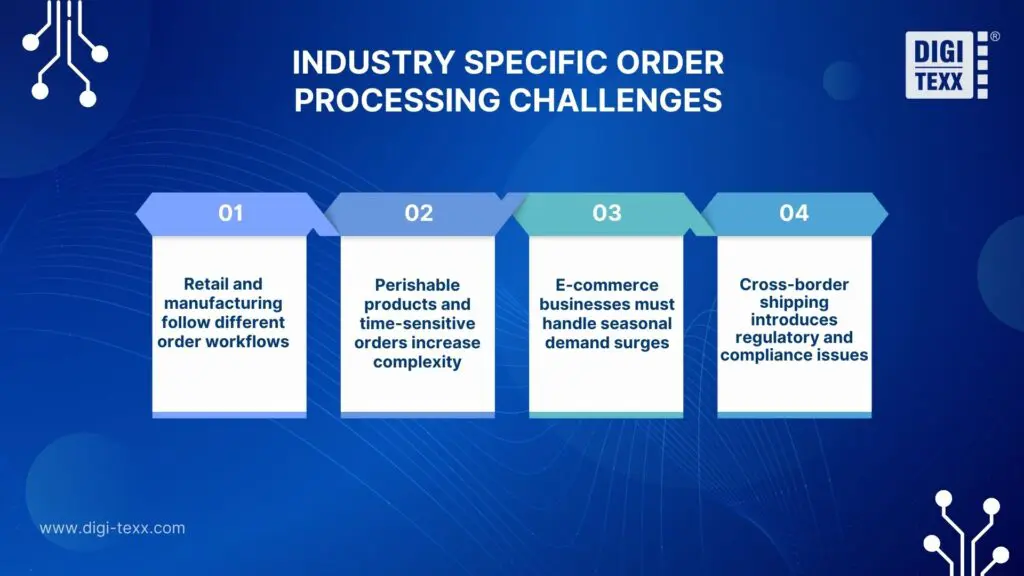
Retail And Manufacturing Follow Different Order Workflows
Retail and manufacturing businesses face fundamentally different order processing challenges. Retailers manage high volumes of small, frequent orders that require speed and efficient handling of returns, while manufacturers process fewer but larger orders involving bulk quantities, longer lead times, and product customization. These differences extend to inventory priorities, with retail focusing on finished goods and manufacturing emphasizing raw materials and production planning. Addressing this complexity requires tailored order processing workflows, standardized data structures, and clear process handoffs.
Perishable Products And Time-Sensitive Orders Increase Complexity
Industries handling perishable or time-sensitive products operate under strict time constraints and higher risk of loss. Short shelf life, cold-chain dependencies, and regulatory requirements increase the margin for error in order processing. Any delay or data inaccuracy can lead to spoilage, missed delivery windows, or compliance issues. Effective solutions focus on faster order validation, real-time visibility, and data-driven coordination between inventory, fulfillment, and logistics.
E-commerce Businesses Must Handle Seasonal Demand Surges
E-commerce businesses frequently experience sharp spikes in order volume during promotions and peak seasons, placing heavy pressure on internal teams and manual processes. Fixed capacity and limited automation often lead to order backlogs, fulfillment delays, and higher error rates. To manage these surges, businesses need scalable order processing supported by demand forecasting, standardized workflows, and flexible execution models.
Cross-Border Shipping Introduces Regulatory And Compliance Issues
Cross-border order processing adds complexity through varying customs regulations, taxes, tariffs, and documentation requirements across markets. Errors in data or compliance can result in shipment delays, penalties, and unexpected costs, while data security and privacy regulations further raise operational risk. Addressing these challenges requires standardized documentation, accurate data handling, and clear compliance workflows.
The Importance Of Data-Driven Order Processing
As order volumes increase and sales channels become more complex, relying on manual judgment is no longer effective. Data-driven order processing enables businesses to make informed decisions throughout the entire order lifecycle, helping improve accuracy, responsiveness, and scalability.
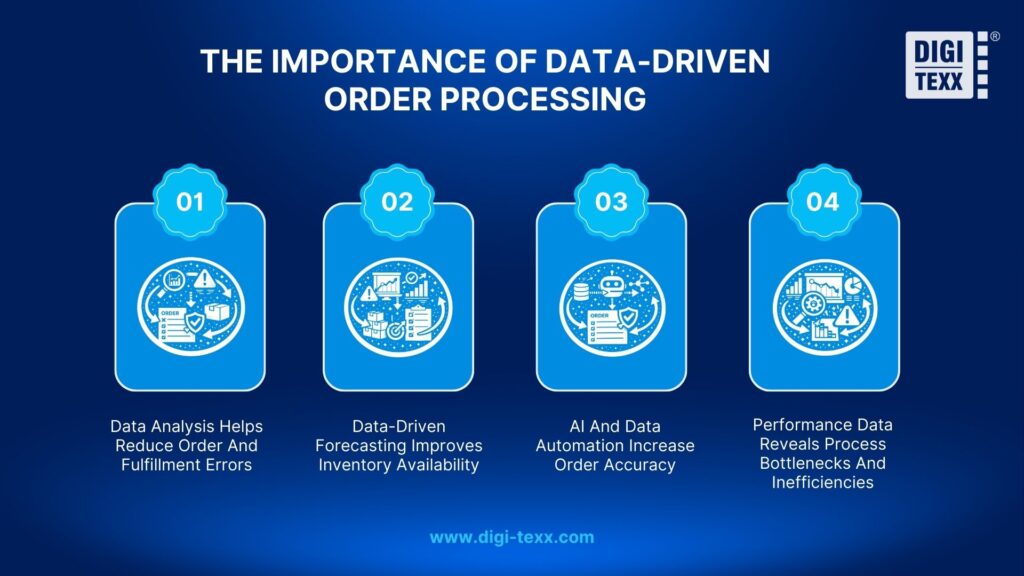
Data Analysis Helps Reduce Order And Fulfillment Errors
By analyzing historical order data and error patterns, businesses can identify recurring issues such as incorrect product information, shipping mismatches, or repeated manual corrections. These insights allow companies to strengthen validation steps and reduce avoidable mistakes.
Data-Driven Forecasting Improves Inventory Availability
Order data provides a reliable foundation for demand forecasting and inventory planning. Analyzing order trends and seasonality helps businesses align stock levels with actual demand, preventing shortages that delay fulfillment and excess inventory that ties up capital.
AI And Data Automation Increase Order Accuracy
Automation powered by data plays a key role in handling large order volumes without compromising accuracy. Automated checks can validate order details, flag inconsistencies, and route orders to the appropriate fulfillment paths based on predefined rules and historical performance. AI-supported automation reduces dependency on manual intervention, especially in repetitive tasks such as order matching, status updates, and data validation. This not only speeds up processing times but also significantly lowers the risk of human error as operations scale.
Performance Data Reveals Process Bottlenecks And Inefficiencies
Metrics such as processing time, exception rates, and rework frequency highlight where delays or inefficiencies occur. By analyzing these indicators, businesses can pinpoint bottlenecks whether caused by system limitations, manual handoffs, or capacity constraints and take targeted actions to optimize the process. This continuous feedback loop enables ongoing improvement and supports more resilient, scalable order processing operations.
>>> See more:
- How to Automate Documentation in 2026: Step By Step Guide
- What Is A Back Office Service? Examples, Benefits, And Cost In 2026
- Top 10 Data Processing Software For Business 2026 – Best Tool Reviewed
- Best Real Estate Image Processing Services 2026: Top 15 Providers
Benefits Of Outsourcing Order Processing
Outsourcing order processing is not only a cost-control tactic but a strategic move to strengthen operations as businesses scale. By transferring complex, high-volume order handling to specialized providers, companies can improve efficiency, service consistency, and long-term growth readiness.
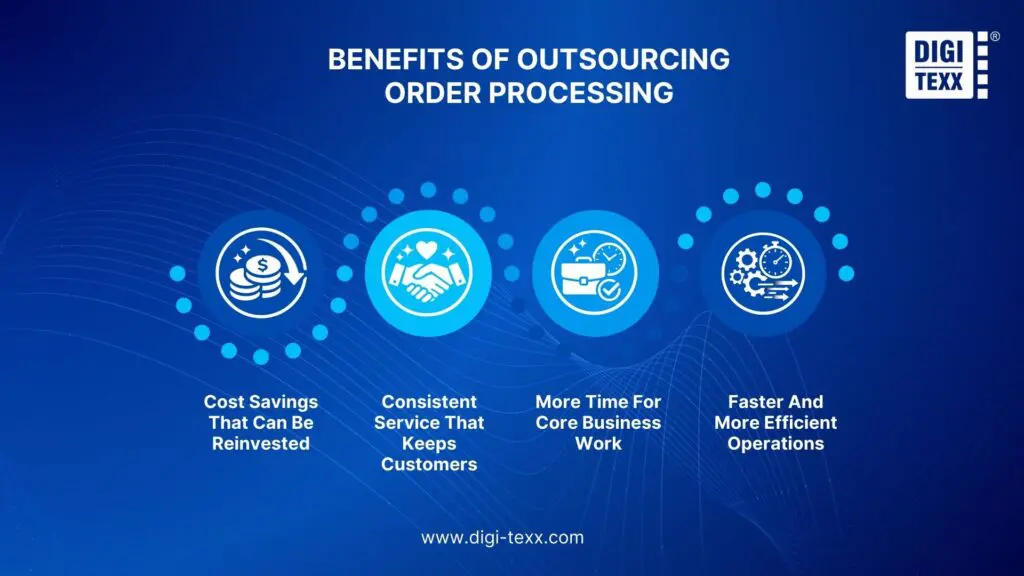
Cost Savings That Can Be Reinvested
Instead of maintaining an in-house order processing team with ongoing costs for recruitment, training, technology, and infrastructure, businesses can convert fixed expenses into flexible operating costs through outsourcing. The savings generated can be reinvested in revenue-driving initiatives such as product development, marketing, or market expansion while still gaining access to skilled teams and modern order processing systems without heavy upfront investment.
Consistent Service That Keeps Customers
Professional outsourcing providers operate with standardized workflows and clear performance metrics, ensuring consistent order processing quality even as volumes fluctuate. Higher accuracy, faster processing times, and reliable order information help reduce errors and customer complaints. This service consistency plays a critical role in protecting customer trust and encouraging repeat purchases.
More Time For Core Business Work
Manual order processing often consumes significant management attention and internal resources. By outsourcing order processing, businesses can free their teams from repetitive operational tasks and redirect focus toward strategy, innovation, and growth. This shift allows leadership and key functions to spend more time on product expansion, customer experience improvement, and competitive differentiation.
Faster And More Efficient Operations
Outsourcing enables businesses to leverage optimized processes, supporting technologies, and dedicated processing teams to shorten order turnaround times and improve overall efficiency. The ability to scale resources quickly during peak seasons or demand spikes ensures operational speed is maintained without sacrificing service quality. As a result, order processing becomes faster, more efficient, and better equipped to support long-term growth.
>>> See more:
- Construction Invoice Reconciliation: Best Practices, Software & Outsourcing
- Top 10 Outsourced AI Training Data Companies in 2026
- 20 Best Data Integration Tools: Definition, Benefits & Features
- Define Business Process Outsourcing (BPO): Meaning, Examples & Benefits 2026
Outsourced Order Processing Services By DIGI-TEXX
DIGI-TEXX provides outsourced order processing services to help businesses optimize their order processing workflows with effective control over costs, quality, and accuracy. Instead of investing in additional personnel, systems, and complex internal processes, businesses can transfer all or part of their order processing operations to DIGI-TEXX to ensure stable, flexible, and consistent operation.
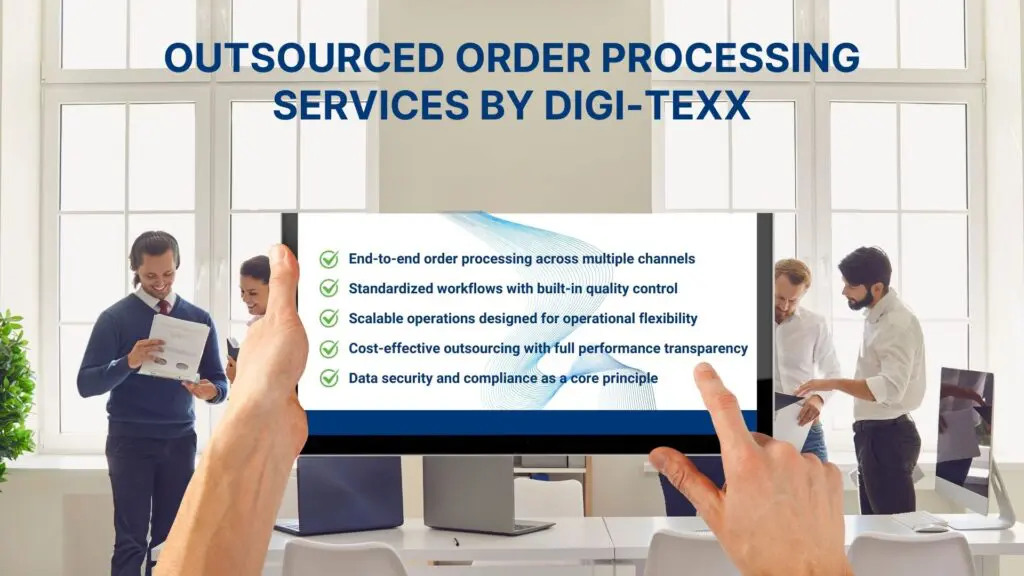
- End-to-end order processing across multiple channels: DIGI-TEXX handles order intake and processing across websites, emails, ERP systems, and integrated sales platforms. Orders are standardized and validated through agreed workflows to reduce errors and ensure consistent handover.
- Standardized workflows with built-in quality control: DIGI-TEXX’s services are built on standardized workflows with multi-layer quality control. Key performance indicators such as processing time, exception rates, and rework frequency are continuously monitored to identify inefficiencies and address bottlenecks early, ensuring consistent order handling even during volume spikes.
- Scalable operations designed for operational flexibility: DIGI-TEXX enables businesses to scale order processing capacity up or down in response to seasonal demand, sales campaigns, or expansion needs. Resources are structured to adapt quickly, ensuring service continuity without overloading internal teams or underutilizing capacity.
- Cost-effective outsourcing with full performance transparency: By leveraging a BPO delivery model and experienced teams, DIGI-TEXX helps organizations optimize operational costs compared to in-house order processing. Transparent reporting provides clear visibility into order status, turnaround time, and performance metrics in real time or through scheduled reports.
- Data security and compliance as a core principle: Data security and regulatory compliance are foundational to DIGI-TEXX’s order processing services. Order and customer data are protected through strict security policies, controlled access, and disciplined procedures, enabling businesses to confidently outsource mission-critical processes.
FAQs About Outsource Order Processing
What Are The Future Trends Of Order Processing Outsourcing?
Future trends in order processing outsourcing focus on increased automation and AI adoption, deeper use of data-driven analytics, and stronger omnichannel integration. Providers are also placing greater emphasis on data security, sustainability, and transparency, especially for cross-border and multi-channel operations.
How to Ensure Success When You Outsource Order Processing?
To ensure success when you outsource order processing, businesses should clearly define objectives, select a provider with relevant industry experience, and establish clear SLAs and performance metrics. Ongoing communication and performance monitoring are essential to maintain accuracy, service quality, and long-term operational alignment.
>>> See more:
- Top 10 Data Entry Outsourcing Companies to Hire in 2026
- Top 10 Best Big Data Processing Tool for Business 2026
- Professional E-commerce Data Entry Services by DIGI-TEXX
Outsourced order processing has become a practical solution for businesses facing growing order volumes, multi-channel complexity, and rising accuracy demands. By standardizing workflows, applying data-driven controls, and scaling execution flexibly, businesses can maintain speed, accuracy, and visibility across the entire order lifecycle.
With proven experience in multi-channel order processing, DIGI-TEXX delivers reliable outsourced order processing services that help businesses reduce manual workload, improve order accuracy, and scale operations with confidence. If you are looking for a trusted partner to support fast, accurate, and scalable order processing, DIGI-TEXX is ready to support your operational growth.
DIGI-TEXX Contact Information:
🌐 Website: https://digi-texx.com/
📞 Hotline: +84 28 3715 5325
✉️ Email: [email protected]
🏢 Address:
- Headquarters: Anna Building, QTSC, Trung My Tay Ward
- Office 1: German House, 33 Le Duan, Saigon Ward
- Office 2: DIGI-TEXX Building, 477-479 An Duong Vuong, Binh Phu Ward
- Office 3: Innovation Solution Center, ISC Hau Giang, 198 19 Thang 8 street, Vi Tan Ward
References:
- APICS / Association for Supply Chain Management (ASCM) (.org) https://www.ascm.org/
- Institute for Supply Management (ISM) (.org) https://www.ismworld.org/