
Outsourced AI training data is a critical driver of model performance, scalability, and long-term ROI in enterprise AI initiatives. As businesses process large, diverse datasets and require strict compliance, partnering with providers in the BPO industry becomes a strategic move.
By combining data processing, data cleansing, and data annotation services such as image annotation and AI-driven business documents analysis, organizations can transform unstructured data into high-quality training inputs. Technologies like optical character recognition (OCR) and automated document processing, integrated with document management systems, further enhance accuracy, accessibility, and efficiency.
In this article, DIGI-TEXX will help you understand how outsourced AI training data impacts AI outcomes, the risks of poor data quality, and how to evaluate reliable providers with confidence.
What Is An AI Training Data Service?
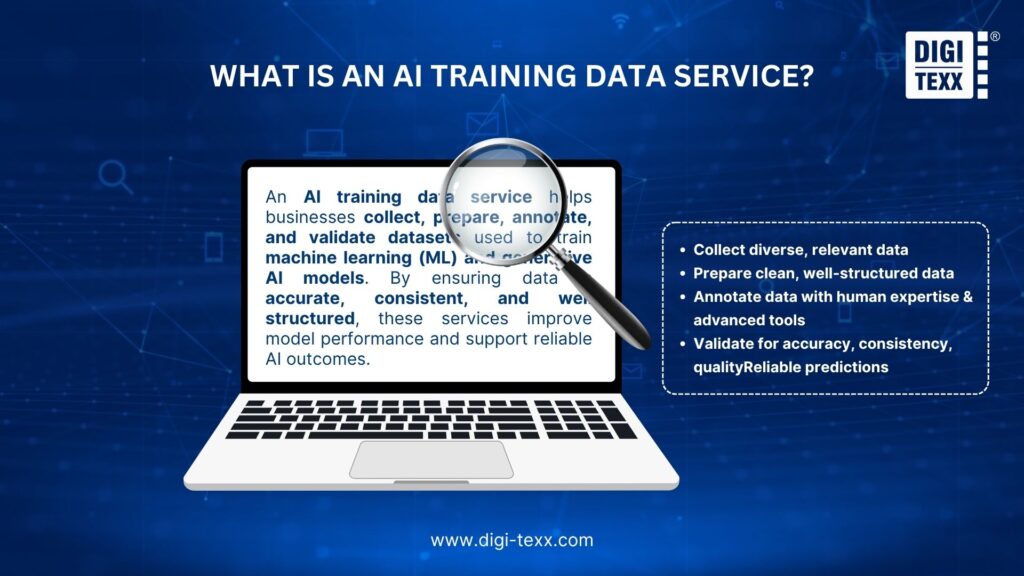
An AI training data service helps businesses collect, prepare, annotate, and validate datasets used to train machine learning (ML) and generative AI models. By ensuring data is accurate, consistent, and well structured, these services improve model performance and support reliable AI outcomes.
Beyond data labeling, AI training data services cover the full data preparation process, including data collection, preprocessing, quality assurance, and dataset management. Organizations use these services to accelerate AI development, reduce operational costs, and build production-ready datasets for applications such as computer vision, natural language processing (NLP), speech recognition, and large language models (LLMs).
>>> See more:
- Top 10 Data Processing Software For Business 2026 – Best Tool Reviewed
- Top 10 Data Cleansing Companies for Businesses in 2025
- Medical Claims Processing Outsourcing For Healthcare Providers
How AI Training Outsourcing Companies Help?
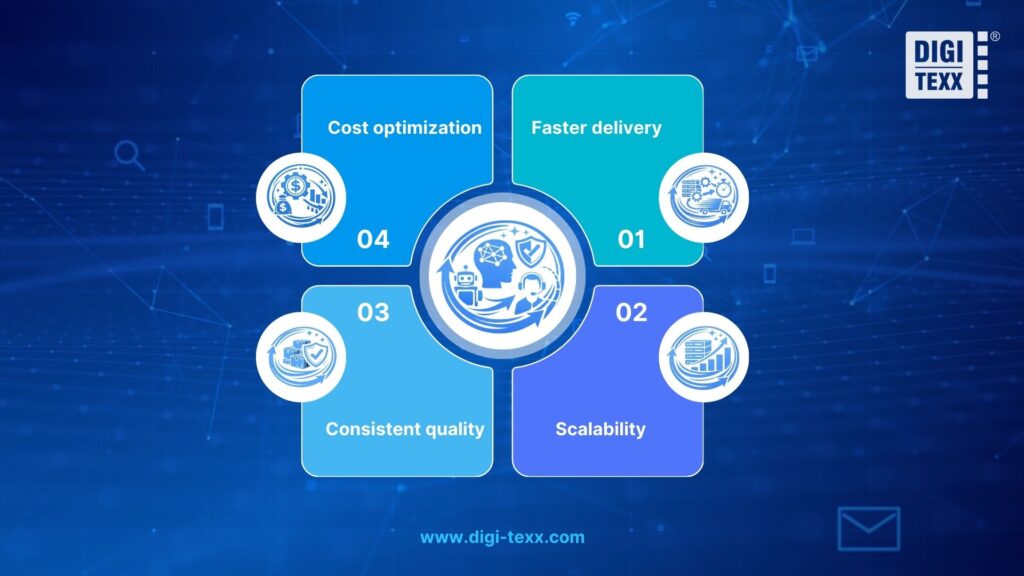
AI training outsourcing companies support enterprises by managing data preparation, annotation, and quality assurance, often the most time-consuming and resource-intensive stages of AI development. Key benefits include:
- Cost optimization: Reduce fixed overhead while maintaining professional quality
- Faster delivery: Established workflows shorten dataset turnaround time
- Consistent quality: Standardized labeling guidelines and multi-layer QA/QC
- Scalability: Easily scale annotation volumes based on project needs
>>> See more:
- Top 10 Data Entry Outsourcing Companies to Hire in 2026
- What Is Business Process Outsourcing (BPO)? Definition & Benefits
- Business Process Automation Solutions: Benefits, Example & Service Company
Why Data Annotation Outsourcing Matters For AI Projects?
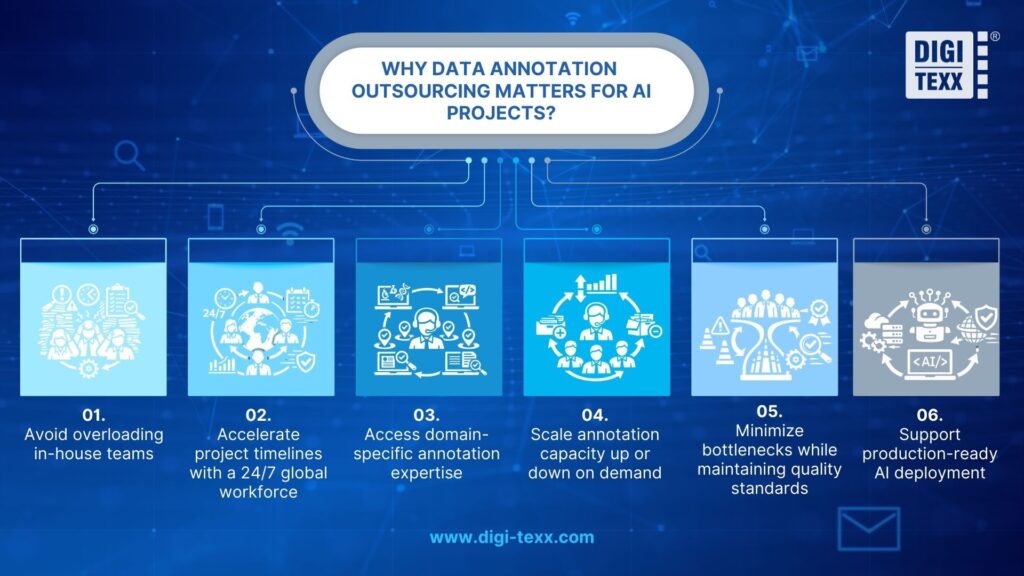
Data annotation outsourcing matters for AI projects because it enables organizations to:
- Avoid overloading in-house teams: Outsourcing prevents internal teams from being stretched thin while ensuring annotation is handled by providers with the right experience and infrastructure.
- Accelerate project timelines with a 24/7 global workforce: Around-the-clock annotation significantly reduces turnaround time for large-scale AI initiatives.
- Access domain-specific annotation expertise: Trained annotators with backgrounds in healthcare, finance, and e-commerce apply precise labeling protocols required for complex or regulated use cases.
- Scale annotation capacity up or down on demand: Organizations can adjust volumes quickly without the overhead of hiring, retraining, or restructuring internal staff.
- Minimize bottlenecks while maintaining quality standards: Standardized workflows help preserve consistency and accuracy across expanding datasets.
- Support production-ready AI deployment: Outsourcing enables annotation pipelines that are suitable for real-world AI systems, not just experimentation. Similar approaches are applied in projects involving data generation on multiple platforms to build user behavior datasets for AI agent training, where scalable and consistent datasets are critical for improving AI agent decision-making.
“Organizations that invest in high quality data and AI governance consistently achieve better business outcomes. Companies adopting AI effectively have reported productivity gains of 20% to 35% by reducing repetitive work and improving decision making.” – Michael Chui
>>> See more:
- Healthcare BPO Services – Cost Optimization & Improve Care 2026
- How to Automate Documentation in 2026: Processes, Tools & Examples
- What are the 6 steps of the data analysis process?
What Does An AI Training Data Service Include?
An AI training data service covers every stage of preparing high quality datasets for machine learning and generative AI models. While the exact scope varies by provider, most services include the following core capabilities:
| Service | Description | Business Benefit |
| Data collection | Gather data from documents, images, videos, audio, sensors, or online sources. | Build diverse and representative training datasets. |
| Data preparation | Clean, organize, normalize, and remove duplicate or irrelevant data. | Improve data quality before model training. |
| Data annotation | Label text, images, audio, video, or documents for AI training. | Enable AI models to recognize patterns and make accurate predictions. |
| Data validation | Review annotated data through quality assurance and accuracy checks. | Ensure consistent and reliable training datasets. |
| Dataset enrichment | Add metadata or contextual information to improve dataset quality. | Increase model accuracy and generalization. |
| Dataset management | Maintain, update, and version datasets as AI models evolve. | Support continuous model improvement and scalability. |
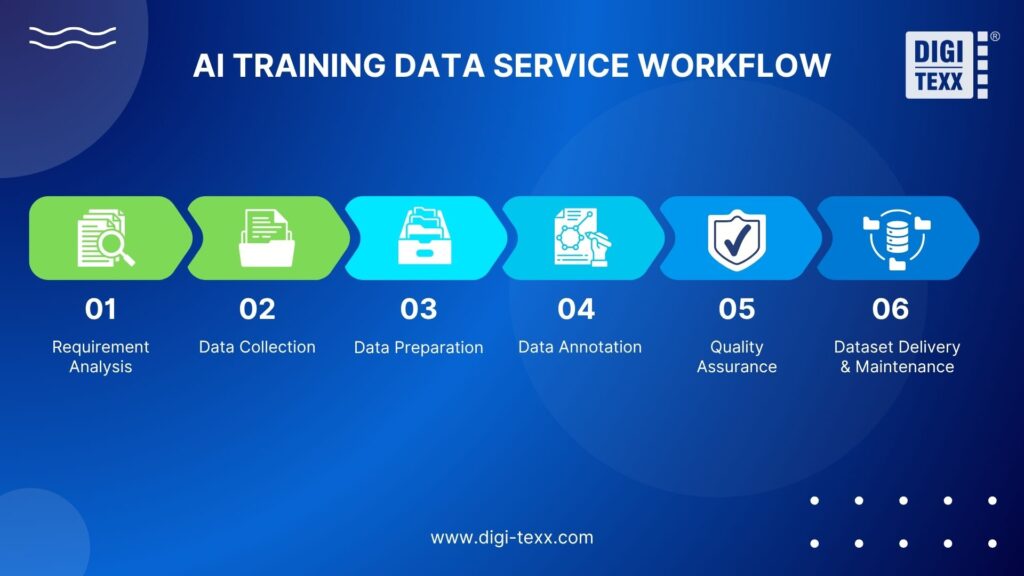
AI Training Data Service Workflow
A well-defined workflow ensures training datasets are accurate, consistent, and ready for AI model development. While the process may vary by project, most AI training data service providers follow these six key steps:
Step 1. Requirement Analysis
The project begins by identifying business objectives, AI use cases, data requirements, annotation guidelines, quality standards, and delivery timelines. This planning stage establishes a clear roadmap for the entire project.
Step 2. Data Collection
Relevant data is collected from sources such as documents, images, videos, audio files, sensors, or enterprise systems. The goal is to build a diverse and representative dataset that reflects real-world scenarios.
Step 3. Data Preparation
Raw data is cleaned, organized, and standardized by removing duplicates, correcting errors, and filtering irrelevant information. Proper data preparation improves annotation efficiency and overall dataset quality.
Step 4. Data Annotation
Experienced annotators label the data using techniques appropriate for the AI application, such as image annotation, text labeling, speech transcription, or document annotation. Human expertise is often combined with AI-assisted tools to improve speed and consistency.
Step 5. Quality Assurance
Annotated data undergoes multiple quality checks to verify accuracy, consistency, and compliance with project guidelines. This step helps minimize labeling errors before the dataset is used for model training.
Step 6. Dataset Delivery and Maintenance
Once validated, the dataset is delivered in the required format for AI model training. As business needs evolve, providers can continuously update and expand datasets to maintain model performance and support long term AI initiatives.
Data Collection Companies Comparison: Quick Reference Guide
The following tables provide a comprehensive comparison of key factors across all featured providers.
| Company | Key Strengths | Related Services | SLA |
| 1. DIGI-TEXX | Multimodal expertise; Enterprise BPO infrastructure; Multi-layer QA/QC | AI training data, Data annotation, Data processing, Computer vision, NLP annotation | Custom enterprise SLAs; Dedicated QA/QC and project management |
| 2. HitechDigital | Human-in-the-loop workflows; Fast project delivery; Industry-specific expertise | Data annotation, Image/video annotation, NLP annotation, AI training data | Project-based SLAs; Dedicated project management |
| 3. Microsoft Azure | Enterprise security; Compliance-ready infrastructure; Azure AI integration | AI data labeling, Dataset management, Machine learning, AI development | Enterprise support SLAs; Azure service-level commitments |
| 4. HabileData | Cost-effective processing; Multilingual capabilities; High-volume data handling | Data collection, Data annotation, Data labeling, Data processing | Custom project SLAs; Scalable delivery options |
| 5. Scale AI | Government-grade security; 3D/LiDAR expertise; Advanced ML quality control | Data labeling, Model evaluation, RLHF, Generative AI fine-tuning | Enterprise custom SLAs; 24/7 support tier available |
| 6. Appen | 180+ languages; 1M+ crowd; 25+ years of experience | Data labeling, RLHF, Search relevance, LLM training | Project-based SLAs; Dedicated PM for enterprise |
| 7. Amazon Web Services (AWS) | Cloud-native infrastructure; Enterprise scalability; SageMaker integration | AI data labeling, Data annotation, Model training, Machine learning | Enterprise support SLAs; AWS service-level commitments |
| 8. Google Cloud | Vertex AI integration; Scalable data pipelines; Enterprise-grade infrastructure | Dataset management, Data labeling, Model evaluation, Generative AI, LLM development | Enterprise support SLAs; Google Cloud service-level commitments |
| 9. CloudFactory | Dedicated human workforce; Consistent quality; Long-term enterprise support | Data labeling, Data annotation, AI training data, Computer vision | Custom enterprise SLAs; Dedicated workforce and project management |
| 10. Nexdata | Pre-built datasets; AI-assisted labeling; AV/ADAS specialty | Data collection, Data labeling, RLHF, Model evaluation, Off-the-shelf data | Custom project SLAs; Flexible delivery options |
| 11. Cogito Tech | RLHF expertise; SME workforce; Red-teaming capability | Data labeling, RLHF, Prompt engineering, LLM fine-tuning, Red-teaming | Project-based SLAs |
| 12. Snorkel AI | Programmatic labeling; 100x faster data development; Stanford spinout | Programmatic labeling, LLM evaluation, RAG optimization, Fine-tuning | 99% uptime; 24-hour disaster recovery |
| 13. Twine AI | 750K+ experts; 190 countries; Professional expert matching | Expert annotation, Domain-specific labeling, Data collection, Consulting | Project-based agreements |
| 14. Aya Data | African language expertise; Ethical sourcing; Community impact | Data collection, Language data, Transcription, Translation, Data annotation | Project-based terms; Custom delivery agreements |
| 15. Roboflow | 100K+ datasets; Auto-labeling; Developer-friendly platform | Auto-labeling, Dataset management, Model training, Model deployment | Tiered plans; Enterprise custom SLAs |
Top 15 AI Training Data Companies In USA
When evaluating AI training data companies in the U.S., enterprises typically focus on data quality, domain expertise, security compliance, and the ability to scale annotation workflows efficiently. The providers below are commonly considered by organizations seeking outsourced AI training data for production-ready AI systems.
| Company | Core Service | Best For | Key Strength |
| DIGI-TEXX | AI training data, data annotation, data processing | Enterprises requiring end-to-end AI data services | Multimodal annotation, enterprise BPO expertise, multi-layer QA/QC |
| HitechDigital | AI data annotation and labeling | Retail, healthcare, automotive | Human-in-the-loop workflows and fast project delivery |
| Microsoft Azure | Cloud-based AI training platform | Large enterprises and regulated industries | Enterprise security, compliance, and Azure AI integration |
| HabileData | Data collection and annotation | High-volume AI projects | Cost-effective multilingual data processing |
| Scale AI | AI data infrastructure | Generative AI, autonomous driving, defense | Advanced annotation pipelines and API integration |
| Appen | Crowdsourced data collection and labeling | Multilingual AI applications | Global workforce covering more than 170 languages |
| Amazon Web Services (AWS) | AI data labeling platform | Organizations using AWS | SageMaker Ground Truth and cloud-native workflows |
| Google Cloud | AI dataset management and labeling | Generative AI and LLM development | Vertex AI integration and scalable data pipelines |
| CloudFactory | Managed AI data labeling | Long-term enterprise projects | Dedicated human workforce with consistent quality |
| Nexdata | Multilingual AI training datasets | Global AI applications | Diverse datasets with multilingual and multimodal coverage |
1. DIGI-TEXX – Best for End-to-End AI Data Collection and Training Data Services
DIGI-TEXX is an established provider of AI data collection services, AI training data, data annotation, and AI-powered data processing outsourcing. The company supports enterprises throughout the AI data lifecycle, from data collection and processing to annotation, classification, and multi-layer quality assurance. Its BPO infrastructure enables businesses to outsource large-scale data operations while maintaining structured workflows and quality control. For organizations comparing AI training data companies or looking for an AI data collection company, DIGI-TEXX offers an end-to-end approach that combines human expertise with scalable data processing capabilities.
Strengths: End-to-end AI data collection and processing; multimodal data annotation; enterprise BPO expertise; multi-layer QA/QC; scalable AI training data workflows.
Best for: Enterprises looking for AI training data providers, data collection services for AI, AI outsourcing services, and large-scale training data operations.
2. HitechDigital – Best for Human-in-the-Loop AI Training Data
HitechDigital provides training data services, AI data annotation, data labeling, and AI outsourcing services for organizations developing machine learning and artificial intelligence applications. Its human-in-the-loop approach combines trained specialists with structured annotation workflows to produce reliable datasets for AI model development. The company supports industries including retail, healthcare, and automotive, making it suitable for projects that require contextual data and domain-specific annotation. Businesses searching for platforms that use human expertise to build AI training data can consider HitechDigital for scalable annotation and data processing requirements.
Strengths: Human-in-the-loop workflows; domain-specific expertise; scalable data annotation; contextual data processing; fast project delivery.
Best for: Businesses needing AI training data services, human-verified datasets, machine learning outsourcing, and domain-specific data annotation.
3. Microsoft Azure – Best for Enterprise AI Model Training Infrastructure
Microsoft Azure provides cloud infrastructure and AI development tools for organizations building, training, optimizing, and deploying machine learning models. Through its integrated AI ecosystem, enterprises can manage datasets, develop machine learning workflows, and connect training data with broader cloud infrastructure. While Azure differs from traditional AI training data providers, its platform enables organizations to build their own data pipelines and AI model training environments. This makes it relevant for businesses exploring AI model training and optimization services, machine learning solutions in BPO, and scalable AI infrastructure.
Strengths: Enterprise cloud infrastructure; AI and machine learning integration; scalable data pipelines; security and compliance; model training and optimization capabilities.
Best for: Large enterprises that need infrastructure for AI model training, machine learning solutions, AI analytics, and large-scale data processing.
4. HabileData – Best for Cost-Effective AI Data Collection
HabileData specializes in AI data collection services, data annotation, data processing, and training data services for organizations working with large datasets. Its multilingual capabilities and scalable workforce allow businesses to collect, process, classify, and prepare data for machine learning applications. This makes the company relevant for organizations seeking a data provider for AI or an AI data collection company capable of handling high-volume projects. Its outsourcing model can also help businesses reduce the operational burden associated with building internal AI data teams.
Strengths: Cost-effective data collection; multilingual processing; high-volume data operations; data annotation; scalable outsourcing workflows.
Best for: Companies looking for AI data collection services, large-scale training datasets, and cost-effective AI outsourcing.
>>> See more:
- Outsourcing Data Cleansing: What You Need to Know
- How Digitization Can Facilitate Historical Research?
- Best Insurance Claims Processing Outsourcing BPO in the US 2026
5. Scale AI – Best for Large-Scale AI Training Data
Scale AI is one of the leading AI training data companies, providing data labeling, data collection, model evaluation, RLHF, and generative AI services. Its platform supports complex datasets across computer vision, autonomous vehicles, robotics, and large language models. Scale AI combines human expertise with AI-assisted workflows to produce high-quality datasets for advanced AI systems. Its ability to manage large and complex datasets makes it particularly relevant to organizations searching for large-scale AI data scanning services, contextual training data, and advanced AI model evaluation.
Strengths: AI-assisted data labeling; large-scale data operations; 3D/LiDAR expertise; RLHF; model evaluation; human-powered quality control.
Best for: Enterprises seeking AI training data providers, large-scale AI data collection, contextual training data, and AI model training and optimization.
6. Appen – Best for Global and Multilingual AI Data Collection
Appen is a long-standing pAppen is a global AI data collection company with extensive experience providing training data for machine learning and artificial intelligence applications. Its distributed workforce supports data collection, annotation, search relevance evaluation, transcription, and RLHF across numerous languages and markets. This global reach makes Appen particularly useful for companies that need real-world contextual data from diverse populations. For businesses asking who offers AI model training with contextual data, Appen’s human-powered data collection model is especially relevant.
Strengths: Global crowd workforce; extensive language coverage; multilingual data collection; human evaluation; RLHF and search relevance expertise.
Best for: Global AI applications, multilingual model development, real-world contextual data collection, and organizations seeking AI training data providers.
7. Amazon Web Services (AWS) – Best for Cloud-Based AI Data Processing
AWS provides cloud-based infrastructure that enables organizations to collect, process, label, and manage datasets used for machine learning. Through its AI and machine learning ecosystem, businesses can create scalable data pipelines and integrate training data with model development workflows. AWS is therefore particularly relevant to companies looking for AI-powered data processing outsourcing, machine learning infrastructure, and scalable AI analytics environments. Rather than functioning solely as an outsourced data provider, AWS gives organizations the infrastructure required to build and automate their own AI data operations.
Strengths: Cloud-native AI infrastructure; scalable data processing; machine learning integration; automated workflows; enterprise cloud ecosystem.
Best for: Enterprises seeking AI outsourcing services, cloud-based machine learning solutions, AI analytics, and scalable data processing.

8. Google Cloud – Best for AI Model Training and Optimization
Google Cloud approaches AI training data through an AI-first platform strategy, offering an integrated ecosystem for data labeling, dataset versioning, anGoogle Cloud provides infrastructure and tools for organizations developing, training, evaluating, and deploying AI and machine learning models. Its Vertex AI ecosystem connects data management with model training, evaluation, generative AI, and deployment workflows. This makes Google Cloud particularly relevant to organizations searching for AI model training and optimization services or infrastructure for large-scale AI projects. Companies can also use its ecosystem to develop data pipelines for collecting and preparing the information required to train AI systems.
Strengths: Vertex AI; generative AI infrastructure; scalable data pipelines; model evaluation; AI model training and optimization.
Best for: Generative AI companies, LLM developers, enterprises seeking AI model training, and organizations building scalable machine learning solutions.
>>> See more:
- Top 7 Free AI Business Document Analysis Tools 2026
- Outsourced data annotation services: List of best companies to work for
- Top 7 Document Scanning Software for Businesses
9. CloudFactory – Best for Managed AI Data Outsourcing
CloudFactory provides managed human-in-the-loop services that allow organizations to outsource repetitive and large-scale AI data tasks. Its dedicated workforce supports data labeling, annotation, processing, and other AI training data operations. This makes CloudFactory a strong option for businesses searching for an AI outsourcing company rather than building an internal data operations team. Its managed model is particularly useful when projects require continuous human review, consistent quality, and scalable delivery.
Strengths: Dedicated human workforce; managed AI data operations; consistent quality; scalable outsourcing; long-term project support.
Best for: Enterprises looking for AI outsourcing services, machine learning outsourcing, managed data annotation, and long-term AI data operations.
10. Nexdata – Best for AI Training Data and Real-World Datasets
Nexdata provides pre-built and custom AI training data for organizations developing computer vision, speech, autonomous driving, and other machine learning applications. Its services cover data collection, annotation, RLHF, model evaluation, and off-the-shelf datasets. By combining ready-made datasets with custom collection capabilities, Nexdata can support companies that need both immediately available data and real-world contextual data for AI training.
Strengths: Pre-built datasets; custom data collection; AI-assisted labeling; multimodal datasets; autonomous vehicle and ADAS expertise.
Best for: AI developers seeking a data provider for AI, real-world contextual datasets, computer vision data, and specialized training data.
>>> See more: What Is A Back Office Service? Examples, Benefits, And Cost In 2026
11. Cogito Tech – Best for Human Expertise in AI Model Training
Cogito Tech provides AI data services focused on RLHF, LLM fine-tuning, prompt engineering, data annotation, and red-teaming. Its use of subject matter experts makes it particularly relevant to organizations that need human expertise to evaluate and improve AI-generated outputs. This approach fits the growing demand for platforms that use human expertise to build AI training data, especially for generative AI systems that require contextual judgment rather than simple labeling.
Strengths: RLHF expertise; subject matter experts; LLM fine-tuning; prompt engineering; red-teaming; contextual human evaluation.
Best for: Generative AI companies, LLM developers, businesses needing human expertise for AI training data, and AI model optimization projects.
12. Snorkel AI – Best for AI-Powered Data Labeling and Processing
Snorkel AI focuses on programmatic data labeling and data-centric AI, enabling organizations to create training datasets through automated and machine learning-assisted workflows. Instead of relying exclusively on manual annotation, its approach helps teams generate and refine datasets programmatically. This makes Snorkel AI relevant to organizations researching AI-powered data processing outsourcing, automated training data creation, and scalable data preparation for machine learning.
Strengths: Programmatic labeling; automated data preparation; data-centric AI; LLM evaluation; RAG optimization; scalable dataset development.
Best for: AI engineering teams, enterprises processing large datasets, and organizations looking for automated alternatives to traditional AI training data services.
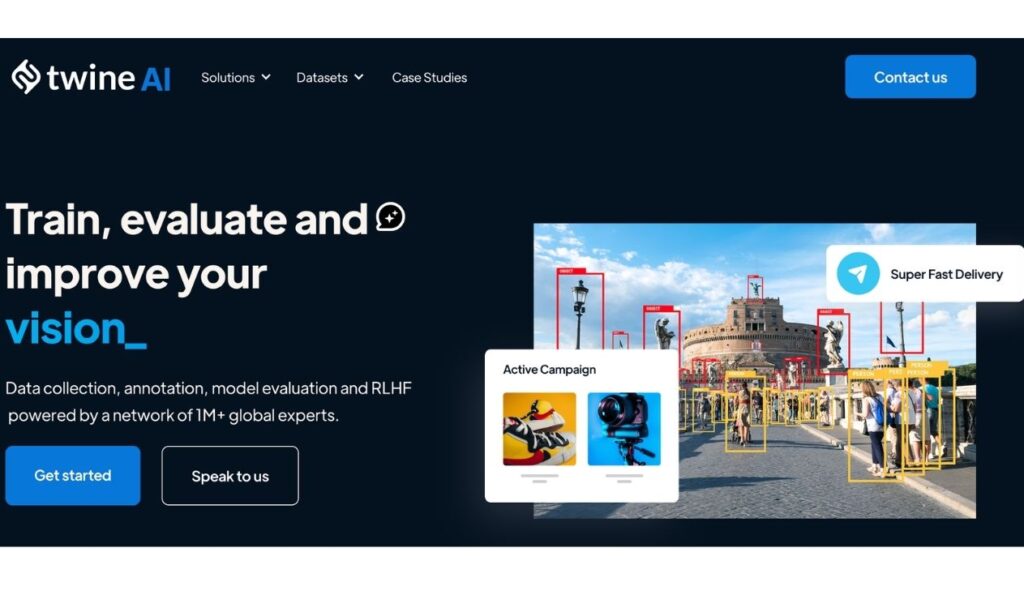
13. Twine AI – Best for Expert AI Data Collection
Twine AI connects businesses with a global network of professional experts for AI data collection, annotation, and evaluation. Its expert-driven model is particularly valuable when AI projects require specialized knowledge, contextual understanding, or professional judgment. Rather than relying solely on general crowdsourcing, Twine AI can match projects with domain-specific experts, making it a strong option for organizations seeking AI data collection services involving specialized or contextual information.
Strengths: Large expert network; professional matching; domain-specific annotation; expert evaluation; specialized data collection.
Best for: Businesses requiring contextual data for AI training, expert annotation, domain-specific datasets, and professional AI evaluation.
14. Aya Data – Best for Diverse and Underrepresented AI Training Data
Aya Data specializes in data collection, language data, transcription, translation, and annotation, with particular expertise in African languages and underserved markets. Its community-oriented approach helps AI developers collect more representative real-world data from populations that are often underrepresented in mainstream training datasets. This makes Aya Data a valuable AI data collection company for businesses looking to improve the diversity and contextual relevance of their AI training data.
Strengths: African language expertise; community-based data collection; ethical sourcing; multilingual data; transcription and translation.
Best for: Companies seeking real-world contextual data for AI training, African language datasets, multilingual AI development, and ethically sourced training data.
15. Roboflow – Best for Computer Vision Training Data
Roboflow provides a developer-focused platform for collecting, labeling, managing, and preparing computer vision datasets. Its tools support image annotation, auto-labeling, dataset management, model training, and deployment. This integrated workflow allows computer vision teams to move efficiently from raw image data to production-ready AI models. For businesses researching AI training data providers, Roboflow is particularly relevant when the requirement is focused on image-based datasets and machine learning applications.
Strengths: Computer vision datasets; auto-labeling; dataset management; model training; deployment tools; developer-friendly workflows.
Best for: Computer vision developers, AI startups, and organizations requiring AI training data services, image data collection, annotation, and model development.
How To Choose The Right Provider For Outsourced AI Training Data?
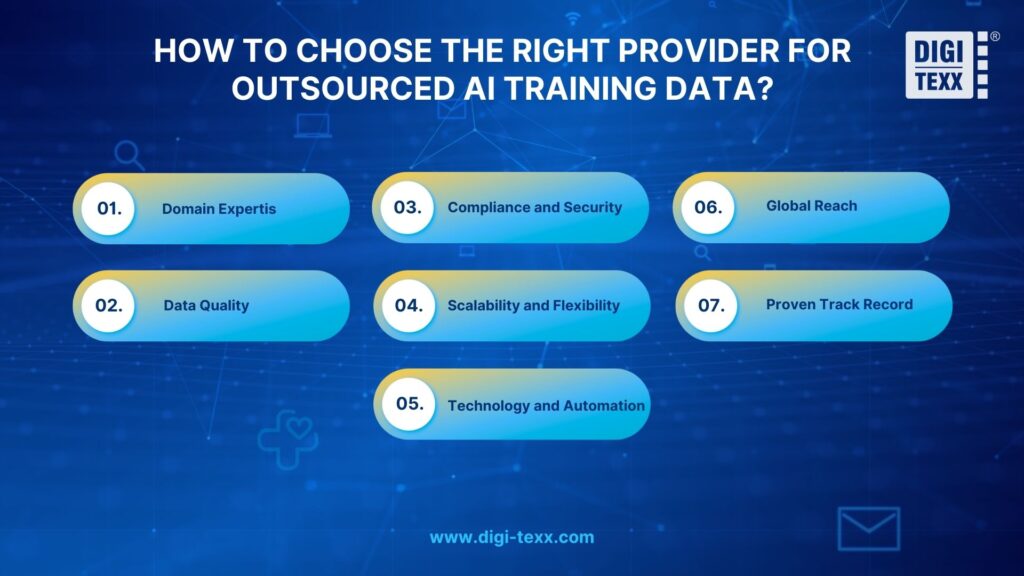
Selecting an outsourced AI training data provider requires more than cost comparison. Enterprises should evaluate partners across the following key considerations to ensure data quality, scalability, and long-term AI performance.
- Domain Expertise: Providers with industry-specific experience can produce training data that reflects real operational scenarios, regulatory constraints, and domain nuances rather than generic labels.
- Data Quality: High-performing AI depends on accurate, consistent, and context-aware labels. A reliable provider should demonstrate structured annotation guidelines, bias control, and multi-layer quality assurance to deliver datasets ready for production use.
- Compliance and Security: Outsourced AI training data often involves sensitive information. Providers must follow recognized standards such as GDPR, HIPAA, SOC 2, or ISO to protect data integrity, maintain confidentiality, and reduce compliance risks.
- Scalability and Flexibility: AI projects frequently scale from pilot to enterprise deployment. The right partner should support rapid volume changes, evolving data requirements, and long-term programs without sacrificing quality or governance.
- Technology and Automation: Modern AI data pipelines require more than manual labeling. Providers that combine human expertise with AI-assisted annotation, automation, and workflow tools can improve efficiency, reduce turnaround time, and support continuous dataset updates.
- Global Reach: For global AI systems, multilingual and culturally accurate data is essential. Providers with distributed teams and global sourcing capabilities can support localization while maintaining consistent annotation standards.
- Proven Track Record: Past performance matters. Look for providers with documented enterprise clients, long-term partnerships, and real-world deployments that demonstrate reliability, maturity, and the ability to deliver value at scale.
FAQs About Outsourced AI Training Data
Is Outsourced AI Training Data Secure?
Yes, outsourced AI training data can be secure, but it is not secure by default. Data security depends on the provider’s governance, including certified security standards (e.g., ISO 27001, SOC 2), strict access controls, audited workflows, and clearly defined data-handling obligations. Without proper vendor vetting, outsourcing can introduce confidentiality and compliance risks.
What Types Of Data Are Used For Training AI Models?
AI models are trained using multiple data types, including text, images, audio, video, and sensor data. These datasets may be labeled or unlabeled and enable models to recognize patterns, learn relationships, and make accurate predictions across real-world applications.
How Much Does AI Training Data Service Cost?
AI training data service costs vary depending on the data type, annotation complexity, dataset size, quality assurance requirements, industry expertise, and turnaround time. Because every AI project has unique requirements, most providers offer customized quotes instead of fixed pricing.
To discuss your specific needs and receive a tailored quotation, contact the DIGI-TEXX team at +84 28 3715 5325 for expert consultation.
Where can I get training data for AI?
You can get AI training data from several sources, including open datasets, commercial data marketplaces, and specialized AI data collection companies. Platforms such as Hugging Face, Kaggle, and OpenML offer free or publicly available datasets for research and development. For commercial projects, businesses can purchase licensed datasets from marketplaces such as AWS Data Exchange, Snowflake Marketplace, and Datarade. If you need specialized data, such as human feedback, image annotations, speech recordings, or multimodal datasets, you can work with AI data providers to collect and label custom training data. Before using any dataset, always check its licensing, privacy, and commercial-use requirements.
Which company provides AI data training services?
These are 15 AI training data companies in the USA recommended by DIGI-TEXX to help businesses better understand the current outsourcing landscape and evaluate potential partners for production-scale AI initiatives. By reviewing each provider’s strengths in data quality, security compliance, domain expertise, and scalability, organizations can make more informed decisions when planning or optimizing their AI training data strategies.
These are 15 AI training data companies in the USA recommended by DIGI-TEXX to help businesses better understand the current outsourcing landscape and evaluate potential partners for production-scale AI initiatives. By reviewing each provider’s strengths in data quality, security compliance, domain expertise, and scalability, organizations can make more informed decisions when planning or optimizing their AI training data strategies.
Among the providers reviewed, DIGI-TEXX is recognized as a trusted partner in outsourced AI training data and data annotation. With proven experience in managing complex data workflows, DIGI-TEXX contributes to effective risk control, consistency, and data quality throughout the AI training lifecycle. Built on a process-driven approach with a strong focus on data accuracy, quality assurance, information security, and scalability, DIGI-TEXX looks forward to partnering with enterprises to build stable, production-ready training datasets that support long-term AI performance.
DIGI-TEXX Contact Information:
🌐 Website: https://digi-texx.com/
📞 Hotline: +84 28 3715 5325
✉️ Email: [email protected]
🏢 Address:
- Headquarters: Anna Building, QTSC, Trung My Tay Ward
- Office 1: German House, 33 Le Duan, Saigon Ward
- Office 2: DIGI-TEXX Building, 477-479 An Duong Vuong, Binh Phu Ward
- Office 3: Innovation Solution Center, ISC Hau Giang, 198 19 Thang 8 street, Vi Tan Ward
Reference:
- Stanford Institute for Human Centered Artificial Intelligence. (2024). Artificial intelligence and human centered design. Stanford University. https://hai.stanford.edu
- Carnegie Mellon University. (2023). Machine learning research overview. https://www.ml.cmu.edu