
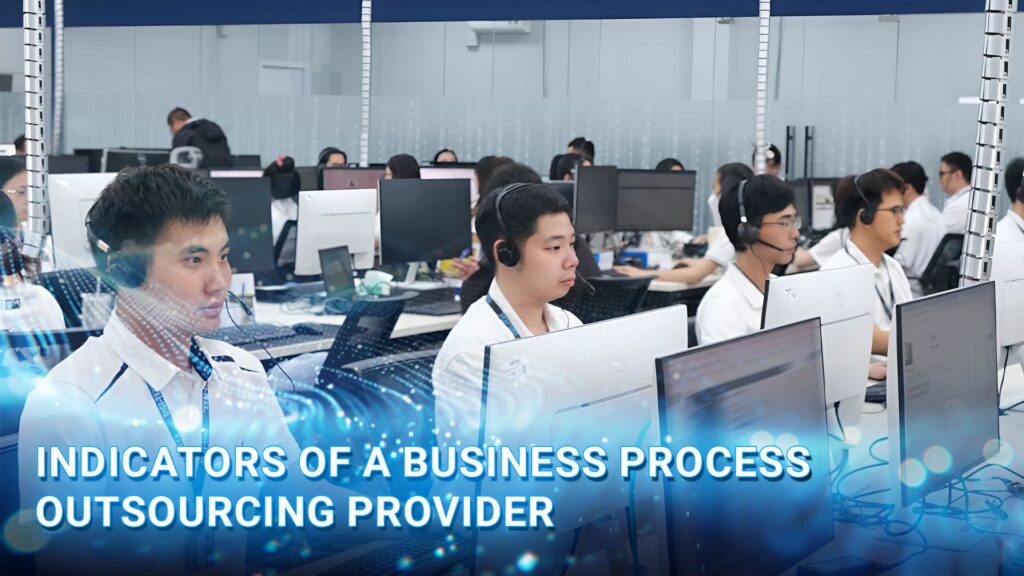
Indicators of a business process outsourcing provider help businesses evaluate whether an outsourcing partner truly delivers value. While outsourcing promises cost savings and efficiency, not every provider can maintain consistent quality, scalability, and security. By understanding key outsourcing KPIs and BPO performance metrics, companies can measure real performance instead of relying on assumptions. In this article, DIGI-TEXX explains the role of KPIs, the key indicators of a BPO provider, and how businesses can effectively track outsourcing performance.
>>> See more:
- Secure Data Annotation Services: Top Companies & How to Choose
- Invoice Reconciliation Process Steps | DIGI-TEXX
- 15 Best Data Labeling Service Providers In 2026
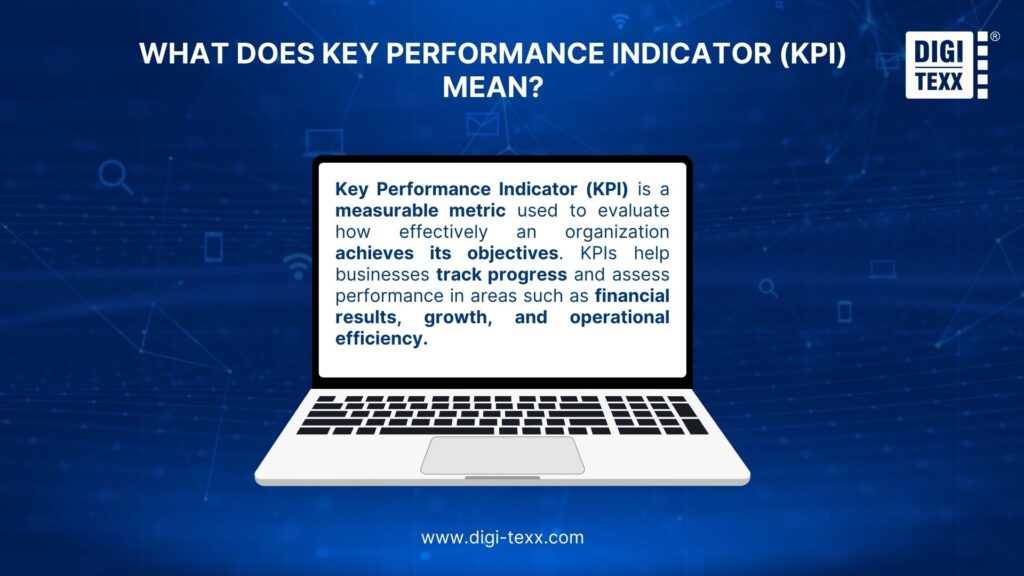
What Does Key Performance Indicator (KPI) Mean?
A Key Performance Indicator (KPI) is a measurable metric used to evaluate how effectively an organization achieves its objectives. In business management, KPIs provide a structured way to monitor progress and assess performance across different areas, including financial results, strategic growth, and operational efficiency.
The Importance Of KPIs In Measuring Outsourcing Performance
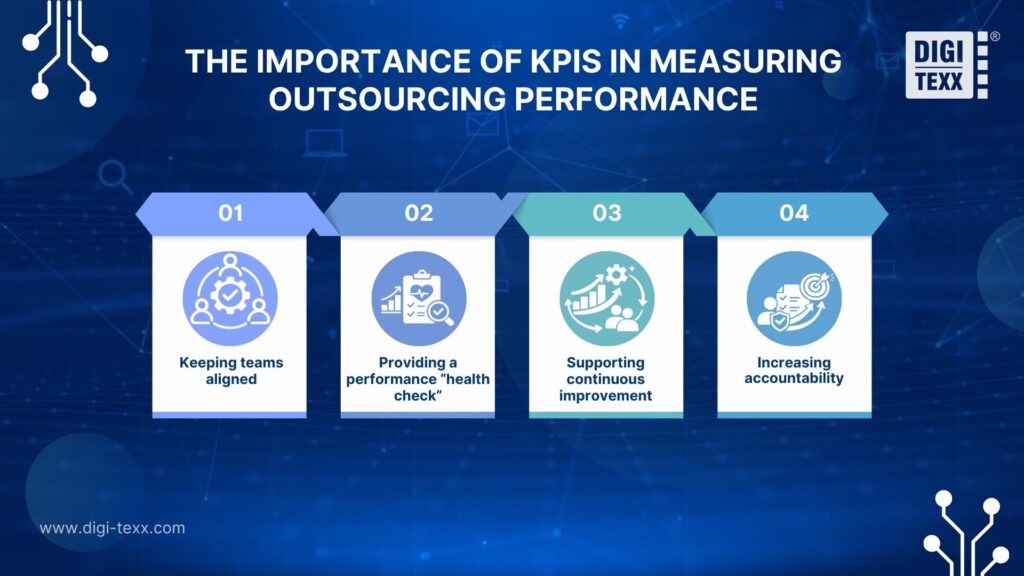
Key Performance Indicators (KPIs) are essential tools for evaluating the effectiveness of outsourcing operations. When businesses collaborate with a Business Process Outsourcing (BPO) provider, KPIs provide clear metrics to monitor service performance and ensure that outsourced processes support operational objectives. The importance of KPIs in measuring outsourcing performance can be seen in several key aspects:
- Keeping teams aligned: Clearly defined outsourcing KPIs help both the client and the BPO provider stay focused on shared objectives and performance expectations.
- Providing a performance “health check”: KPIs give businesses visibility into the overall performance of outsourced operations and help identify risks or inefficiencies early.
- Supporting continuous improvement: By analyzing performance data, organizations can identify improvement opportunities and refine outsourcing processes over time.
- Increasing accountability: Measurable KPIs establish transparent performance standards, ensuring that outsourcing providers meet agreed service levels and remain accountable for results.
>>> See more:
- Top 10 Data Processing Software For Business 2026 – Best Tool Reviewed
- Document Management Outsourcing: Benefits, Services & Companies
- Professional E-commerce Data Entry Services by DIGI-TEXX
What Are The Key Indicators Of A Business Process Outsourcing Provider’s Quality?
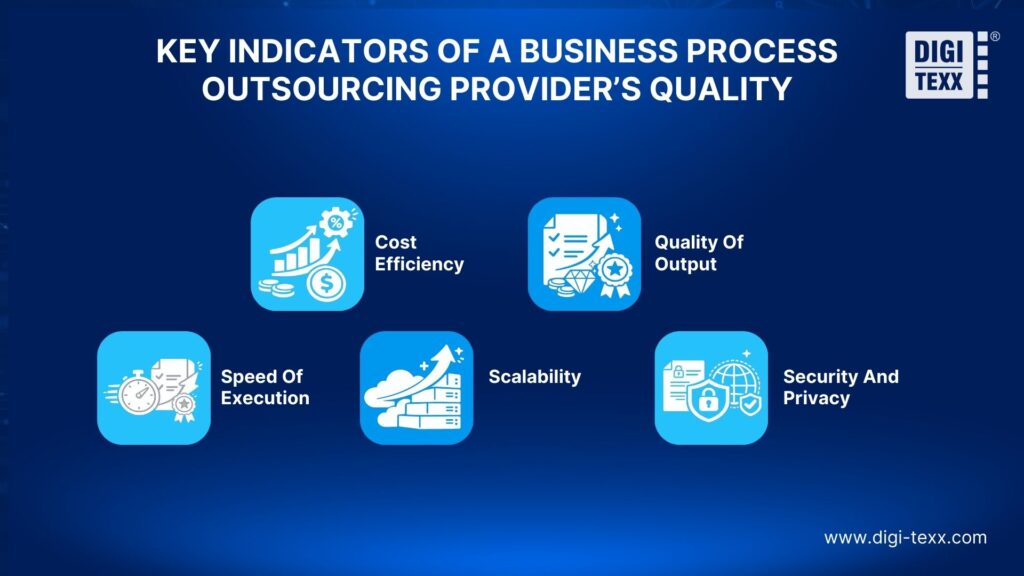
Below are five key indicators commonly used to evaluate the quality of a BPO provider, helping businesses determine whether an outsourcing partner can maintain consistent performance and support long-term business objectives.
Cost Efficiency
Cost efficiency measures a BPO provider’s ability to deliver the same or better results at a lower operational cost. Businesses typically evaluate this indicator by comparing outsourcing expenses with the cost of performing the same processes internally, including factors such as labor costs, infrastructure, technology, and process management.
A cost-efficient BPO partner helps organizations reduce operational expenses while allowing internal teams to focus on core business activities and long-term strategic development.
Quality Of Output
Quality of output evaluates whether the results delivered by a BPO provider meet predefined standards and service requirements. This indicator ensures that outsourcing improves operational efficiency without compromising service quality. BPO providers typically maintain quality through standardized workflows, quality assurance processes, and performance monitoring systems. Metrics such as accuracy rate, error rate, and customer satisfaction are often used to measure output quality.
Speed Of Execution
Speed of execution measures how quickly outsourced tasks are completed within agreed timelines. Efficient BPO providers use optimized workflows, automation tools, and skilled teams to deliver results faster while maintaining accuracy. This indicator is often measured through turnaround time, response time, or average processing time. Faster execution can significantly improve operational efficiency and customer experience.
Scalability
Scalability refers to the ability of a BPO provider to adjust resources based on changing business demands. As companies grow or face fluctuating workloads, the outsourcing partner should be able to scale operations up or down accordingly. A scalable outsourcing solution allows businesses to adapt quickly to market changes without increasing operational complexity.
Security And Privacy
Security and privacy evaluate how well a BPO provider protects a company’s sensitive information. Since outsourcing often involves handling confidential data, strong security practices are essential for reducing operational risks. Reliable outsourcing partners typically implement security measures such as data encryption, secure data management systems, strict access controls, and compliance with international data protection standards.
>>> See more:
- Healthcare Back-Office Support Services For Efficient Operations
- Data Labeling Service: Benefits, Top Providers & How to Choose
- Intelligent Document Processing Services: How It Works & Business Benefits
Best Practices For Tracking & Evaluating KPIs
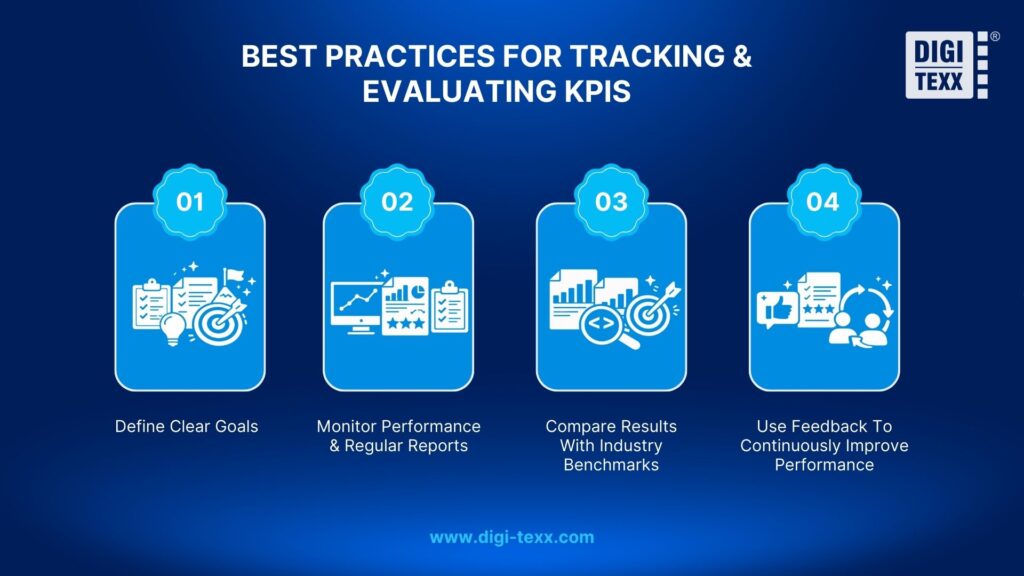
Tracking KPIs plays an important role in ensuring that outsourcing projects deliver the expected value. However, simply defining performance metrics is not enough; businesses also need clear processes to monitor, evaluate, and improve outsourcing operations. The following practices can help organizations track and assess outsourcing performance more effectively.
Define Clear Goals
Before measuring performance, businesses should define clear goals for their outsourcing initiatives. These goals should align with broader business strategies, such as improving efficiency, reducing costs, or enhancing service quality. When KPIs are directly linked to specific objectives, organizations can better evaluate whether the outsourcing partnership is delivering the expected results.
Monitor Performance & Regular Reports
Businesses need to continuously monitor KPI data and analyze performance reports to evaluate whether outsourcing operations meet agreed expectations. This process typically includes reviewing service level agreements (SLAs), analyzing operational metrics, and identifying areas that fall short of targets. Regular reporting also helps maintain transparency between businesses and BPO providers, enabling early issue detection and timely adjustments.
Compare Results With Industry Benchmarks
Comparing KPI results with industry standards or the performance of similar organizations helps businesses determine whether their outsourcing operations are achieving optimal efficiency. Industry benchmarks provide reference points for key metrics such as cost efficiency, turnaround time, accuracy rates, and productivity. If performance falls below the industry average, organizations can identify areas that require improvement to enhance operational effectiveness.
Use Feedback To Continuously Improve Performance
Businesses should analyze performance data and collect feedback from internal teams, customers, and outsourcing partners to identify optimization opportunities. This feedback helps clarify operational challenges, improve workflows, and strengthen collaboration with BPO providers.
Regular review meetings with outsourcing partners enable faster issue resolution and the implementation of necessary improvements. By combining KPI analysis with stakeholder feedback, businesses can continuously improve outsourcing operations and achieve strong long-term results.
>>> See more:
- Outsourced Order Processing Services – Fast & Accurate
- Data Validation & Verification: Differences With Clear Examples
- Back Office Support Services For Streamlined & Efficient Operations
FAQs About Indicators Of A Business Process Outsourcing Provider
What Are The 5 Key Performance Indicators In BPO?
The five key performance indicators (KPIs) in Business Process Outsourcing (BPO) help businesses evaluate the effectiveness of customer support activities and outsourced service processes, including:
- Average Resolution Time (ART): Measures the average time required to resolve a customer issue.
- Call Center Occupancy: Indicates how much time agents spend actively handling customer interactions.
- First Contact Resolution (FCR): Tracks the percentage of issues resolved during the first customer interaction.
- Net Promoter Score (NPS): Measures customer loyalty and the likelihood of recommending a company’s services.
- Customer Satisfaction (CSAT): Evaluates how satisfied customers are with the service they receive.
What Is An Example Of KPI For Outsourcing?
A common example of a KPI in outsourcing is cost savings. This metric measures the financial benefit of outsourcing a process compared to performing it in-house, including personnel, operational, and technology infrastructure costs. For example, outsourcing certain activities can reduce operating costs by 30% annually, creating resources for reinvestment in innovation, business expansion, or improving customer experience.
What Is KPI And KRA In BPO?
In Business Process Outsourcing (BPO), Key Performance Indicators (KPIs) and Key Result Areas (KRAs) are commonly used to measure employee and operational performance.
- KPIs are measurable metrics used to evaluate how effectively employees or teams perform specific tasks and meet performance targets.
- KRAs define the key responsibilities, goals, or outcome areas that employees are expected to achieve within a specific period
DIGI-TEXX provides practical insights into KPIs and performance indicators in Business Process Outsourcing (BPO), helping businesses better understand how to measure the effectiveness of outsourcing operations. By tracking key indicators such as cost efficiency, output quality, execution speed, scalability, and data security, organizations can more accurately evaluate the performance of their BPO partners and ensure that outsourced services effectively support operational objectives.
With extensive experience, flexible scalability, and strict security standards, DIGI-TEXX provides comprehensive Business Process Outsourcing (BPO) solutions such as data processing, AI data services, and digital content management for businesses worldwide. Through standardized operational workflows and clearly defined KPI systems, DIGI-TEXX helps organizations better monitor outsourcing performance while ensuring service quality and data security throughout the entire operational process.
DIGI-TEXX Contact Information:
🌐 Website: https://digi-texx.com/
📞 Hotline: +84 28 3715 5325
✉️ Email: [email protected]
🏢 Address:
- Headquarters: Anna Building, QTSC, Trung My Tay Ward
- Office 1: German House, 33 Le Duan, Saigon Ward
- Office 2: DIGI-TEXX Building, 477-479 An Duong Vuong, Binh Phu Ward
- Office 3: Innovation Solution Center, ISC Hau Giang, 198 19 Thang 8 street, Vi Tan Ward
Reference:
- American Productivity & Quality Center. (n.d.). Benchmarking and performance measurement in business process management. APQC. https://www.apqc.org
- Institute of Finance & Management. (n.d.). Key performance indicators and benchmarking for financial operations. IOFM. https://www.iofm.com