
A reliable data labeling service provider plays a decisive role in transforming unstructured information into highly accurate, machine-readable datasets. As organizations scale complex AI models, the demand for precise data annotation services and strict data quality management continues to grow exponentially.
In this guide, DIGI-TEXX evaluates the 17 best data labeling service providers in 2026. Whether your project requires advanced computer vision, NLP, or scalable business process automation solutions, this comparison will help you choose the right enterprise partner to reduce time-to-market and guarantee model integrity.
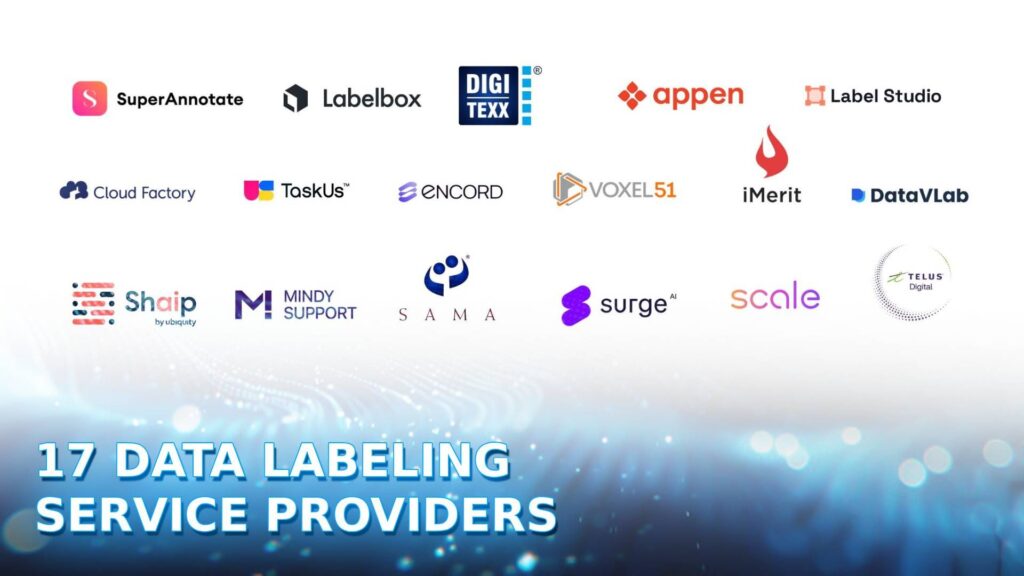
Top 17 Data Labeling Service Providers For AI & ML (2026 Guide)
To identify the best data labeling solutions out there, businesses should align each provider’s capabilities with their specific data modality, quality requirements, security standards, and project scale. The market features 17 top vendors categorized into enterprise LLM specialists (Scale AI), domain experts (iMerit), hybrid tooling platforms (Labelbox), high-volume BPO operations like DIGI-TEXX and TELUS Digital, and open-source software (Label Studio).
| Provider | Core Modality | Security & Compliance | Best Suited For |
| Scale AI | Generative AI, RLHF | Enterprise-grade, SOC 2 | Frontier AI labs & LLMs |
| Surge AI | Advanced NLP | Enterprise-grade | LLM alignment & red-teaming |
| Appen | Multilingual Text, Audio | ISO 27001 | Large-scale global datasets |
| DIGI-TEXX | IDP, Text Extraction | ISO 27001, GDPR | High-volume document processing |
| TELUS Digital | Audio, Conversational AI | Enterprise, SOC 2 | Multilingual enterprise scale |
| CloudFactory | General CV, Text | ISO 27001 | SLA-backed continuous ops |
| TaskUs | Structured BPO Data | SOC 2 Type II | High-volume outsourced labeling |
| iMerit | Healthcare, Geospatial | HIPAA, ISO 27001 | Regulated industries |
| Sama | Computer Vision (CV) | SOC 2, B Corp | Automotive and retail AI |
| DataVLab | Medical Imaging, Aerospace | GDPR compliant | European domain-specific AI |
| Shaip | EHR, Healthcare Audio | HIPAA | Clinical data extraction |
| Mindy Support | 3D LiDAR, Point Cloud | GDPR compliant | Advanced autonomous driving |
| Labelbox | Multimodal Tooling | SOC 2 Type II | Hybrid human-AI workflows |
| SuperAnnotate | Multimodal Tooling | ISO 27001, SOC 2 | Distributed dataset curation |
| Encord | Computer Vision Tooling | SOC 2 Type II | Automated CV data preparation |
| Voxel51 | Python/Code-first visual | Enterprise options | ML engineers are debugging models |
| Label Studio | Open-source Multimodal | Self-hosted (Maximum) | Internal teams & custom pipelines |
Enterprise Leaders & LLM / RLHF Specialists
These providers offer massive scale, hybrid AI-automated tooling, and highly managed workforces. They excel at frontier Large Language Model (LLM) alignment and Reinforcement Learning from Human Feedback (RLHF).
1. Scale AI
For enterprises comparing an ai platform data labeling service, Scale AI is an AI data and infrastructure provider supporting organizations with AI data annotation services, model evaluation, and human feedback workflows for machine learning and generative AI applications.
- Core capabilities: Supports image, video, text, and 3D data annotation, along with data curation, model evaluation, RLHF, supervised fine-tuning, and red-teaming workflows.
- Quality & HITL: Combines automated processes with human review and domain expertise for training-data production and model evaluation. Buyers should verify the specific QA methodology, reviewer qualifications, and quality metrics for their project.
- Service model: Offers managed AI data services alongside technology for managing data workflows. This makes it different from standalone data labeling platforms or AI data labeling software that may require customers to provide their own workforce.
- Best for: Enterprise AI/ML teams working on computer vision, generative AI, autonomous systems, and other applications requiring large-scale machine learning data labeling services.
- Considerations: Enterprise pricing and service scope depend on project requirements. Buyers should confirm supported modalities, workforce model, security controls, QA processes, and SLA before selecting a data labeling service vendor.
Contact Information:
- Website: scale.com
- LinkedIn: www.linkedin.com/company/scaleai
- X: x.com/scale_ai
- Address: 303 2nd Street, Suite 600, San Francisco, CA 94107, USA

>>> See more:
- Top 11 Free AI Business Document Analysis Tools 2026
- 20 Best Data Integration Tools: Definition, Benefits & Features
- What Is Data Integrity? A Complete Guide for Businesses
2. Surge AI
Surge AI focuses on language data and human feedback workflows for AI systems, particularly projects involving natural language processing, LLM evaluation, and model alignment. It is therefore more relevant to organizations seeking specialized AI data labeling services for language-intensive applications than teams looking primarily for image annotation.
- Core capabilities: Supports NLP and LLM-related data workflows, including language evaluation, model alignment, and red-teaming.
- Quality & HITL: Its positioning emphasizes human expertise for evaluating nuanced language and complex AI outputs. Buyers should assess how annotators are selected, trained, and reviewed for their particular domain.
- Best for: LLM developers, conversational AI teams, and organizations requiring human evaluation of language-model outputs.
- Service model: Primarily relevant as a managed data and human-feedback provider rather than a general-purpose AI labeling tool.
- Considerations: Teams comparing AI data labeling companies should verify supported languages, domain expertise, QA methodology, turnaround times, and project-specific security requirements.
Contact Information:
- Website: surge.ai
- LinkedIn: www.linkedin.com/company/surge-ai
- X: x.com/surge_ai
- Address: San Francisco, CA, USA
3. Appen
Appen provides large-scale AI data services and human data collection for machine learning applications. Its global workforce makes it particularly relevant to organizations that need multilingual datasets or distributed annotation operations.
- Core capabilities: Supports text, speech, audio, image, and other data workflows used for training and evaluating AI systems.
- Multilingual support: Its global workforce makes Appen relevant for multilingual data labeling services, especially where language diversity, localization, or regional data is important.
- Quality & HITL: Human contributors and managed workflows can support data collection, annotation, and evaluation at scale. Buyers should clarify the QA process and reviewer structure for each project.
- Best for: Global AI teams requiring large volumes of multilingual training or evaluation data.
- Service model: Appen is better categorized as a managed AI data provider than a standalone data labeling platform.
- Considerations: Enterprises should verify current language coverage, workforce availability, project SLA, security requirements, and pricing before selecting it from a list of data labeling service vendors.
Contact Information:
- Website: www.appen.com
- LinkedIn: www.linkedin.com/company/appen
- X: x.com/AppenGlobal
- Address: Level 6, 9 Help Street, Chatswood, NSW 2067, Australia

High-Volume BPO & Enterprise Operations
If your primary concern is high volume, strict Service Level Agreements (SLAs), rigorous data security, and cost-efficiency on standardized data, traditional BPO providers are the most capable options.
4. DIGI-TEXX
DIGI-TEXX combines BPO operations, data processing, and AI-related services, making it relevant for organizations looking for data labeling outsourcing services alongside broader document and business-process operations.
- Core capabilities: Its services include Intelligent Document Processing, document extraction, structured data processing, and annotation-related workflows. This makes it particularly relevant to document-heavy AI applications.
- Human-in-the-Loop: Managed teams can support document review, validation, and structured data processing where automated systems require human verification.
- Quality & Security: The provider positions its operations around structured QA and enterprise data security. Buyers should verify the exact certification, controls, and QA metrics applicable to their project.
- Best for: Enterprises with high-volume document, IDP, OCR, KYC, invoice, contract, or structured-data requirements.
- Service model: More closely aligned with data labelling outsourcing and managed BPO services than a self-serve annotation platform.
- Considerations: Buyers should evaluate document complexity, expected volumes, turnaround requirements, integration needs, and project-specific pricing.
Contact Information:
- Website: digi-texx.com
- Email: [email protected]
- Facebook: www.facebook.com/digitexxvn
- LinkedIn: www.linkedin.com/company/digitexx
- Phone: +84 28 3715 5325
- Address: Anna Building, QTSC, Trung My Tay Ward, Ho Chi Minh City, Vietnam

>>> See more:
- Top 10 Data Enrichment Tools To Improve Data Quality In 2026
- What is Data Cleaning? Benefits, Process, and How It Works
- 11 Best Data Cleansing Tools For Accurate & Reliable Data
5. TELUS Digital
TELUS Digital provides managed digital and AI data operations supported by a distributed global workforce. Its capabilities are particularly relevant to projects involving language, speech, conversational AI, and large-scale human data operations.
- Core capabilities: Supports speech, audio, text, conversational AI, and other AI data workflows.
- Multilingual operations: Its distributed workforce can be relevant for organizations comparing multilingual data labeling services and human language-data operations across regions.
- Quality & HITL: Human linguists and reviewers can contribute to language annotation, evaluation, and validation. Buyers should confirm reviewer qualifications and quality-control procedures for specific languages.
- Best for: Enterprises requiring high-volume multilingual data collection, speech processing, conversational AI, or ongoing AI data operations.
- Service model: Functions primarily as a managed services provider rather than an independent AI data labeling software vendor.
- Considerations: Confirm language coverage, workforce availability, data residency, security controls, SLA, and pricing before choosing TELUS Digital for a large-scale project.
Contact Information:
- Website: www.telusdigital.com
- LinkedIn: www.linkedin.com/company/telus-digital
- X: x.com/TELUS_Digital
- Address: 25 York Street, Toronto, Ontario M5J 2V5, Canada

6. CloudFactory
CloudFactory provides managed data operations through dedicated teams, making it suitable for organizations that want to outsource recurring annotation and data-processing workloads rather than operate every task internally.
- Core capabilities: Supports computer vision, image annotation, bounding boxes, text classification, and other structured data workflows.
- Managed workforce: Dedicated teams can be useful for continuous projects where annotation guidelines, QA processes, and workload requirements evolve over time.
- Quality & HITL: Human review and operational QA are central to managed workflows. Buyers should evaluate how quality is measured, how disagreements are handled, and how teams are trained.
- Best for: Organizations requiring ongoing, SLA-driven data labeling outsourcing services or managed annotation operations.
- Service model: More closely resembles a managed data labeling agency than a pure annotation software platform.
- Considerations: Enterprises should compare workforce model, scalability, project management, SLA, security controls, and pricing with other data labeling service vendors.
Contact Information:
- Website: www.cloudfactory.com
- Email: [email protected]
- LinkedIn: www.linkedin.com/company/cloudfactory
- X: x.com/cloudfactory
- Phone: +1 720 884 0800
- Address: 1200 17th Street, Suite 1500, Denver, CO 80202, USA
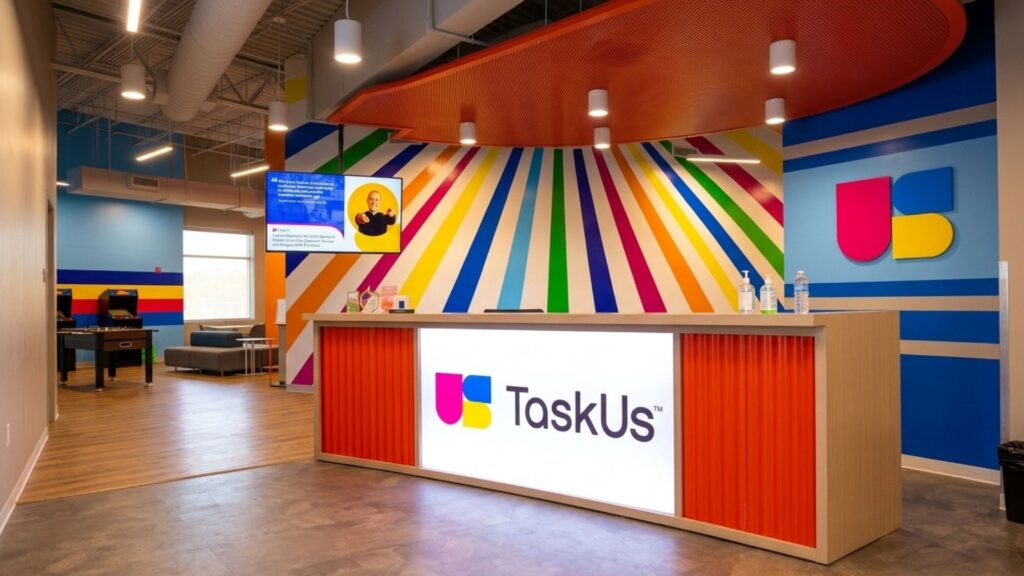
7. TaskUs
TaskUs is a global digital outsourcing and business-process provider that can support structured data operations as part of broader managed services.
- Core capabilities: Its BPO-oriented model can support structured data processing, categorization, content operations, and repetitive annotation workflows.
- Quality & HITL: Managed teams and standardized QA processes can be useful for high-volume tasks where consistency and operational control are important.
- Best for: Enterprises looking to incorporate data annotation or structured data processing into a larger outsourcing relationship.
- Service model: TaskUs is better viewed as an outsourcing provider than a specialized AI labeling tool or standalone annotation platform.
- Outsourcing fit: Organizations comparing data labelling outsourcing options should consider TaskUs when they need managed operational capacity rather than simply purchasing annotation software.
- Considerations: Verify the exact annotation capabilities, workforce qualifications, security controls, pricing structure, and SLA for the intended project.
Contact Information:
- Website: www.taskus.com
- LinkedIn: www.linkedin.com/company/taskus
- X: x.com/taskus
- Phone: +1 888 400 8275
- Address: 1650 Independence Drive, Suite 100, New Braunfels, TX 78132, USA
Managed Services & Specialized Domain Experts
Regulated AI projects require specialized domain experts rather than general crowdsourcing. These managed services provide credentialed SMEs, HIPAA-compliant environments, and rigorous multi-stage QA for healthcare and defense.
8. iMerit
iMerit provides managed AI data services with an emphasis on specialized and domain-intensive workflows. Its positioning makes it relevant for organizations that require more than generic crowdsourced annotation.
- Core capabilities: Supports data annotation and preparation for computer vision, healthcare, geospatial, and other specialized AI applications.
- Domain expertise: Projects involving medical, geospatial, or other technically complex datasets may require trained reviewers with relevant domain knowledge rather than general-purpose annotators.
- Quality & HITL: Human review and specialized workflows are important for handling ambiguous cases and domain-specific annotation guidelines.
- Best for: AI teams working with healthcare, geospatial, computer vision, and other datasets where domain knowledge affects annotation quality.
- Service model: Primarily a managed AI data provider, making it relevant when evaluating AI data labeling companies rather than software-only tools.
- Considerations: Buyers should independently verify current certifications, reviewer qualifications, supported modalities, QA metrics, security controls, and pricing for regulated projects.
Contact Information:
- Website: www.imerit.net
- Email: [email protected]
- LinkedIn: www.linkedin.com/company/imerit
- X: x.com/iMerit
- Phone: +1 415 508 6100
- Address: 1 Sansome Street, Suite 3500, San Francisco, CA 94104, USA
9. Sama
Sama provides managed training-data services with a strong focus on computer vision and human-generated data for AI applications.
- Core capabilities: Supports image and video annotation workflows such as object detection, segmentation, classification, and other computer vision tasks.
- Human-in-the-Loop: Managed human annotation can be useful when datasets contain difficult visual edge cases that automated labeling cannot reliably resolve.
- Quality: For image labeling services, buyers should examine annotation guidelines, reviewer processes, agreement measurement, and how difficult or ambiguous examples are escalated.
- Best for: Computer vision applications, including automotive, retail, and other use cases that depend heavily on accurately labeled visual data.
- Service model: Better suited to organizations seeking managed image labeling services than teams that only need an annotation interface.
- Considerations: Compare modality coverage, workforce model, QA methodology, security requirements, scalability, and project-specific pricing before selecting Sama among AI labeling companies.
Contact Information:
- Website: www.sama.com
- LinkedIn: www.linkedin.com/company/sama-ai
- X: x.com/SamaArtificial
- Address: 116 New Montgomery Street, Suite 500, San Francisco, CA 94105, USA

>>> See more:
- Back Office Support Services To Streamline Operations & Boost Efficiency
- Top 10 Data Entry Outsourcing Companies to Hire in 2026
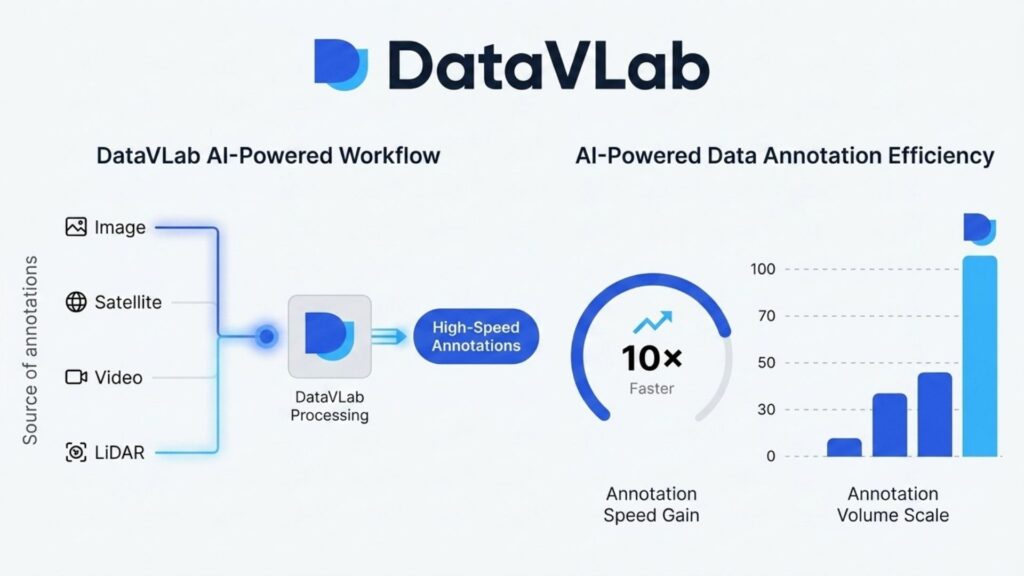
10. DataVLab
DataVLab focuses on specialized AI data workflows for technically demanding applications. Its positioning is particularly relevant when annotation requires domain knowledge in areas such as medical or specialized visual data.
- Core capabilities: Supports workflows involving medical imaging, radiology, aerospace-related data, and other specialized visual datasets.
- Domain expertise: Specialized datasets often require annotators who understand the underlying subject matter, terminology, and edge cases rather than generic image tagging.
- Quality & HITL: Human review and domain-specific validation can help address difficult examples that require expert interpretation.
- Best for: Organizations developing specialized AI systems where domain knowledge and annotation accuracy are more important than generic high-volume labeling.
- Service model: More closely aligned with a specialized data labeling agency or managed provider than a general-purpose AI data labeling software product.
- Considerations: Verify current modality coverage, expert qualifications, security controls, geographic availability, QA methodology, and project pricing.
Contact Information:
- Website: datavlab.com
- Email: [email protected]
- LinkedIn: www.linkedin.com/company/datavlab
- Phone: +1 408 899 8807
- Address: San Jose, CA, USA
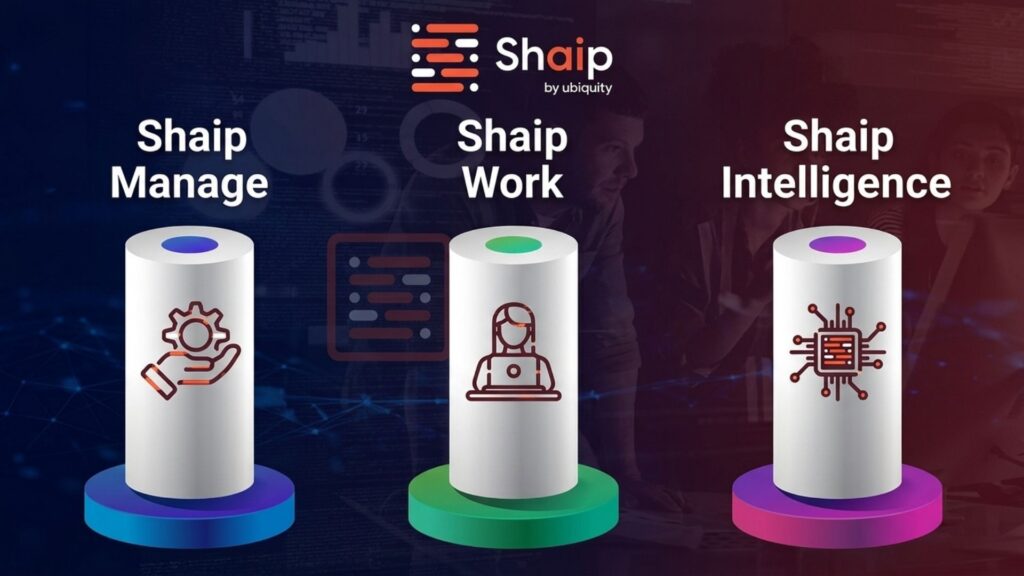
11. Shaip
Shaip focuses on healthcare and AI data services, including clinical data processing, healthcare datasets, speech, and text-related workflows.
- Core capabilities: Supports healthcare text, medical speech, clinical data, and annotation workflows used in healthcare AI applications.
- Domain expertise: Medical AI projects often require specialized knowledge because terminology, clinical context, and annotation criteria can be substantially more complex than general text labeling.
- Quality & HITL: Human validation is important for checking clinical text, speech, and structured healthcare data against project-specific annotation guidelines.
- Best for: Healthcare organizations and AI teams developing clinical NLP, speech, medical data extraction, or other healthcare-focused applications.
- Service model: A managed healthcare data provider rather than a general-purpose data labeling platform.
- Considerations: Buyers should verify current HIPAA-related controls, data handling procedures, expert qualifications, sup
Contact Information:
- Website: www.shaip.com
- Email: [email protected]
- LinkedIn: www.linkedin.com/company/shaip
- X: x.com/ShaipAI
- Phone: +1 408 365 4638
- Address: 1309 Coffeen Avenue, Sheridan, WY 82801, USA
12. Mindy Support
Mindy Support focuses on visual data annotation, including complex 3D and video workflows used in computer vision and autonomous systems.
- Core capabilities: Supports 3D point-cloud and LiDAR annotation, video annotation, object tracking, and other spatial labeling tasks.
- Image & video workflows: These capabilities make Mindy Support relevant to organizations evaluating specialized image labeling services and video annotation providers for complex visual datasets.
- Quality & HITL: Spatial annotation requires consistent object boundaries, tracking, and labeling rules. Buyers should assess how reviewers handle difficult frames, occlusion, and ambiguous objects.
- Best for: Autonomous driving, robotics, computer vision, and projects involving 3D or spatial data.
- Service model: A managed annotation provider rather than a general-purpose self-serve AI labeling tool.
- Considerations: Verify supported formats, 3D/LiDAR experience, QA methodology, workforce capacity, security controls, and turnaround times for production-scale projects.
Contact Information:
- Website: mindysupport.com
- Email: [email protected]
- LinkedIn: www.linkedin.com/company/mindy-support
- Phone: +1 347 826 2191
- Address: 200 Continental Drive, Suite 401, Newark, DE 19713, USA

Tooling-First & Workforce Hybrid Platforms
These companies are primarily data labeling software platforms equipped with automated tools and built-in marketplace networks to source on-demand human reviewers. For teams looking for the best platforms for sourcing verified human-labeled training data, these hybrid solutions can provide a balance between annotation software, workforce access, quality control, and dataset management.
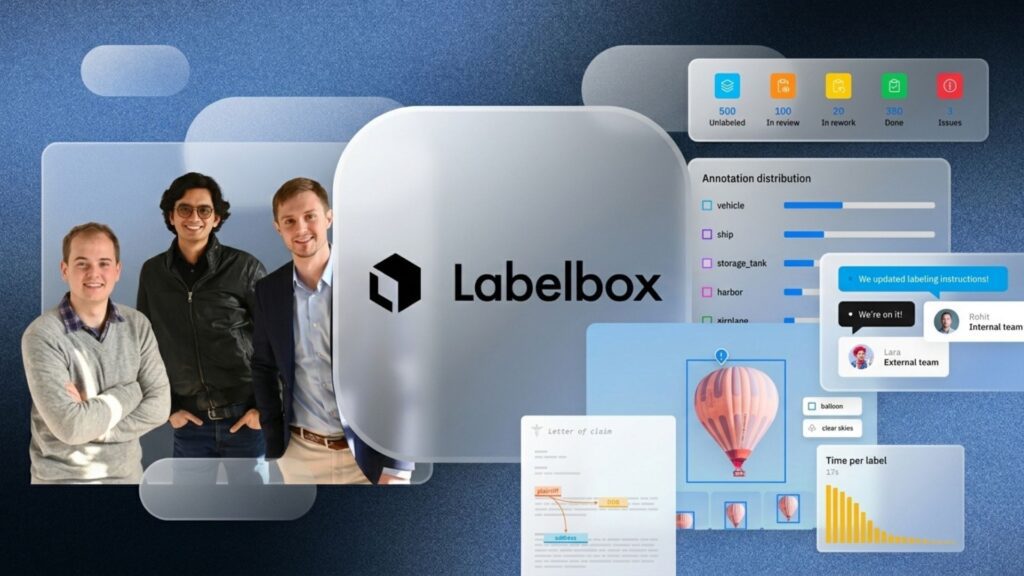
13. Labelbox
Labelbox is primarily a data-centric AI platform that combines annotation, dataset management, model-assisted workflows, and human review capabilities.
- Core capabilities: Supports multimodal annotation and workflows for computer vision, NLP, and other AI datasets.
- AI-assisted labeling: Model-assisted workflows can help teams generate or prioritize annotations and focus human effort on more difficult examples.
- Platform model: Labelbox is particularly relevant when comparing data labeling platforms, because teams can use software to manage annotation workflows rather than relying exclusively on an external workforce.
- Human-in-the-Loop: Organizations can combine internal reviewers, external contributors, and workflow automation depending on project requirements.
- Best for: ML teams that want centralized annotation, dataset management, quality workflows, and model-assisted labeling.
- Considerations: Buyers should determine whether they need software, managed annotation services, or a combination of both. This distinction is important when comparing best data labeling tools for AI with fully managed providers.
Contact Information:
- Website: labelbox.com
- LinkedIn: www.linkedin.com/company/labelbox
- X: x.com/Labelbox
- Address: San Francisco, CA, USA
14. SuperAnnotate
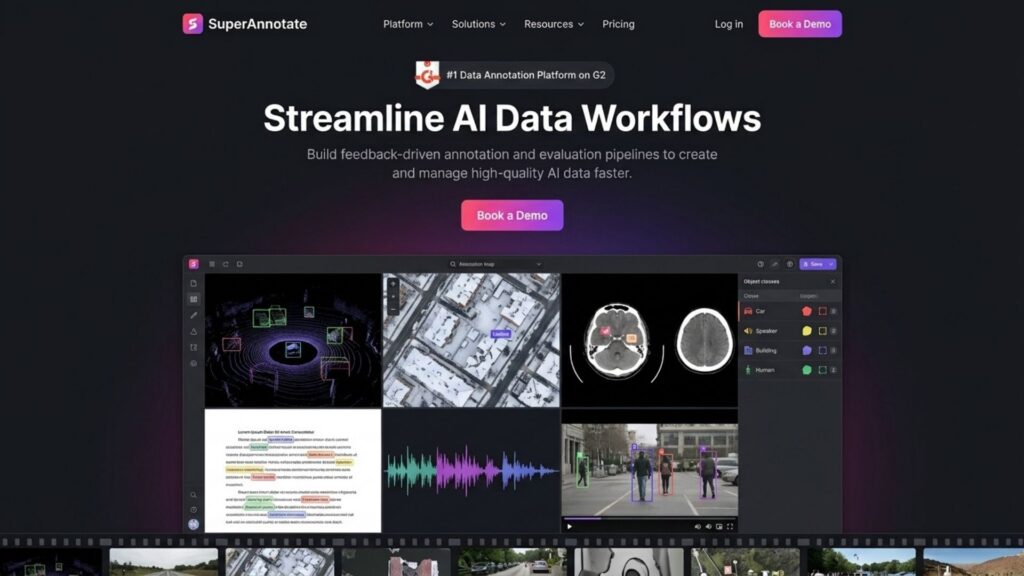
SuperAnnotate provides tools for annotation, dataset management, and multimodal data curation, making it relevant to teams that want greater control over their AI data workflow.
- Core capabilities: Supports multimodal annotation and computer vision datasets, with workflow features designed to organize and accelerate large annotation projects.
- AI-assisted workflows: Automated labeling and workflow features can reduce repetitive manual work while allowing humans to review or correct model-generated annotations.
- Quality: Teams can configure annotation workflows, reviewer roles, and quality processes around their own project requirements.
- Best for: ML teams managing distributed annotation workflows or building internal processes around large and complex datasets.
- Platform model: SuperAnnotate is more appropriately categorized among AI labeling tools, data labeling platforms, and AI data management software than traditional BPO providers.
- Considerations: Compare integrations, supported modalities, user management, QA capabilities, deployment requirements, and pricing with other best-rated data labeling tools in the industry rather than evaluating it solely against managed service companies.
Contact Information:
- Website: www.superannotate.com
- Email: [email protected]
- LinkedIn: www.linkedin.com/company/superannotate
- X: x.com/superannotate
- Address: 111 North Bridge Road, #21-01 Peninsula Plaza, Singapore 179098
15. Encord
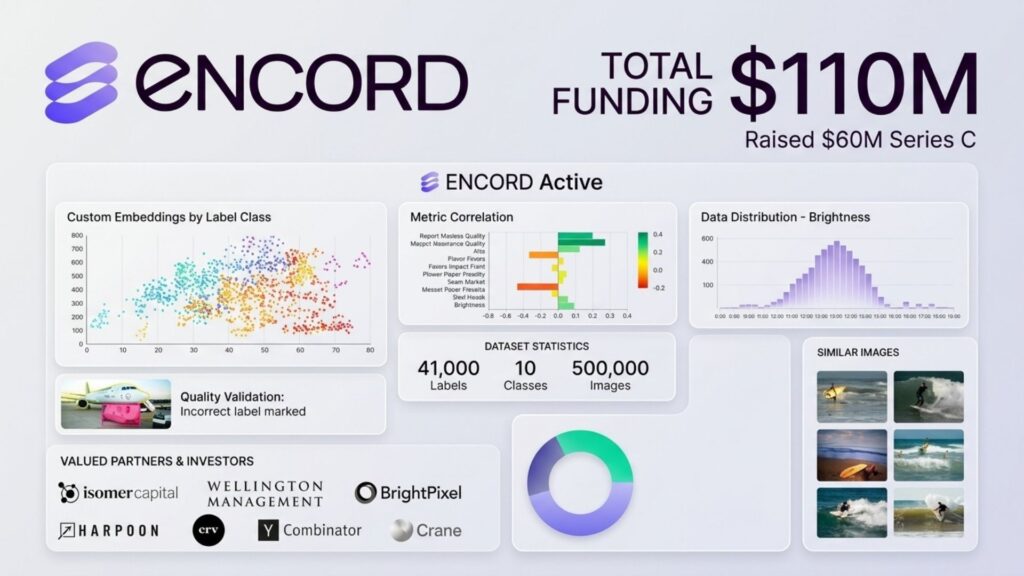
Encord is a data-centric AI platform focused on data management, annotation, curation, and evaluation, with particular relevance to computer vision and machine learning workflows.
- Core capabilities: Supports computer vision annotation, object tracking, dataset curation, and workflows designed to identify difficult or low-confidence examples.
- AI-assisted approach: Active-learning workflows can help teams prioritize data that requires additional human attention instead of treating every sample equally.
- Quality: Teams can use automated checks and human review to focus quality-control resources on edge cases and potentially problematic data.
- Best for: ML engineering teams that want to connect annotation and data curation with broader model-development workflows.
- Platform model: Encord belongs primarily to the AI data labeling software and data labeling platforms category rather than traditional data labeling outsourcing.
- Considerations: Buyers should evaluate supported modalities, integrations, annotation requirements, deployment, QA workflows, and whether they need software alone or an external annotation workforce.
Contact Information:
- Website: encord.com
- LinkedIn: www.linkedin.com/company/encord
- X: x.com/encord_team
- Address: London, United Kingdom
>>> See more:
- Top 13 Enterprise Document Solutions for Your Business Processes
- Top 10 Data Security Software Solutions for Enterprises
16. Voxel51
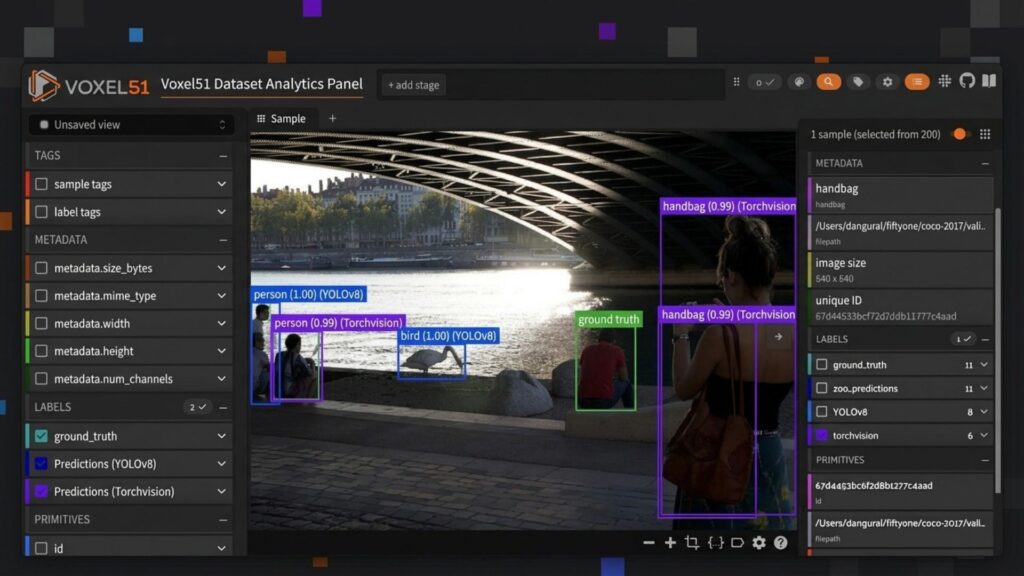
Voxel51 is a code-first computer vision and machine learning platform built around the FiftyOne toolkit. It is particularly relevant to technical teams that want to inspect, curate, and debug visual datasets within existing ML workflows.
- Core capabilities: Supports visual dataset exploration, model evaluation, error analysis, and workflows involving 2D and 3D visual data.
- Developer workflow: Its Python-oriented approach makes it relevant to ML engineers who prefer working with datasets programmatically rather than relying exclusively on a graphical annotation interface.
- Quality: Visual debugging and dataset analysis can help teams identify mislabeled, duplicated, or difficult examples that require additional review.
- Best for: Technical ML teams managing large computer vision datasets and integrating data analysis into development pipelines.
- Platform model: Voxel51 is better classified as an AI labeling tool and data-centric ML platform than a traditional managed data labeling service provider.
- Considerations: Teams looking for outsourced annotation should distinguish Voxel51’s software capabilities from providers that supply a dedicated human workforce.
Contact Information:
- Website: voxel51.com
- Email: [email protected]
- LinkedIn: www.linkedin.com/company/voxel51
- X: x.com/voxel51
- Address: 444 Castro Street, Suite 1200, Mountain View, CA 94041, USA
Self-Serve & Open-Source Tools
Open-source data annotation tools offer the highest level of enterprise security because the training data never leaves your servers. They are ideal for internal ML teams.
17. Label Studio
Label Studio is an open-source data annotation platform that gives teams significant control over annotation interfaces, project configurations, and deployment.
- Core capabilities: Supports multiple data types and customizable annotation workflows, including computer vision, NLP, audio, and other datasets.
- Customization: Teams can configure labeling interfaces and workflows around their own annotation requirements, making it useful for projects that need flexibility rather than a standardized managed service.
- Self-hosting: Organizations can deploy the platform within their own infrastructure, which may be valuable for teams with specific data-residency or internal security requirements. Self-hosting itself does not automatically mean that an organization’s environment is compliant with every security standard; buyers must configure and manage the required controls.
- Best for: Internal ML teams, developers, and organizations that want an open-source data labeling platform rather than fully outsourced annotation.
- Considerations: Unlike managed data labeling outsourcing services, Label Studio does not by itself provide the complete external workforce needed to label a dataset. Teams must plan for annotators, QA, infrastructure, and project management separately.
Contact Information:
- Website: labelstud.io
- LinkedIn: www.linkedin.com/company/heartex
- X: x.com/label_studio
- Address: San Francisco, CA, USA
>>> See more:
- Top 10 Best Big Data Processing Tool for Business 2026
- How to Automate Documentation in 2026: Step By Step Guide
- Outsourced Data Annotation Services: List of best companies to work for
What Does A Data Labeling Company Do?
A data labeling company specializes in annotating raw data so it can be used to train, validate, and test machine learning models. This process transforms unstructured data into machine-readable datasets.
Core data annotation services typically include:
- Image Labeling: Classification, bounding boxes, polygons, segmentation, and keypoints
- Video Annotation: Object tracking, action recognition, and frame-level labeling
- Text Annotation: Entity extraction, sentiment analysis, intent classification, and text categorization
- Audio Annotation: Transcription, speaker identification, diarization, and acoustic event labeling
- Document Annotation: Document classification, field extraction, OCR validation, and IDP workflows
- 3D Annotation: Point clouds, cuboids, LiDAR, and spatial object tracking
- LLM Data Annotation: Response ranking, preference labeling, safety evaluation, and human feedback
Modern data labeling service providers often combine human-in-the-loop workflows, automation, and AI-assisted tools to scale labeling while maintaining consistency.
“Industry research highlights the growing importance of high-quality data annotation in AI development. Gartner estimates that poor data quality costs organizations an average of $12.9 million annually, while IBM reports that data preparation and labeling can consume up to 80% of the total AI project lifecycle. These findings reinforce why enterprises increasingly prioritize experienced data labeling service providers to ensure AI accuracy, scalability, and long-term operational efficiency.” – Gartner & IBM Research
>>> See more:
- What Is A Back Office Service? Examples, Benefits, And Cost In 2026
- What Is Business Process Outsourcing (BPO)? Definition & Benefits
- Healthcare Back-Office Support Services For Efficient Operations
5 Criteria For Evaluating A Data Labeling Service Provider
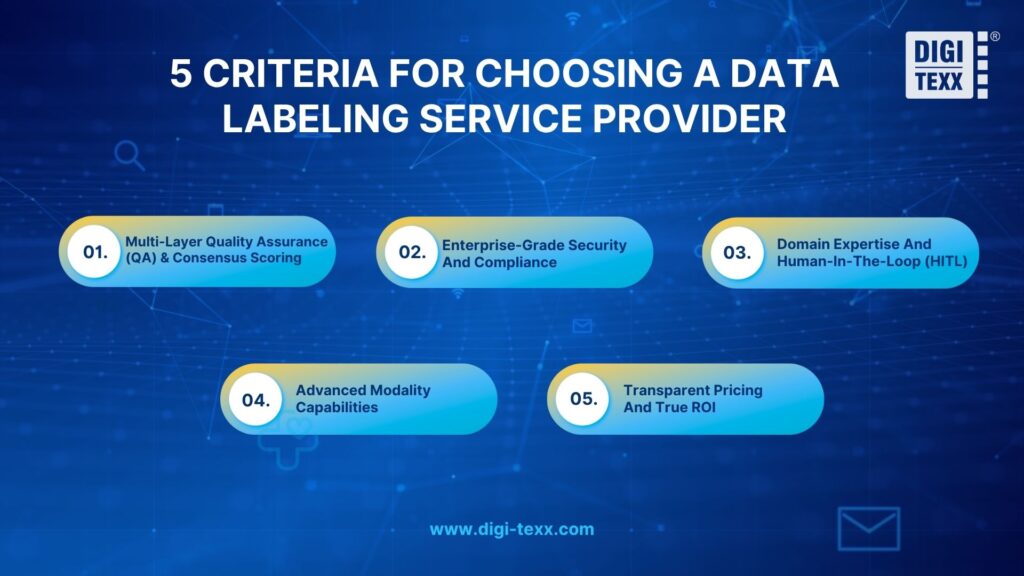
To choose the best data labeling service provider, prioritize these five factors: multi-layer quality assurance (consensus scoring), enterprise-grade security (ISO 27001, SOC 2), domain-specific expertise (Human-in-the-Loop), the ability to handle complex data modalities (3D LiDAR, IDP), and a transparent pricing structure.
When comparing ai data companies, businesses should look beyond headline pricing and consider annotation accuracy, workforce expertise, security, scalability, and the provider’s ability to support the required data modality.
Multi-Layer Quality Assurance (QA) & Consensus Scoring
High annotation accuracy cannot rely on simple manual checks. Enterprise-grade data annotation companies implement multi-stage QA workflows. Look for vendors using Gold-Standard benchmarking and Cohen’s Kappa consensus scoring to measure agreement between multiple annotators. This statistical audit ensures consistently reliable labels, minimizing edge cases and long-tail scenarios in your ML pipeline.
When comparing data labeling quality assurance tools vendors, evaluate whether their platforms support multi-stage review, consensus scoring, gold-standard datasets, automated quality checks, and human escalation workflows. These capabilities help enterprises identify inconsistent annotations before they affect model performance.
Enterprise-Grade Security And Compliance
When handling sensitive training data, standard NDAs are insufficient. Your provider must operate within secure, air-gapped environments and hold independent certifications. Essential compliance standards include ISO/IEC 27001, SOC 2 Type II, and GDPR. If you are processing healthcare or financial data, HIPAA compliance is a mandatory requirement to prevent data breaches.
Domain Expertise And Human-In-The-Loop (HITL)
Modern AI projects, especially those involving LLMs (Large Language Models) and RLHF (Reinforcement Learning from Human Feedback), require more than basic crowdsourcing. You need Subject Matter Experts (SMEs), such as doctors, lawyers, or engineers, integrated into an active-learning loop. This Human-in-the-Loop approach ensures a nuanced understanding that automated foundation models often miss.
Advanced Modality Capabilities
Verify that the provider’s tooling compatibility aligns with your specific data format. Top data labeling companies specialize in complex modalities:
- Computer Vision: Polygon segmentation, Bounding boxes, and 3D point clouds (e.g., Keymakr, Mindy Support). These advanced modalities are critical for real-world applications, such as executing Data Annotation for BIM System to enhance Spatial Digital Twin Accuracy.
- NLP & Text: Sentiment analysis and entity extraction (e.g., RWS TrainAI).
- Intelligent Document Processing (IDP): Accurate extraction from invoices, KYC records, and contracts.
Transparent Pricing And True ROI
Do not choose a provider solely based on the lowest initial quote. Evaluate the pricing structure against the true ROI.
| Pricing Model | Average Cost | Best Suited For | Risk Factor |
| Per-Label / Per-Task | $0.05 – $5.00 / label | Standard bounding boxes, text classification | Hidden rework costs if error rates exceed 2% |
| Dedicated Hourly | $6.00 – $28.00+ / hour | Complex 3D LiDAR, SME-required RLHF tasks | Requires strict time-tracking and productivity KPIs |
Note: A label costing $0.01 with a 20% error rate is ultimately more expensive than a $0.04 label with a 1% error rate due to the massive cost of data rework and model retraining
>>> See more:
- What is Automated Document Processing and How Does It Work?
- What Is Data Processing? Key Types And Benefits
- Optical Character Recognition Explained: What Is OCR and How It Works
Data Labeling Services By Data Type
A data labeling service can support different data types depending on the AI model, including images, video, text, audio, documents, and 3D data. Each modality requires different annotation methods and quality controls.
| Data Type | Common Labeling Tasks | AI Applications |
| Image | Classification, bounding boxes, polygons, segmentation, keypoints | Computer vision, retail, automotive |
| Video | Object tracking, frame labeling, action recognition | Autonomous driving, surveillance, sports AI |
| Text | Entity extraction, sentiment, intent classification | NLP, search, LLMs, chatbots |
| Audio | Transcription, speaker identification, diarization | Speech recognition, voice AI |
| Document | Classification, field extraction, OCR validation | IDP, invoice processing, KYC |
| 3D/LiDAR | Point-cloud labeling, 3D cuboids, object tracking | Robotics, autonomous vehicles |
The complexity of the project can vary significantly within the same data type. For example, labeling an entire image with one classification tag requires considerably less work than creating pixel-level segmentation or annotating multiple objects with attributes. Therefore, businesses should match the provider’s expertise, annotation tools, QA process, and workforce capabilities to the specific data modality.
How Much Do Data Labeling Services Cost?
The cost of a data labeling service depends on the data type, annotation complexity, dataset volume, quality requirements, turnaround time, and level of expertise required. Common pricing models include per label, per image or file, per minute of audio/video, hourly, and project-based pricing.
| Pricing Model | Typical Use Case |
| Per label/object | Bounding boxes, entities, keypoints |
| Per image/file | Image or document classification |
| Per minute | Audio and video annotation |
| Hourly | Complex or expert-led annotation |
| Project-based | Large enterprise datasets |
Published industry benchmarks show that basic image annotation can cost only a few cents per item, while complex segmentation, 3D annotation, or expert-reviewed tasks can cost substantially more.
Businesses should therefore compare the total cost of producing accurate, usable training data, rather than choosing a provider based only on the lowest price per label. Rework, quality checks, project management, security requirements, and annotation complexity can significantly affect the final cost.
Why Choose DIGI-TEXX For Data Labeling Services?
DIGI-TEXX provides managed data labeling services for AI and machine learning projects, supporting image, video, text, document, and other data annotation workflows. Its services combine human review with AI-assisted processes to handle large-scale annotation while maintaining quality and consistency.
DIGI-TEXX reports 1,200+ employees, 30+ processing languages, and 24/7/365 operations, supporting enterprises that need scalable annotation capacity. Its data annotation services also incorporate ISO 27001-based information security practices and multi-stage quality control.
For document-intensive AI projects, DIGI-TEXX can combine data labeling with OCR, document processing, data extraction, and Intelligent Document Processing (IDP). This is particularly relevant when labeled datasets need to be created from invoices, contracts, KYC documents, forms, or other business records.
A hybrid approach can also combine automated processing with human validation. In one published case study, DIGI-TEXX processed 200,000 social media posts within two months using a workflow combining machine learning, NLP, and human review.

Data Labeling Service & Data Labeling Platform
A data labeling service provides managed annotation through a combination of workforce, processes, technology, and quality control. A data labeling platform, by contrast, primarily provides the software that organizations use to manage annotation internally.
| Factor | Data Labeling Service | Data Labeling Platform |
| Workforce | Provider supplies annotators | Client usually manages workforce |
| Technology | Provider or client tools | Platform software |
| QA | Often managed by provider | Configured by client |
| Scalability | Workforce can scale with demand | Software scales; workforce is separate |
| Best suited for | Outsourced or high-volume projects | Internal ML teams |
A data labeling service is useful when businesses need additional workforce capacity, specialized annotators, multilingual support, or managed quality assurance without building the entire operation internally.
A platform is more suitable when an organization already has annotators and wants direct control over datasets, workflows, integrations, and annotation tools. Some enterprises also combine both approaches by using a labeling platform while outsourcing annotation and QA to a specialized data labeling service provider.
FAQs About Data Labeling Service Provider
Is Data Annotation A Legitimate Company?
Yes, data annotation is a legitimate business and professional service. It involves labeling, categorizing, and reviewing data to help train and improve AI and machine learning models. Businesses commonly outsource or build in-house data annotation operations as part of their AI development workflows.
Which Companies Are The Best For Data Labeling?
The best data labeling company depends on your project requirements, including data type, annotation complexity, language coverage, quality standards, and project scale. Several established providers stand out for different use cases:
- Scale AI: Well suited to large-scale AI projects, including computer vision, LLM development, and reinforcement learning from human feedback (RLHF).
- Appen: A strong option for multilingual data collection, speech, and natural language processing, supported by a large global workforce.
- SuperAnnotate: Designed for enterprise computer vision projects that require advanced annotation tools, collaboration, and workflow automation.
- Labelbox: Suitable for AI teams that need an end-to-end data labeling platform with annotation, data management, and machine learning integrations.
- iMerit: Focuses on high-quality data annotation for specialized AI applications, including healthcare, robotics, and geospatial projects.
- Clarifai: Combines data labeling with AI development tools, making it useful for teams working with unstructured data and model training.
- DIGI-TEXX: Provides professional data annotation and AI data services for businesses that need scalable, quality-controlled support across image, text, and other data types.
Choosing the right data labeling service provider is a strategic decision that directly affects the accuracy, scalability, and long-term success of your AI initiatives. As the comparison shows, each provider brings different strengths, ranging from self-serve annotation platforms to fully managed, enterprise-grade services.
For organizations working with complex, unstructured, or regulated data, partnering with an experienced provider like DIGI-TEXX offers a clear enterprise advantage. Whether you require scalable Intelligent Document Processing (IDP) or high-volume Vehicle Annotation to enhance traffic monitoring and an AI-Powered Security System, DIGI-TEXX delivers proven domain expertise.
If you have any questions or would like a detailed consultation about our services, please contact us via DIGI-TEXX Contact Information:
🌐 Website: https://digi-texx.com/
📞 Hotline: +84 28 3715 5325
✉️ Email: [email protected]
🏢 Address:
- Headquarters: Anna Building, QTSC, Trung My Tay Ward
- Office 1: German House, 33 Le Duan, Saigon Ward
- Office 2: DIGI-TEXX Building, 477-479 An Duong Vuong, Binh Phu Ward
- Office 3: Innovation Solution Center, ISC Hau Giang, 198 19 Thang 8 street, Vi Tan Ward
References:
- AI & Machine Learning Foundation https://www.nist.gov/artificial-intelligence
- Data Quality & Data Governance https://www.dama.org/