
Best data integration software plays a critical role as organizational data becomes increasingly complex and fragmented, making it difficult to connect and synchronize information from multiple sources. Data integration tool solutions have emerged as an effective answer, helping businesses consolidate data and create a single, reliable source of truth. In this article, DIGI-TEXX provides an overview of data integration tools, their core functions, and the most trusted solutions used by businesses today.
>>> See more:
- Best Offshore Data Annotation Service Providers in 2026
- Best Insurance Claims Processing Outsourcing BPO in the US 2026
- The 15 Best Invoice Processing Software Solutions In 2026
What Is Data Integration Software?
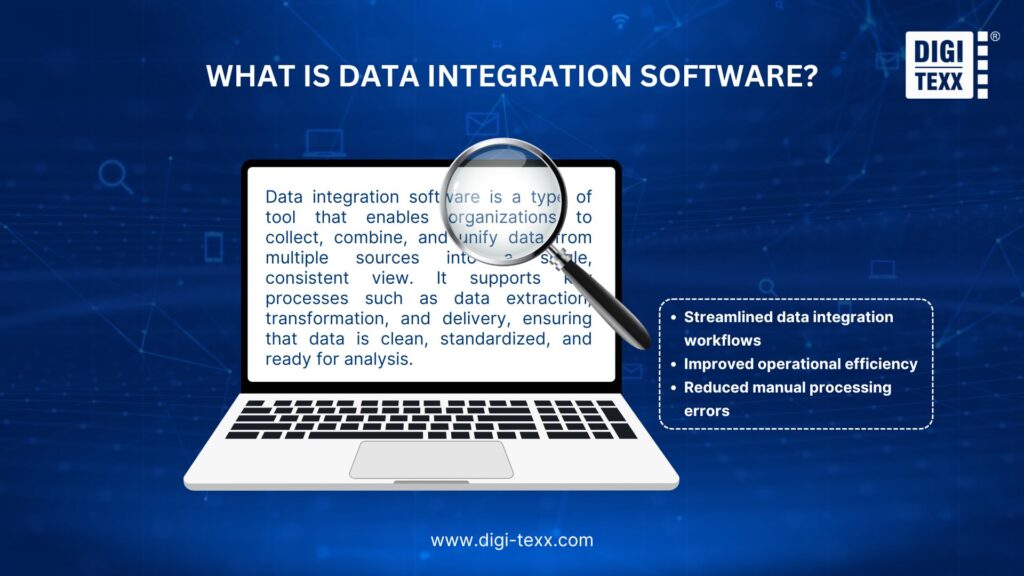
Data integration software is a type of tool that enables organizations to collect, combine, and unify data from multiple sources into a single, consistent view. It supports key processes such as data extraction, transformation, and delivery, ensuring that data is clean, standardized, and ready for analysis.
These tools are widely used in data engineering, analytics, and modern data architectures like data warehouses and data lakes. Data integration software can be deployed as SaaS, on-premises, or in hybrid environments, helping businesses eliminate data silos and make faster, more accurate decisions.
>>> See more:
- Invoice Processing Outsourcing Services For US Businesses
- An Overview of Document Processing Company: What You Need to Know
- Top 10 Data Entry Outsourcing Companies to Hire in 2026
4 Types Of Data Integration Tools
Not all data integration software is built for the same purpose. Some tools focus on moving data into warehouses, while others automate business applications or process streaming data in real time. Understanding these categories makes it easier to choose the right solution for your environment.
1. ETL & ELT Tools
ETL and ELT platforms are designed to move data from multiple sources into a centralized repository for reporting, analytics, and business intelligence. While traditional ETL transforms data before loading, modern ELT platforms load raw data first and perform transformations inside cloud data warehouses.
Typical examples: Fivetran, Airbyte, AWS Glue, Azure Data Factory, Informatica.
2. Integration Platform as a Service (iPaaS)
iPaaS solutions connect cloud applications, APIs, and business systems through visual workflows and reusable connectors. They are commonly used to automate processes across CRM, ERP, HR, finance, and marketing platforms without extensive custom development.
Typical examples: Boomi, Workato, Tray.io, MuleSoft.
3. API Integration Platforms
API integration tools enable applications to exchange data through standardized APIs. They are ideal for organizations building microservices, digital products, or enterprise applications that require secure, scalable communication between systems.
Typical examples: MuleSoft, Apache Camel.
4. Real-Time Data Integration Tools
Real-time integration platforms continuously process and deliver data as events occur. They are commonly used for IoT, fraud detection, operational monitoring, customer personalization, and other latency-sensitive workloads.
Typical examples: Apache NiFi, SnapLogic, Workato.
>>> See more:
- What is Optical Character Recognition (OCR) and How Does It Work?
- What Is Automated Data Extraction? Guide, Benefits & Tools
- 16 Key Factors To Improve Data Accuracy
Best Data Integration Platforms 2026 Comparison
| # | Software | Type | Ideal Use Case | Core Capabilities | Key Strength | Pricing |
| 1 | Informatica Intelligent Data Management Cloud (IDMC) | Enterprise Data Integration / iPaaS | Complex enterprise data environments | ETL, ELT, data quality, MDM, governance, cloud integration | Comprehensive enterprise data management | Custom quotation |
| 2 | MuleSoft Anypoint Platform | iPaaS / API Integration | Application and API integration | API management, application integration, workflow automation, data integration | Strong API-led connectivity | Custom quotation; pricing varies by Mule Flow and Mule Message capacity |
| 3 | IBM DataStage | Enterprise ETL | Large-scale enterprise data integration | ETL, data transformation, data quality, orchestration | Enterprise scalability and governance | From $1.75/CUH for DataStage as a Service; enterprise editions may require custom pricing |
| 4 | Dell Boomi | iPaaS | Connecting cloud and on-premise applications | Application integration, API management, workflow automation, data integration | Low-code hybrid integration | Custom quotation |
| 5 | Fivetran | ELT / Data Integration | Automated data replication and analytics pipelines | Managed connectors, CDC, ELT, data replication | Fully automated pipelines with minimal maintenance | Free plan available; paid plans are usage-based |
| 6 | Stitch Data | ELT / Data Integration | Simple database replication | Data replication, ETL/ELT, cloud warehouse integration | Simple setup and ease of use | From $100/month; Advanced $1,500/month; Premium $3,000/month |
| 7 | Domo | BI / Data Integration Platform | Combining data integration with business analytics | Data integration, dashboards, reporting, visualization | Integrated analytics and data management | Free trial; paid plans are consumption-based/custom |
| 8 | Tray.io | iPaaS / Automation | Workflow and application integration | API integration, workflow automation, data pipelines | Flexible low-code automation | Custom quotation |
| 9 | Airbyte | Open-source Data Integration | Customizable data replication pipelines | Data connectors, ELT, replication, API integration | Open-source flexibility and extensibility | Free self-managed Core; Cloud plans from $10/month |
| 10 | Talend Data Fabric | Data Integration / Data Quality | Enterprise data integration and governance | ETL, data quality, API integration, data governance | Broad data integration and data quality capabilities | Custom quotation |
| 11 | Pentaho Data Integration | ETL / Data Integration | Data preparation and enterprise ETL | ETL, data transformation, data preparation, analytics | Flexible visual ETL capabilities | Custom quotation |
| 12 | Scriptella | ETL / Open-source Tool | Lightweight database integration | SQL scripts, data migration, ETL automation | Simple script-based data integration | Free / Open source |
| 13 | Apache Camel | Integration Framework | Developer-led application integration | Routing, messaging, API integration, system connectivity | Extensive enterprise integration patterns | Free / Open source |
| 14 | dbt (Data Build Tool) | Analytics Engineering / Transformation | Transforming data inside modern data warehouses | SQL transformation, testing, documentation, lineage | Strong analytics engineering workflow | Free Developer plan; paid plans from $100/user/month |
| 15 | Google Cloud Data Fusion | Cloud Data Integration / ETL | Visual data pipelines on Google Cloud | ETL, connectors, pipeline design, orchestration | Low-code integration within Google Cloud | From $0.35/hour; higher editions up to $4.20/hour, excluding pipeline processing costs |
| 16 | AWS Glue | Serverless ETL / Data Integration | AWS-based data preparation and integration | ETL, data catalog, crawlers, serverless processing | Native AWS integration and scalability | From $0.44/DPU-hour for applicable Glue workloads |
| 17 | Microsoft Azure Data Factory | Cloud ETL / iPaaS | Hybrid and cloud data integration | ETL, ELT, pipeline orchestration, data movement | Strong Azure and Microsoft ecosystem integration | Usage-based; pricing depends on orchestration, integration runtime, and data-flow usage |
| 18 | Apache NiFi | Data Flow / Integration | Real-time data movement and processing | Data routing, transformation, ingestion, flow management | Visual data-flow management | Free / Open source |
| 19 | Workato | iPaaS / Automation | Enterprise application and workflow integration | API integration, workflow automation, data integration | Strong enterprise automation capabilities | From $75/month for self-service plans; Enterprise custom |
| 20 | SnapLogic | iPaaS / Data Integration | Enterprise application and data integration | ETL, API integration, workflow automation, orchestration | Low-code integration and orchestration | Custom quotation |
| 21 | Dot | Data Integration / Analytics | Connecting and analyzing business data | Data integration, analytics, reporting | Simplified data access and analytics | Custom quotation |
| 22 | Supaboard | Data Analytics / BI | Business reporting and data visualization | Data integration, dashboards, reporting, visualization | Accessible analytics and dashboarding | Custom quotation |
| 23 | Tellius | AI-powered Analytics / BI | Self-service analytics and data discovery | Data integration, AI analytics, natural-language insights, visualization | AI-powered data discovery | Custom quotation |
| 24 | Omni | BI / Analytics Platform | Governed self-service business intelligence | Data modeling, SQL, dashboards, reporting, data exploration | Flexible BI with governed semantic layer | Custom quotation |
| 25 | ThoughtSpot | AI-powered BI / Analytics | Search-driven analytics and business insights | Natural-language search, AI analytics, dashboards, visualization | Search and AI-driven business intelligence | From $25/user/month; Pro $50/user/month; Enterprise custom |
Gartner Magic Quadrant Leaders For Data Integration Tools
The Gartner Magic Quadrant is one of the most widely referenced evaluations for enterprise software. It assesses vendors based on two dimensions: Ability to Execute and Completeness of Vision, helping organizations compare leading data integration platforms beyond individual features.
While rankings change over time, vendors that frequently appear as Leaders in Gartner evaluations include:
- Informatica
- Microsoft (Azure Data Factory)
- Qlik (Talend)
- Boomi
- IBM
- Oracle
These platforms are typically chosen by large enterprises because they combine broad connectivity, governance, scalability, and long-term vendor support. However, being a Leader does not automatically make a platform the best fit for every organization. Small and mid-sized businesses may find cloud-native ELT tools such as Fivetran or Airbyte more cost-effective and easier to implement.
Note: Gartner updates its Magic Quadrant reports periodically. Organizations should refer to the latest report when evaluating enterprise data integration platforms.
Best Data Integration Software 2026
Choosing the right data integration software is no longer just about moving data between systems. Modern platforms differ significantly in deployment models, automation capabilities, governance features, pricing, and scalability. Some are designed for cloud-native ELT pipelines, while others specialize in enterprise governance, API-led integration, or real-time streaming.
To help you compare the available options, we’ve grouped the leading data integration tools based on their primary strengths, typical use cases, and deployment models. Rather than ranking them from best to worst, this guide highlights where each platform performs best so you can identify the right fit for your architecture and business requirements.
Best For Enterprise Data Integration
Enterprise organizations typically require more than simple data movement. They need platforms capable of integrating hundreds of applications, enforcing governance policies, maintaining data quality, supporting regulatory compliance, and scaling across hybrid or multi-cloud environments. The following enterprise data integration software is designed to address those requirements while supporting large, business-critical workloads.
1. Informatica IDMC
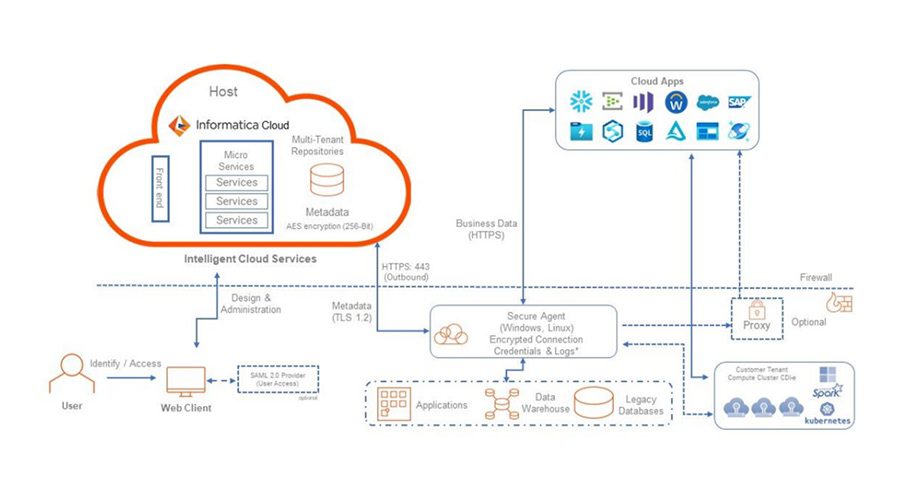
Informatica Intelligent Data Management Cloud (IDMC) is one of the most comprehensive enterprise data integration platforms available today. Rather than focusing solely on ETL or ELT, it combines data integration, governance, cataloging, master data management (MDM), and data quality into a unified cloud platform.
A major differentiator is CLAIRE AI, Informatica’s AI engine, which automates repetitive integration tasks, recommends mappings, identifies data quality issues, and simplifies pipeline development. This makes the platform particularly valuable for organizations managing large, distributed data environments where manual administration quickly becomes impractical.
Because of its extensive governance capabilities and broad connector ecosystem, Informatica IDMC is commonly adopted by enterprises operating in highly regulated industries such as banking, insurance, healthcare, telecommunications, and the public sector.
Key Features:
- AI-powered pipeline automation with CLAIRE AI
- Supports ETL, ELT, streaming, and API-based integration
- Built-in data quality, profiling, and cleansing
- Enterprise data catalog with lineage tracking
- Master Data Management (MDM)
- More than 600 pre-built cloud and on-premises connectors
- Hybrid and multi-cloud deployment support
Best for: Large enterprises, financial institutions or governments, where there are huge volumes of data and high security requirements as well as the need to comply with strict data regulations.
Pricing: Pricing is usage-based and available upon request. Informatica offers a free trial for its cloud services. Enterprise contracts are typically custom-negotiated.
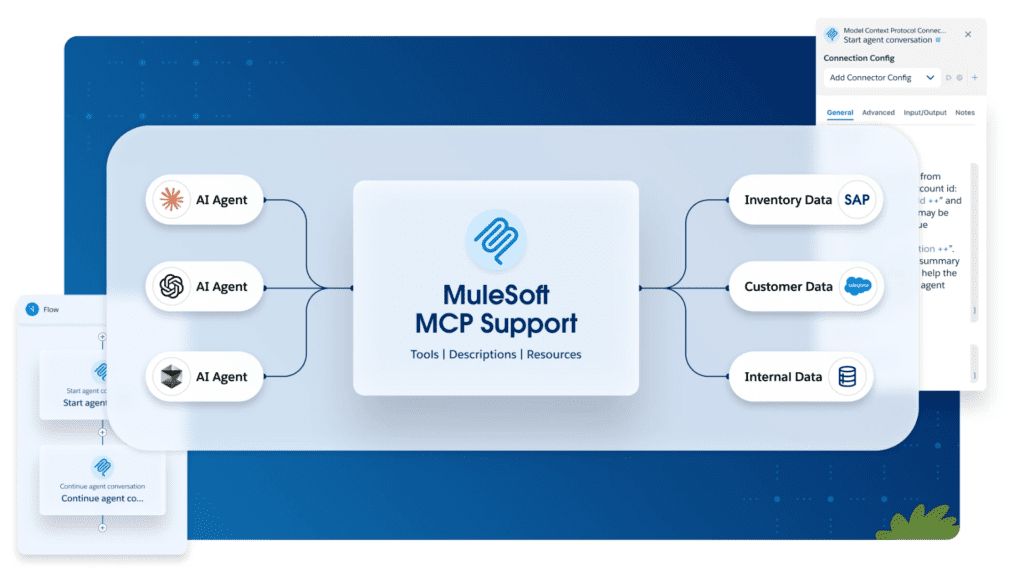
2. MuleSoft Anypoint Platform
Unlike traditional ETL platforms that primarily move data, MuleSoft Anypoint Platform focuses on connecting applications through reusable APIs. This API-led architecture allows organizations to expose business capabilities once and reuse them across multiple projects, reducing duplicate integrations and simplifying long-term system maintenance.
The platform is particularly popular among enterprises modernizing legacy systems while expanding cloud adoption. Since MuleSoft is part of the Salesforce ecosystem, it is also widely implemented by organizations seeking seamless integration between Salesforce and third-party enterprise applications. Although MuleSoft includes data transformation capabilities, its primary strength lies in orchestrating complex enterprise services rather than building analytics-focused data pipelines.
Key Features:
- API-led connectivity architecture for reusable, scalable integrations
- 1,000+ pre-built connectors via Anypoint Exchange
- Full API lifecycle management, including design, deployment, and governance
- Support for real-time, event-driven, and batch integration
- Anypoint DataGraph for federated GraphQL API queries
- Runtime Fabric for containerized, hybrid deployments
- Enterprise security: encryption, OAuth, SAML, and compliance tools
Best For: Large enterprises with complex IT landscapes, especially those already using Salesforce, that need a robust API management and integration platform for connecting diverse systems.
Pricing: A 30-day free trial is available. Pricing is custom; enterprise contracts typically start from $50,000+/year.
>>> Explore more:
- Intelligent Document Processing Services: How It Works & Business Benefits
- Outsourced Order Processing Services – Fast & Accurate
- Document Indexing Services For Efficient Search & Data Access
3. IBM DataStage
IBM DataStage (part of IBM Cloud Pak for Data) is an enterprise-grade ETL and data integration platform designed for handling massive volumes of complex data. It provides a visual design environment for building high-performance data pipelines and is trusted by large organizations in regulated industries.
Key Features:
- High-performance parallel processing for large-scale data workloads
- Visual job designer for ETL pipeline creation
- Support for batch, real-time, and micro-batch integration
- Native connectors for IBM Db2, Oracle, SAP, Salesforce, and more
- Advanced data transformation and business rule management
- Tight integration with IBM Cloud Pak for Data for analytics workloads
- Enterprise-grade security, lineage tracking, and governance
Best for: Large enterprises and government organizations with complex, high-volume data integration needs, particularly those already using IBM technologies or requiring on-premises deployments.
Pricing: IBM DataStage pricing is subscription-based via IBM Cloud Pak for Data. Pricing is custom and quote-based depending on resource units (CPs) and is commonly used for enterprise tools for data integration.
4. Dell Boomi
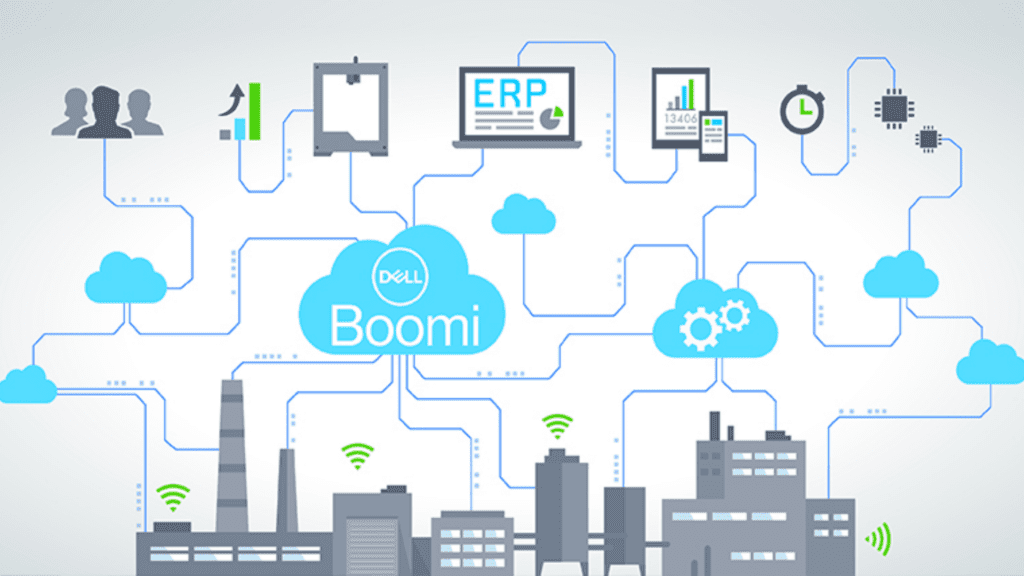
Dell Boomi is a cloud-native iPaaS that enables organizations to quickly build, deploy, and manage integrations between cloud and on-premises applications. Known for its low-code visual builder and large connector library, Boomi is a popular choice for mid-size to large enterprises automating business processes.
Key Features:
- 200,000+ reusable integration components in the Boomi Atom Sphere
- Low-code visual process builder for rapid integration development
- Support for EDI, B2B, and supply chain integration scenarios
- Boomi Flow for workflow automation and digital process automation
- Real-time and batch data integration modes
- Master data hub for data governance and golden record management
- SOC 2, ISO 27001, HIPAA, and GDPR compliance certifications
Best for: Mid-size to large enterprises needing a flexible, scalable iPaaS for connecting a wide range of cloud and on-premises applications across finance, HR, logistics, and more.
Pricing: Boomi pricing is subscription-based and custom-quoted. Plans typically start from approximately $550/month for the Professional plan.
5. Fivetran
Fivetran specializes in automated ETL with good cloud support. Fivetran’s main features automatically synchronize data and migrate schemas, helping businesses save time and human resources for management.
Key Features:
- 300+ fully managed, pre-built data connectors
- Automatic schema migration and pipeline maintenance
- Support for incremental data syncing to minimize data loads
- Native integrations with major cloud warehouses (Snowflake, BigQuery, Redshift, Databricks)
- Data transformation via dbt integration
- SOC 2 Type II, GDPR, and HIPAA compliance
- Real-time and scheduled sync options
Best for: Small and medium-sized businesses, or data analytics teams that want to quickly integrate popular data sources without having to maintain complex ETL structures.nt to quickly integrate popular data sources without having to maintain complex ETL structures.
6. Stitch Data
Stitch Data is an enterprise data integration software in the form of a cloud first ELT platform that focuses on simplicity and speed. Acquired by Talend and now part of the Qlik ecosystem, Stitch allows data teams to rapidly replicate data from dozens of SaaS and database sources into their cloud data warehouse with minimal setup and no code.
Key Features:
- 140+ pre-built source connectors, including SaaS apps, databases, and event streams
- Simple, code-free setup with guided source and destination configuration
- Near-real-time data replication with incremental loading
- Native support for Snowflake, Redshift, BigQuery, and Azure Synapse
- Row-level change detection for efficient data syncing
- Transparent pipeline monitoring and error alerting
- Singer open-source protocol compatibility
Best For: Small to mid-size data teams and startups that want a simple, fast, and affordable way to replicate data from multiple sources into their data warehouse without complex configuration.
Pricing: Stitch offers a free plan with limited rows. Paid plans start at $100/month for up to 5 million rows. The Advanced plan starts at $1,250/month for more data volume and priority support.
>>> See more:
- Professional E-commerce Data Entry Services by DIGI-TEXX
- Ecommerce Back Office Support Services By DIGI-TEXX
- Top 7 Free AI Business Document Analysis Tools 2026
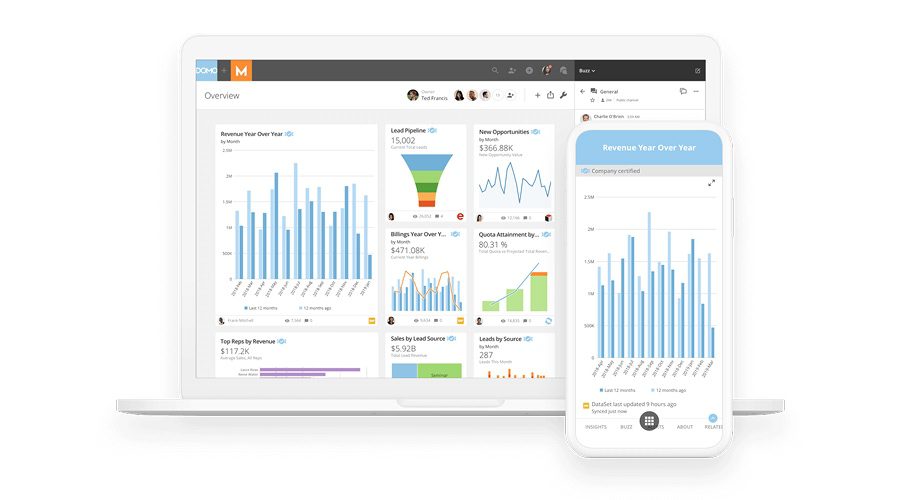
7. Domo
Domo stands out as one of the tools for data integration with an intuitive data representation and a comprehensive integration platform. It combines integration, visualization, and data management in a single system, helping users not only integrate data but also analyze and visualize information easily to support better business decision making.
Key Features:
- 1,000+ pre-built data connectors, including SaaS apps, databases, and files
- Drag-and-drop data transformation with Magic ETL
- Built-in BI dashboards and data storytelling features
- Real-time data updates and alerts
- AI-powered insights and anomaly detection
- Role-based access controls and data governance
- Mobile-first design for on-the-go data access
Best for: Businesses that need an all-in-one solution, from data collection to creating easy-to-follow reports and dashboards for senior leaders.
Pricing: Estimated costs start from around $300/month for small teams, scaling up based on user count and data volume.
>>> See more:
- Top 10 Best big data processing tool for Business 2026
- Best Data Cleansing Outsourcing Companies for 2026
- What are the 6 steps of the data analysis process?
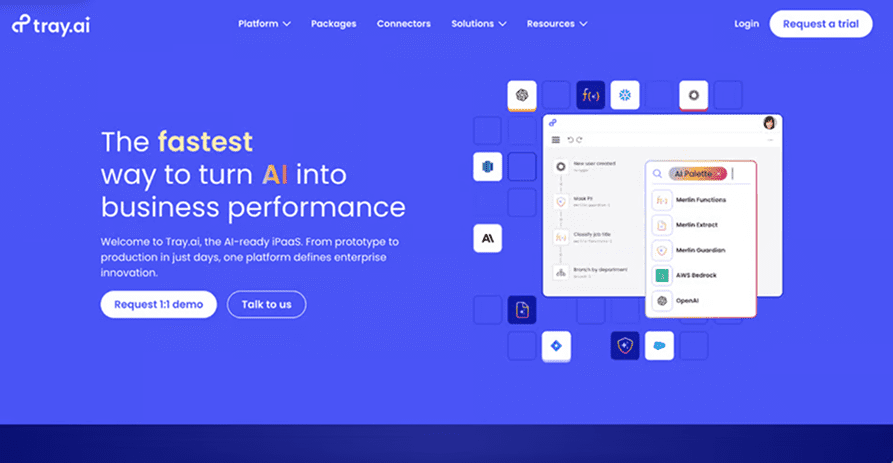
8. Tray.io
Tray.io is a powerful low-code integration tool that is especially effective for automating SaaS applications. Tray.op helps businesses connect cloud applications and automate business processes without writing much code. Suitable for beginners to connect & clean data.
Key Features:
- 600+ pre-built connectors for SaaS tools and APIs
- Visual low-code workflow builder with branching logic
- Support for complex, multi-step automation sequences
- Real-time webhooks and scheduled triggers
- Built-in data transformation and conditional logic
- Enterprise governance with SSO, audit logs, and role-based access
- API integration and custom connector creation
Best for: Startups and marketing teams looking to automate campaigns and business processes.
Pricing: Pricing is custom and quote-based. Tray.io offers a free trial. Plans start from approximately $3,000–$5,000/year for small teams; enterprise plans scale based on workflow volume.
Best Open Source Data Integration Tools
Open-source data integration tools give businesses and developers greater control over how data is extracted, transformed, and loaded across different systems. Compared with proprietary platforms, these solutions typically offer more flexibility for customization, self-hosting, and connector development, making them particularly useful for technical teams with specific integration requirements. The following tools are worth considering for organizations looking for flexible and cost-effective alternatives to fully managed data integration platforms.
9. Airbyte
Airbyte is a highly regarded open-source data integration tool, especially with the ability to easily build custom connectors. With these features, developers have more flexibility in connecting unique data sources that other tools may not support.
Key Features:
- 550+ pre-built and community connectors
- Open-source core with a transparent connector development framework
- Support for both self-hosted (Airbyte OSS) and cloud-managed (Airbyte Cloud) options
- Native ELT approach — loads raw data and transforms in the warehouse
- Custom connector builder for proprietary data sources
- Built-in normalization and dbt integration for transformations
- Monitoring and alerting for pipeline health
Best for: Developers and businesses with high customization needs who want complete control over their data streams.
Pricing: Airbyte Open Source is one of the most popular data integration software free solutions, offering full functionality for self-hosted environments. Airbyte Cloud starts at $10/month per connector with a credit-based free tier, while Enterprise pricing is custom.
10. Talend Data Fabric
Talend has provided both open source and enterprise solutions. So their tool – Talend Data Fabric also combines ETL, data quality and data governance features in a single platform. This combination helps organizations to comprehensively manage the data lifecycle.
Key Features:
- Key Features:
- Visual drag-and-drop interface for building data pipelines
- 1,000+ built-in connectors for databases, cloud apps, and big data platforms
- Native data quality management and profiling tools
- Support for real-time streaming and batch integration
- Open-source Talend Open Studio for free community use
- CI/CD pipeline support for DevOps teams
- Built-in data governance and lineage tracking
Best for: Medium and large enterprises, especially those that need flexibility in data scale, as this is a highly customizable tool.
Pricing: Talend Open Studio is free. Talend Cloud plans start from approximately $1,170/month for the Data Integration tier. Enterprise pricing is custom.
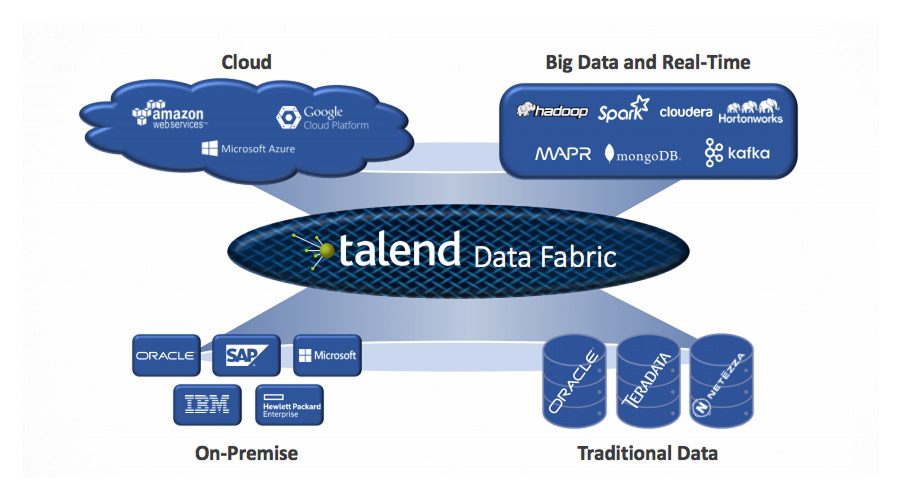
11. Pentaho Data Integration
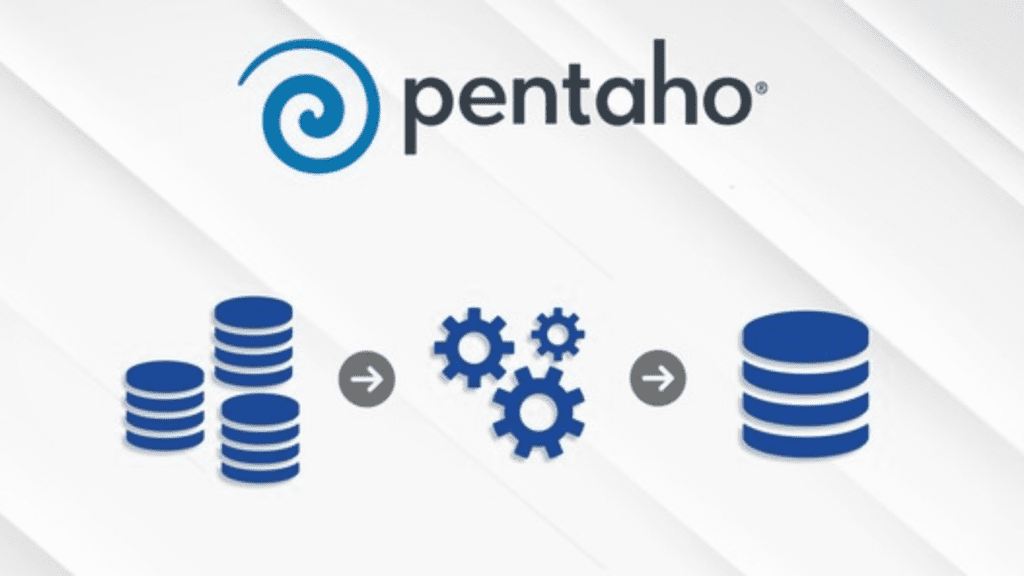
Pentaho Data Integration (PDI), now part of Hitachi Vantara’s data operations software portfolio, is a powerful open-source ETL and data integration tool. Often called ‘Kettle,’ it provides a visual, drag-and-drop environment for designing data transformation workflows and supports a wide variety of data sources.
Key Features:
- Visual Spoon graphical designer for creating ETL workflows (transformations and jobs)
- Wide database and file format support via JDBC, ODBC, and native drivers
- Built-in data profiling and data quality checks
- Support for Hadoop, Spark, and big data platforms
- Extensible via community and commercial plugins
- Scheduling and automation via Pentaho Server (commercial)
- Both open-source (community edition) and enterprise editions are available
Best For: Technical teams and businesses seeking an open-source data integration solution with enterprise-grade capabilities, especially for complex ETL workflows and big data environments.
Pricing: Pentaho Community Edition is free and open source.
>>> See more:
- Back Office Support Services For Streamlined & Efficient Operations
- Data Labeling Service: Benefits, Top Providers & How to Choose
- Insurance Back Office Support Services for Insurers & Agencies
12. Scriptella
This is a lightweight, script-based tool that is suitable for small-scale data integration systems. Scriptella helps users write simple scripts to move data between databases and other sources.
Key Features:
- Simple XML-based script format for defining ETL workflows
- Supports JDBC, JNDI, and a variety of database drivers
- Scripting support in JavaScript, Velocity, Janino, and more
- Lightweight footprint with no complex installation required
- Integration with Apache Ant and Maven build tools
- Cross-database data migration and transformation support
- Open-source with active community maintenance
Best for: Developers and simple integration projects that need to process transient, short-term data.
Pricing: Free and open source (Apache License 2.0). No commercial licensing required.
>>> See more:
- CRM Data Cleaning Solutions: How to Cleanse Your Data Fast
- Secure Data Annotation Services: Top Companies & How to Choose
- Healthcare Back-Office Support Services For Efficient Operations
13. Apache Camel
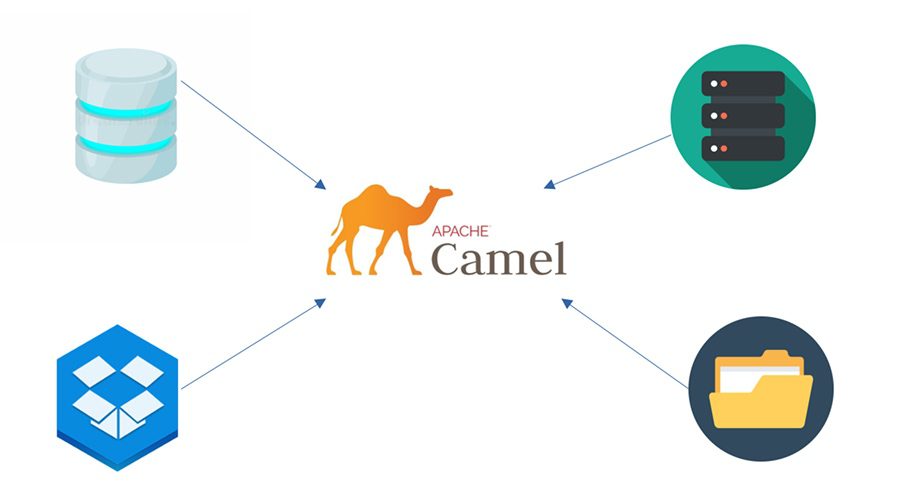
Apache Camel is an open-source integration framework for developers. It supports many different domain specification languages (DSLs), making integration between applications more flexible.
Key Features:
- 300+ built-in components for connecting to APIs, databases, messaging systems, and cloud services
- Implementation of enterprise integration patterns (EIPs) out of the box
- Supports multiple DSLs: Java, XML (Spring), Kotlin, YAML
- Lightweight and embeddable within Spring Boot and Quarkus
- Built-in support for error handling, retry policies, and dead-letter queues
- Real-time and batch data processing
- Extensive testing support with Camel Test framework
Best for: Developers and complex software projects where integration of multiple systems is required when the data of the analyzed object is fragmented.
Pricing: Free and open source (Apache License 2.0). Red Hat provides commercial support via Red Hat Fuse / Camel extensions for Quarkus.
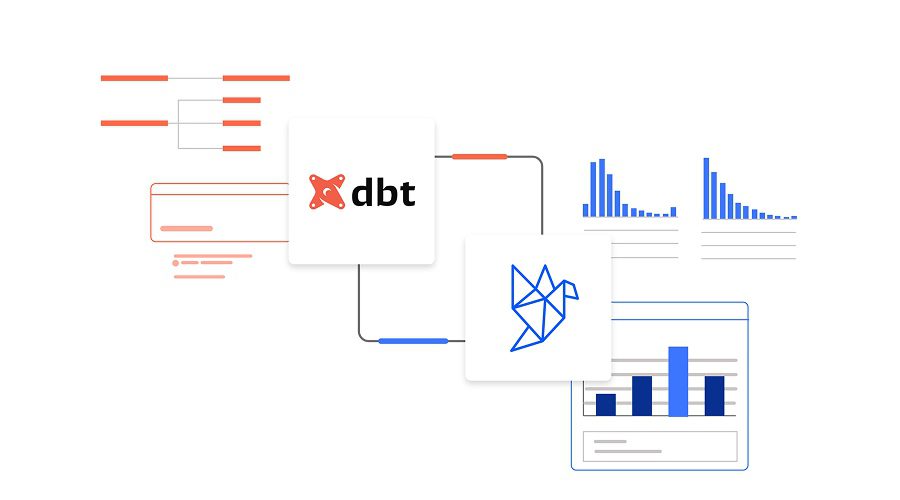
14. dbt (Data Build Tool)
dbt is an open-source, SQL-based data integration tool that specializes in transforming data in a data warehouse. The highlight of dbt is that it helps data engineers build powerful data models using only SQL, instead of having to use complex programming languages.
Key Features:
- SQL-based transformations with Jinja templating for reusable logic
- Version control integration via Git for collaborative workflows
- Built-in testing framework for data quality checks
- Auto-generated data documentation and lineage graphs
- Modular, reusable model architecture
- Native integration with Snowflake, BigQuery, Redshift, Databricks, and more
- dbt Cloud offers a managed IDE, scheduling, and CI/CD pipelines
Best for: Data engineers and data analytics teams who want to focus on data modeling rather than building traditional ETL structures.
Pricing: dbt Core is free and open source. dbt Cloud pricing starts at $50/month for the Teams plan (per developer seat). Enterprise pricing is custom.
Best Cloud-Based Data Integration Software
Cloud-based data integration software enables businesses to build, manage, and scale data pipelines without maintaining extensive on-premise infrastructure. These platforms typically provide managed infrastructure, pre-built connectors, automated data processing, and integration with major cloud ecosystems such as Google Cloud, AWS, and Microsoft Azure. They are particularly useful for organizations that need to move and transform data across cloud applications, databases, warehouses, and analytics platforms while keeping infrastructure management to a minimum.
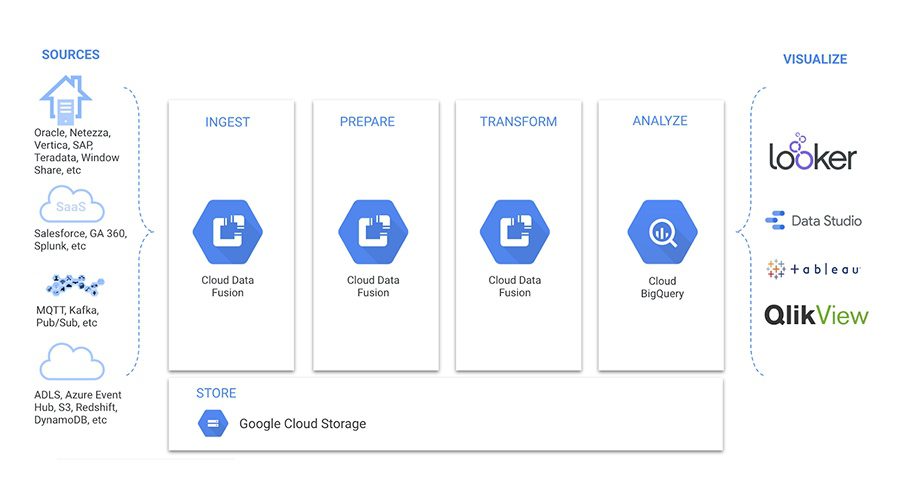
15. Google Cloud Data Fusion
Google Cloud Data Fusion is a fully managed data integration service that runs on the Google Cloud Platform. As a native Google solution, this tool provides an intuitive interface, deep integration with GCP services, and uses Apache Beam for large-scale data processing. These capabilities make it highly effective for building scalable data pipelines and managing complex data workflows across the Google Cloud ecosystem.
Key Features:
- Visual, no-code pipeline builder for data integration
- 150+ pre-built connectors including Google Cloud services, databases, and SaaS tools
- Fully managed infrastructure — no server provisioning required
- Support for batch and real-time data processing
- Native integration with Google BigQuery, Cloud Storage, and Dataproc
- Data lineage and metadata management
- Scalable to handle petabyte-scale data workloads
Best for: Businesses that are using the Google Cloud ecosystem and need a tool that integrates seamlessly with existing services.
Pricing: Developer edition: free (limited). Basic edition starts at $0.35/hour. Enterprise edition starts at $2.65/hour. Costs vary based on usage and region.
16. AWS Glue
AWS Glue is a fully managed, serverless ETL service from Amazon Web Services. It automatically discovers, catalogs, and transforms data from various sources and makes it ready for analytics. Deeply integrated with the AWS ecosystem, it is ideal for organizations building data pipelines on AWS.
Key Features:
- Serverless architecture, no infrastructure provisioning required
- Automatic schema discovery and data catalog management
- Visual ETL job builder with AWS Glue Studio
- Native integration with S3, Redshift, RDS, Athena, and more
- Support for Python and Spark-based data transformation
- Glue DataBrew for no-code data preparation
- Auto-scaling for variable workloads
Best For: Organizations already using the AWS ecosystem that want a managed, scalable ETL service without managing servers or infrastructure.
Pricing: AWS Glue pricing is usage-based. ETL jobs cost approximately $0.44/DPU-hour; Glue Data Catalog requests and storage are charged separately. A free tier is available for new AWS customers.
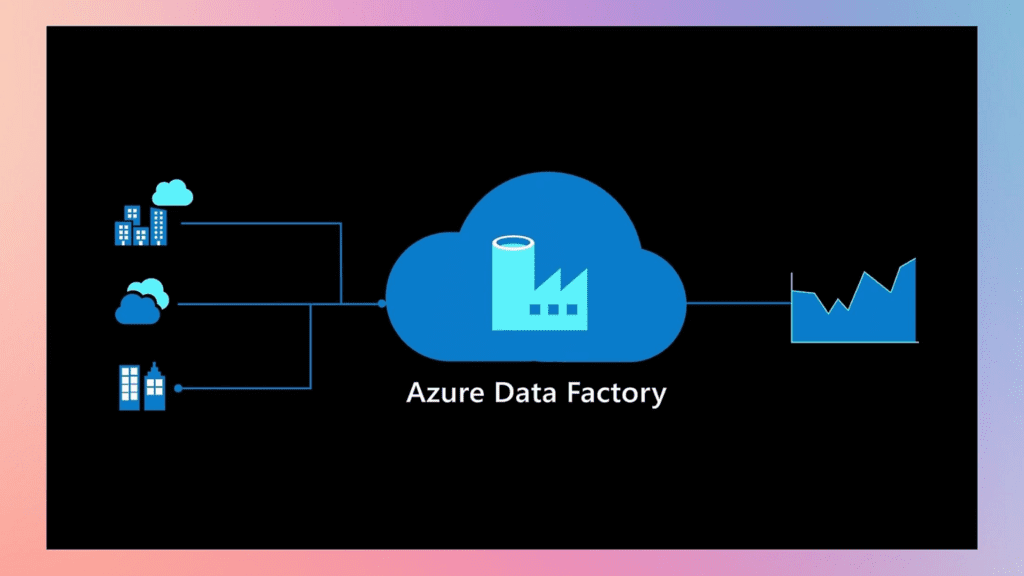
17. Microsoft Azure Data Factory
Microsoft Azure Data Factory (ADF) is an enterprise data integration software and a cloud-based data integration service from Microsoft that enables organizations to create, schedule, and orchestrate data workflows at scale. It supports hybrid data integration across cloud and on-premises sources and integrates natively with the Azure ecosystem.
Key Features:
- 90+ built-in data connectors including Azure services, SaaS tools, and on-premises databases
- Visual, code-free pipeline authoring in the ADF Studio
- Support for both ETL and ELT data integration patterns
- Integration with Azure Synapse Analytics, Azure Databricks, and Azure Machine Learning
- Mapping Data Flows for visual, no-code data transformation
- CI/CD support via Azure DevOps and GitHub integration
- Autoscale compute for handling variable data volumes
Best For: Organizations already invested in the Microsoft Azure ecosystem looking for a managed, scalable data orchestration and integration service.
Pricing: ADF pricing is activity-based. Orchestration activities are charged per run; data movement costs vary by data volume. The first 5 activities/month are free.
Best Real-Time Data Integration Tools
Real-time data integration tools help businesses continuously move, process, and synchronize data between applications, databases, cloud services, and other systems. Unlike traditional batch-based ETL tools, these platforms are designed for streaming workloads where data needs to be processed with minimal delay. They are particularly useful for IoT applications, operational monitoring, fraud detection, customer data synchronization, and event-driven workflows.
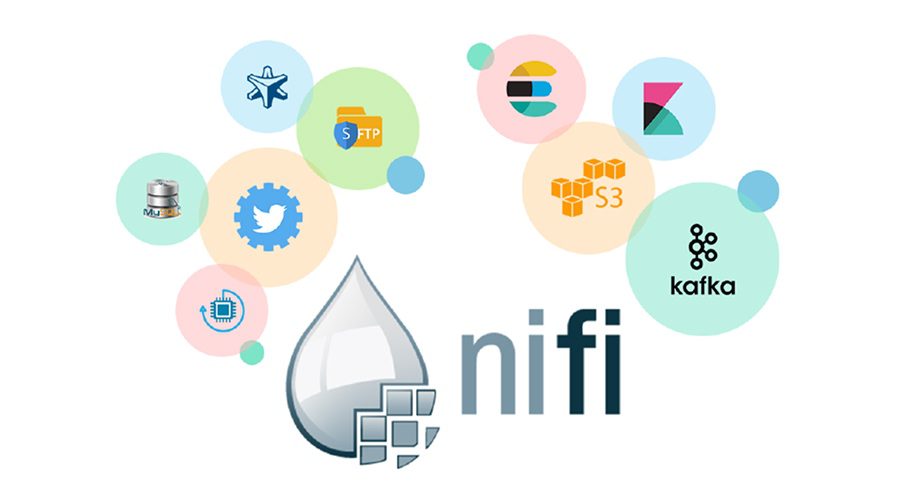
18. Apache NiFi
Apache NiFi stands out with its real-time data flow processing capabilities and an intuitive user interface. As a data integration software free solution, it allows users to easily design, route, and monitor complex data flows through a graphical interface.
Key Features:
- Drag-and-drop visual interface for building data flows
- 300+ built-in processors for data routing and transformation
- Real-time data streaming and processing capabilities
- Highly configurable with fine-grained data provenance tracking
- Support for secure data transfer (TLS, SSL, and encryption)
- Scalable to cluster deployments for high-throughput workloads
- Extensive REST API for programmatic control
Best for: Businesses that need to process data from IoT, logs, or other specialized streaming sources, where real-time, continuous data processing is required.
Pricing: Free and open source (Apache License 2.0). Commercial support is available through vendors such as Cloudera.
19. Workato
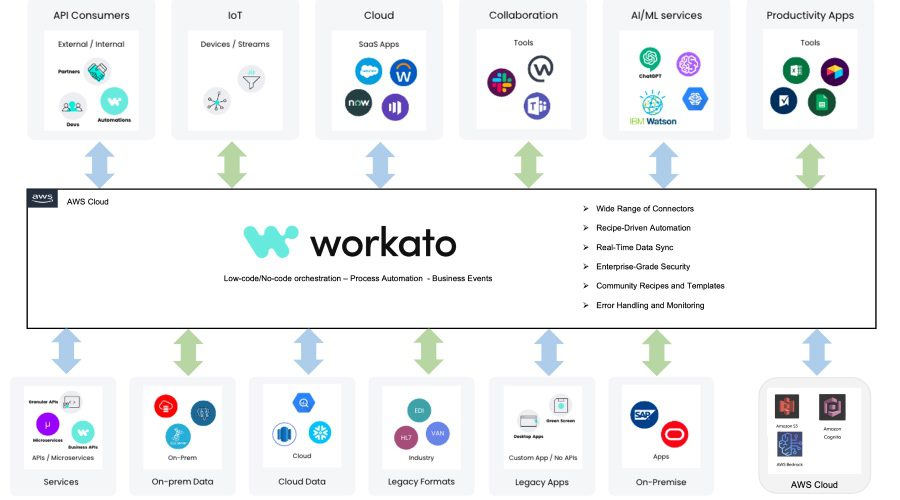
Workato is an enterprise automation and integration platform (iPaaS) that enables business and IT teams to automate workflows and integrate applications without extensive coding. It uses a recipe-based approach to integration, making it accessible to both technical developers and business analysts.
Key Features:
- 1,000+ pre-built connectors and recipe templates
- Low-code/no-code recipe builder for rapid integration development
- Real-time event-based triggering for instant data sync
- AI-powered automation recommendations (Workato Copilot)
- Built-in data transformation and mapping tools
- Enterprise-grade security with SOC 2, ISO 27001, and HIPAA compliance
- Supports both business process automation and IT integrations
Best for: Business and IT teams that want to quickly integrate SaaS applications and automate repetitive tasks without the intervention of data engineers.
Pricing: Pricing is custom and quote-based. Workato offers workspace-based plans typically starting from around $10,000/year for smaller deployments. A free trial is available.
20. SnapLogic
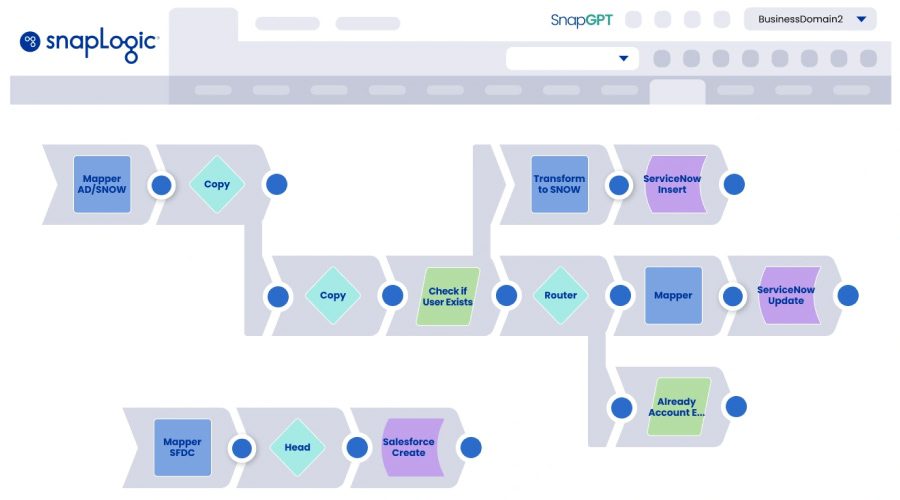
SnapLogic is an Integration Platform as a Service (iPaaS) that provides a visual, AI-assisted interface for designing and managing data integration and application integration workflows. Its ‘Snap’ component library enables users to connect cloud apps, databases, and on-premises systems without extensive coding.
Key Features:
- 700+ pre-built ‘Snaps’ (connectors) for cloud and on-premises systems
- AI-powered pipeline suggestions via SnapGPT
- Visual drag-and-drop pipeline designer
- Support for batch, real-time, and event-driven integration
- Self-service data integration for business users
- Elastic processing engine for high-throughput workloads
- Enterprise-grade security and governance features
Best for: Businesses looking to integrate cloud and on-premises applications quickly and easily.
Pricing: Pricing is custom and quote-based. SnapLogic offers a 30-day free trial. Enterprise contracts are typically annual subscription-based.
Best AI For Data Integration In Tech Industry
AI-powered data integration and analytics tools are changing how technology companies connect, query, analyze, and use data across modern data stacks. Instead of relying entirely on SQL, manual dashboards, or specialized data teams, these platforms use natural language processing, AI agents, and automated analytics to help users access insights from data warehouses and business applications more efficiently. The following tools are particularly useful for organizations looking to combine data integration with AI-powered analytics, self-service reporting, and real-time decision-making.
21. Dot
Dot is an AI-powered data analyst that connects directly to your data warehouse and enables business users to explore data using natural language. Instead of building SQL queries or dashboards manually, users can ask questions and receive narrative insights, charts, and executive-ready reports in seconds.
Key Features:
- Natural language querying across connected data warehouses
- AI-generated business insights and executive summaries
- Automated dashboard creation and reporting
- Scheduled reports and proactive business alerts
- Integrations with Snowflake, BigQuery, Databricks, and other modern data warehouses
- Collaboration features for sharing insights across teams
Best for: Organizations that want to give business users self-service analytics without relying heavily on SQL or BI specialists.
Pricing: Free plan available. Paid plans start at $180/month for the Pro plan.
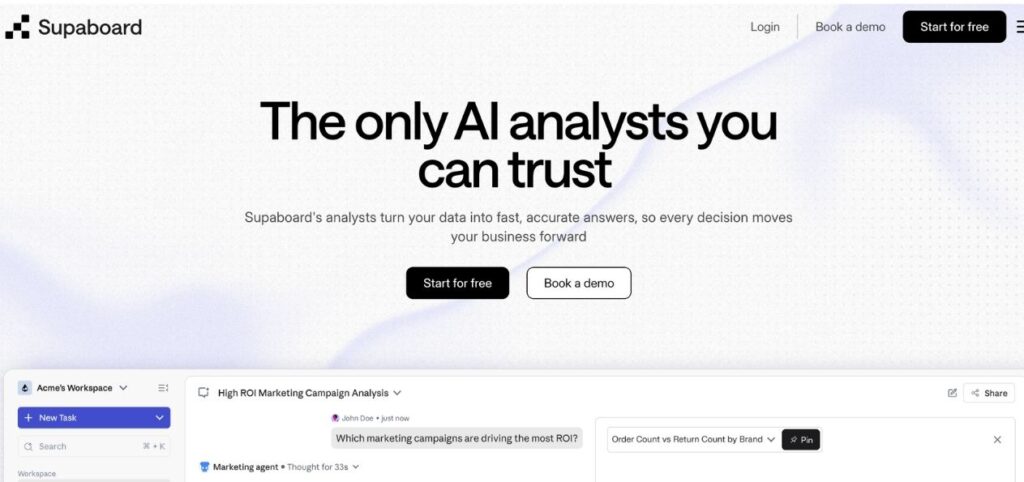
22. Supaboard
Supaboard is a no-code AI analytics platform designed for teams that need fast access to business insights without building complex dashboards. Users can interact with AI agents, generate visualizations automatically, and explore company data through conversational queries.
Key Features:
- AI-powered no-code analytics interface
- Conversational data exploration using natural language
- Auto-generated dashboards and visual reports
- Trainable AI agents tailored to business metrics
- Integration with modern databases and cloud warehouses
- Team collaboration and shared analytics workspaces
Best for: Startups and business teams looking for AI-driven analytics without dedicated data engineering resources.
Pricing: Plans start at $85/month (Individual). A 14-day free trial is available.
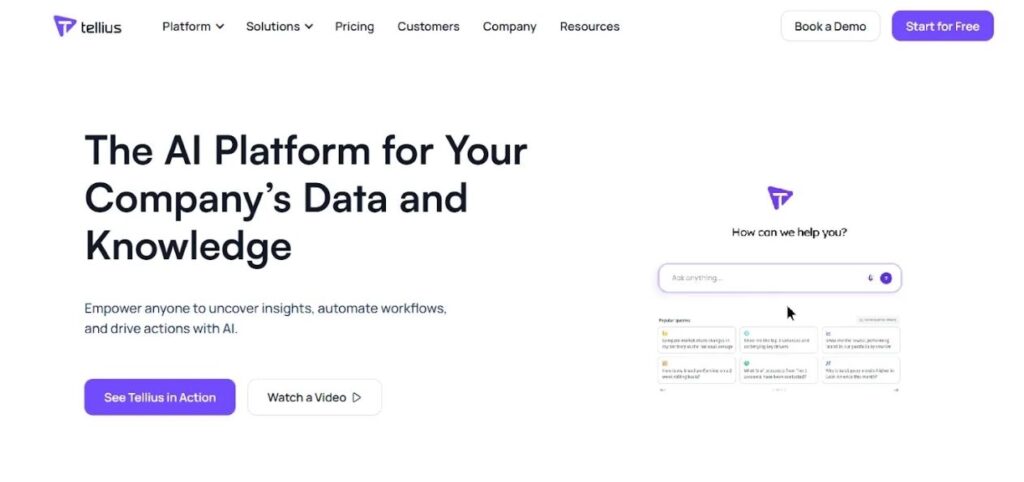
23. Tellius
Tellius is an enterprise AI analytics platform that combines conversational search, automated root cause analysis, and explainable AI to help organizations uncover insights faster. It enables users to investigate trends, anomalies, and business drivers without writing complex queries.
Key Features:
- Natural language search for business data
- Automated root cause and anomaly analysis
- Explainable AI for transparent insights
- Interactive dashboards and visual analytics
- Predictive analytics and machine learning capabilities
- Enterprise-grade governance and security
Best for: Large enterprises that require advanced AI-driven analytics, explainable insights, and self-service business intelligence.
Pricing: Custom pricing for Premium and Enterprise plans.
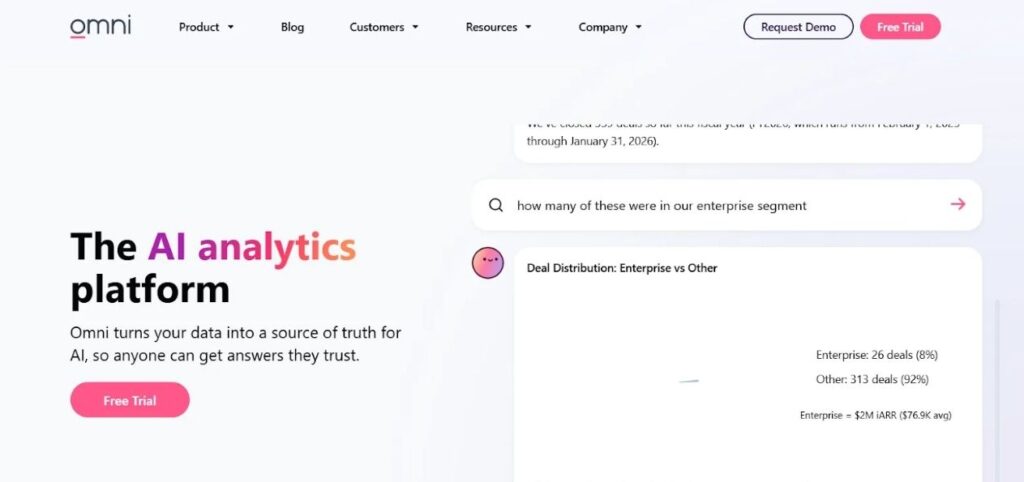
24. Omni
Omni is a modern business intelligence platform built around a semantic layer, enabling organizations to explore live warehouse data with consistent business metrics. Its spreadsheet-like interface and AI-powered analysis allow both technical and business users to answer questions without moving data between systems.
Key Features:
- Semantic layer for consistent business metrics
- AI-powered data exploration using natural language
- Spreadsheet-style analysis on live warehouse data
- Interactive dashboards and self-service reporting
- Native connectivity with Snowflake, BigQuery, Redshift, and Databricks
- Role-based governance and centralized metric definitions
Best for: Organizations that want governed self-service analytics while working directly on cloud data warehouses.
Pricing: Custom pricing. A free trial is available upon request.
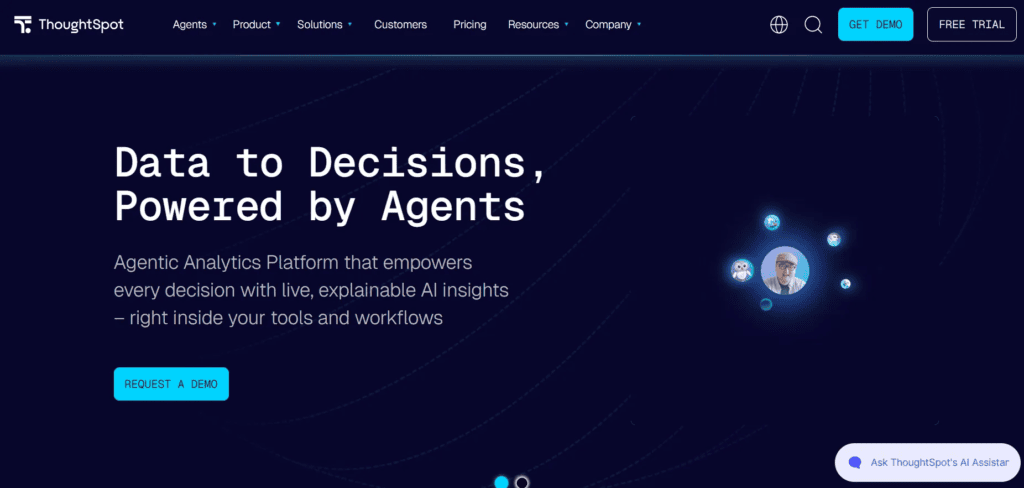
25. ThoughtSpot
ThoughtSpot is an AI-powered analytics platform that enables users to explore data using natural language instead of building complex SQL queries or dashboards. By connecting directly to cloud data warehouses, it delivers fast, self-service analytics while keeping data secure and up to date.
Key Features:
- AI-powered natural language search for business data
- Live analytics on cloud data warehouses without data duplication
- Automated insights and anomaly detection with SpotIQ
- Interactive dashboards and data visualization
- Embedded analytics for customer-facing applications
- Support for Snowflake, BigQuery, Databricks, Redshift, and more
- Enterprise-grade governance and role-based access control
Best For: Organizations that want to empower business users with self-service analytics while maintaining centralized governance over enterprise data.
Pricing: ThoughtSpot offers a free trial. Paid plans are custom-priced based on deployment size, users, and feature requirements.
How To Choose The Right Data Integration Tool ?
Choosing the right data integration software depends on your actual situation-not just features. Below are the most common scenarios and what you should choose in each case.
Based On Company Size
- If you’re a small team, go with simple, cloud-based tools. They help you set up quickly without needing engineers, but you’ll trade off flexibility and long-term cost.
- If you’re a growing company, choose tools that balance ease of use and customization. You’ll need more control as your systems expand.
- If you’re an enterprise, prioritize platforms with strong governance and security. These handle complex data at scale, but require more time and budget to implement.
Based On Use Case
- If your goal is analytics or a data warehouse, choose ELT tools. They scale better in cloud environments.
- If you need real-time data (like dashboards or fraud detection), pick tools that support streaming. Batch tools won’t be fast enough.
- If you’re integrating SaaS apps and automating workflows, low-code platforms are a better fit than heavy ETL tools.
- If you’re working with AI or ML, prioritize tools with strong data cleaning and transformation capabilities.
Based On Data Architecture
- If you’re cloud-first, use cloud-native tools. They integrate faster and scale better.
- If you run both cloud and on-prem systems, choose tools that support hybrid environments to avoid integration issues.
- If you rely on legacy systems, prioritize tools with strong connector support or customization.
- If you already use a modern data stack, ELT tools will fit better and reduce complexity.
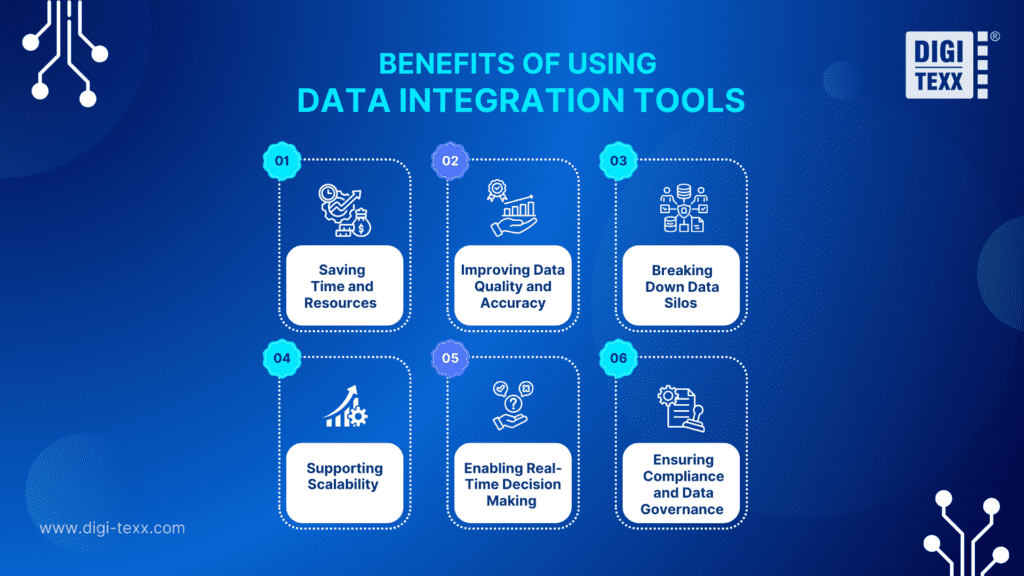
Benefits Of Using Data Integration Tools
Investing in a data integration tool delivers significant advantages for organizations of all sizes. Here are the most impactful benefits:
Saving Time and Resources
By automating the data integration process, businesses eliminate the need for manual data collection and aggregation, a process that is both time-consuming and error-prone. Teams can redirect that time toward higher-value analytical work instead of spending hours consolidating spreadsheets.
Improving Data Quality and Accuracy
Data integration tools include built-in capabilities for data cleansing, validation, and transformation. This ensures data from different sources is standardized and consistent before being used for reporting or analysis, significantly reducing the risk of decisions being made on flawed data.
Breaking Down Data Silos
Many organizations suffer from data silos, where critical information is locked within individual departments or systems. Integration tools connect these sources, giving all relevant stakeholders access to a complete and unified view of business performance.
Supporting Scalability
As businesses grow, so does their data. The right integration tools are built to scale alongside the organization, handling increasing data volumes and new data sources without requiring a complete rebuild of the data infrastructure.
Enabling Real-Time Decision Making
Many modern data integration tools support real-time or near-real-time data processing, enabling businesses to react to changes in data, such as sudden shifts in sales, inventory levels, or customer behavior, much faster than traditional batch-based approaches allow.
Ensuring Compliance and Data Governance
Enterprise-grade integration platforms include features for metadata management, data lineage tracking, and access control. These capabilities help organizations remain compliant with data privacy regulations such as GDPR, HIPAA, and others.
>>> Explore more:
- Top Document Scanning Software for 2026: Features, Pros & Cons
- B2B Data Cleansing in 2026: The Guide to Maintaining Data Quality
- 5 Best Data Parsing Software in 2026 | Features & Comparison
FAQs About The Data Integration Tool
Can Small Businesses Benefit From Data Integration Tools?
Absolutely. Many tools like Stitch Data, Airbyte, and Fivetran offer affordable or free tiers specifically designed for smaller teams. Even small businesses benefit from consolidated data views when making marketing, sales, or operational decisions.
How Do Data Integration Tools Handle Data Security?
Most enterprise-grade data integration tools include role-based access control, data encryption in transit and at rest, audit logging, and compliance certifications (e.g., SOC 2, GDPR). It is important to verify the specific security features of any tool you evaluate against your organization’s compliance requirements. Choosing the right data integration tools is an important strategic decision for any business. Depending on your size, budget, and specific needs, you can choose from free data integration tools or open-source solutions that suit your company’s needs.
What is the most popular ETL tool?
The most popular ETL and data integration tools depend on the category, with Fivetran leading managed ingestion, Airbyte leading open-source options, and traditional enterprise systems like Informatica remaining widely adopted.
What’s the best database integration tool?
The best database integration tool depends on your needs, with top choices including Fivetran for automated pipelines, Airbyte for open-source flexibility, and Informatica for enterprise governance
Is data integration the same as ETL?
No, data integration is not the same as ETL. Data integration is the broad practice of combining data from different places, while ETL (Extract, Transform, Load) is just one specific method used to do that job.
To optimize your data management and analysis processes and ensure that you are getting the most value from your information, it is essential to apply the right integration tools. If you are still wondering, contact DIGI-TEXX for advice and implementation of the most suitable data integration solutions for your business.
If you have any questions or would like expert advice on data analytics services, please feel free to contact us using the information below.
DIGI-TEXX Contact Information:
🌐 Website: https://digi-texx.com/
📞 Hotline: +84 28 3715 5325
✉️ Email: [email protected]
🏢 Address:
- Headquarters: Anna Building, QTSC, Trung My Tay Ward
- Office 1: German House, 33 Le Duan, Saigon Ward
- Office 2: DIGI-TEXX Building, 477-479 An Duong Vuong, Binh Phu Ward
- Office 3: Innovation Solution Center, ISC Hau Giang, 198 19 Thang 8 street, Vi Tan Ward