
Invoice validation process is the backbone of accurate and transparent financial management, helping businesses maintain stability while streamlining operations. As transaction volumes grow and billing structures become more complex, ensuring every invoice is verified correctly is no longer optional but essential.
In this article, DIGI TEXX helps you explore how an effective invoice validation process works, the key benefits it delivers, common pitfalls to avoid, and how modern technology can simplify and automate the entire workflow.
>>> See more:
- Secure Data Annotation Services: Top Companies & How to Choose
- Why Businesses Outsource Data Management in 2026?
- Steps Of Data Analysis: 6 Key Stages Explained With Real Examples
Invoice Validation meaning?
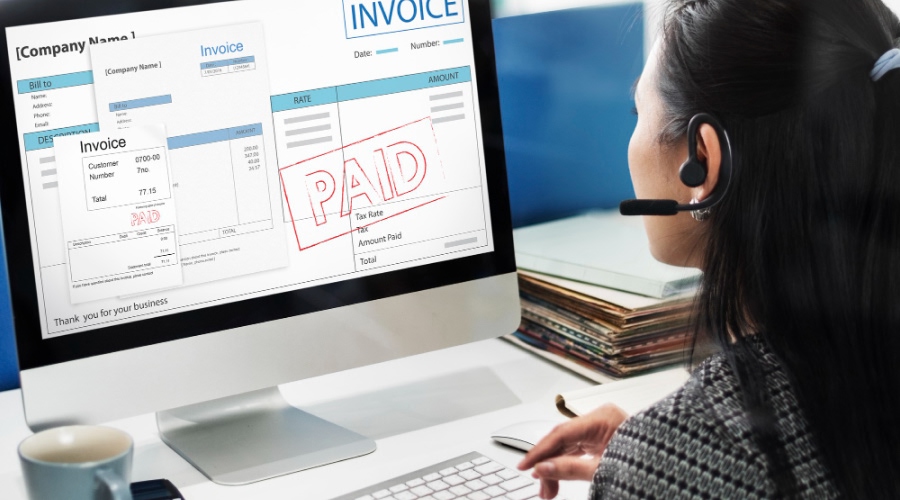
Invoice validation is the process of verifying that an invoice is legitimate and accurately reflects the goods or services received by a business before payment is approved. It involves checking key details such as supplier information, billing address, pricing, quantities, and tax calculations, as well as matching the invoice with related documents like purchase orders and goods receipts.
This process can be performed manually, automatically using software, or through a hybrid approach that combines both with predefined approval workflows. As the first step in the invoice processing cycle, invoice validation helps detect errors, prevent fraud, and ensure financial accuracy and compliance.
>>> See more:
- Intelligent Document Processing Services: Benefits, Use Cases & How It Works
- 5 Advantages Of Data Annotation Outsourcing Services for AI Projects
- Purchase Orders Processing: Steps, Types, Best Practices
Benefits Of Invoice Validation
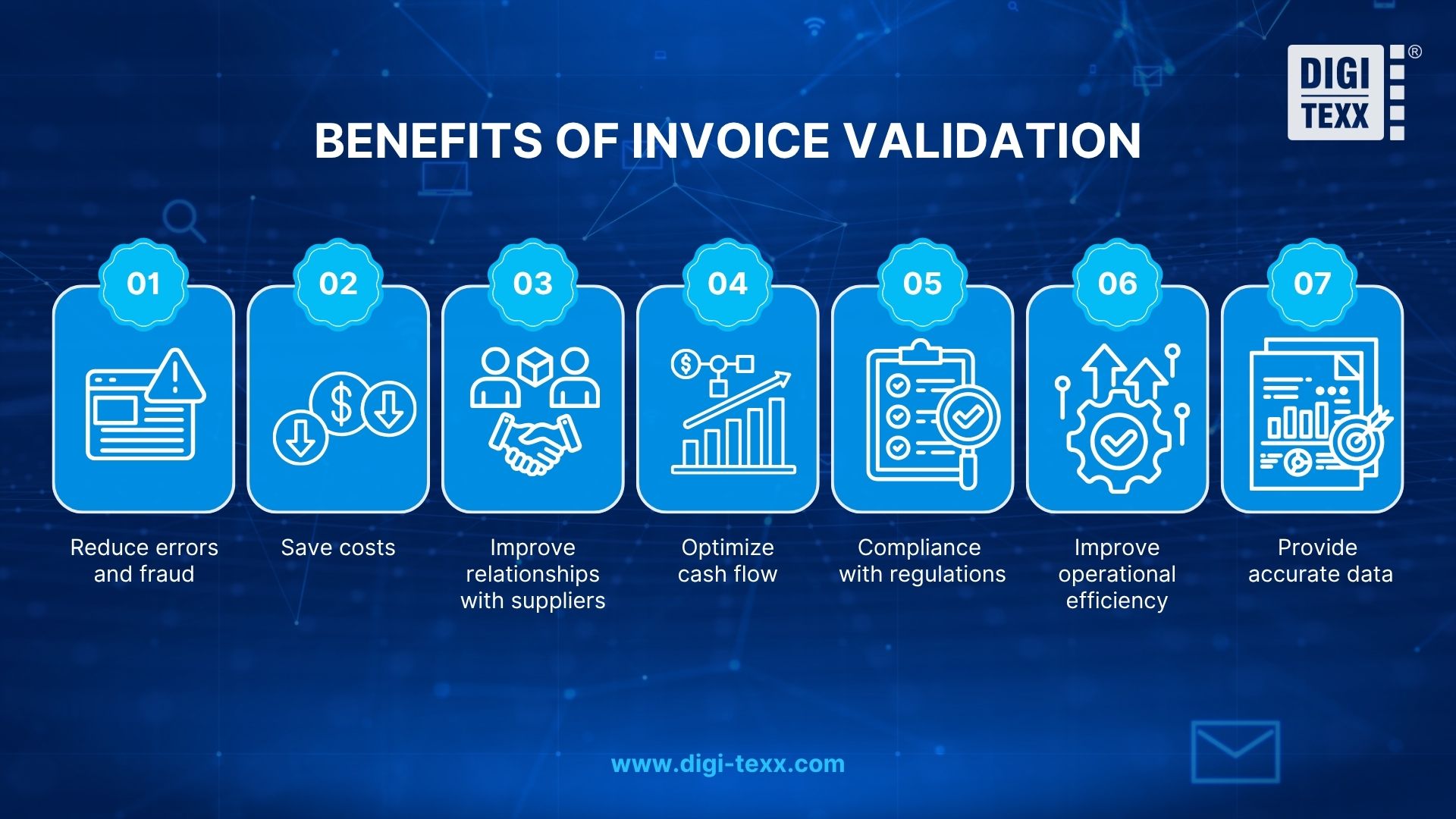
The invoice validation process brings many significant benefits to businesses, including:
- Reduce errors and fraud: Identify data entry errors, calculation errors, and prevent duplicate or fraudulent invoices.
- Save costs: Avoid overpayments, late penalties, or costs arising from invoice disputes.
- Improve relationships with suppliers: Good processes ensure timely payments, help build trust, and maintain positive relationships with partners.
- Optimize cash flow: Closely manage payable expenses, ensure timely payments to optimize the use of business capital.
- Compliance with regulations: Help ensure all invoices comply with current tax and accounting regulations, avoiding legal troubles and penalties.
- Improve operational efficiency: Automating and standardizing processes reduces manual invoice processing time for accountants or invoice processing personnel. You can also explore our article on automated invoice processing to discover how automation improves operational efficiency.
- Provide accurate data: Implementing and integrating invoice processing into the process will help ensure clean and reliable financial data. For more tips on removing errors and organizing your datasets, read our full post on how to clean up data.
>>> See more:
- Professional Fashion Photo Editing Services for Stunning Visuals
- Top 10 Data Cleansing Companies for Businesses in 2026
- How to Automate Documentation in 2026: Step By Step Guide
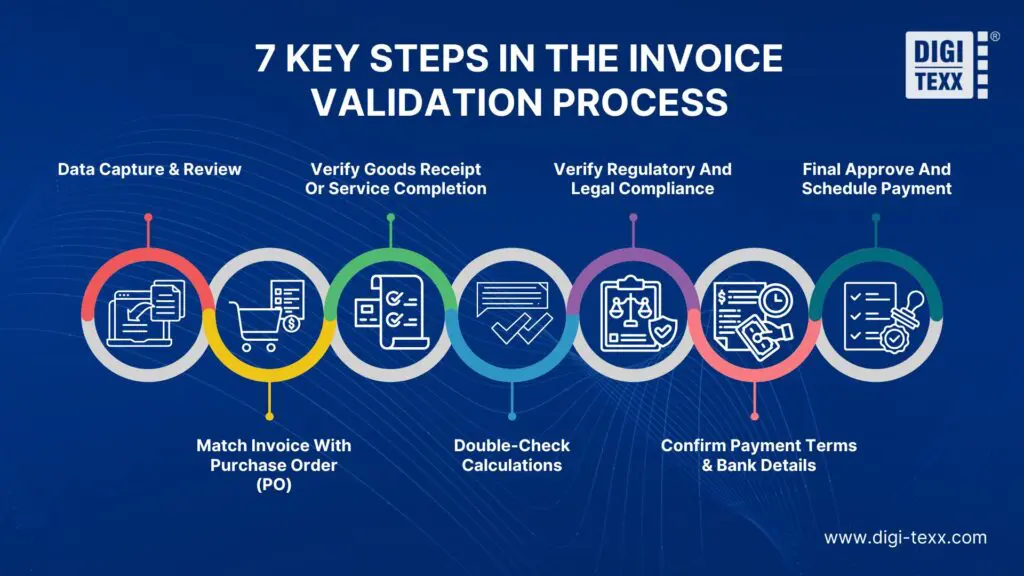
7 Key Steps In The Invoice Validation Process
For a business to effectively implement the invoice validation process, it must first follow a series of thorough checks and build a clear system for this task. An invoice processing and validation process that always follows these steps ensures that every invoice is thoroughly checked before approving payment.
| Processing step | What it is | Why it’s important |
| Review invoice details | Verify key invoice information such as supplier name, address, invoice number, issue date, and service/consignee details | Prevents errors early and avoids delays or complications in later processing stages |
| Match invoice with purchase order (PO) | Compare invoice data (PO number, items, quantities, prices, totals) with the purchase order | Ensures the business only pays for what was ordered and agreed, avoiding overpayment or incorrect billing |
| Verify goods receipt or service completion | Check delivery notes, acceptance reports, or service confirmations to ensure goods/services were received | Confirms that billed items/services were actually delivered or completed before payment |
| Double-check calculations | Recalculate totals, taxes, discounts, and additional charges on the invoice | Prevents financial discrepancies caused by calculation errors, especially at scale |
| Check for compliance requirements | Ensure the invoice meets legal, tax, and regulatory requirements (e.g., tax ID, required format) | Avoids legal risks, audit issues, and non-compliance penalties |
| Confirm payment terms & bank details | Validate payment terms, discount conditions, and bank/payment information | Helps manage cash flow effectively and prevents payment errors or delays |
| Final approval and schedule payment | Route the invoice for authorization and schedule payment according to agreed terms | Ensures proper control, timely payments, and smooth coordination between departments |
1. Review Invoice Details
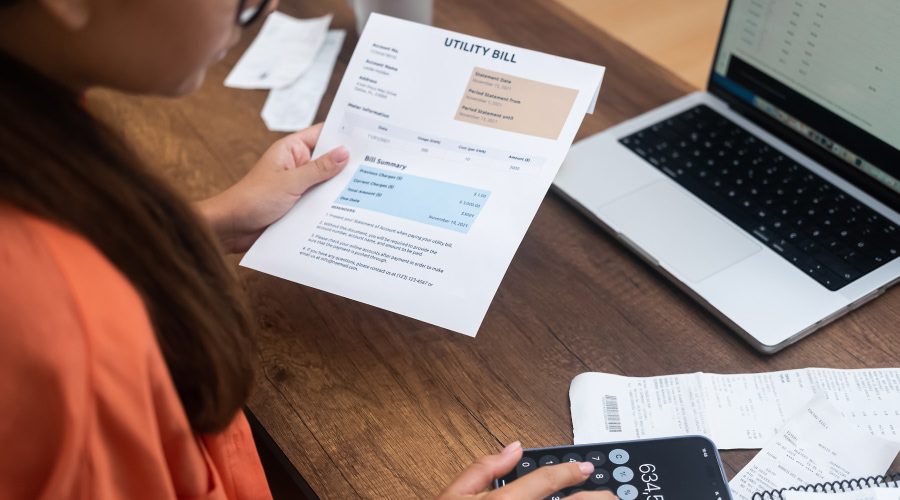
The first step in the process is to review the basic information on the invoice, which includes verifying important information such as the supplier name, address, invoice number, issue date, and consignee or service information. Any omissions or discrepancies at this step can lead to delays in processing or even more complex issues later on.
2. Match Invoice with Purchase Order (PO)
The most important step in the invoice validation process is matching the invoice with the purchase order (PO), which is the act of comparing information such as PO number, items or services requested, quantities, unit prices, and total amounts on the invoice with the details stated on the PO.
Mismatches between the two documents can indicate errors, such as sending the wrong goods, charging the wrong price, etc. Verification at this step will ensure that the business only pays for what was originally ordered and agreed upon.
3. Verify Goods Receipt Or Service Completion
After matching the invoice with the PO, the next step in the invoice validation process is to verify the receipt of goods or completion of services. This usually involves checking documents such as delivery notes, acceptance reports or other confirmations of services provided. The purpose of this step is to ensure that the items listed on the invoice have actually been received or the services have been completed as agreed.
>>> See more:
- Data Validation vs Verification: Key Differences, Examples & Benefits
- Professional E-commerce Data Entry Services by DIGI-TEXX
- Best Data Conversion Services in 2026 | DIGI-TEXX
4. Double-Check Calculations
Double-checking is the process of verifying the accuracy of the data on an invoice, including the total amount, taxes, discounts, and any additional charges. It may seem simple, but small calculation errors can lead to large discrepancies, especially when dealing with a large number of invoices. A thorough check of additions, subtractions, multiplications, and divisions ensures that the final amount due is taken into account.
5. Check for Compliance Requirements
Checking for compliance requirements ensures that the invoice complies with all applicable laws in the market, including tax regulations, accounting rules, and industry-specific standards. For example, the invoice must include full legal information of both the seller and the buyer, tax identification numbers, and formats as required by the state. Failure to comply with these requirements can lead to legal issues and difficulties during the audit process.

6. Confirm Payment Terms & Bank Details
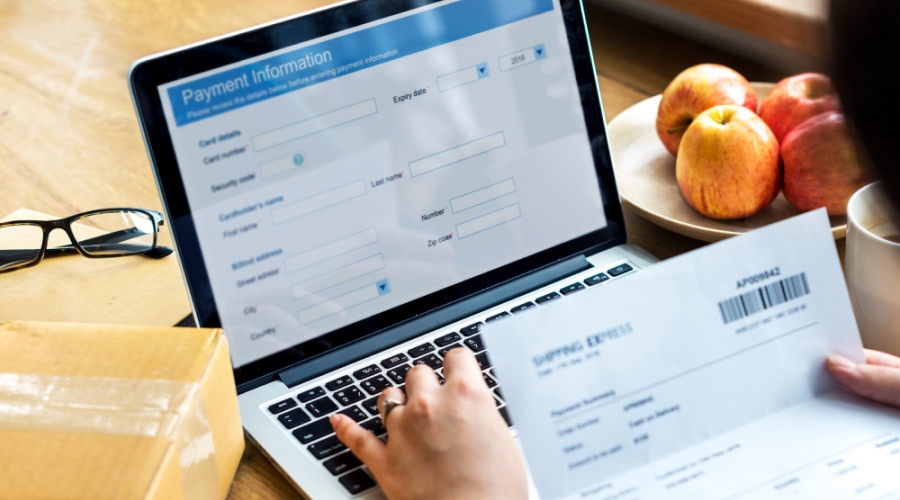
In the invoice validation process, payment validation is equally important, a step in the process that requires a person or tool to check the agreed payment terms, early payment discount conditions and payment method clearly stated in the invoice. After completing this step, it will ensure that the invoice reflects the agreed terms, helping the business manage cash flow effectively and avoid penalties for late payment.
7. Final Approve And Schedule Payment
After all checks have been completed and the invoice is determined to be valid, the final step in the invoice validation process is to approve and schedule payment. The last step describes that the invoice will be sent to the authorized person for approval. Once approved, payment will be scheduled according to the specified terms. Approving and scheduling payment requires close coordination between related departments, ensuring that all invoices are paid on time and according to the process.
>>> See more:
- Ecommerce Photo Retouching Services For High Quality Product Images
- AI-Powered Data Annotation Technologies Efficiency Accuracy Guide For AI Projects
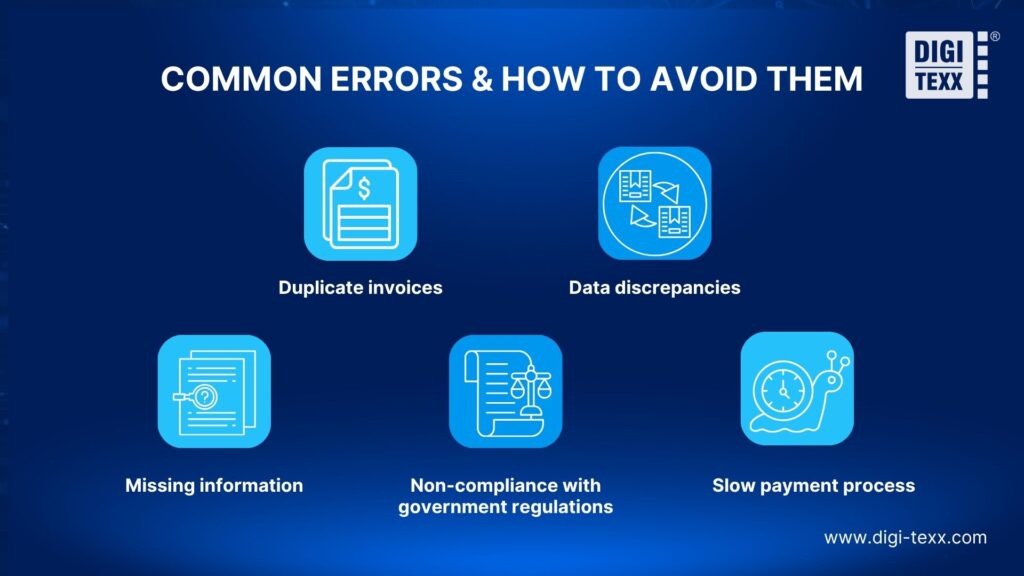
Common Errors And How To Avoid Them
Invoice validation can also cause many challenges during implementation, here are some common errors:
- Duplicate invoices: Suppliers may accidentally send the same invoice multiple times. To avoid this error, implementing a duplicate invoice checking system based on invoice number, supplier name and total invoice amount will help to solve it thoroughly.
- Data discrepancies: This is a phenomenon of mismatch between purchase orders, invoices and goods/service receipts that can lead to unnecessary disputes. The solution is to apply a reconciliation process between purchase orders, invoices and goods/service receipts to ensure consistency.
- Missing information: There will be missing fields such as: amount, date, name or address, which can disrupt the validation process. To overcome this, it is necessary to set up mandatory data entry rules and use prescribed standard invoice templates.
- Non-compliance with government regulations: Strict government regulations often require invoices to follow specific formats. Non-compliant invoices can cause major disputes and errors during the audit process. To avoid this, accountants should always stay up to date with legal and professional regulations.
- Slow payment process: Manual data entry will greatly affect the actual payment process. For companies that have to process a large number of invoices, building an automatic data entry and automation system is necessary.
=> To streamline operations, you might want to explore these top-rated data entry outsourcing companies.
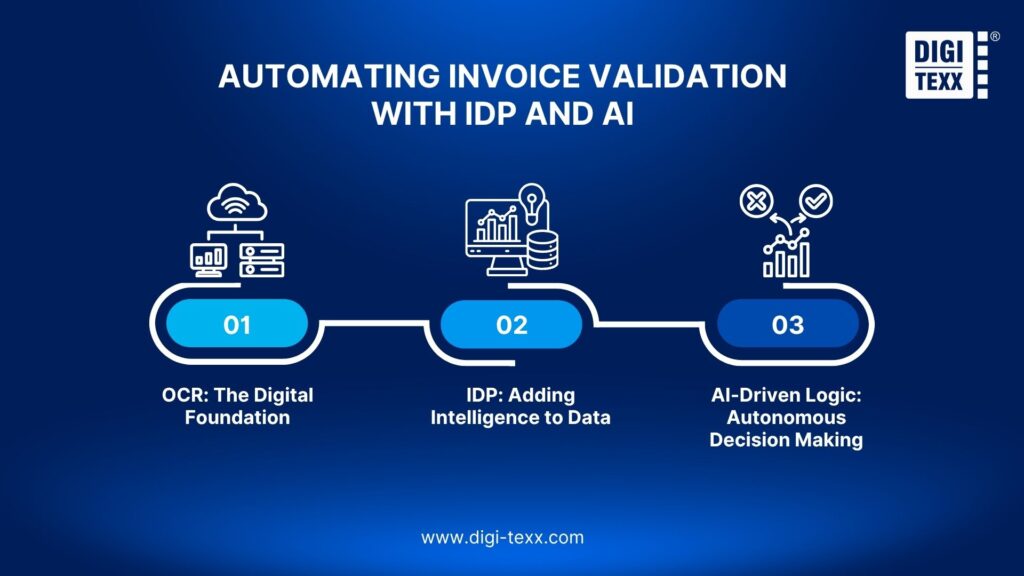
Automating Invoice Validation With IDP And AI
To address the challenges of manual invoice validation processes and improve efficiency, the current trend is moving towards automated invoice validation solutions using advanced technology.
- Optical Character Recognition – OCR: Is a technology that helps software “read” and extract data from printed or handwritten documents, including invoices. OCR converts images of invoices into editable text, reducing manual data entry time.
- Intelligent Document Processing – IDP: Is a technology that combines OCR with machine learning and natural language processing (NLP) techniques. It not only extracts data but also understands the context and structure of the document, allowing flexible processing of invoices in many different formats. With IDP, the system can automatically identify important data fields such as invoice number, date, amount, supplier name and item details, even when they appear in different locations on the invoice.
- AI Rules (AI Invoice Processing): AI will apply smart rules and workflows with algorithms. AI models will be trained to recognize patterns, detect anomalies, and adjust according to rules. For example, AI can automatically perform three-way reconciliations between invoices, purchase orders, and goods receipts; flag duplicate invoices; check invoices for regulatory compliance; and even learn from previous approval decisions to automate the approval process for similar invoices.
=> Explore more: Data Extraction Automation: Everything You Need to Know
FAQs About Invoice Validation
1. How Do You Validate An Invoice?
Validating an invoice involves a systematic process to ensure accuracy and legitimacy before payment. A standardized 7-step approach includes:
- Capture invoice data using IDP (Intelligent Document Processing).
- Verify invoice details (supplier info, billing address, invoice number).
- Perform 3-way matching (Invoice vs. PO vs. GRN).
- Check pricing and calculations (quantities, unit price, taxes).
- Ensure legal and tax compliance.
- Confirm payment terms (due date, payment method).
- Schedule payment in ERP system.
2. How To Check The Validity Of An Invoice?
You can perform invoice validation by comparing the invoice with key documents such as the purchase order, delivery receipt, and contract terms to ensure all details are accurate and consistent. This process, commonly known as a three-way match, helps confirm that the goods or services billed have been properly ordered and received.
3. What Is Billing Validation?
Billing validation is the process of reviewing and verifying charges before payment to ensure they are accurate, eligible, and compliant with required regulations. It helps confirm that only valid services are billed, preventing errors or improper claims, and ensuring that all submitted costs meet the criteria for reimbursement or financial approval.
4. What Is Required For An Invoice To Be Valid?
For an invoice to be considered valid, it must include complete, accurate, and clearly presented information to support payment and compliance. Key requirements include:
- Unique invoice number for identification and tracking.
- Seller and buyer details (full name and address of both parties).
- Invoice and supply dates (issue date and delivery/service date).
- Clear description of goods or services provided.
- Accurate financial details (unit price, total amount, taxes/VAT, final amount due).
- Payment terms and instructions (due date, payment method, bank details).
In short, the invoice validation process is an indispensable function in financial operations, ensuring the accuracy and validity of all payments. Applying advanced technologies such as OCR, IDP, and AI invoice processing. To learn more about businesses providing specialized automated invoice validation solutions, help businesses optimize the invoice management process. Contact DIGI-TEXX today to find out how we can help you achieve excellence.
>>> See more:
- 5 Key Indicators Of A Business Process Outsourcing Provider You Should Track
- 10 Best AI Process Automation Tools Free In 2026
- AI In BPO: Benefits, Applications, Challenges & Future Trends
DIGI-TEXX Contact Information:
🌐 Website: https://digi-texx.com/
📞 Hotline: +84 28 3715 5325
✉️ Email: [email protected]
🏢 Address:
- Headquarters: Anna Building, QTSC, Trung My Tay Ward
- Office 1: German House, 33 Le Duan, Saigon Ward
- Office 2: DIGI-TEXX Building, 477-479 An Duong Vuong, Binh Phu Ward
- Office 3: Innovation Solution Center, ISC Hau Giang, 198 19 Thang 8 street, Vi Tan Ward
Reference:
- ACFE. 2024 Report to the Nations on Occupational Fraud and Abuse. Retrieved from https://www.acfe.com/-/media/files/acfe/pdfs/rttn/2024/2024-report-to-the-nations.pdf
- OECD. Digital Transformation of Tax Administration. Retrieved from https://www.oecd.org/en/topics/digital-transformation-of-tax-administration.html