

Fashion photo composition is the strategic spatial arrangement of models, garments, and environments within a camera frame to highlight the wardrobe. At DIGI-TEXX, we realize that a well-composed raw image is the essential foundation for advanced AI image processing.
Before sending your files to professional fashion photo editing services, mastering the rule of thirds, leading lines, and precise camera angles will ensure your initial shots are structurally flawless and ready for any digital campaign.
What Is Fashion Photo Composition?
Fashion photo composition is the foundational technique in editorial photography used to systematically organize visual elements within a frame. Its primary goal is to direct the viewer’s attention to the brand’s styling and aesthetic, ensuring the clothing remains the absolute focal point.
“90% of online shoppers cite photo quality as a critical factor in their purchasing decisions, outranking shipping costs and customer reviews. Strategic composition directly translates visual appeal into measurable commercial conversion.” – Etsy Research
Key characteristics of mastering this technique include:
- Strategic Spatial Arrangement: Unlike standard portraiture, it prioritizes geometry, lighting, and visual weight over pure human emotion to highlight the wardrobe.
- Versatile Application: Mastering these spatial rules allows you to confidently execute diverse shooting styles, from a high-fashion editorial to an everyday street style lookbook.
- Tool Independence: Whether utilizing a professional DSLR or a smartphone camera, controlling the frame is the critical first step to telling a compelling visual story.
>>> See more:
- Top 10 Best Free AI Photo Retouching Tools Online In 2026
- How To Make A Clipping Path In Illustrator (Step-By-Step)?
- Top 10 Photo Editing Services Online In 2026: Comparison & Review
Essential Fashion Photo Composition Rules
The foundation of compelling editorial imagery relies on basic composition rules to establish perfect visual balance. Techniques like the rule of thirds, symmetry, and leading lines organize the frame structurally, ensuring the fashion garments remain the primary focal point before introducing any complex lighting setups.
1. Rule Of Thirds
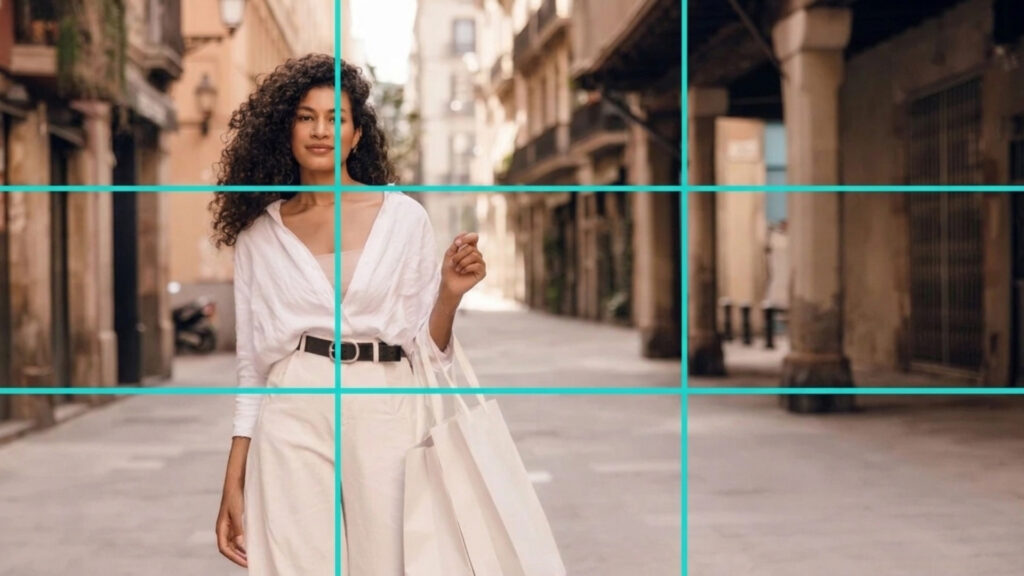
To create a stunning fashion photo composition, you cannot ignore this universally acclaimed Rule of Thirds. Although simple, this technique guarantees a balanced and visually appealing frame that naturally draws the eye to the wardrobe.
- Activate the Grid: On your phone or camera, open the 3×3 grid feature. If unavailable, mentally divide the frame into 9 equal intersecting boxes.
- Position the Subject: Instead of placing the model in the dead center, position them on the vertical lines or grid intersections. This creates a natural balance between the model and the background landscape.
- Distribute Props: Arrange decorative props or secondary accessories based on this grid. This structural alignment prevents visual clutter and keeps the overall photograph harmonious.
2. Leading Lines
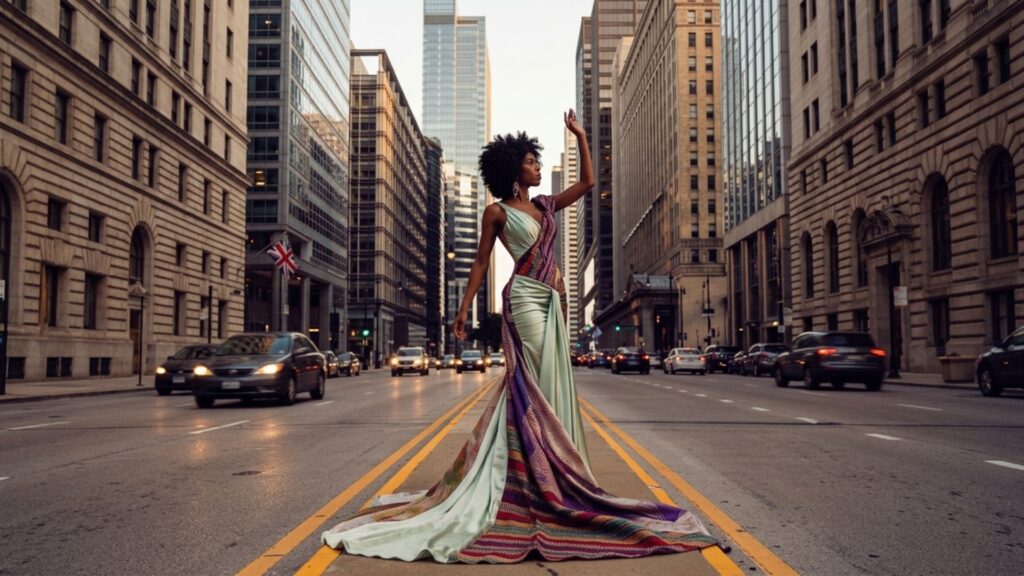
Applying the visual path technique is an essential skill to guide the viewer’s gaze directly to the clothing and the model’s pose.
- Exploit Natural Paths: Utilize available environmental elements such as an empty road, a row of trees, or architectural corridors to lead the gaze directly to the model.
- Utilize Props and Wardrobe: Use a flowing scarf, a long train of a dress, or trailing fabrics to create soft, dynamic leading lines pointing toward the core outfit.
- Observe Lighting and Architecture: Seek out walkways, sharp architectural shadow lines, and railings that create natural converging points to add exceptional depth to the subject.
3. Framing
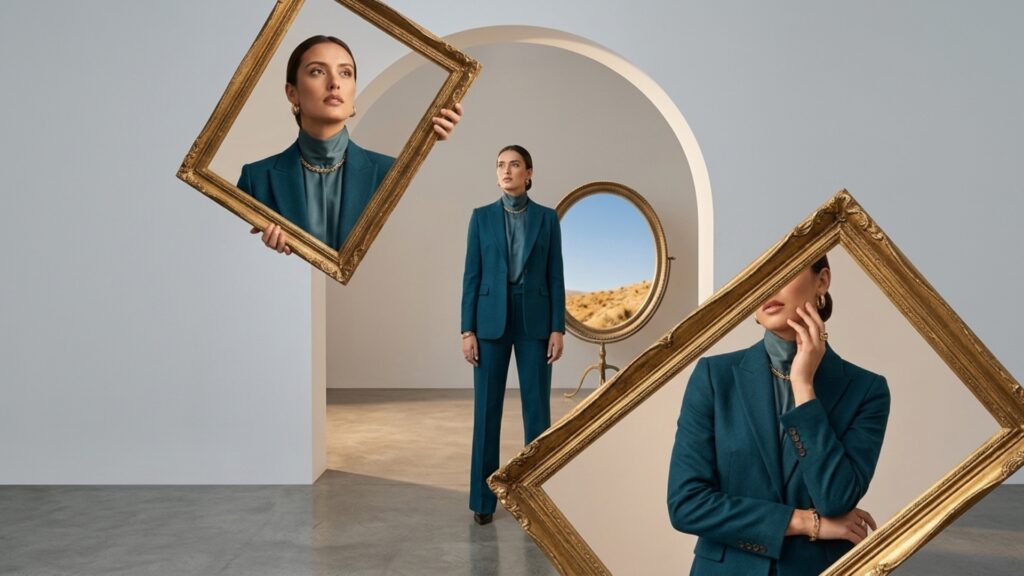
Framing in fashion photography uses secondary elements to construct a natural border around the main subject, trapping the viewer’s attention squarely on the fashion pieces.
- Take Advantage of Landscapes: Elements such as arched doorways, windows, and urban structures act as ideal, sturdy frames.
- Utilize the Foreground: Place out-of-focus flower branches or tree leaves in the foreground to create soft, natural borders.
- Integrate Creative Props: If natural elements are missing, shoot through a physical picture frame, a piece of torn fabric, or sheer curtains to generate an artistic, editorial effect.
4. Symmetry
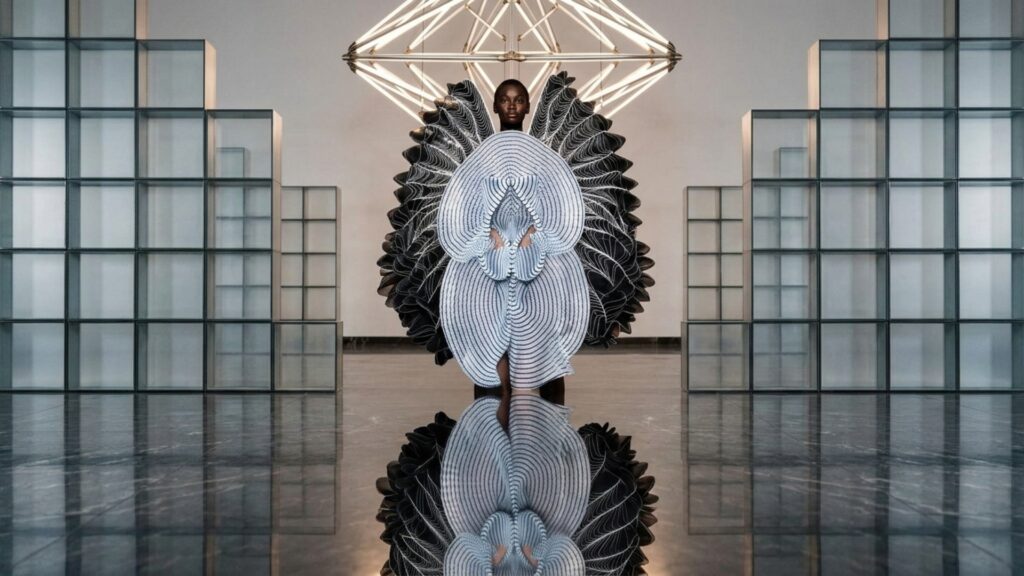
Symmetry in a fashion photo composition brings absolute balance and strict order, conveying a sense of high-end editorial authority.
- Leverage Symmetrical Landscapes: Utilize locations like double staircases, centered urban streets, and grand hallways. Placing the model in the exact middle creates an undeniably powerful composition.
- Align the Subject Perfectly: Place the model in the center and align the outfit and props so both sides of the frame mirror each other evenly.
- Break Symmetry Intentionally: Once mastered, intentionally place the model slightly off-center within a highly symmetrical background. This visual tension creates surprise and significantly increases emotional engagement.
5. Balance The Subjects
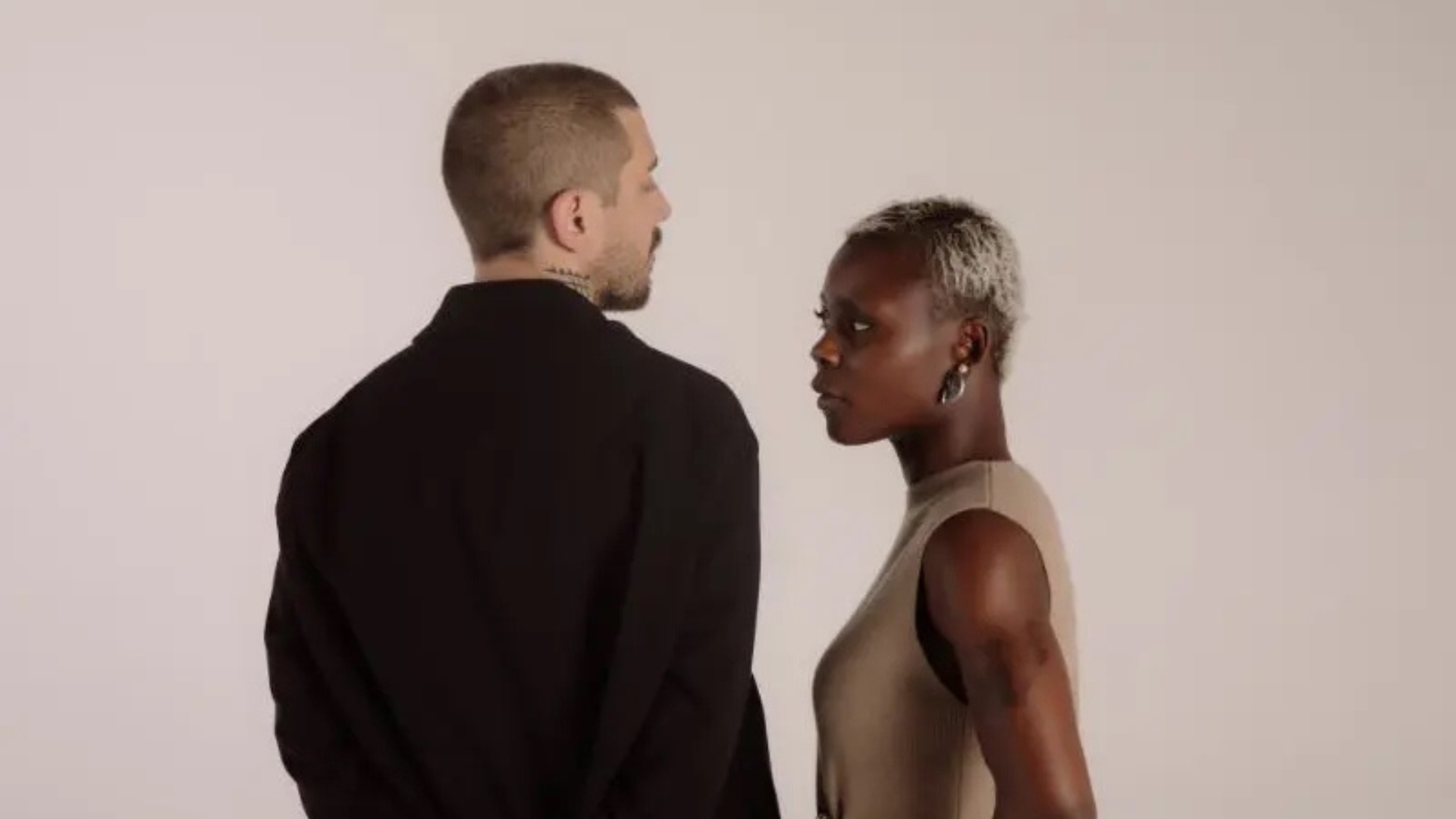
When an editorial shoot features two or more models, balancing the frame is critical so that every outfit stands out without overshadowing the other.
- Manage Spatial Distance: Arrange one model standing close to the lens and the other slightly further away. This layering creates depth while ensuring both garments are entirely visible.
- Combine Color Contrasts: Pair a model in a dark-toned outfit with one in a light-colored outfit. This stark color contrast creates immediate visual highlights for both pieces.
>>> See more:
- Best Product Photo Editing Services For eCommerce: Top Providers Compared
- Photo Editing Price Guide 2026: Rates, Costs & Examples
- How to Retouch Photos on iPhone – Best Free Apps for iOS
Angles, Lighting, And Depth
Adjusting camera angles and manipulating spatial depth transforms a flat image into a three-dimensional visual story. By utilizing dramatic lighting, varying perspective heights, and layering visual elements, fashion photographers can drastically alter and enhance the physical proportions of the fashion model.
6. Contrast
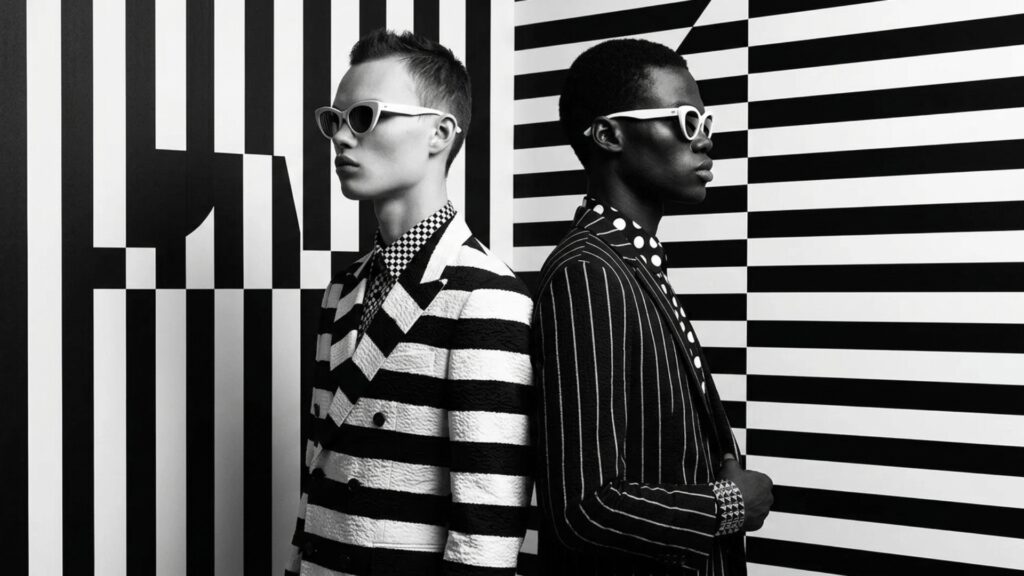
Visual contrast creates striking separation between the subject and the environment, ensuring the fashion pieces are instantly recognizable.
- Color Contrast: Place a model wearing light-colored, pastel clothing against a dark, moody background to make the silhouette stand out immediately.
- Lighting Contrast: Arrange your lights to create distinctly bright and heavily shadowed areas within the same frame, increasing emotional depth.
- Textural Contrast: Combine opposing materials. Place a model wearing sleek leather against a monotonous concrete wall to create a powerful tactile illusion.
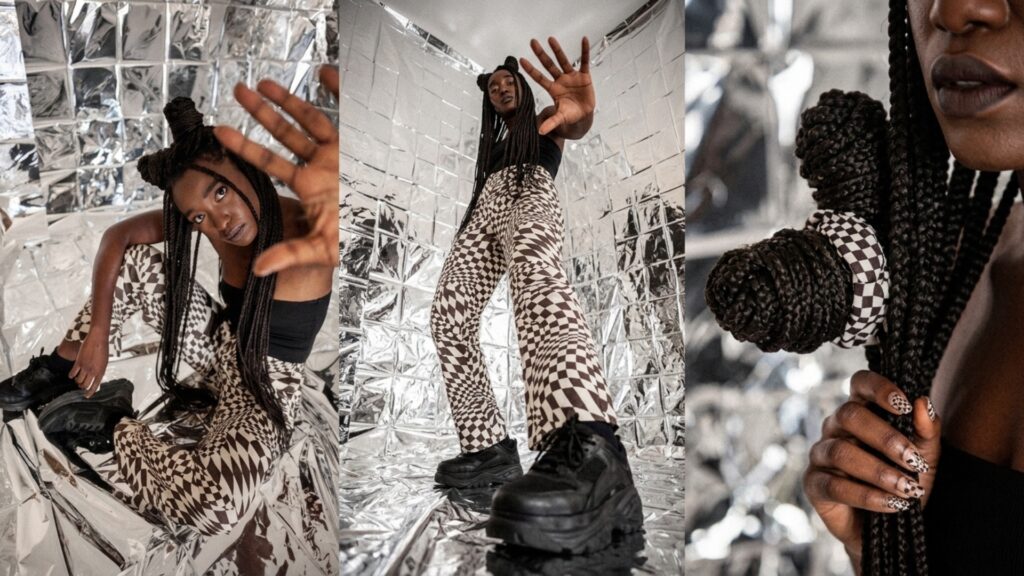
7. Angles
Shooting exclusively at eye-level results in a monotonous portfolio. Altering your physical perspective is the easiest way to redefine the mood of the garment.
- Shoot from a Low Angle: Lower the lens below the waist and shoot upward. A Low Angle elongates the model’s legs, making them appear taller and giving streetwear a dominant presence, a fundamental technique highly sought after in street style photo editing.
- Shoot from a High Angle: Position the camera above the subject. This softer, vulnerable perspective is highly effective for highlighting makeup, hats, and delicate necklines.
- Try a Tilted Angle: Tilt the camera slightly to disrupt the horizon. This edgy framing is perfect for high-energy or rebellious photography concepts.
8. Lights And Shadows
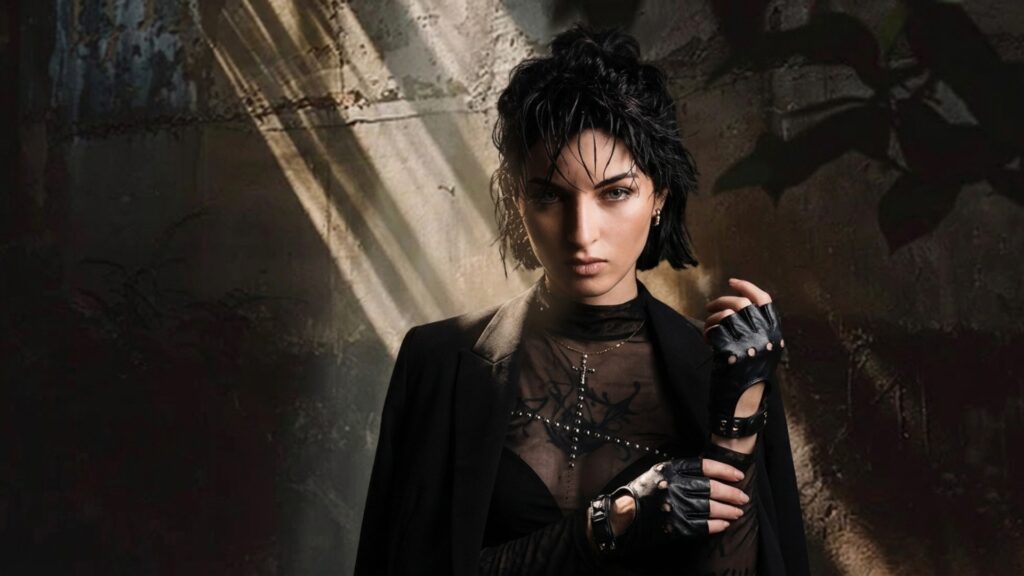
Light and shadow are fundamental tools that portray emotion while highlighting the texture of the outfit and directing the focal point.
- Maximize the Golden Hour: Dawn or just before sunset provides soft light that subtly highlights the intricate weave of the fabric and enriches garment colors.
- Embrace the Darkness: Use deep shadows to create moody depth. Utilizing the stark shadows of urban buildings can evoke strong editorial emotions.
9. Lines And Patterns
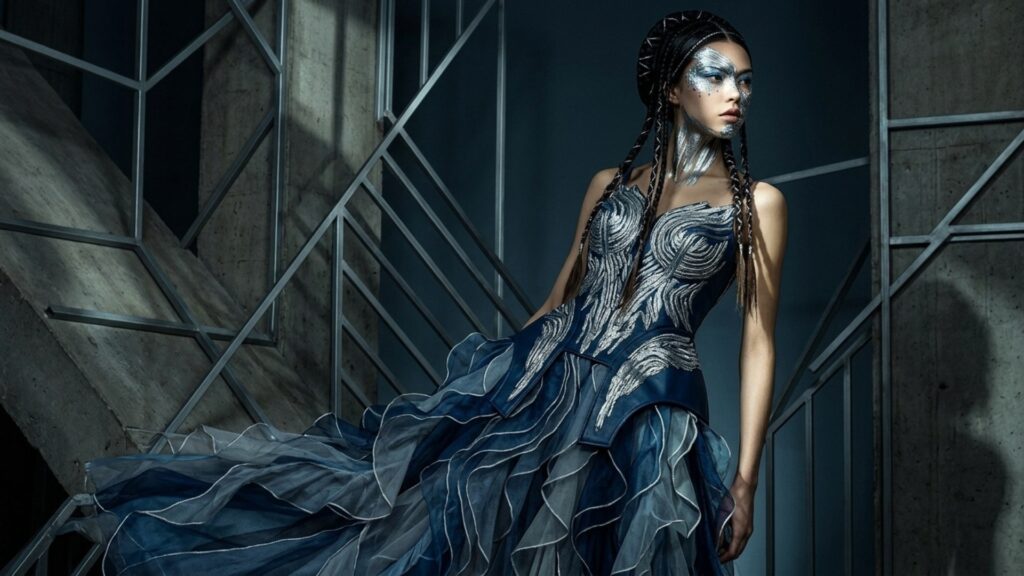
Environmental patterns breathe life into a monotonous photo, acting as structural anchors for the composition.
- Guide the Eye: Utilize repeating lines on brick walls or crosswalks to create a visual funnel pointing straight at the model.
- Highlight with Patterns: Leverage patterned backgrounds to frame the subject, but ensure the wardrobe contrasts against it so the model doesn’t blend in.
10. Add Depth
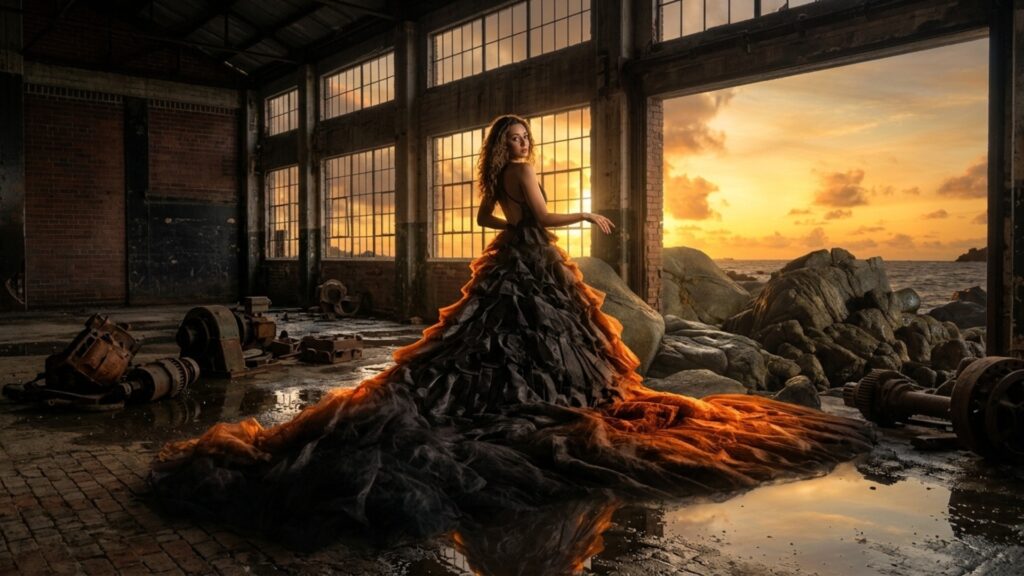
A premium fashion photo is more than just a beautiful image, it tells a layered story. Creating a three-dimensional feel invites the viewer to step into the scene.
- Master Layering: Establish a distinct foreground, middle ground, and background. Shooting the subject through a canopy of trees instantly adds cinematic depth.
- Vary Your Focal Length: Utilize a wide-angle lens (like 35mm) to capture environmental scale, or a telephoto lens (like 85mm) to compress the background.
>>> See more:
- Top 7 Ecommerce Product Photo Retouching Services Compare
- Birthday Editing Online Free: Tools, Frames & Creative Ideas
- 15 Best Document Scanning Software: Features, Pricing & Reviews 2026
Backgrounds, Colors, And Details
The background strongly dictates the overall composition; it must always support, never overpower, the wardrobe. By applying negative space, controlling color psychology, and isolating macro details, you ensure the garment’s craftsmanship is fully appreciated.
11. The Background
How you manage your shooting location determines the clarity of your subject.
- Choose the Right Location: For streetwear, utilize urban alleys. For gentle female photo sets, locations such as parks or historical houses are ideal.
- Utilize Negative Space: Leave empty, clean areas around the subject (Negative Space). This prevents visual clutter and gives the viewer’s eyes a place to rest.
- Take Advantage of Depth of Field: If the environment is unavoidably messy, use a wide aperture (e.g., f/2.8) for a shallow depth of field to blur the background into smooth bokeh. If visual clutter persists, you may need a reliable clipping path service during post-production to perfectly isolate the model from the background.
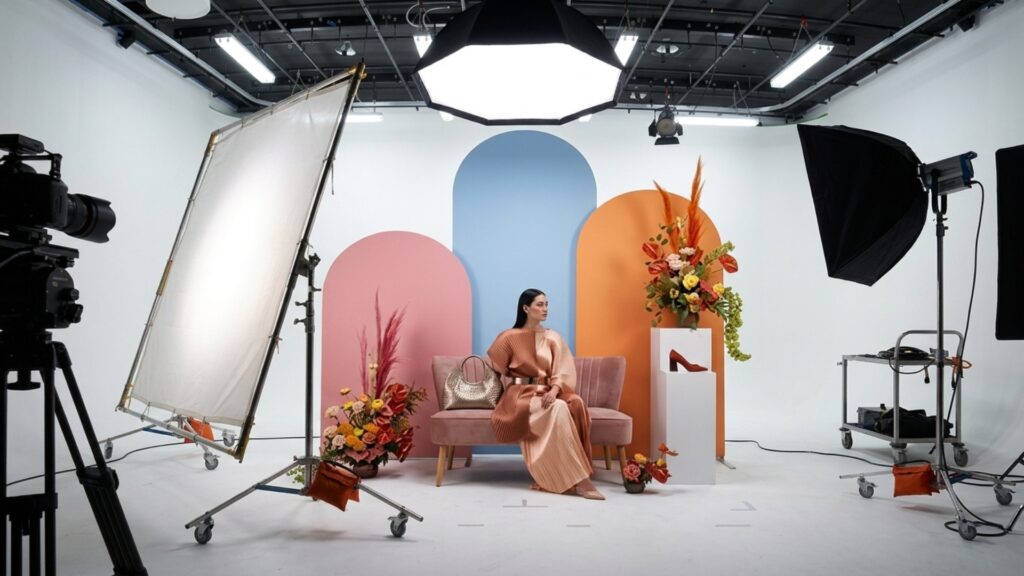
12. Use Colors To Create Mood
Color is an element that can create emotion, highlight the subject, and define the style of a photo.
- Contrasting Colors: Combine colors that sit opposite each other on the color wheel to create an energetic, highly visible accent.
- Analogous Colors: Pair colors that are next to each other to establish a harmonious, sophisticated, and unified aesthetic. Whether you capture these tones perfectly in-camera or edit photos in lightroom to enhance them later, understanding color combinations is key to conveying the right emotion.
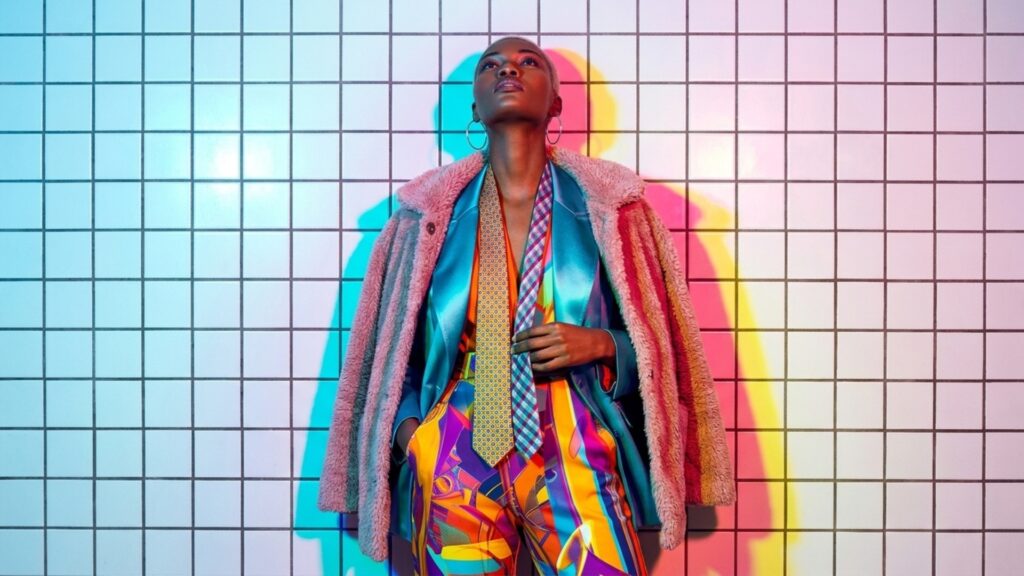
13. Capture The Details
In fashion photography, it’s the little details that make the biggest difference to your composition.
- Geometric Posing: Direct the model to create sharp triangles with their limbs (Geometric Posing). Bending elbows and knees draws attention to the structural design details of the outfit.
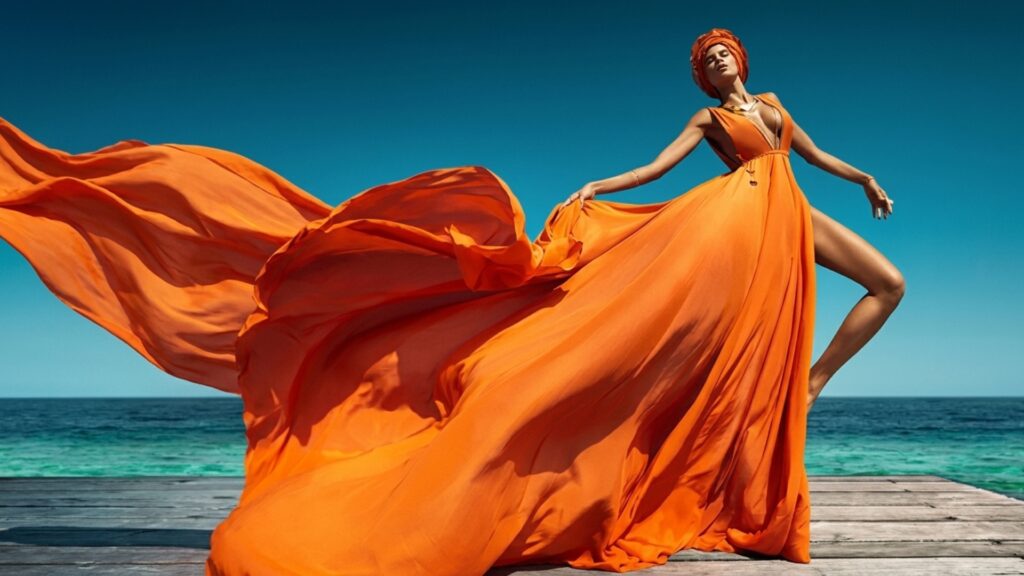
- Fabric Flow: Highlight the smoothness or shine of the fabric by capturing movement. Catching the Fabric Flow mid-air brings static clothing to life.
- Stitching and Detailing: Crop closely on the stitching and tailoring to demonstrate the garment’s true craftsmanship.
>>> See more:
- What Is Multiple Clipping Path Service? A Complete Guide
- How To Master Portraits Photo Editing: 10 Best Tools, Tips & Step-By-Step Guide
- Top 10 Free Photo Retouch Tools Online In 2026
Fashion Photo Composition Examples
To truly understand these rules, it helps to analyze real-world fashion photo composition examples. Professional photographers often combine multiple techniques within a single frame to create a compelling visual narrative that highlights the designer’s intent.
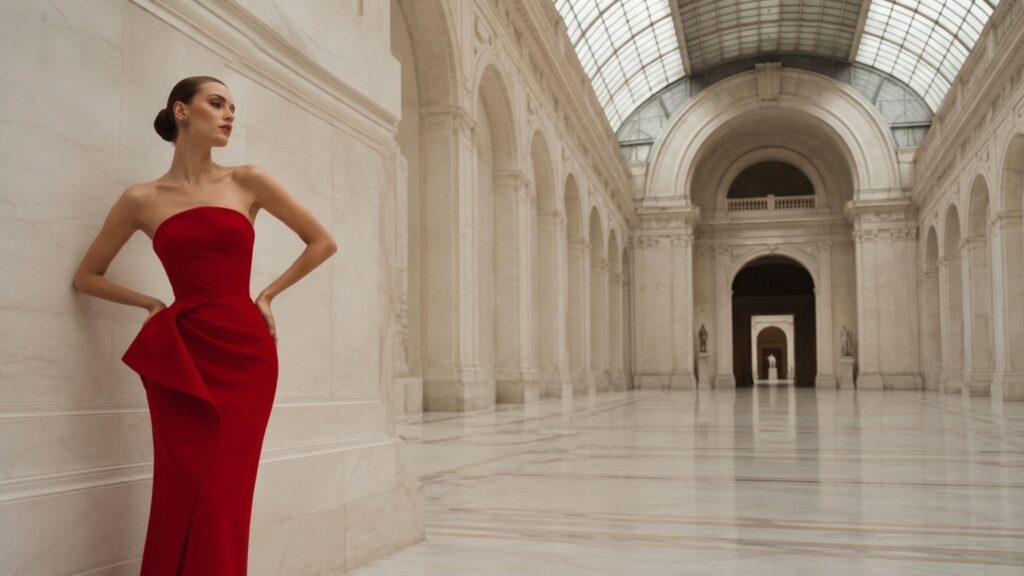
Example 1: The High-Fashion Editorial Lookbook
This conceptual image simultaneously coordinates four fundamental composition techniques to achieve a premium aesthetic:
- Rule of Thirds: The model stands off-center rather than squarely in the middle of the frame, creating natural visual tension.
- Negative Space: The setting is a grand, empty museum hall. This vast emptiness ensures the subject does not compete with visual clutter.
- Color Contrast: The model wears a vibrant red dress against a stark white marble wall, making the garment instantly “pop.”
- Geometric Posing: The model rests her hands sharply on her hips, creating distinct triangular angles. This pose draws immediate attention to the waistline and the structured silhouette of the dress.
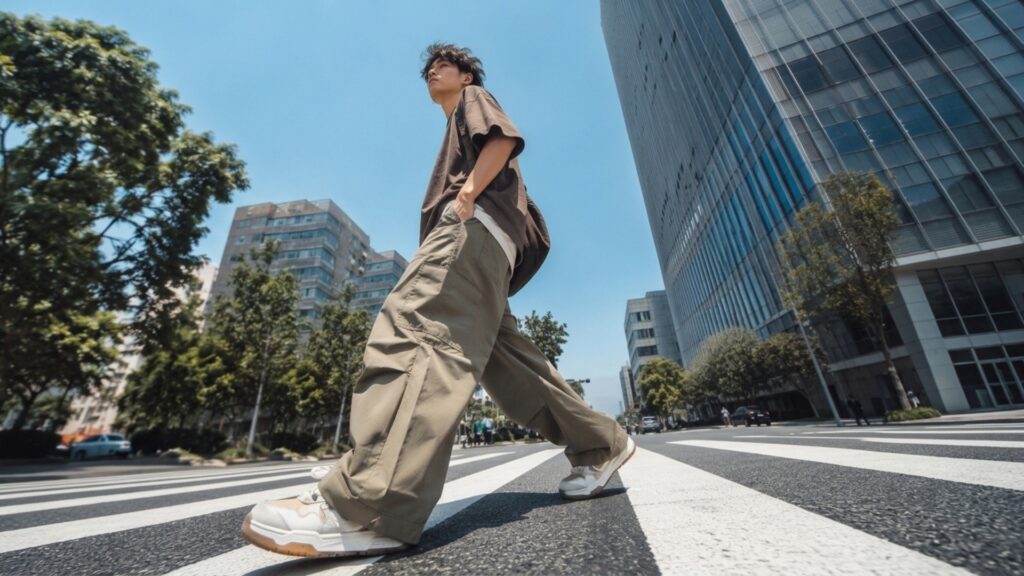
Example 2: The Edgy Streetwear Campaign
This urban shot combines two powerful techniques to establish a dynamic, rebellious style:
- Low Angle: The photographer places the camera near the ground and shoots upward using a 35mm wide-angle lens. This specific angle establishes visual authority and an edgy attitude.
- Leading Lines: The model walks boldly along a pedestrian crosswalk toward the lens. The extending white stripes act as a visual funnel, guiding the viewer’s eye straight to the subject.
- The Result: By combining these spatial elements, the oversized sneakers and baggy trousers look incredibly prominent, projecting vivid three-dimensional depth and a strong streetwear identity.
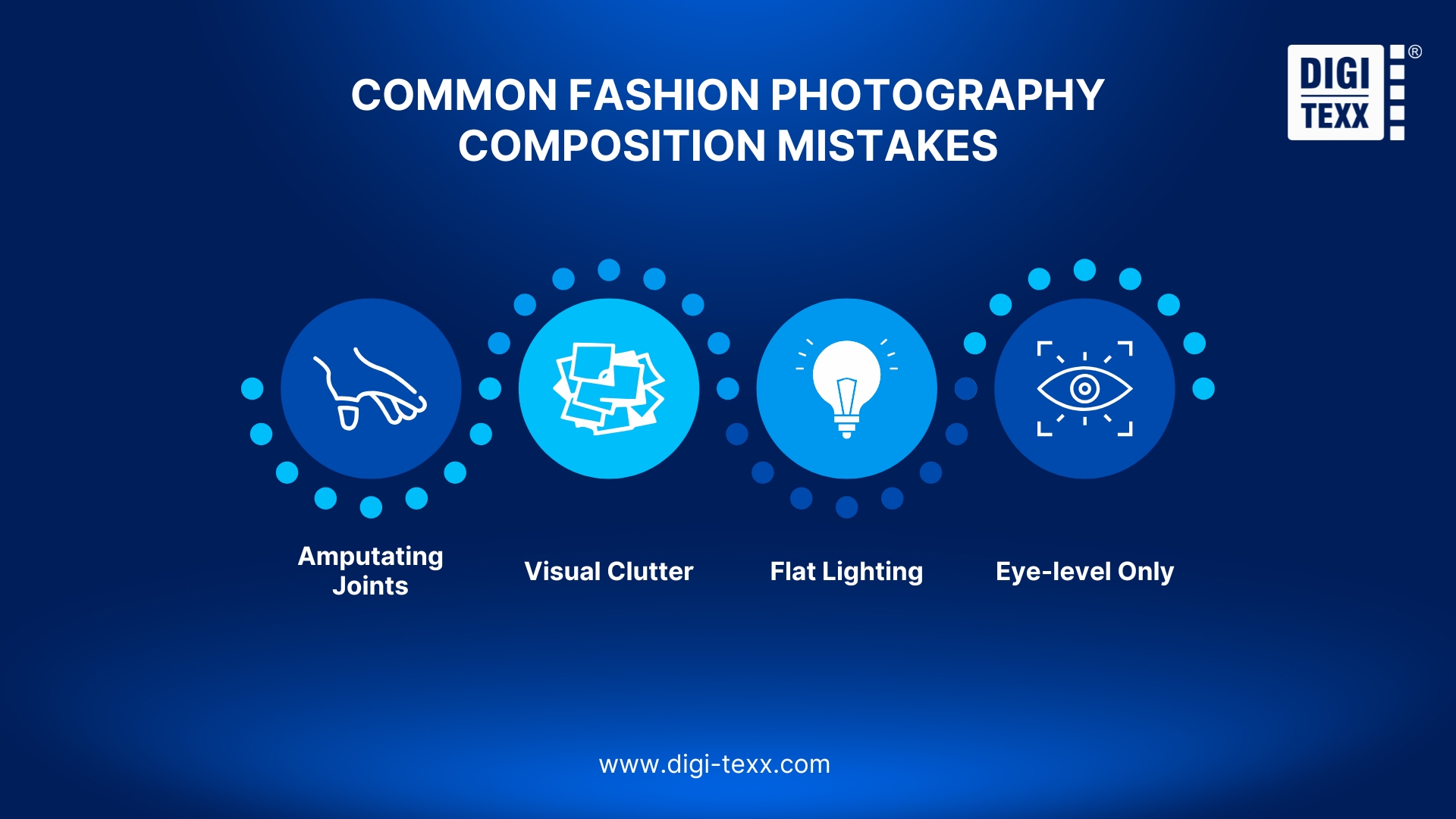
Common Fashion Photography Composition Mistakes
To maintain a professional standard in your fashion photography portfolio, reference this quick diagnostic table. It breaks down the most common spatial errors and the immediate compositional fixes required to elevate your imagery.
| Composition Element | Common Mistake | Negative Impact | The Professional Fix |
| Framing | Amputating Joints | Makes poses look awkward and unnatural. | Crop above/below knees and elbows, never directly on them. |
| Background | Visual Clutter | Distracts the viewer from the garment. | Use a shallow depth of field (e.g., f/2.8) to blur the background. |
| Lighting | Flat Lighting | Loses fabric texture and tailoring details. | Shoot at a 45-degree angle to introduce structural shadows. |
| Angles | Eye-level Only | Results in a monotonous, static portfolio. | Switch to low angles to elongate the model’s physical proportions. |
>>> See more:
- How To Restore Damaged Photographs: Best AI Tools, Software & Professional Services
- 7+ Best Photo Editing Apps For Android And iPhone (2026 Guide)
- Car Photo Editing Guide: Professional Results With Free Online Apps
FAQs About Fashion Photo Composition
What Is The Most Used Composition Technique In Fashion Photography?
The rule of thirds is the most universally relied-upon technique. By placing the model, their face, or the garment’s defining features along the camera’s grid intersections, photographers instantly create an aesthetically balanced image without making it look rigidly centered.
How Do Camera Angles Affect Fashion Photo Composition?
Camera angles drastically dictate the mood and physical proportions of the subject. Low angles elongate the legs, making models look taller and giving clothing a powerful presence. Conversely, high angles offer a softer perspective, ideal for highlighting accessories or makeup.
Why Is Negative Space Important In Clothing Photography?
Negative space prevents the photographic frame from feeling chaotic and cluttered. By purposefully leaving empty, clean areas around the subject, the viewer’s eye is naturally forced to focus entirely on the silhouette, colors, and textures of the fashion pieces.
How Can I Effectively Add Depth To My Fashion Photos?
You can add three-dimensional depth by utilizing the layering technique. Establish a distinct foreground (like shooting through leaves), a middle ground (the model), and a background. Combining this with a shallow depth of field invites the viewer into the scene.
Can You Break The Rules Of Composition In Fashion Shoots?
Yes, intentionally breaking composition rules is highly common in avant-garde and editorial photography to create visual tension. However, photographers must first master fundamental spatial rules, like symmetry and the rule of thirds, before successfully breaking them to make an artistic statement.
What Are Good Fashion Photo Composition Examples To Study?
To improve, study high-fashion editorial spreads in magazines like Vogue or Harper’s Bazaar. Analyze how they combine techniques, such as using a low angle paired with leading lines in an urban environment to emphasize the dominance of a streetwear collection.
Mastering fashion photo composition is the key to transforming ordinary pictures into stunning editorial masterpieces. By consistently applying the rule of thirds, experimenting with bold camera angles, and balancing your subjects, you ensure the wardrobe always remains the undeniable focal point.
At DIGI-TEXX, we understand that a flawlessly composed raw image drastically improves the efficiency and quality of the final output during post-production. Remember, photographic rules are meant to be mastered before they are creatively broken. Start experimenting with these 13 spatial techniques today to elevate your visual storytelling and build a world-class fashion portfolio.
DIGI-TEXX Contact Information:
🌐 Website: https://digi-texx.com/
📞 Hotline: +84 28 3715 5325
✉️ Email: [email protected]
🏢 Address:
- Headquarters: Anna Building, QTSC, Trung My Tay Ward
- Office 1: German House, 33 Le Duan, Saigon Ward
- Office 2: DIGI-TEXX Building, 477-479 An Duong Vuong, Binh Phu Ward
- Office 3: Innovation Solution Center, ISC Hau Giang, 198 19 Thang 8 street, Vi Tan Ward
References
- Adobe. (n.d.). Photography composition rules and tips. Adobe Discover. Retrieved from https://www.adobe.com/creativecloud/photography/discover/photo-composition.html
- New York Institute of Photography (NYIP). (n.d.). Understanding Camera Angles and Perspective. NYIP Photo Articles. Retrieved from https://www.nyip.edu/photo-articles